Tag Archive for: Water Conservation

Pure Water Oceanside-Drought-Water Shortage-Water Supply-Drought

Water Conservation Helps San Diego Regional Supply During Drought

Water conservation is a way of life in the San Diego region, whether during drought periods or wet years. While the region is in drought like much of the Southwest U.S., San Diego County is not experiencing a water shortage. That’s because the Helix Water District, and the other water utilities serving the region, have worked together for 25 years to conserve water and invest in new water resources.

The San Diego County Water Authority, its 24 member agencies, and the water ratepayers of San Diego County, have made investments to increase water supply reliability.

June 2021 was the hottest June on record in the U.S.

High temperatures make drought conditions worse. The hotter it is, the faster water evaporates from soil and transpires from plants. This is why urban landscapes, crops and forests dry out and the risk of wildfires increases. The map below shows all of the wildfires currently burning throughout the West.

Map from InciWeb

InciWeb map shows current fires burning across the U.S. West.

On July 8, Governor Newsom declared a drought emergency everywhere except Southern California

The Governor called for all Californians to voluntarily reduce their water use by 15%, but only declared a drought emergency in the counties in red in the map below. That’s because communities in central and northern California are more likely to rely on a single river, creek or well for their water and are more vulnerable to drought. It’s drier in Southern California and water agencies have been developing multiple water resources to meet water supply needs for more than 100 years. Today, this approach helps protect the region against drought and water shortage.

Map from Cal Matters

On July 8, 2021, Governor Newsom extended his drought emergency declaration to include all 50 counties in central and northern California.

In the San Diego region, water utilities work together to develop water supply

Helix and other water utilities in San Diego depend on the San Diego County Water Authority to import water from the Colorado River and Northern California.  When residents and businesses pay their water bills, their water utility pays the Water Authority for the imported water they use. Then, all the water utilities meet at the Water Authority and decide how to invest that money in water resources. By pooling our money over the last 25 years, we invested $3 billion and developed projects no single utility could afford on its own.

San Diego County Water Authority board meeting photo from Water News Network

Board members from member agencies work together as the board of the San Diego County Water Authority.

San Diego residents use half the water they used in the 1990s

Residents and businesses in the region have reduced their water bills by installing water efficient plumbing fixtures, appliances, landscapes and irrigation, and have taken advantage of rebates to save money. Today, San Diego County residents use half the water they used in the 1990s. As a result, water utilities have been able to reduce the size and cost of new water projects. Conservation eases demand when there is a water shortage due to drought or emergencies.

Water efficient landscaping at The Water Conservation Garden

Water efficient landscaping at The Water Conservation Garden.

Water supply from the Colorado River

In 2003, the Imperial Irrigation District agreed to sell up to 200,000 acre feet of water annually to the San Diego County Water Authority. Water used to irrigate crops was now available to San Diego homes and businesses, and just one acre foot of water can sustain up to four homes for a year. And, the Imperial Irrigation District has the most senior water rights on the Colorado River. If the Colorado River Basin states renegotiate how the river’s water is divided up, those senior water rights will help protect San Diego.

Colorado River photo from KUER Public Radio

Muddy Colorado River flowing through Utah.

Drought-proof water resources

In 2014, the Water Authority completed the Claude “Bud” Lewis Carlsbad Desalination Plant to turn Pacific Ocean water into drinking water. It’s the largest desalination plant in the western hemisphere. Now, we’re focused on turning recycled water into drinking water by using reverse osmosis, just like at the Carlsbad plant, and other advanced water treatment technology.

New water supply projects underway

Helix is working with Padre Dam Municipal Water District, the city of El Cajon and the county of San Diego on the East County Advanced Water Purification Program, and the cities of San Diego and Oceanside are developing “Pure Water” programs.

Reverse osmosis cannisters at the Carlsbad Desalination Plant. Photo from Poseidon Water

Reverse osmosis canister arrays at the Carlsbad Desalination

More space to store water

The more water we can store during a wet year, when a lot of rain and snow falls on California and the Colorado River Basin, the more water we have available in a dry year. Diamond Valley Lake, which Metropolitan Water District of Southern California filled in 2002, stores enough water for Southern California for six months. With the construction of Olivenhain Dam and the raising of San Vicente Dam, we have an additional six month water supply just for the San Diego region.

San Vicente Dam photo from the San Diego County Water Authority

San Vicente Dam.

(Editor’s note: The Helix Water District is one of the San Diego County Water Authority’s 24 member agencies that deliver water across the metropolitan San Diego region.)

San Diego Gets State Funding for Ocean Beach Pier Repairs, Energy Storage, Pure Water Program

A windfall of state funding is coming to San Diego, including money for Ocean Beach Pier repairs, an energy-storage project at San Vicente Reservoir, and the city’s Pure Water program.

Money from California’s state budget, signed last week, will fund the series of San Diego projects and programs.

“The dollars that San Diego is receiving from the state will upgrade critical infrastructure, help us fight homelessness, ensure a reliable supply of clean water, enhance our arts and culture and much more,” San Diego Mayor Todd Gloria said.

Trio of Waterwise Landscapes Win Vista 2021 Contest

Three homeowners in the Vista Irrigation District won recognition recently from the VID board of directors in its 2021 WaterSmart Landscape Contest.

The annual contest recognizes outstanding water-wise residential landscapes based on overall attractiveness, appropriate plant selection, design, appropriate maintenance, and efficient irrigation methods.

As Drought Worsens, Central Coast Cities Rolling Out New Water Conservation Messaging, Programs

As the drought tightens its grip on California, several Central Coast cities are rolling out new water conservation messaging and programs for its residents.

“During a hot, dry summer, water supplies are reduced throughout the state due to the drought,” said Santa Maria Utilities Director Shad Springer. “We just want to encourage people to be cognizant of that and to conserve water where they can.”


Setting Objectives for Waterwise Landscaping Success

It takes time to learn about the concepts behind the watershed approach to creating a healthy and sustainable landscape. Once you have these concepts mastered, the most important step of all comes next.  Consider the goals you want to achieve in your garden for landscaping success.

It might be difficult to know where to start. Many people accept an ocean of green but thirsty lawn and never give much thought to landscaping goals. Consider one of these worthy objectives.

WaterSmart Landscape Contest-Lauren Grey's new landscaping filled with vibrant blooming plants is the 2021 Vista Irrigation District Landscape Makeover Contest winner. Photo: Vista Irrigation District Vista 2021 Contest

Trio of Waterwise Landscapes Win Vista 2021 Contest

Three homeowners in the Vista Irrigation District won recognition recently from the VID board of directors in its 2021 WaterSmart Landscape Contest.

The annual contest recognizes outstanding water-wise residential landscapes based on overall attractiveness, appropriate plant selection, design, appropriate maintenance, and efficient irrigation methods.

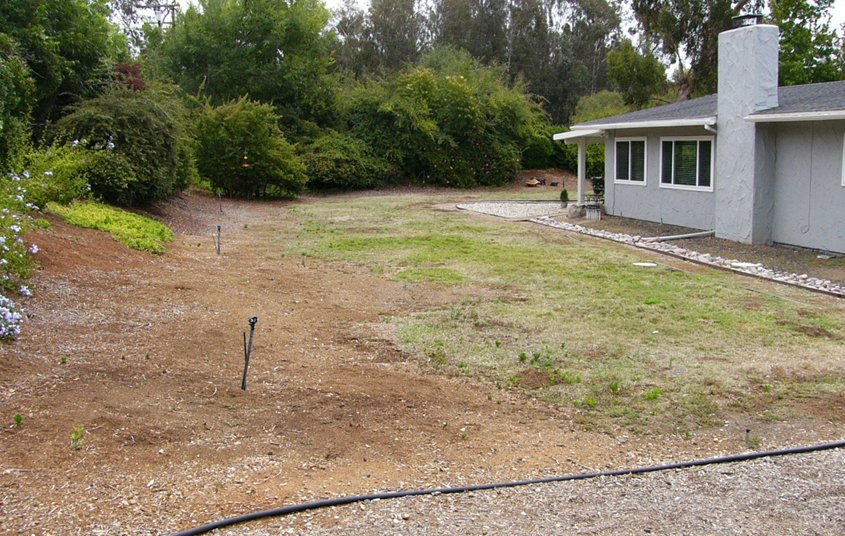
Lauren Grey's landscaping before its winning makeover. Photo: Vista Irrigation District Vista 2021 Contest

Lauren Grey’s landscaping before its winning makeover. Photo: Vista Irrigation District

Winning plan solves erosion problem with beautiful blooms

The “Best in District” award went to Lauren Grey. What started as a project to halt the rush of soil down a steep front slope turned into a multi-hued garden with a view from the top. Grey renovated her front slope and landscape by installing retaining walls surrounded by beds of colorful blooms. She lined the staircase zigzagging through the hillside with a variety of potted succulents. Bright orange poppies, lush green jade, silvery Ghost Plants, and Purple Heart Tradescantia dot the slope.

Lauren Grey’s landscaping solved her problems with a troublesome slope. Photo: Vista Irrigation District

The winning result is an explosion of color. “What fun to have a beautiful garden and a sweet place to sit and contemplate it all!” said Grey.

“With rebates available for turf removal, now is a great time to replace your lawn with a beautiful WaterSmart landscape,” said Brent Reyes, VID water conservation specialist.

Drought-tolerant results receive recognition

Homeowners Deborah Brandt and Dorothy Wagemester received honorable mentions for their outstanding projects.

The "before" look at the Wagemester landscaping. Photo: Vista Irrigation District Vista 2021 Contest

The “before” look at the Wagemester landscaping. Photo: Vista Irrigation District

The Wagemesters wanted to conserve water and create an inviting natural haven on their property. A meandering hardscape pathway lined with a vibrant palette of drought-tolerant choices, including bougainvillea, trailing buttercups, sea lavender, and Cape plumbago replaced turf with a native garden.

The Wagemester home's attractive new waterwise landscaping. Photo: Vista Irrigation District Vista 2021 Contest

The Wagemester home’s attractive new waterwise landscaping. Photo: Vista Irrigation District

Magenta blooms of an Eastern Redbud tree pop against foxtail agaves and Kaleidoscope Abelia.

“While spring is our favorite season, we now have color all year long,” said Dorothy Wagemester.

Deborah Brandt's landscaping before its makeover. Photo: Vista Irrigation District Vista 2021 Contest

Deborah Brandt’s landscaping before its makeover. Photo: Vista Irrigation District

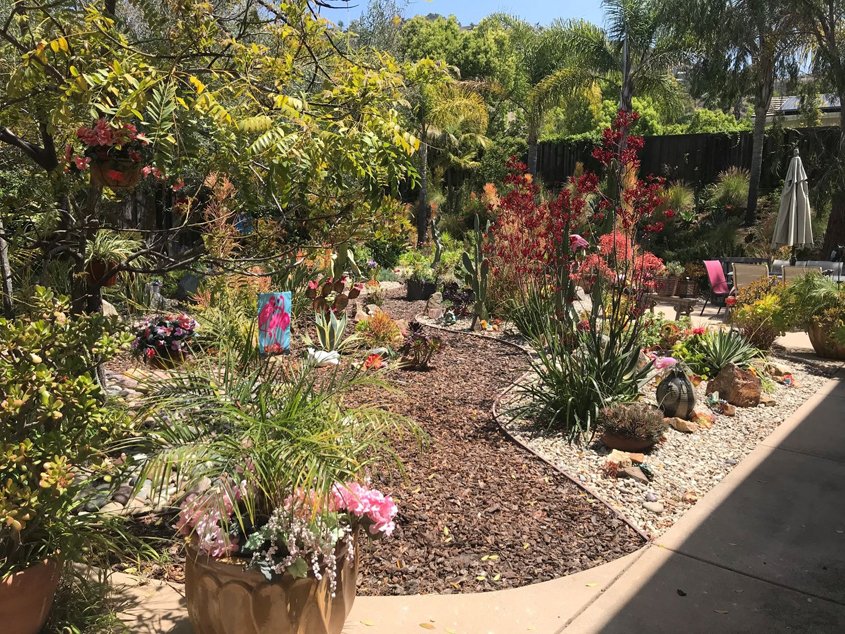
Brandt wanted to transform her plain backyard into a magical place. She started with river rock and added cactus and succulents in multiple shapes and sizes. Over time, she mixed in yard art and chimes, creating charming surprises. Brandt installed drip irrigation and two rain barrel water collection systems to reduce her water use.

The Brandt home with its new drought-tolerant landscaping. Photo: Vista Irrigation District Vista 2021 Contest

The Brandt home with its new drought-tolerant landscaping. Photo: Vista Irrigation District

Brandt “gave away the lawnmower” due to the transformation into a low-maintenance, WaterSmart paradise where flowers bloom year-round.

(Editor’s note: The Vista Irrigation District is one of the San Diego County Water Authority’s 24 member agencies that deliver water across the metropolitan San Diego region.)

Native plant-sustainability-garden-landscapetracting pollinators like hummingbirds and butterflies. Image: Water Authority plant installation

Setting Objectives for Waterwise Landscaping Success

It takes time to learn about the concepts behind the watershed approach to creating a healthy and sustainable landscape. Once you have these concepts mastered, the most important step of all comes next.  Consider the goals you want to achieve in your garden for landscaping success.

It might be difficult to know where to start. Many people accept an ocean of green but thirsty lawn and never give much thought to landscaping goals. Consider one of these worthy objectives.

Waving goodbye to grass

Most native Southern California plants do well in hotter temperatures, so summer plant care is easy with a little planning. Photo: Annie Spratt/Pixabay

Most native Southern California plants do well in hotter temperatures, so summer plant care is easy with a little planning. Photo: Annie Spratt/Pixabay

  • Removing a thirsty lawn without using any chemicals, in a way that preserves the healthy soil microbes
  • Planting local California native plants that will attract birds, butterflies, and bees for pollination
  • Creating a child or pet-friendly garden without thorns or sticky grass seed heads
  • Planting fruit trees, edible vines, and shrubs, or vegetable gardens

Using irrigation efficiently

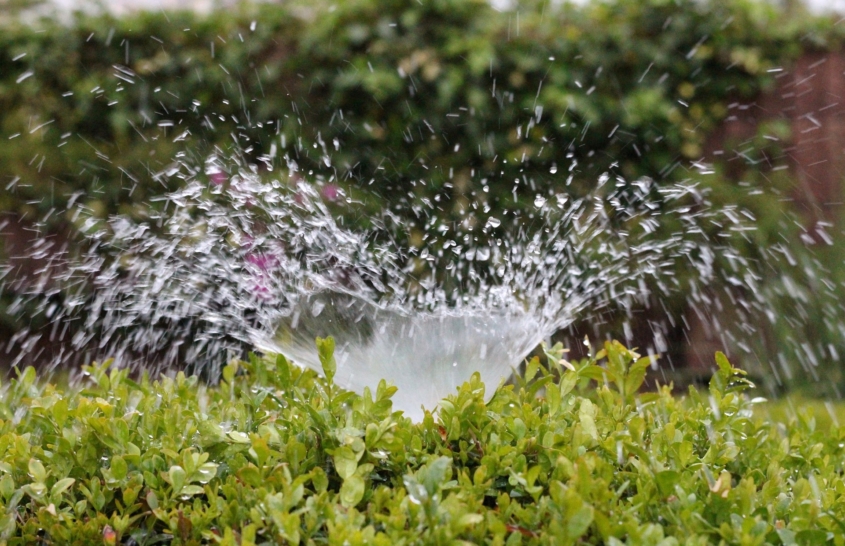
Well designed and operated irrigation systems can reliably deliver the water your landscaping needs without waste or excess. Photo: AxxLC/Pixabay

Well designed and operated irrigation systems can reliably deliver the water your landscaping needs without waste or excess. Photo: AxxLC/Pixabay

Building healthy living soil that will act like a sponge, even if it rains a lot

Capturing all the rainwater from the roof and re-routing downspouts to fill rain barrels instead of running onto hardscaping

Converting spray irrigation to micro or drip irrigation, with the intention of turning it off after establishing your waterwise landscaping

Making pathways and driveways more permeable

Making your landscaping an art project

San Marcos resident Jeff Moore's landscape makeover won recognition in the 2018 Landscape Makeover Contest. Photo: Water Authority

San Marcos resident Jeff Moore’s landscape makeover including artistic touches won recognition in the 2018 Landscape Makeover Contest. Photo: San Diego County Water Authority

Making room for a small patio with room for an outdoor table or seating

Adding pathways, Zen gardens, and interesting materials and patterns

Integrating beautiful objects such as an art piece, interesting container collection, or items like sundials

One goal we can all support: creating a beautiful sustainable landscape that reduces your water use by 70 percent or more. We can all agree on this definition of landscaping success no matter your individual goals.

This article is part of a year-long series inspired by the 71-page Sustainable Landscapes Program guidebook. The Water Authority and its partners also offer other great resources for landscaping upgrades, including free WaterSmart classes at WaterSmartSD.org.

Vista Irrigation District Logo

Vista Irrigation District Announces WaterSmart Landscape Contest Winners

Vista, Calif. — The Vista Irrigation District board of directors recognized customers for their entries in the district’s WaterSmart Landscape Contest. The annual contest recognizes outstanding water-wise residential landscapes based on the criteria of overall attractiveness, appropriate plant selection, design, appropriate maintenance, and efficient methods of irrigation.

Hard Work Pays Off for Padre Dam Landscape Makeover Winner

Frank Edward’s Santee home is bursting with bright colors and textures. Vibrant yellow, orange, red, green, and purple flowers, and drought-tolerant, native plants spring to life where there was once just dry and patchy grass.

“It was a lot of hard work but it was also a lot of fun,” said Edward. “It was great to see all of my labor come to fruition.”

The transformation from high maintenance lawn to vibrant design is the winner of the 2021 Padre Dam Municipal Water District Landscape Makeover Contest.

Nothing Icky About ‘Toilet-to-Tap’: Water Recycling Explained

Wastewater that recently swirled down a toilet bowl may be coming to your tap, in purified form, especially if you’re in a drought-stricken area where drinking water is increasingly scarce.

More municipal water systems in the West are considering water recycling, known in some places as “toilet-to-tap.” And Congress may begin supporting the idea as water systems scramble to find secure water supplies amid a decades-long drought driven by climate change, which may be the worst the region has experienced in more than a millennium.