Pollinator Paradise Wins 2026 Oceanside Landscape Makeover Contest
The 2026 winner of the City of Oceanside’s annual Landscape Makeover Contest created a beautiful water smart landscape focused on pollinator-friendly plants that became a personal legacy.
Oceanside resident Tom Watson and his wife Patti began working on landscape upgrades after being inspired during his regular neighborhood dog walks.
“I’d seen a lot of nice gardens going for walks with our dog,” said Watson. “It had been in my mind two years. Gee, it would be nice to have something more interesting than just grass, and if it’s good for the environment, that’s great too!”
Then Watson received information from the City of Oceanside about its WaterSmart Landscape Makeover Contest. The possibility of qualifying for a rebate for replacing non-functional turf got his attention.
“If you did a garden upgrade that met certain criteria for removing turf and replacing it in a certain way, you could qualify for a rebate,” recalls Watson. “So we did that.”
Swales Incorporated Into Design
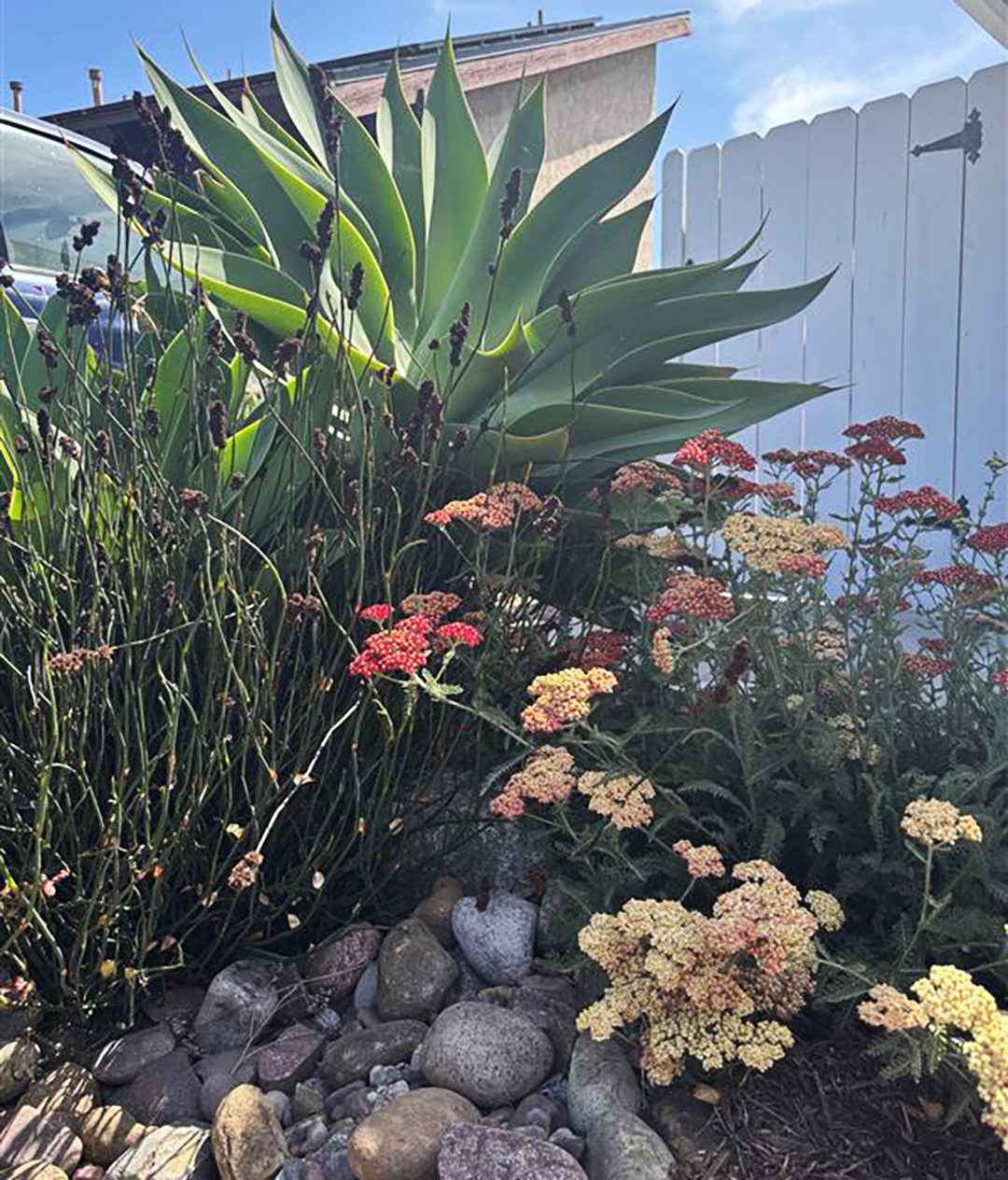
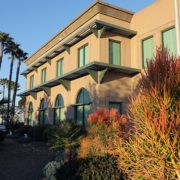
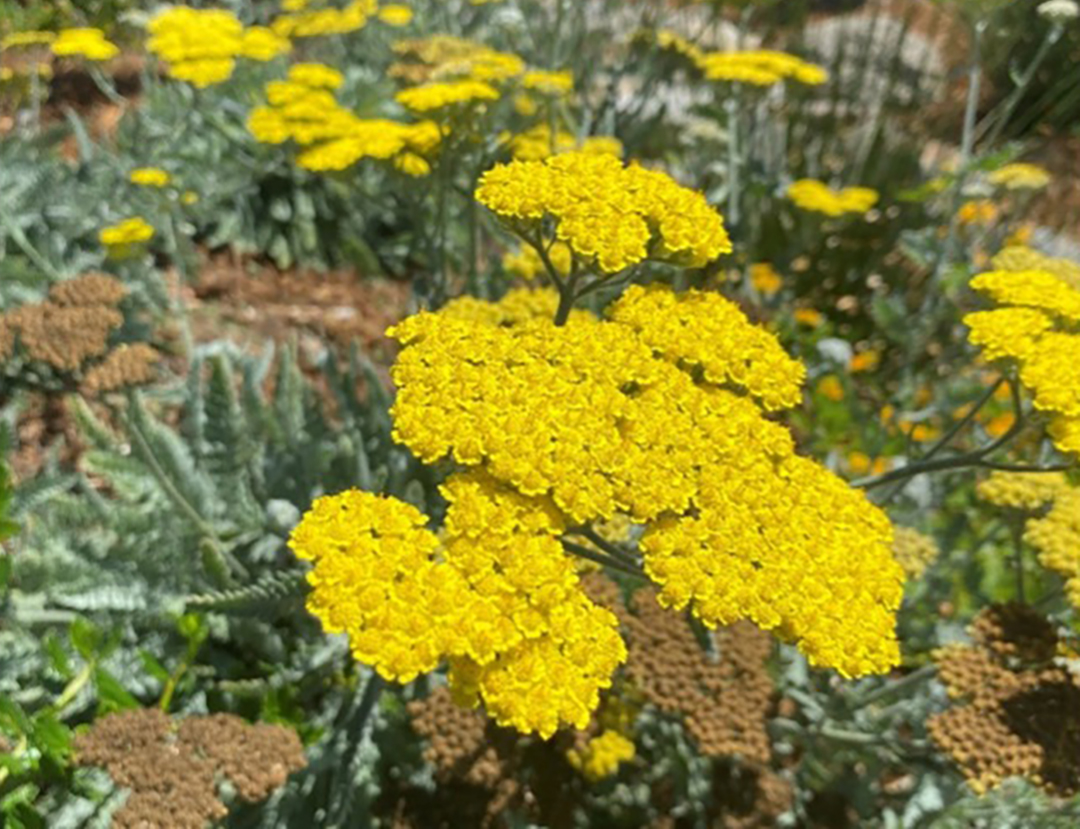
A large Agave Attenuata, Yarrow, and Small Cape Rush in the winning landscape. Photo: T. Watson/City of Oceanside
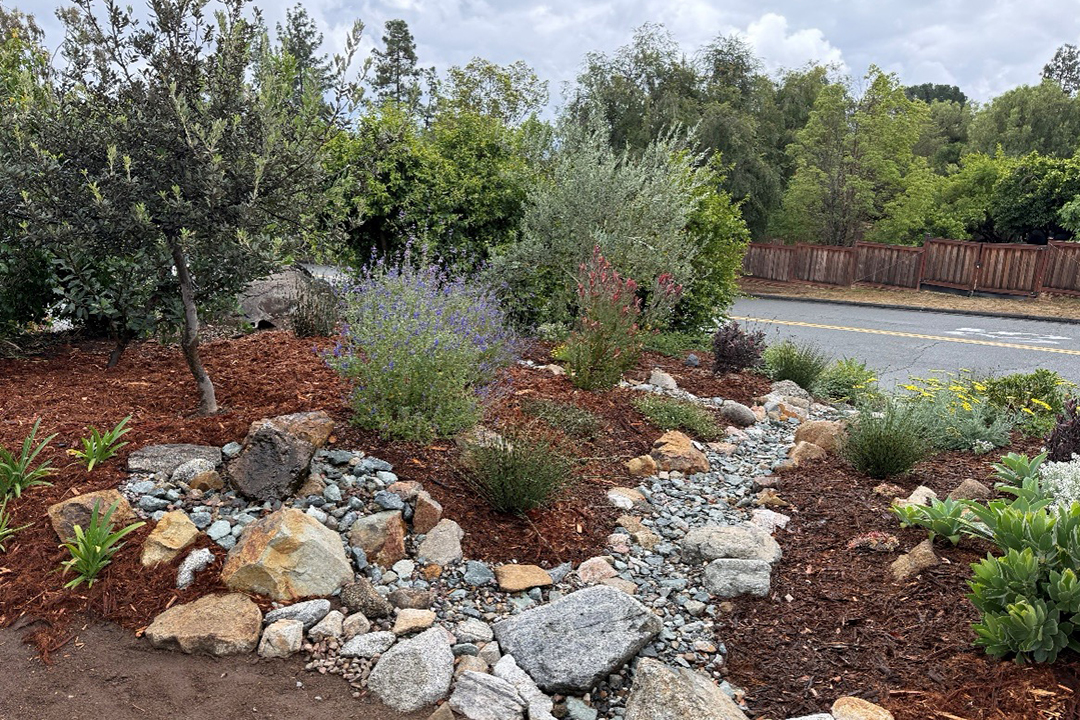
Watson worked with landscape designer Lisa Bellora of Ornamental Gardens by Lida. “I didn’t know much about this in the beginning, so I learned a lot,” said Watson. Bellora introduced him to the concept of integrated swales into the landscape. Swales manage stormwater runoff, prevent soil erosion, and encourage natural groundwater infiltration by slowing down water and directing it safely across a property.
“I thought it was great how she integrated the concept into the design,” said Watson. “There was also a lot more in the details of the drip irrigation systems, and how they have to be figured out.”
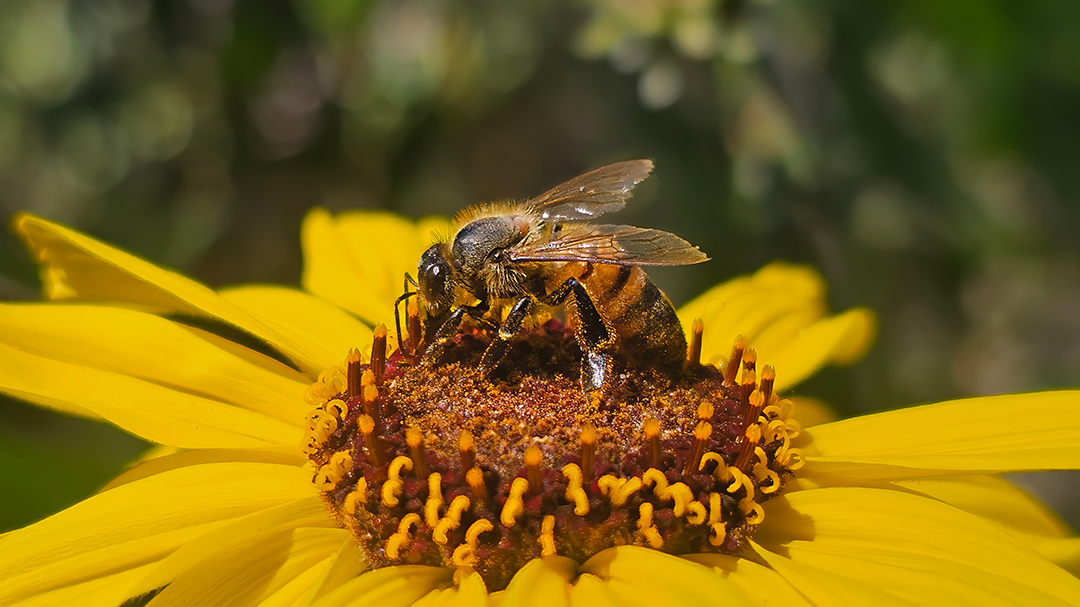
The heart of the garden is its plant palette, designed to attract pollinators. It was his late wife Patti’s idea, who insisted on it. “We did want a lot of butterflies and other critters, so we chose a lot of plants that are pollinator-friendly,” said Watson.
Plants used include Lantana, Coyote Mint, Elephant Food, Yarrow (Achillea M Paprika), ‘Winifred Gilman’ Pozo Blue and Cleveland Sages, Howard McMinn Manzanita (Arctostaphylos ‘Howard McMinn’), Marian Simpson Coyote Mint (Monardella), Agave Attenuata, and Small Cape Rush (Chondro El Campo).
Surprise Winner of 2026 Landscape Contest
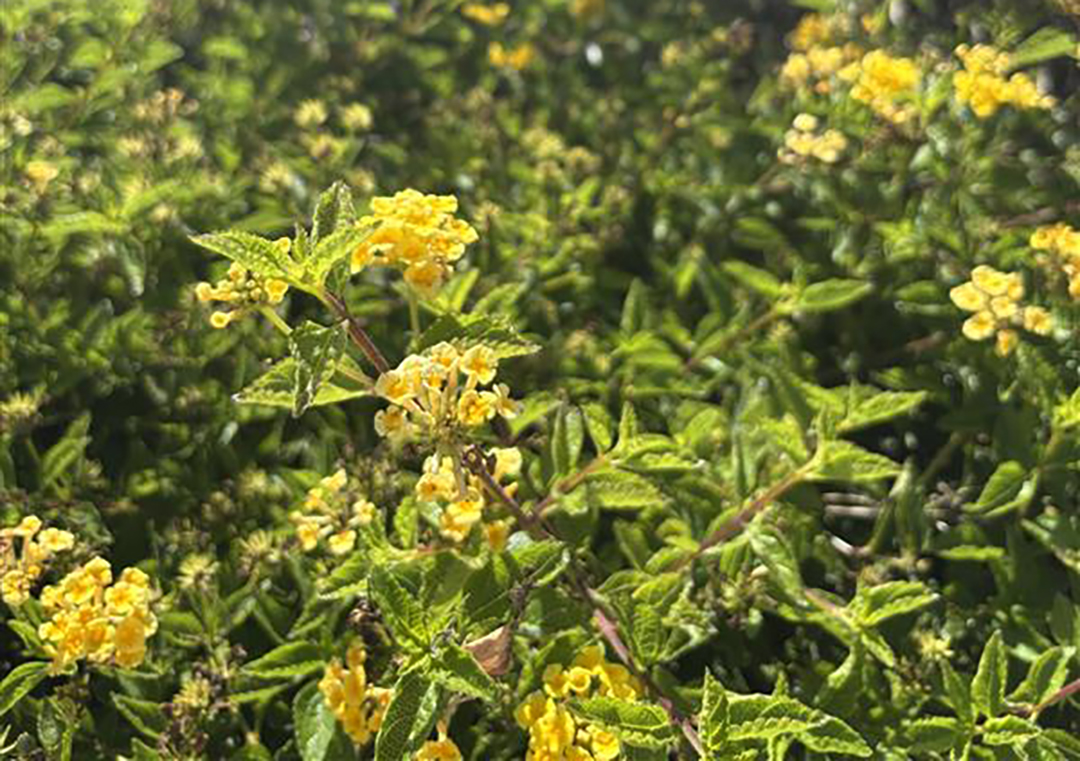
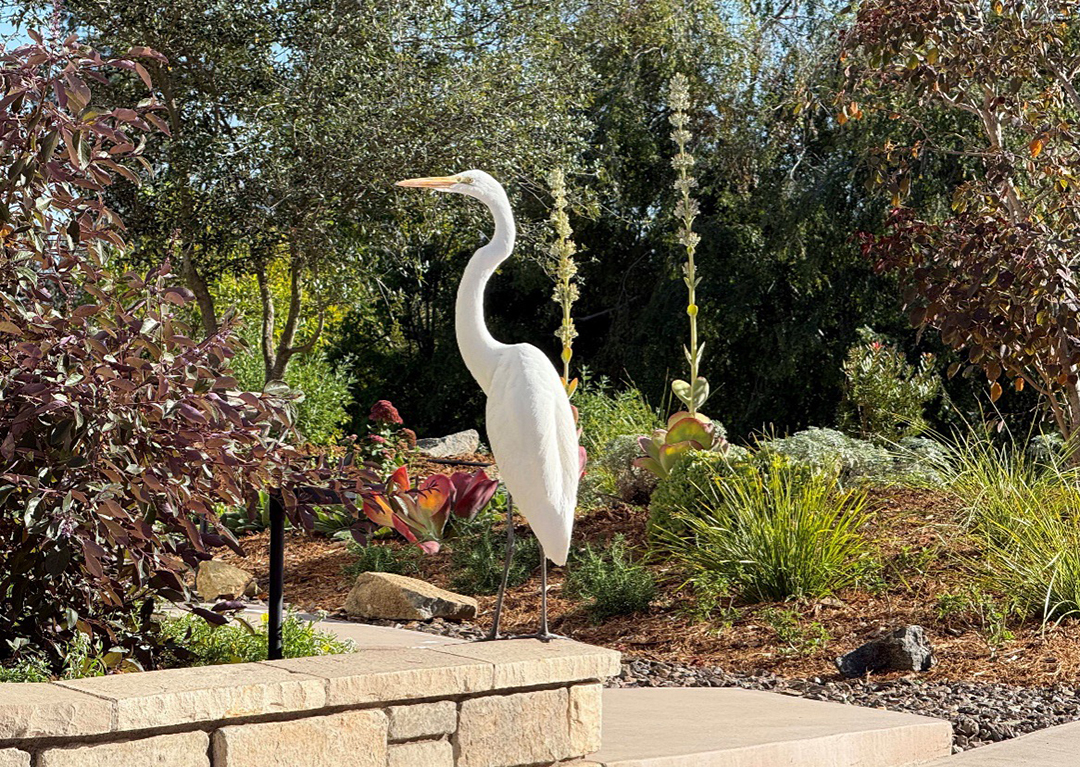
Yellow Lantana was added to the landscape to attract pollinators. Photo: T. Watson/City of Oceanside
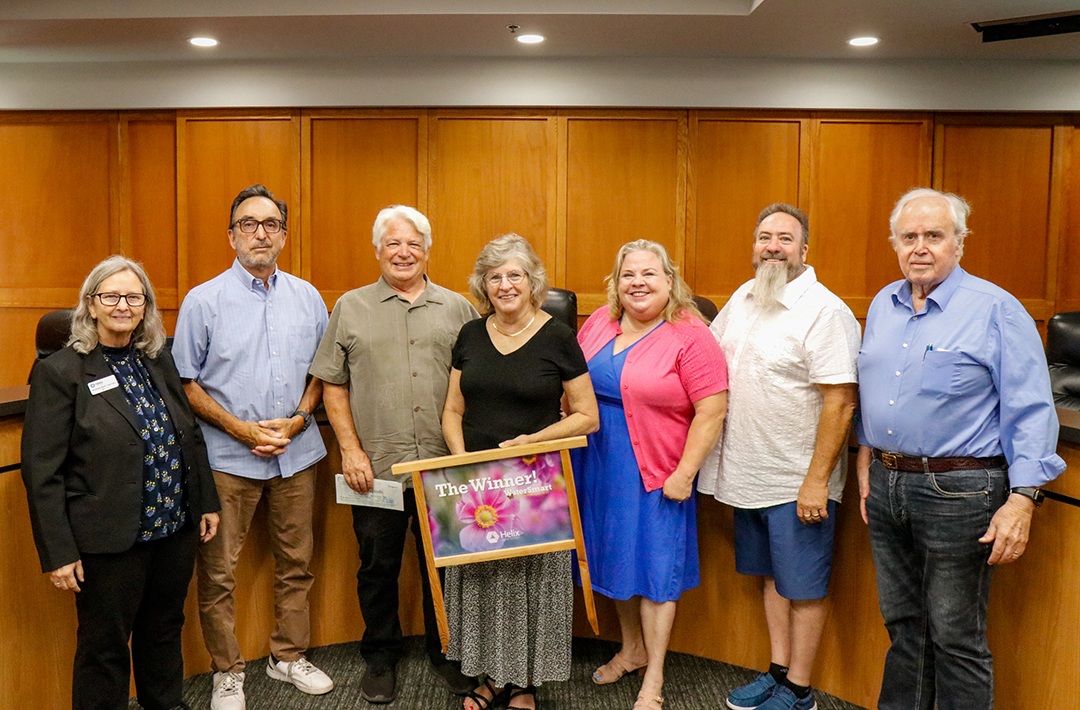
Once the yard was completed, Watson noticed the invitation to enter the contest earlier this year. “I said I’m gonna enter and see what happens,” said Watson. What happened was being named the 2026 winner.
“I have the certificate proudly on my refrigerator, next to the pictures of the grandkids! It’s like I got an A on my report card,” laughed.
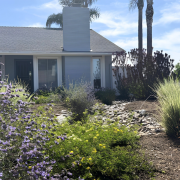
The winning result is a water-efficient garden full of vibrant color equally appealing to people and pollinators.
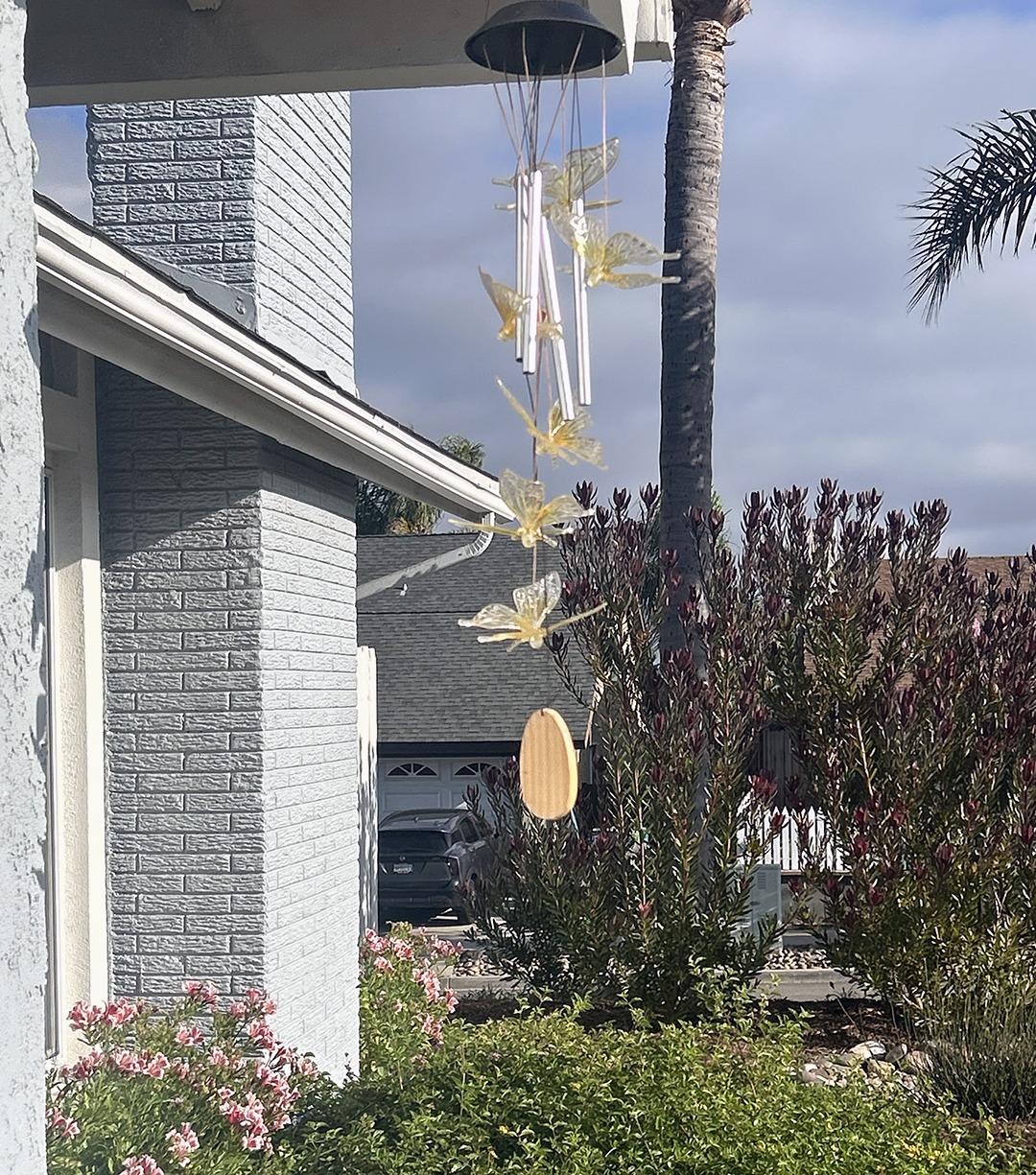
Tom Watson hung butterfly wind chimes in honor of his late wife, Patti Watson. Photo: T. Watson.
Patti Watson passed away before Tom Watson’s contest entry was submitted. Her reward was enjoying visits by the butterflies attracted to the new landscaping. The project became her living memorial. Watson added hanging butterfly wind chimes in her memory.
Homeowners undertaking a similar landscape makeover can review the San Diego County Water Authority’s “Happy 100” plant list to choose annuals, perennials, groundcovers, shrubs, and trees that provide color and thrive in our climate and soils with a minimal amount of irrigation. Find the list on the Water Authority website.