Tag Archive for: Water Conservation

snow survey-Sierra Nevada snowpack-drought-Phillips Station

Snow Survey: Good Start but Drought Relief Depends on Coming Months

The California Department of Water Resources first manual snow survey of the season Tuesday at Phillips Station recorded 55.5 inches of snow depth and a snow water equivalent of 17.5 inches, which is 177% of average for the location. The snow water equivalent measures the amount of water contained in the snowpack and is a key component of DWR’s water supply forecast. Statewide the snowpack is 174% of average for this date.

Survey: December storms delivered big snow totals

California is expected to see continued rain and snow over the next seven days, with the threat of flooding in parts of California. Conditions so far this season have proven to be strikingly similar to last year when California saw some early rainstorms and strong December snow totals only to have the driest January through March on record.

“The significant Sierra snowpack is good news but unfortunately these same storms are bringing flooding to parts of California,” said DWR Director Karla Nemeth. “This is a prime example of the threat of extreme flooding during a prolonged drought as California experiences more swings between wet and dry periods brought on by our changing climate.”

One year ago, the Phillips survey showed the seventh highest January measurements on record for that location. However, those results were followed by three months of extremely dry conditions and by April 1 of last year, the Phillips survey measurements were the third lowest on record.

More telling than a survey at a single location are DWR’s electronic readings from 130 stations placed throughout the state. Measurements indicate that statewide, the snowpack’s snow water equivalent is 17.1 inches, or 174%  of average for January 3.

Opportunities to save more water

“After three consecutive years of drought, the recent series of storms is a good start to the season,” said Jeff Stephenson, water resources manager with the San Diego County Water Authority. “However, we had a similarly strong early winter last year, which did not continue. While the Water Authority and its 24 member agencies have worked and continue to develop diverse water supply sources, there are still opportunities, including rebates, to save more water.”

In San Diego County, watersmartsd.org, provides sources of residential and business rebates, including indoor and outdoor incentives, and free landscape makeover classes. 

Stephenson added that the region has reduced its reliance on imported water supplies, including from the Sacramento-San Joaquin Bay Delta, which means more of that source is available for other parts of California.

Strong start but “a long way to go”

The January 2023 manual snow survey results are similar to results in 2013 and 2022 when the January 1 snowpack was at or above average conditions, only for dry weather to set in and lead to drought conditions by the end of the water year (September 30).

In 2013, the first snow survey of the season also provided promising results after a wet December similar to today’s results. However, the following January and February were exceptionally dry, and the water year ended as the driest on record, contributing to a record-breaking drought. In 2022, record-breaking December snowfall was again followed by the driest January through March period on record.

“Big snow totals are always welcome, but we still have a long way to go before the critical April 1 total,” said DWR’s Snow Surveys and Water Supply Forecasting Unit Manager Sean de Guzman. “It’s always great to be above average this early in the season, but we must be resilient and remember what happened last year. If January through March of 2023 turn out to be similar to last year, we would still end the water year in severe drought with only half of an average year’s snowpack.”

Sierra snowpack supplies 30% of California’s water

On average, the Sierra snowpack supplies about 30% of California’s water needs and is an important factor in determining how DWR manages the state’s water resources. Its natural ability to store water is why the Sierra snowpack is often referred to as California’s “frozen reservoir.” A below-average snowpack impacts water users across the state, putting further stress on the environment and critical groundwater supplies.

Due to these increasing swings from dramatically wet to dry conditions, Governor Newsom’s recently released “California’s Water Supply Strategy, Adapting to a Hotter, Drier Future” calls for investing in new projects and technologies that will modernize how the state manages water.

Current climate research indicates the state will see bigger swings from extreme heat and dry conditions to larger and more powerful storms that deliver temporary large boosts to the state snowpack as well as flood risk.

DWR encourages Californians to visit SaveOurWater.com for water saving tips and information, and to continue to conserve California’s most precious resource, rain or shine. DWR conducts five snow surveys at Phillips Station each winter near the first of each month, January through April and, if necessary, May. The next survey is tentatively scheduled for February 1.

How Record Snowfall Could Soften the 2023 Drought Season

NPR’s Ari Shapiro talks with Andrew Schwartz of the UC Berkeley Central Sierra Snow Lab about how record snowfall in western states could mean a less drought-ridden 2023.

Turn Off Irrigation During and After Rainstorms

A series of storms bringing much needed rain to the San Diego region is also a reminder for residents and businesses to turn off irrigation systems when wet weather is predicted and for at least a week after significant rainfall.

While a series of atmospheric rivers is boosting Sierra snowpack and easing dry conditions statewide, there is still a long way to go to overcome three extremely dry years. Water-saving actions today can help conserve more of our most precious natural resource for when it’s needed most.

San Diego County Water Authority And its 24 Member Agencies

Turn Off Irrigation During and After Rainstorms

A series of storms bringing much needed rain to the San Diego region is also a reminder for residents and businesses to turn off irrigation systems when wet weather is predicted and for at least a week after significant rainfall.

While a series of atmospheric rivers is boosting Sierra snowpack and easing dry conditions statewide, there is still a long way to go to overcome three extremely dry years. Water-saving actions today can help conserve more of our most precious natural resource for when it’s needed most.

WNN Top Stories of 2022-WNN-Water News Network-Top Stories

Water News Network Top Stories of 2022

The Water News Network top stories of 2022 were drought-related and features about technology and college scholarships also engaged readers.

Water News Network Top Stories of 2022

The #1 Water News Network Top Story of 2022 focused on scholarship opportunities for water industry education and the growing need for water and wastewater industry workers:

Multiple California water associations and water agencies in San Diego County are offering college scholarships to help candidates achieve their goals.

A large number of recent retirements combined with the need for a skilled workforce up to date on new technologies have resulted in a critical need to increase the talent pool of skilled individuals in the water and wastewater industry, including in San Diego County.

Funding water industry education and training

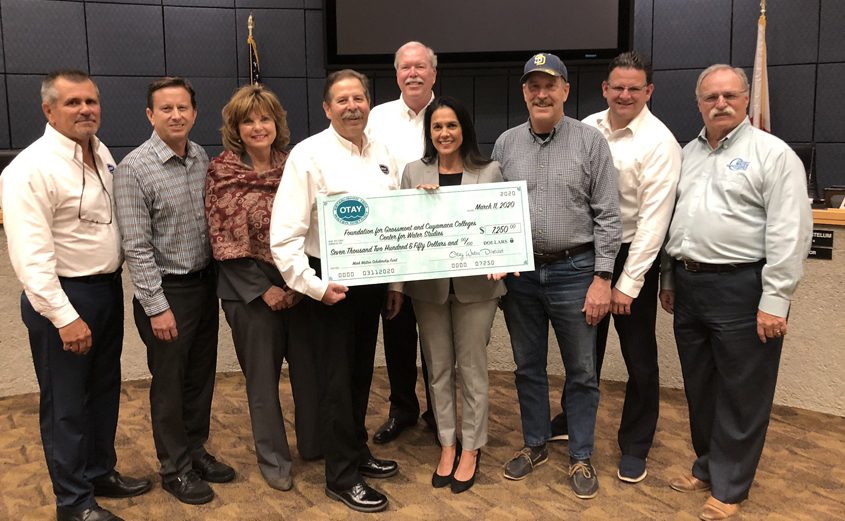
Otay Water District officials presents the first donation for a scholarship fund to Cuyamaca College President Dr. Julianna Barnes named after Otay General Manager Mark Watton. Photo: Otay Water District

Among the highlights in the January 20 story, was news about the Mark Watton Scholarship Fund, established by the Otay Water District at the Foundation for Grossmont and Cuyamaca Colleges. The fund supports students attending the Center for Water Studies at Cuyamaca College. It honors Otay Water District General Manager Mark Watton’s four decades of service to the district.

Patent for pipeline inspection system

The #2 most viewed story on the Water News Network in 2022 highlighted an innovative tool to inspect pipelines developed by the San Diego County Water Authority:

The Water Authority has been granted its first ever utility patent for a device that inspects interior sections of water pipelines that are inaccessible or not safe to inspect without expensive specialized gear and training.

Industry-leading asset management program

Water Authority Operations and Maintenance Manager Martin Coghill invented the tool to save time, reduce costs and improve safety during ongoing aqueduct inspections. The Water Authority’s industry-leading Asset Management Program includes a proactive search for pipeline weaknesses that can be addressed before they become large and costly problems.

The U.S. Patent and Trademark Office awarded Patent #US011,293,581 on April 5, 2022, for the Water Authority’s pipeline inspection system, which comprises a body, cameras, support members and light sources to capture high-resolution images of pipeline walls.

Utility Patent-Pipeline Inspection Tool-

The San Diego County Water Authority has been granted its first ever utility patent for a device that inspects interior sections of water pipelines that are inaccessible or not safe to inspect without expensive specialized gear and training. Inventor Martin Coghill calls the tool “Scanny.” Photo: San Diego County Water Authority

Commitment to innovation

“This new pipeline inspection tool is a prime example of the Water Authority’s commitment to innovation that benefits ratepayers by saving money and enhancing reliability,” said Water Authority General Manager Sandra L. Kerl. “We have a long history of advancing industry-leading solutions, from state legislation to adopt low-flow toilets in the early 1990s to the nation’s largest water conservation-and-transfer program a decade later to the largest seawater desalination plant on the continent.”

Rebates and water conservation

The third most-viewed story detailed the California state tax breaks available and rebates to remove grass and save money, as California edged into the fourth consecutive year of drought:

A newly signed state law exempts local rebates for grass replacement from state income tax, ensuring more dollars can be spent creating beautiful and functional WaterSmart yards.

“Drought conditions make it imperative to boost water conservation in San Diego County and across the state,” said Sandra L. Kerl, general manager of the San Diego County Water Authority. “Using California tax incentives and regional rebates to install WaterSmart landscapes is a clear winner for stretching water supplies both today and for generations to come.”

The WNN feature story alerted homeowners and businesses in San Diego County that they are eligible to receive between $2 and $4 per square foot for removing grass and replacing it with low water-use plants that are better suited to withstand the hot and dry conditions that continue to hammer the West. All customers are eligible for the base rebate of $2 per square foot, but other agencies offer additional funding, including the City of San Diego and the County of San Diego.

Check latest rebates here: your-water/conservation/residential-rebates-programs

Claude “Bud” Lewis Carlsbad Desalination Plant

100 billion gallons-reverse osmosis-seawater desalination

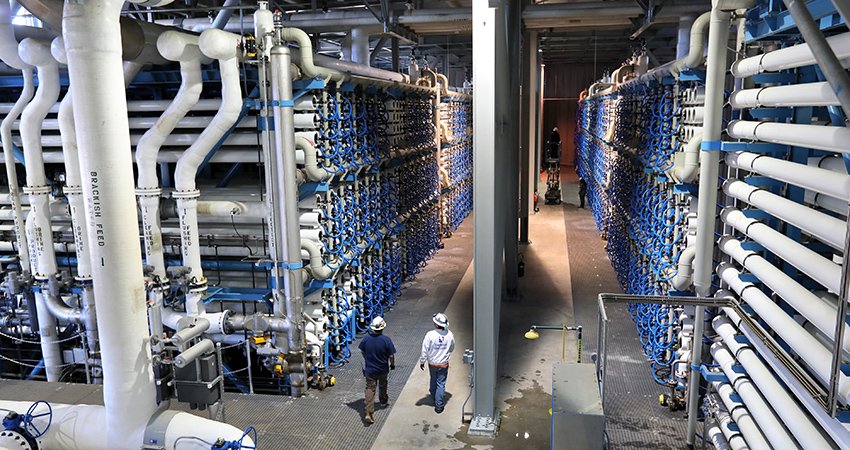
Reverse osmosis is the heart of the Carlsbad Desalination Plant. During this process, dissolved salt and other minerals are separated from the water, making it fit for consumption. This reverse osmosis building contains more than 2,000 pressure vessels housing more than 16,000 reverse osmosis membranes. Photo: San Diego County Water Authority

Drought-proof supply

Coming in as the 4th most popular story on the WNN in 2022 was the benefit of seawater desalination providing a drought-proof supply for San Diego County:

As the worst drought in 1,200 years grips the West, the Claude “Bud” Lewis Carlsbad Desalination Plant is protecting the San Diego region with 50 million gallons a day of drought-proof water.

Completed in 2015, the plant was built before the period of increasing inflation that’s driving up prices for water infrastructure projects that are just starting. That means the desal plant is safeguarding the region’s economy and quality of life today at a lower cost than it would be to build now.

Carlsbad Desalination Plant-Water Supply Portfolio-desalination

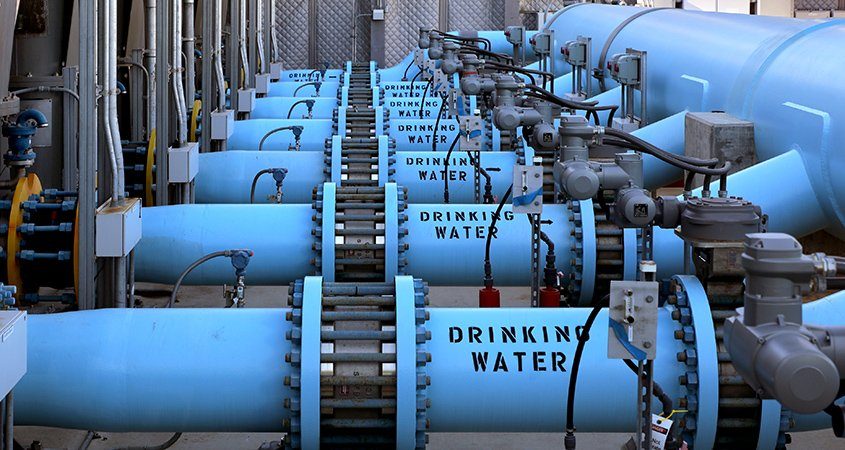
The Carlsbad Desalination Plant uses reverse osmosis to produce approximately 10% of the region’s water supply; it is a core supply regardless of weather conditions, and it is blended with water from other sources for regional distribution. Photo: San Diego County Water Authority

100 billion gallons

“Desalination remains a valuable tool for our community when it comes to ensuring safe and reliable water supplies no matter the weather,” said Jeremy Crutchfield, water resources manager for the Water Authority.  “It has shown its value by generating nearly 90 billion gallons over the past six years, and I’m confident it will continue to do so in the years ahead.”

In late-October 2022, the Carlsbad Desalination Plant passed a milestone, having served more than 100 billion gallons of high-quality, locally controlled water over the past seven years – as California entered a fourth consecutive year of severe drought.

(Editor’s Note: Click on the years to see the most viewed stories from 2019, 2020, and 2021. The Otay Water District is one of the San Diego County Water Authority’s 24 member agencies that deliver water across San Diego County.)

San Diego County Water Authority And its 24 Member Agencies

Carlsbad Desalination Plant Upgrades to Protect Marine Life

December 15, 2022 – The San Diego County Water Authority’s Board of Directors today unanimously authorized an agreement with Poseidon Resources (Channelside) LP to make major upgrades to the Claude “Bud” Lewis Carlsbad Desalination Plant, as required by the state’s Ocean Plan Amendment. The new facilities ensure the plant will continue to meet California’s evolving standards for protecting marine life.

Drought Emergency Declared for All Southern California

As California faces the prospect of a fourth consecutive dry year, officials with the Metropolitan Water District of Southern California have declared a regional drought emergency and called on water agencies to immediately reduce their use of all imported supplies.

The decision from MWD’s board came about eight months after officials declared a similar emergency for 7 million people who are dependent on supplies from the State Water Project, a vast network of reservoirs, canals and dams that convey water from Northern California. Residents reliant on California’s other major supply — the Colorado River — had not been included in that emergency declaration.

San Diego County Supervisors OK Program to Increase Use of Native Plants

San Diego County supervisors voted 4-0 Wednesday in favor of a multi-year program to increase the use of native plants in the region.

The program was developed by the San Diego Regional Biodiversity Working Group, which formed via a proposal from Supervisors Nathan Fletcher and Terra Lawson-Remer.

Lawson-Remer said that more native plants aren’t just good for environment, they also benefit the regional economy in the form of more landscaping and related service jobs. She said the program will provide incentives to “residents, landscapers and businesses to protect the biodiversity that makes our region so beautiful and unique, as well as require native plants be used in many county projects.”

WaterSmart Makeover: Welcoming a Sense of Whimsy

Cathy and Mike Godfrey’s most recent front yard landscape project was not their first rodeo. The couple, who bought their Carlsbad house in August 1997 and are empty nesters with two adult daughters, are avid gardeners and DIYers.

Twenty years ago, Cathy dug 40 holes to sink posts for the white picket fence that encircles their small front yard. They reduced the scale of the lawn (mostly to discourage neighborhood dogs being walked from pooping on their property) and, for a tropical look, added palms and decorative plants like red fountain grass, which Cathy said they regretted.

(Editor’s Note:This is the second in an occasional series on winners of the annual WaterSmart Landscape Contest, conducted in partnership with the San Diego County Water Authority. To learn about entering the next contest, visit landscapecontest.com.)

Planned Upper Colorado River Basin Program Reboot Could Pay Water Users to Conserve

As climate change continues to shrink the Colorado River’s largest reservoirs, a group of four states that use its water are set to lay out plans to reboot a conservation program. The Upper Colorado River Commission – comprised of Colorado, Utah, Wyoming and New Mexico – plans to announce details of an extended “System Conservation Pilot Program” through which water users could be paid to cut back on their use.

The soon-to-be-launched program aims to use a pool of $125 million from the Inflation Reduction Act for payouts to “mitigate the impacts of long-term drought and depleted storage,” according to presentation slides obtained by KUNC.