Tag Archive for: Helix Water District

Jon Foreman of the San Diego band Switchfoot is among the many fans of The Water Conservation Garden in San Diego's East County. Photo: Water Authority

Water Conservation Garden Celebrates 20th Anniversary Nov. 16

Twenty years ago, people who saw a need to help people conserve water and preserve San Diego’s environment conceived the idea for a demonstration garden.

The Water Conservation Garden celebrates its 20th-anniversary Saturday, November 16 at 5 p.m. with a benefit concert featuring food and drink stations, dancing, auction items and live music provided by The Mighty Untouchables. More information and tickets are available on The Garden’s website.

Native San Diegan Jon Foreman of the Grammy-award winning band Switchfoot is among The Garden’s newest fans after a recent visit.

“It has been an amazing journey,” said CEO Jennifer Pillsbury. “We run six acres with educational exhibits for the public, but we also have a huge education program for the public. Last year we had 42,000 visitors and reached 88,000 kids. When we first opened, we were excited about 1,000 visitors.”

Water agencies and municipalities worked together to bring The Garden to life

The annual Spring Garden and Butterfly Festival is among The Garden's most popular annual events. Photo: The Water Conservation Garden

The annual Spring Garden and Butterfly Festival is among The Garden’s most popular annual events. Photo: The Water Conservation Garden

A task force of water agencies and municipalities conceived The Garden in response to six years of drought in San Diego County.

Otay Water District, Helix Water District, and Cuyamaca College kick-started the effort in 1990. By 1992, the San Diego County Water Authority, City of San Diego, and Padre Municipal Water District joined the effort, forming the original Water Conservation Authority.

The following year, the Grossmont-Cuyamaca Community College District approved the establishment of a 4.5-acre Water Conservation Garden adjacent to Cuyamaca College. With $700,000 in donated services, products, and labor from local nurseries and members of the California Landscape Contractors Association, the Water Conservation Garden came to life. San Diego County Supervisor Dianne Jacob presided over its grand opening in May 1999.

Over the past 20 years, The Garden has added its popular children’s exhibits, bird and butterfly gardens, the Dorcus Utter Memorial Sensory Garden, and the Dorcus Butterfly Pavilion.

“The Garden is here to inspire everyone to use all natural resources efficiently, not just water,” said Pillsbury. “When people see proper irrigation and the right plants in the right location with the right soil, having everything working together can be beautiful and efficient.”

Inspiring positive change in the living environment

Pam Meisner, also known as Ms. Smarty-Plants, started the conservation program in 2008 at the Water Conservation Garden. Photo: The Water Conservation Garden

Pam Meisner, also known as Ms. Smarty-Plants, started the conservation program in 2008 at the Water Conservation Garden. Photo: The Water Conservation Garden

The Water Conservation Garden has been governed as an independent nonprofit organization under its own Board of Directors since 2011. Memberships, donations, grants, facility rentals, gift shop sales, and water district dues fund operations.

With additional land donated by Cuyamaca College, The Water Conservation Garden now covers six acres of displays showcasing water conservation through its themed demonstration gardens and how-to displays on mulch and irrigation.

Students in the Cuyamaca College Ornamental Horticulture program benefit from hands-on education just steps away from their classrooms.

“Students come through and learn plant identification and experience lab learning,” said Pillsbury.

New smart classroom available soon at The Garden

The Garden's amphitheater seats 300 and will host its 20th anniversary benefit concert on Nov. 16. Photo: Water Conservation Garden

The Garden’s amphitheater seats 300 and will host its 20th-anniversary benefit concert on Nov. 16. Photo: The Water Conservation Garden

The Garden will open a new smart classroom available for business retreats, meetings, and seminars. Pillsbury also hopes to book more events in the 300-seat amphitheater.

Through its evolution and innovation, the mission of The Water Conservation Garden remains the same as it did on its opening day 20 years ago: to inspire positive change in the living environment through water conservation and the protection of natural resources.

“We’re here to educate the community on efficient water use, but we also want to be a spot where people can come learn and explore together in so many ways,” said Pillsbury.

Admission to The Garden is free. Docent-led tours take place on the first Saturday of each month at 10 a.m.
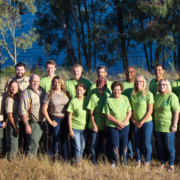

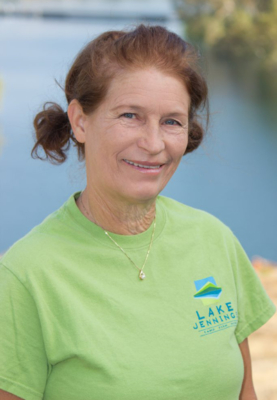
Lake Jennings staff including Recreation Manager Kira Haley (front row, fifth from left) rely on their dedicated volunteers including Lori Stangel (front row, sixth from left). Photo: Helix Water District

Volunteer Opportunities at Water Agency Reservoirs in San Diego County

People around the world know the San Diego region for its beautiful setting along the Pacific Ocean. But visitors, and even many local residents, aren’t aware of the recreational activities available year-round at area reservoirs.

There are 24 reservoirs in San Diego County. Of these, there are 18 fishable lakes and some offer overnight camping. Popular activities also include boating, kayaking, hiking, and picnicking.

Lake Jennings Reservoir, east of El Cajon, is called a “hidden jewel.” Lake Jennings Recreation Manager Kira Haley admits she didn’t know much about the lake even though she grew up in nearby La Mesa.

“It’s a beautiful resource, and it’s so close to home,” said Haley.

Volunteers help maintain the Lake Jennings campsites, which include five tipis. Photo: Helix Water DIstrict

Volunteers help maintain the Lake Jennings campsites, which include five tipis. Photo: Helix Water District

Volunteers help Lake Jennings operations become self-sustaining

Haley arrived in December 2014 with the goal of making the Lake Jennings self-sustaining. Recent park upgrades and an aggressive outreach program have attracted new visitors. The Helix Water District considered closing the park due to financial losses. But in 2018, Lake Jennings Park made a profit for the first time.

Onsite volunteers make a significant contribution to park operations. Onsite volunteers live full-time at Lake Jennings in campers and trailers in exchange for campsite space and electricity. They perform key roles by staffing the information and registration kiosk, monitoring and maintaining the 97 campsites, answering questions, and responding on-call 24 hours. All volunteers receive training in first aid and evacuation procedures.

“We find the volunteers through word of mouth or regular campers who retire,” said Haley. “Some work other jobs and still volunteer 24 hours each week. Their backgrounds are varied. Some have been with us for many years.”

Visitors can enjoy hiking year-round at Lake Jennings. Trail maps are available from volunteers at the campground kiosk. Photo: Helix Water District

Visitors can enjoy hiking year-round at Lake Jennings. Trail maps are available from volunteers at the campground kiosk. Photo: Helix Water District

Eight campsites are home to the volunteers, whether individuals or couples. Haley is currently recruiting new volunteers. The Helix Water District oversees the hiring process. Applications are now available on the Helix Water District website jobs page.

“It’s wonderful to live in a place like this in a natural open space situation,” said Haley. “There is a grocery store a mile away, but when you’re here, you feel like you’re in the wilderness. Everyone who comes out here is looking to have a great time. It makes for a wonderful work environment.”

Retired teacher puts her experience to work at Lake Jennings

Volunteer Lori Stangel arrived at Lake Jennings five years ago intending to stay six months, but is still a dedicated onsite volunteer host. Photo: Helix Water District

Intending to stay six months, Lori Stangel has worked as an onsite volunteer host for five years. Photo: Helix Water District

Retired kindergarten teacher Lori Stangel returned to her native San Diego after working in Arizona. She and her husband Chuck found a notice online about Lake Jennings volunteer opportunities and thought the six-month assignment would provide an ideal transition. Five years later, the Stangels are still living and working at Lake Jennings.

“I love nature, and I love being outdoors,” said Lori Stangel. “I love working with the public, and I work for the best staff and administration at Helix you can imagine. They make me feel welcome; it means a lot to me.”

Stangel puts her 30 years of experience as an educator into her volunteer role.

“I get to educate people and families about nature through the outdoors,” said Stangel. “It’s a wonderful opportunity for retired people, but also for young people. They can still go to school or work part-time. It’s a win-win. I’m here because I love it.”

As a Ms. California Senior America pageant competitor, Stangel also spreads the word about Lake Jennings as a valued environmental resource in her personal advocacy platform.

Additional San Diego County Water Authority member agency recreational facilities with volunteer opportunities include Santee Lakes, Padre Dam Municipal Water District, and Elfin Forest Recreational Reserve, Olivenhain Municipal Water District.

See And Learn How Water Is Delivered To Your Home

This Saturday, October 26, Helix Water District is hosting Helix Water Talks, a behind-the-scenes look at how their field operations crews maintain the vast water distribution system that delivers water from their treatment plant in Lakeside to 276,000 people in El Cajon, La Mesa, Lemon Grove and Spring Valley.

The free event begins 8:30 a.m. at 1233 Vernon Way in El Cajon with coffee and bagels and includes a 2-hour walking tour of their operations center in El Cajon. Participants will see and learn how the district repairs broken water mains, installs service lines to homes and maintains water meters.

Pure Water Oceanside Project Construction Slated for 2020

The City of Oceanside is joining the City of San Diego and East San Diego County in adding advanced purified water to its drinking water supply. The Pure Water Oceanside project is expected to break ground next spring and begin producing advanced purified water in 2022.

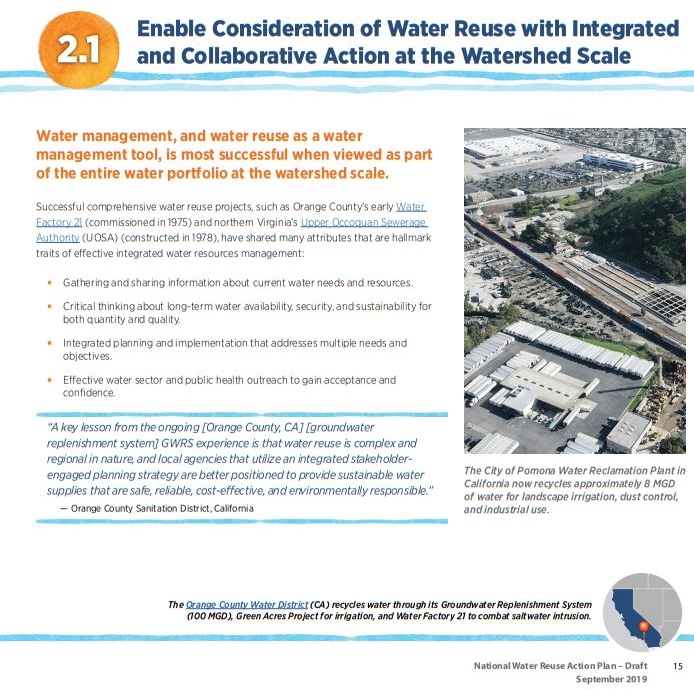
The Padre Dam Municipal Water District, Helix Water District and the City of San Diego, are among the water agencies in San Diego County that are developing or expanding water recycling to increase the local water supply.

Lake Jennings - East County Advanced Water Purification Program - Woranuch Joyce

EPA Action Plan to Boost Water Reuse Across U.S.

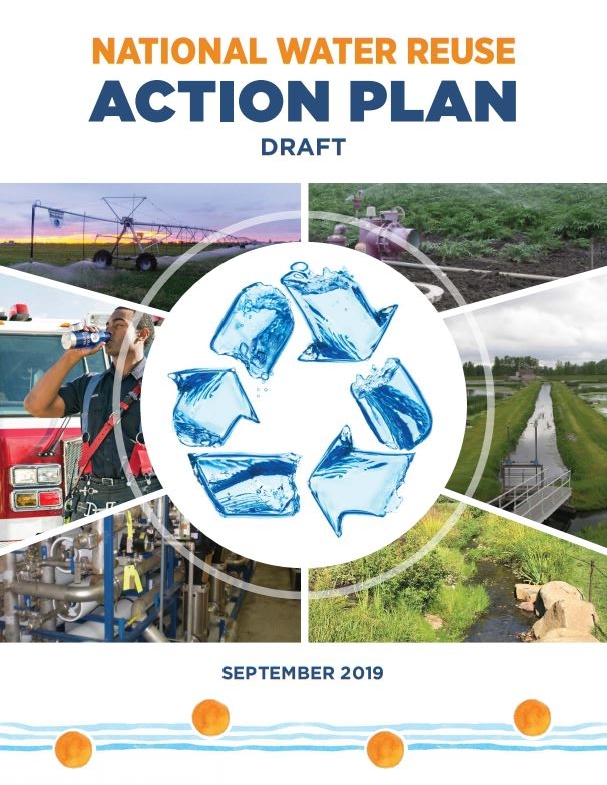
The U.S. EPA today released a draft plan to advance water reuse nationally at the WateReuse Association Symposium in San Diego.

The National Water Reuse Action Plan identifies 46 proposed actions organized around 10 strategic objectives, including leadership and collaboration, to support the implementation of water reuse.

“Forty states anticipate experiencing fresh water shortages in certain regions within their borders over the next decade,” said David Ross, EPA’s assistant administrator for water. “Diversifying our nation’s water portfolio must be a nationwide priority, and water reuse has the potential to ensure the viability of our water economy for generations to come.”

The draft plan incorporates federal, state, tribal and local water perspectives and highlights key actions that support consideration and implementation of water reuse.

The San Diego County Water Authority and its 24 member agencies have worked for decades to increase the region’s water supply reliability through supply diversification, and the Water Authority collaborated with its member agencies to submit comments to the EPA before the draft was released.

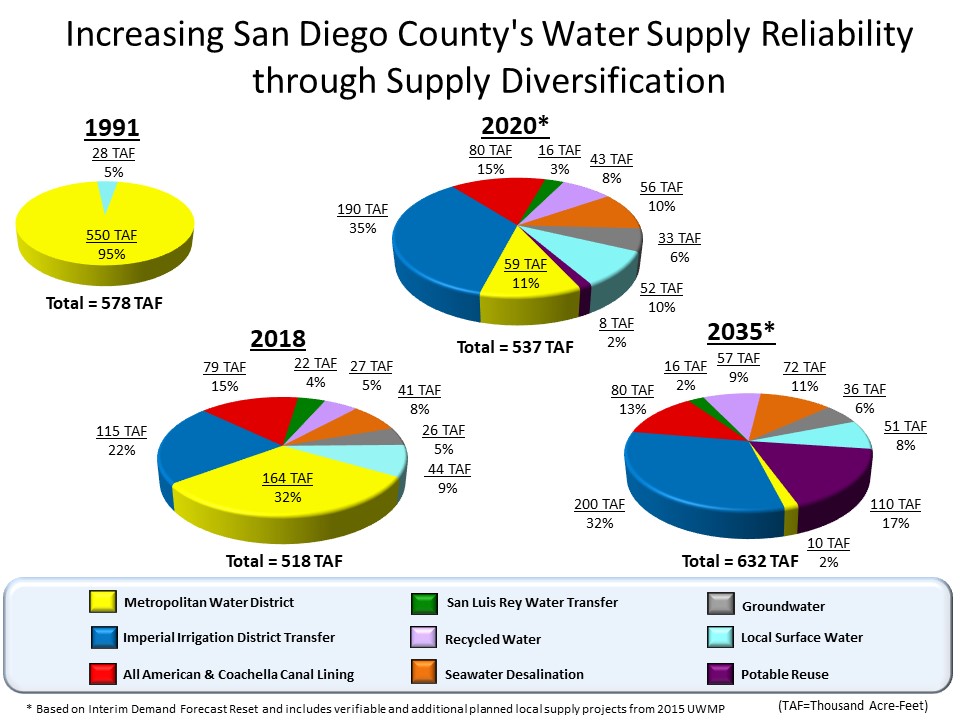
Increasing San Diego County's Water Supply Reliability through Supply Diversification

Recycled water and potable reuse are forecast to make up more than one-quarter of San Diego County’s water supply by 2035. Graphic: San Diego County Water Authority

National Water Reuse Action Plan a ‘game changer’

The draft plan will be open for public comment for 90 days following its publication to the Federal Register. During that period, EPA will solicit feedback about how to prioritize and implement the proposed actions.

EPA’s goal is to issue a final plan that will include clear commitments and milestones for actions that will further water reuse to bolster the sustainability, security and resilience of the nation’s water resources, according to the agency.

“The National Water Reuse Action Plan will be a game changer,” said Patricia Sinicropi, executive director of the WateReuse Association. “Communities across the country are incorporating water reuse into their water management strategies as a proven method for ensuring a safe, reliable, locally controlled water supply – essential for livable communities, healthy environments, robust economies and a high quality of life.”

EPA Action Plan to Boost Water Reuse Across U.S.

The U.S. EPA released a draft National Water Reuse Action Plan on September 10, 2019 in San Diego. Graphic: EPA

San Diego County agencies developing water reuse and recycling

In San Diego County, several agencies are developing or expanding water recycling plans, including the City of San DiegoPadre Dam Municipal Water District, Helix Water District, the City of Oceanside, and several additional projects in North County.

Padre Dam Demonstration Facility-Padre Dam MWD photo

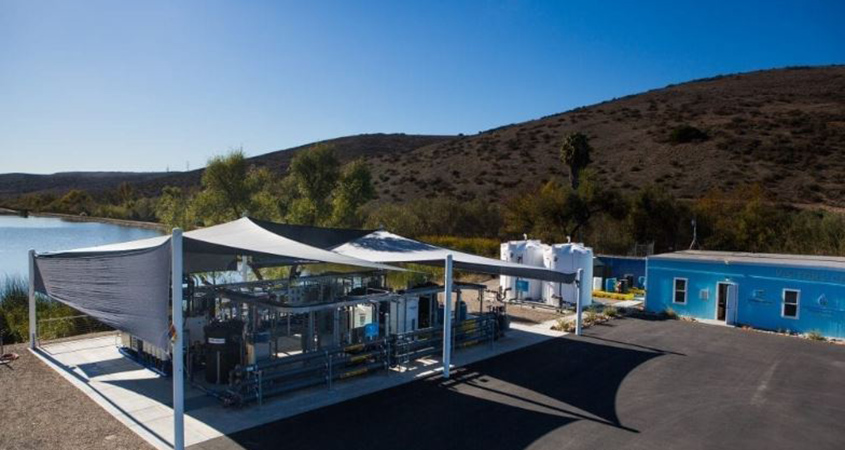
Padre Dam’s demonstration project is evaluating the feasibility of the East County Advanced Water Purification Program. Since March 2015, the pilot program has produced approximately 100,000 gallons of purified water each day. Photo: Padre Dam MWD

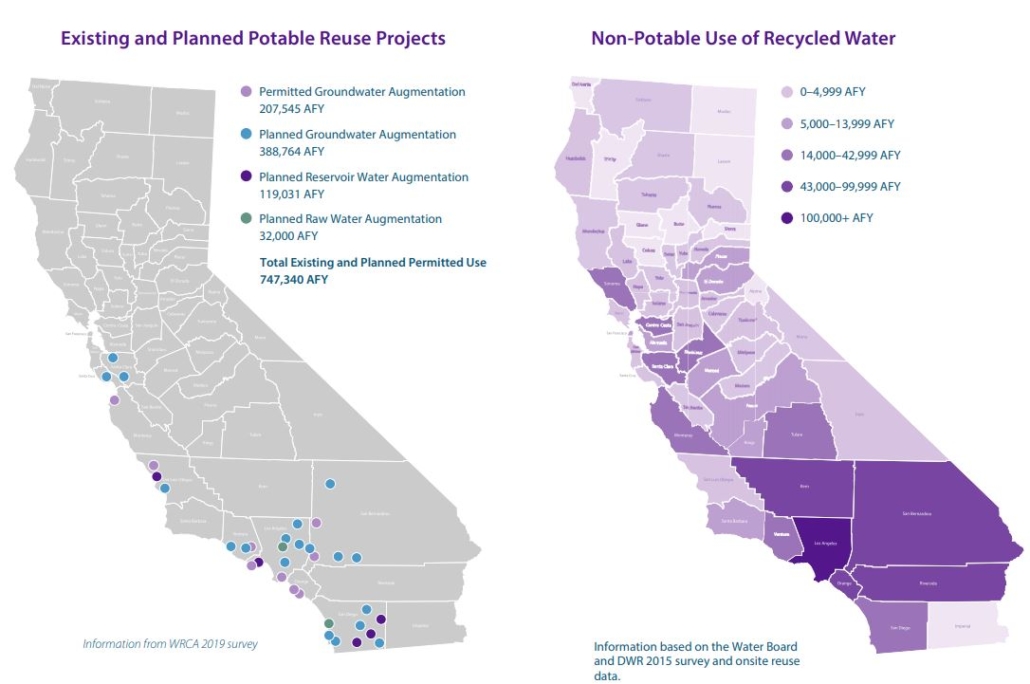
“California is widely recognized as a national and world leader in water recycling,” according to the California WateReuse Action Plan, released in July 2019. “Recycled water supplies offset approximately 9% of the state’s urban water demands and agricultural reuse provides reliable water supplies for farmers throughout the state.”

In July, the Water Authority Board endorsed Governor Gavin Newsom’s Executive Order N-10-19, directing development of a water resilience portfolio approach that meets the needs of California through the 21st century.

On July 18, state officials toured San Diego County water infrastructure to see the region’s successful water portfolio approach for supply diversification, as they work to create the statewide water resilience portfolio.

EPA Action Plan to Boost Water Reuse Across U.S.

The EPA Draft National Water Reuse Action Plan cites examples from California water agencies. Graphic: EPA

The Fall 2015 Citizens Water Academy tours the Olivenhain Reservoir. Photo: Water Authority Citizens Water Academy Applications

Citizens Water Academy ‘Inspiration’ for Water Agency Board Members

The Citizens Water Academy helps educate civic leaders, and many graduates have gone on to become water agency board members in San Diego County.

The application and nomination period remains open for the Fall 2019 class of the San Diego County Water Authority’s pioneering Citizens Water Academy.

The closing date is September 18. More than 700 people have completed the award-winning program since 2014.

The Citizens Water Academy provides an opportunity for emerging civic leaders to learn about visionary local efforts to ensure a safe and reliable water supply for the San Diego region. Participants get an in-depth look at how the Water Authority helps the region’s economy and quality of life through strategic planning, innovative programs, and cost-effective investments.

The first two sessions are at the Helix Water District’s operations headquarters in El Cajon on October 11 and 16, and the third session is in Escondido at the Water Authority’s Escondido operations center on October 25.

Citizens Water Academy ‘a catalyst’ for Gracyk

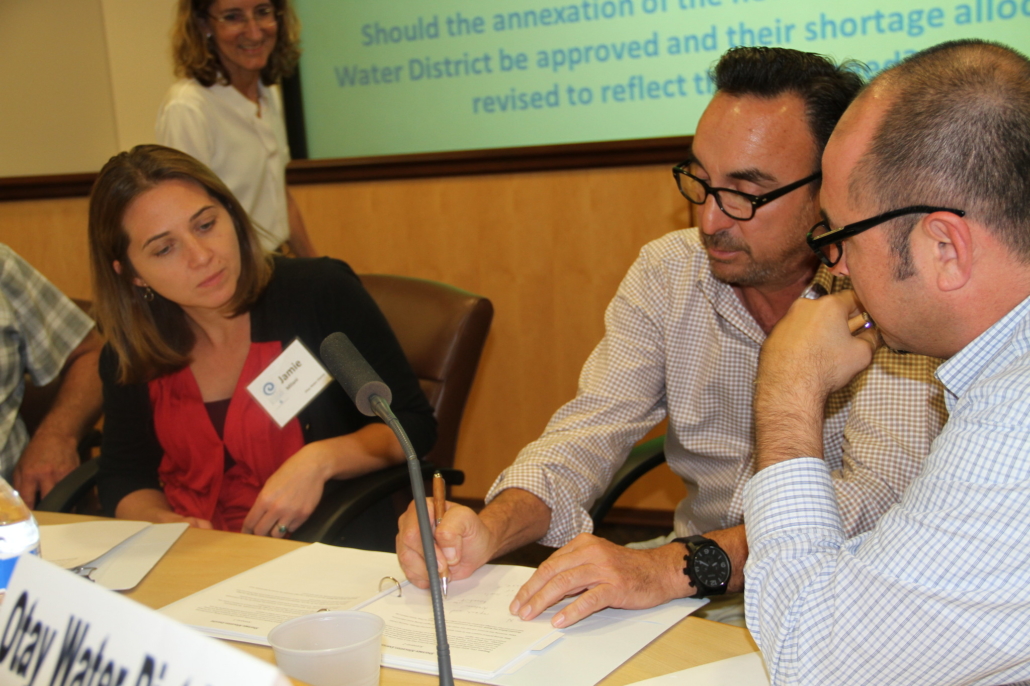
Mark Gracyk (center) participates in a role playing exercise during the Winter 2016 Citizens Water Academy. Photo: Water Authority Water Academy Applications

Mark Gracyk (center) participates in a role playing exercise during the Winter 2016 Citizens Water Academy. Photo: San Diego County Water Authority

Helix Water District board member Mark Gracyk attended the Citizens Water Academy in Winter 2016.

“As an average citizen, most people don’t know much about what’s involved about getting their water,” said Gracyk. “I didn’t have a macro view of the whole system. I really looked forward to the classes and I learned so much. It’s kind of jam packed, it’s like a cram course. But you really learn a lot in those short three or four days.”

Gracyk says the Citizens Water Academy was “a catalyst” inspiring him to run for the Helix board in 2016.

“I took what I learned and it helped in my campaign, and to be an more effective elected official,” said Gracyk.

Local leaders become better informed

Citizens Water Academy participants tour the Claude "Bud" Lewis Desalination Plant in Carlsbad. Photo: Water Authority

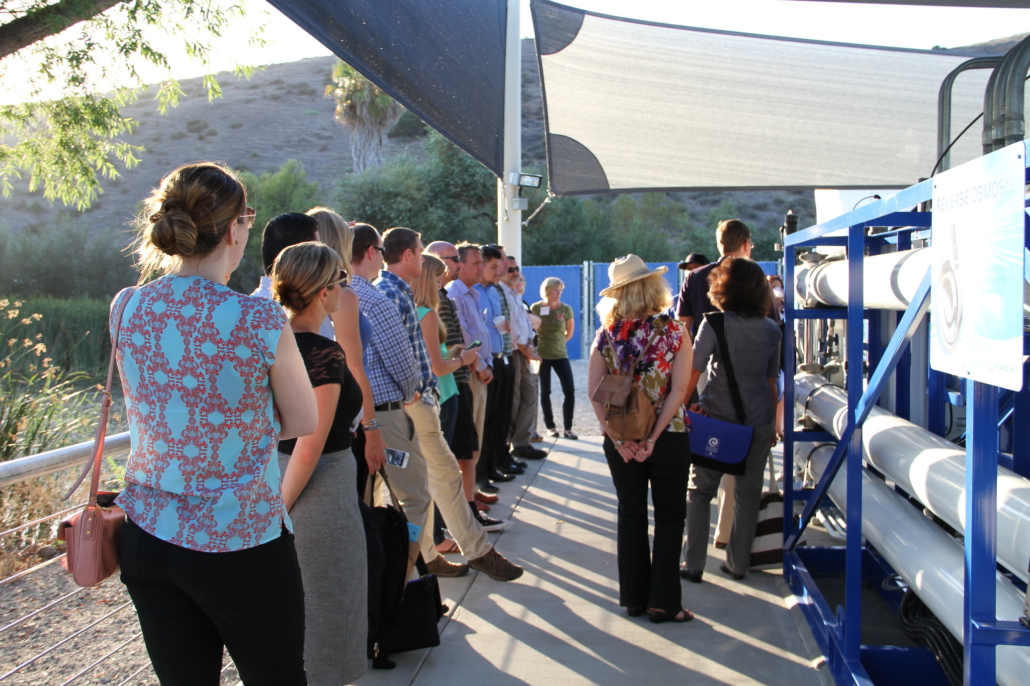
Citizens Water Academy participants tour the Padre Dam Advanced Water Purification Demonstration Project in Santee. Photo: San Diego County Water Authority

The program also helped José F. Cerda become better informed about the region’s water supply and infrastructure in 2015 prior to his successful 2016 campaign for the South Bay Irrigation District board.

“I had a childlike wonderment about what water is and where it comes from,” said Cerda. “It’s your civic duty to understand this big issue for California and create a sense of consciousness. People think you just open the tap.”

“I’m pretty comfortable now making decisions because of the background and the foundation of the Water Academy,” added Cerda.

Valley Center avocado grower Enrico Ferro, a Valley Center Municipal Water District board member, says his Citizens Water Academy experience in 2015 helped him look at water beyond the local perspective.

“Whenever I talk to anyone about water, I reference what I’ve learned,” said Ferro, recently named president of the San Diego County Farm Bureau. “We can’t do anything without water, it’s extremely important. Before I got involved with the Farm Bureau, I wasn’t paying attention to the impact of things on a regional and statewide level.”

“Lots of people from different walks of life of all ages, all professions, and every type of person attends. You get their perspective on things and how [water] affects them,” added Ferro.

Citizens Water Academy grads forge new relationships

Enrico Ferro (far right) participates in an icebreaker exercise at the Summer 2016 Citizens Water Academy. Photo: Water Authority

Enrico Ferro (far right) participates in an icebreaker exercise at the Summer 2016 Citizens Water Academy. Photo: San Diego County Water Authority

Gracyk, Cerda, and Ferro all value the relationships they forged and the networking opportunities with other engaged people at the Citizens Water Academy.

“You’ll make new friends and colleagues you didn’t have before. It will pay you back twenty fold,” said Gracyk.

Competitive selection process for popular program

The selection process is competitive. The Water Authority typically receives many more applications than spots available.

To apply or to nominate someone for the academy, go to www.sdcwa.org/citizens-water-academy. People who are interested but cannot attend in October can submit an application and ask to be notified when additional sessions are announced.

Gracyk says he hopes to join the first session and welcome the new Citizens Water Academy Fall 2019 class to the Helix operations center.

“Three years ago, I was sitting in that audience,” said Gracyk. “Now, I’m here as an elected official and I’m much more knowledgeable than when I started. One thing I really learned is that access to fresh, clean, safe affordable water is essential to human dignity.”

Two Southern California Water Districts Send Personnel to Aid Paradise Irrigation District

The Camp Fire in the community of Paradise and other locations in Butte County cut a wide swatch of destruction in the rural community. It is regarded as the deadliest and most destructive wildfire in California history. At least 85 perish in the fire storm and it destroyed 18,804 structures. It covered almost 240 sq. miles and total damages have been estimated at $16.5 billion.

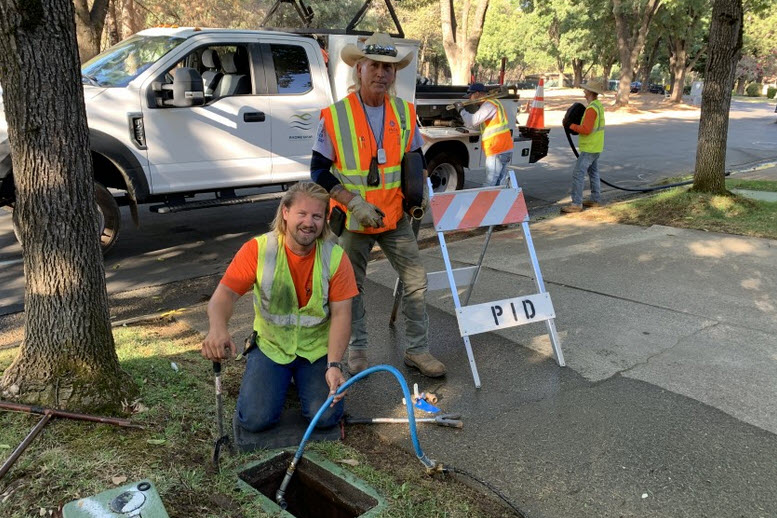
(L to R) Helix WD employees John Wilson, Eric Hughes, Dan Baker and Bryan Watte, and Padre Dam MWD workers Jesse Knowles and Austin Darley. Photo: Helix Water District Paradise Irrigation District

San Diego Water Pros Aid Paradise Irrigation District Following Camp Fire

Six water professionals from the Helix Water District and Padre Dam Municipal Water District spent one week in August assisting the Paradise Irrigation District with disaster recovery in the wake of the devastating Camp Fire.

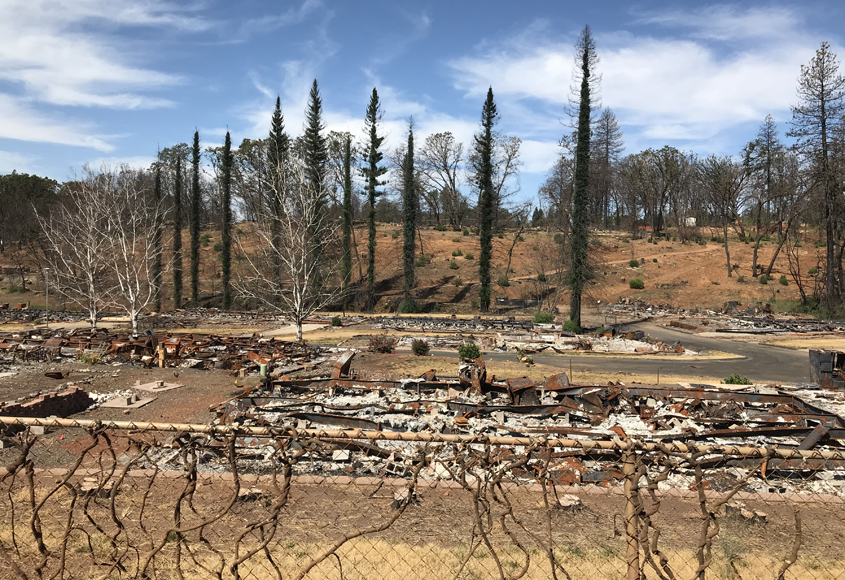
The Camp Fire burned through the town of Paradise, California in November 2018. CAL FIRE reported the fire burned 153,336 acres, destroyed 18,804 structures and resulted in 85 civilian fatalities and several firefighter injuries. The Camp Fire is the deadliest and most destructive fire in California history, according to CAL FIRE.

Ten months later, Paradise remains hard at work on recovery efforts.

The fire caused significant damage to the Paradise Irrigation District’s infrastructure. As a result, more than 10,500 customers fell under a “Do Not Drink” advisory due to contamination from several harmful volatile organic compounds in distribution pipelines.

Austin Darley and Jesse Knowles hard at work in Paradise, California. Photo: Padre Dam Municipal Water District

Austin Darley (kneeling) and Jesse Knowles hard at work in Paradise, California. Photo: Padre Dam Municipal Water District

Padre Dam employees Austin Darley and Jesse Knowles, and Helix employees John Wilson, Dan Baker, Eric Hughes and Bryan Watte, spent a week in Paradise working to help ensure water system safety. While most customers have water service restored, the water quality is being carefully monitored.

“The majority of the work we did revolved around keeping customers in water during a three-day testing period, and reestablishing water service through a plastic jumper after samples had been drawn,” said Darley.

State emergency assistance system activated to provide mutual aid

Helix and Padre Dam are among 14 member agencies and the Water Authority participating in the California Water/Wastewater Agency Response Network, or CalWARN, to support and promote statewide emergency preparedness, disaster response, and mutual assistance processes for public and private water and wastewater utilities.

Damage remaining from the Camp Fire in Paradise, California. Photo: Padre Dam Municipal Water District

Damage remaining from the Camp Fire in Paradise, California. Photo: Padre Dam Municipal Water District

“This program is like an insurance policy that can provide assistance when an emergency becomes larger than our internal resources can deal with,” said Melissa McChesney, Padre Dam Communications Manager. “The situation Paradise Irrigation District finds themselves in is a good example of this. We also have agreements with neighboring water agencies in which we call upon each other for equipment or staffing when needed.”

The agencies identified staff with the skills and experience to help the Paradise Irrigation District. All agreed to volunteer for the mutual aid mission. Padre Dam employees Jesse Knowles and Austin Darley were selected to help.

“Jesse and I feel very blessed to work for an organization that is passionate about helping those in need,” said Darley. “It was an important reminder that recovery efforts continue long after the disaster leaves the news. Paradise is still in need of our thoughts, prayers, and help.”

Recovery effort not over for Paradise Irrigation District

Padre Dam Municipal Water District and Helix Water District crews at work in Paradise, California. Photo: Padre Dam MWD

Padre Dam Municipal Water District and Helix Water District crews at work in Paradise, California. Photo: Padre Dam Municipal Water District

“There’s a lot of work up here but the town is healing,” wrote Helix employee Dan Baker while working in Paradise. “I think I speak for all four of us when I say I’m proud to be a part of this.”

Water service for burned lots will be replaced as recovery progresses and new homes are built.

“It is a privilege to have the opportunity to assist our fellow Californians with this recovery effort,” added Darley. “Although we exist 600 miles apart we all have the same goal, to deliver safe and reliable drinking water to our residents and communities.”

Padre Dam Demonstration Facility-Padre Dam MWD photo

California Moves To Boost Recycled Water

A new plan recommends four strategies to advance water reuse in California over the next three decades – an important part of both the state and regional water resilience portfolio.

The California WateReuse Action Plan includes a comprehensive set of proposed actions that will more than double the use of water recycling in California and help prepare the state for the impacts of climate change, according to WateReuse California, which released the plan in July.

But getting to that goal will require several steps, including: Completing research to advance water recycling and potable reuse; developing and streamlining recycled water regulations and permitting; increasing grant and loan opportunities to expand recycled water infrastructure; and, implementing integrated regional planning.

The U.S. EPA is developing a similar plan to advance water reuse nationwide.

California WateReuse Action Plan

The California WateReuse Action Plan recommends strategies for increasing water recycling statewide. Graphic: WateReuse California

San Diego water agencies collaborate on plan

Recycled water is expected to be the next major source of local water supply for the San Diego region – and the region has a long history of working together toward that goal.

The San Diego County Water Authority collaborated with its member agencies to provide feedback on the plan’s development.

“We appreciate how this new plan aims to increase water supply diversification, including recycled water,” said Lesley Dobalian, principal water resources specialist with the Water Authority, and a contributor to the final action plan.

“Within the next 15 years, potable reuse and recycled water is projected to make up more than a quarter of San Diego County’s supply, but reaching our potential will depend in part on statewide implementation of the plan’s key findings,” Dobalian said.

Increasing San Diego County's Water Supply Reliability through Supply Diversification

Recycled water and potable reuse are forecast to make up 26% of San Diego County’s water supply by 2035. Graphic: San Diego County Water Authority

Water Resilience Portfolio

In July, the Water Authority Board endorsed Governor Gavin Newsom’s Executive Order N-10-19, directing development of a water resilience portfolio approach that meets the needs of California through the 21st century.

On July 18, state officials toured San Diego County water infrastructure to see the region’s successful water portfolio approach for supply diversification, as they work to create the statewide water resilience portfolio.

In San Diego County, several agencies are developing or expanding water recycling plans, including the City of San Diego, Padre Dam Municipal Water District, Helix Water District, the City of Oceanside, and several additional projects in North County.

National water reuse action plan

At the national level, EPA is also developing a Water Reuse Action Plan, or WRAP, to advance water reuse. The Water Authority met with its member agencies and submitted comments to the U.S. EPA for the WRAP.

A draft WRAP is expected to be released by the federal agency at the national WateReuse Association Symposium September 8-11 in San Diego.

“California is widely recognized as a national and world leader in water recycling,” according to the California WateReuse Action Plan. “Recycled water supplies offset approximately 9% of the state’s urban water demands and agricultural reuse provides reliable water supplies for farmers throughout the state.”

WateReuse California Symposium Sept. 8-10 in San Diego

The U.S. EPA plans to release a draft Water Reuse Action Plan to advance water reuse, at the national WateReuse Association Symposium September 8-10 in San Diego.

Leaky indoor faucet - Shutterstock

Helix Water District, Sweetwater Authority Offer Smart Leak Detector Rebates

The Helix Water District has rolled out a new smart leak detector rebate program. Helix and Sweetwater Authority customers can get a rebate of up to $100 when they purchase a smart leak detector.

The detectors sync to smartphones, allowing customers to monitor water use 24/7 via smartphone and the devices notify customers of leaks and water consumption amounts.

Smart Leak Detectors

There are two types of smart leak detectors: plumbed devices and external devices, according to Helix.

  • Plumbed Devices
    Plumbed devices are plumbed into your existing water lines. Most of these devices can automatically shut the water off at their point of installation, or allow you to shut your water off remotely, in case of a leak. Since these devices tap into your existing plumbing system, a licensed plumber and permit may be required for installation. Plumbed devices are typically more expensive than external devices.
  • External Devices
    External devices attach to the outside of your water meter, typically with some type of strap, making them simple to install. Since external devices are not directly attached to your plumbing system, they do not have the ability to automatically shut off your water, or allow you to shut off your water remotely, if a leak occurs. External devices are typically less expensive than plumbed devices.

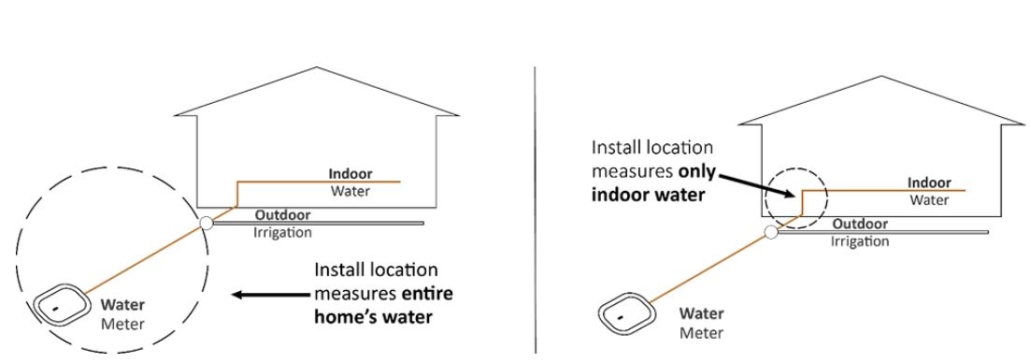
Measure All of Your Water Use

To monitor indoor and outdoor water use, install the leak detector before the point where your irrigation line branches off. This way, the device can alert you of faulty irrigation programming, broken sprinklers or outdoor leaks. This is important, because outdoor use is about half of a typical home’s total water use.

To monitor indoor water use only, install a smart leak detector on your water service line after the point where your main irrigation line branches off.

Install Smart Water Leak Detector

How to install smart water leak detectors to monitor water use or leaks. Graphic: Helix Water District/Sweetwater Authority

Rebates are first come, first served

Rebates are available on a first-come, first-served basis and are not guaranteed. To be eligible for this rebate pilot program you must be a customer of either Helix Water District or Sweetwater Authority and purchase a qualifying device on or after August 1, 2019.

Questions? Customers of Helix Water District can contact Helix staff at 619-667-6226 or ; customers of Sweetwater Authority can contact Sweetwater staff at 619-409-6779 or .