You are now in Facilities & Operations News category.

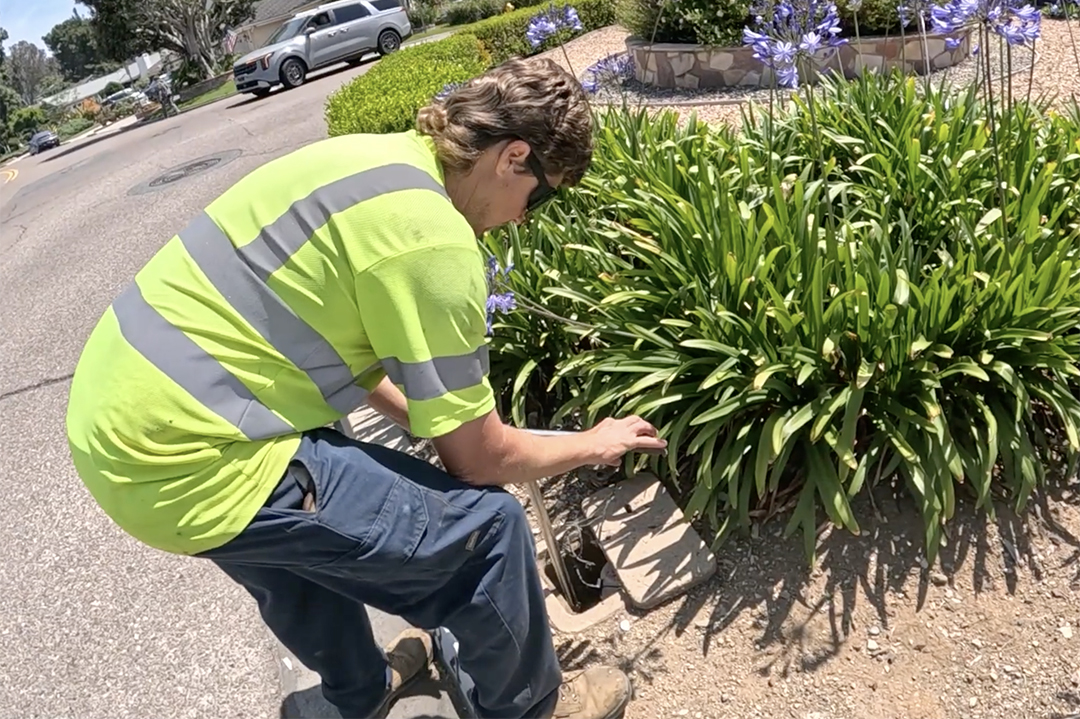
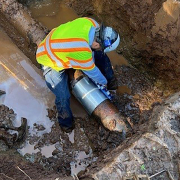
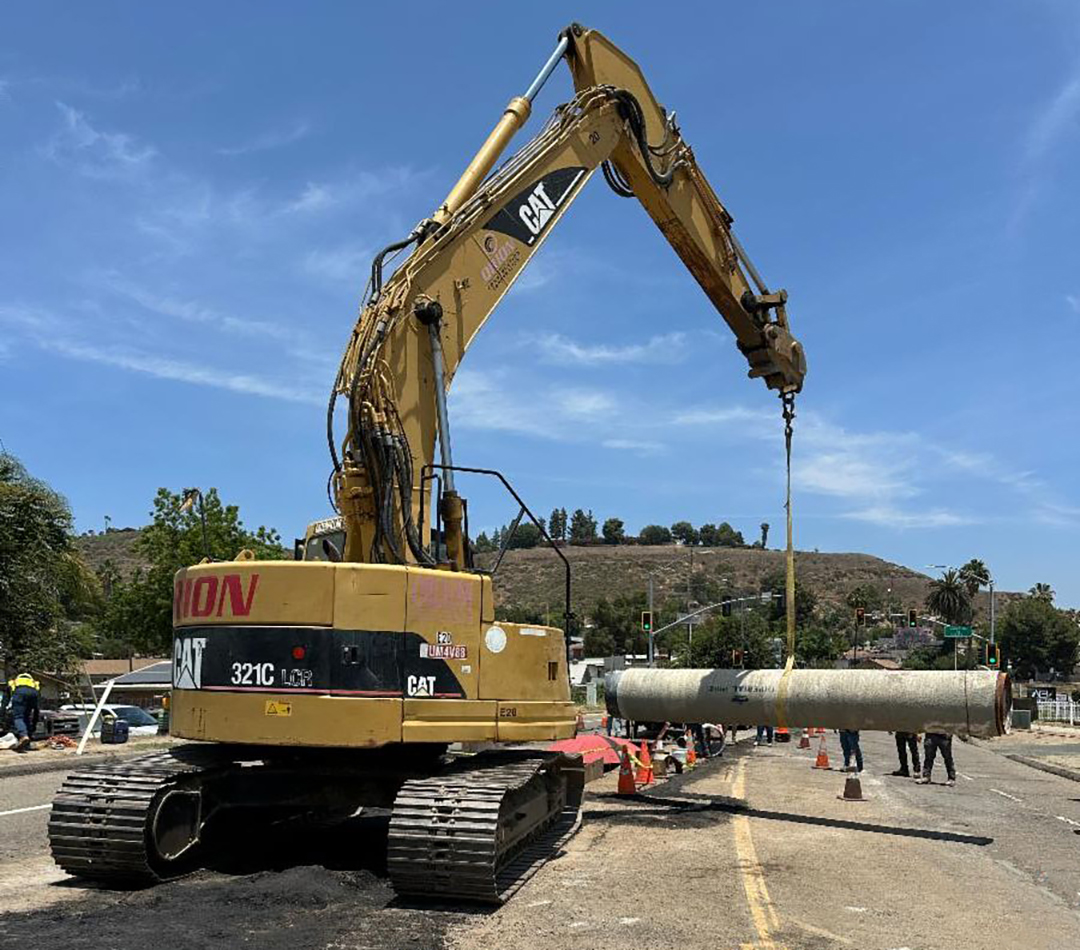
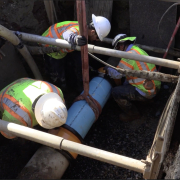
Vallecitos Water District maintenance team workers effect repairs on a pipeline in San Marcos. Photo: Vallecitos Water District water shutdowns

Water Shutdowns Allow Preventive Water System Maintenance

Whether planned or unexpected, a water shutdown can interrupt daily life. Residents and businesses can stay safe and comfortable until service is restored with a little advance preparation and coordination.

In May, the Vallecitos Water District needed to conduct a water shutdown in order to repair a leak in a 10-inch water main located in San Marcos on Discovery Street, south of West San Marcos Boulevard.

The water main is located next to Valley Christian School, a private K-12 prep school, and services both businesses and homes in the immediate area.

Vallecitos Water District maintenance teams supplied the school during the day-long shutdown on May 19 for repairs by providing a water line to the school from a nearby fire hydrant.

See the repair operation in this video.

Crew leader Mitchell Toth, Valve Maintenance Technician with the Vallecitos Water District, said, “We know water systems shutdowns are a huge inconvenience for customers and VWD, but our construction crew will work as safely and efficiently as possible to restore water to customers as soon as possible.”

Repairs were successfully completed, and water service was restored to all customers by the end of the day.

What Prompts A Water Shutdown?

Water shutdowns may happen during planned maintenance, emergencies, or water main repairs. Teams work to restore safe, reliable service as quickly and carefully as possible. Every shutdown helps protect the system that delivers safe, reliable water when you need it most, and helps avoid emergency repairs and the loss of water supplies due to unanticipated breaks.

Multiple departments work together throughout the process. Customer service and meter crews notify residents and prepare the system by shutting off affected meters. Construction crews repair damaged pipes, and water operations crews flush and test the water before service is safely restored.

Mitchell Toth, Valve Maintenance Technician with the Vallecitos Water District, oversees preventive maintenance repairs in San Marcos. Photo: Vallecitos Water District water shutdowns

Mitchell Toth, Valve Maintenance Technician with the Vallecitos Water District, oversees preventive maintenance repairs in San Marcos. Photo: Vallecitos Water District


How To Prepare Ahead For A Water Shutdown

Customers can reduce the inconvenience of a water shutdown by taking several steps in advance.

Before the shutdown, store drinking water. Plan a minimum of one gallon per person per day, if possible. Don’t forget water for your pets.

Fill containers with additional tap water for washing hands, cleaning, and flushing toilets.

During the outage, conserve stored water and avoid using dishwashers, washing machines, or ice makers. To flush a toilet, pour a bucket of water directly into the bowl. Keep easy-to-prepare meals, paper plates, sanitizer, and wipes available to reduce water use during the outage.

When service returns, water may appear cloudy or sputter briefly as air clears from the pipes. Run cold water from the highest faucet in your home until it clears.

By planning ahead, you can protect your home and reduce stress during any water shutdown. If you have questions before, during, or after an outage, contact your community’s water district.


Urban Corps San Diego team members get a briefing before beginning habitat restoration work. Photo: Sweetwater Authority

Sweetwater Authority Habitat Restoration Effort Delivers Impressive Results

What began as an emergency hazardous tree removal project to protect water treatment facilities by the Sweetwater Authority became an effective community partnership. By working with Urban Corps San Diego, supported by neighboring residents and regulatory agencies, Sweetwater Authority transformed a portion of a fire-prone canyon adjacent to the Robert A. Perdue Water Treatment Plant into a safer, fire-resilient native habitat.

Need For Fire Hazard Mitigation Addressed With Two-Year Plan
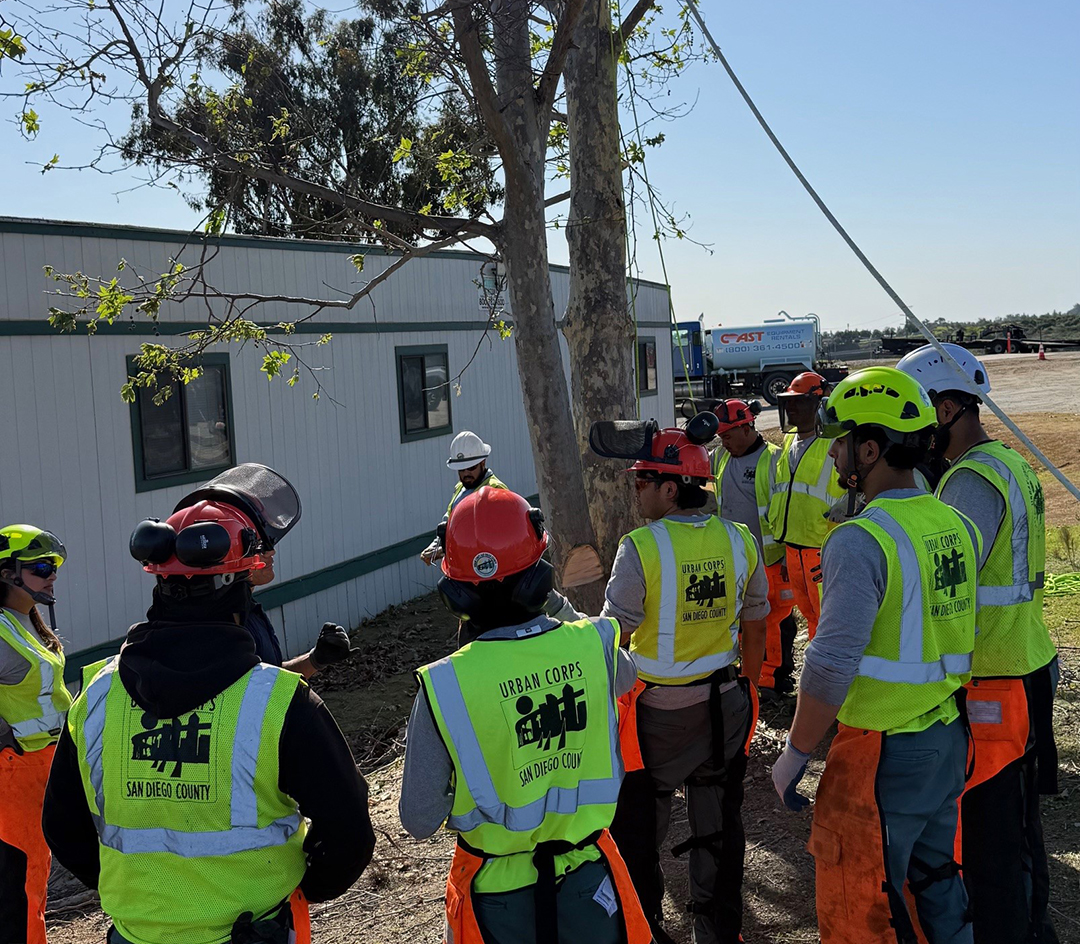
Non-native tree removal was a focus of the Sweetwater Authority's habitat restoration project. Photo: Sweetwater Authority

Non-native tree removal was a focus of the Sweetwater Authority’s habitat restoration project. Photo: Sweetwater Authority

The Perdue Plant is situated at the western edge of the urban–wildland interface, within a designated Very High Fire Hazard Zone. The facility faces ongoing wildfire threats from the adjacent open space and urban canyon immediately west of the treatment plant.

Eight different fires burned in the canyon below in five years, including one that came close to buildings. It became evident that the hazardous eucalyptus trees adjacent to the treatment plant needed to be removed. Sweetwater Authority took proactive steps to protect water infrastructure and the surrounding neighborhoods, approving a two-year plan in 2024.

The project evolved through the development of partnerships among the Sweetwater Authority, nonprofits, conservation partners, and the community working side by side to protect people and wildlife with positive results. Sweetwater Authority decided to restore that same area with fire-resilient native habitat to protect the slope from erosion issues and to create habitat for sensitive species.

State and federal wildlife agencies including the California Department of Fish & Wildlife (CDFW) and the U.S. Geological Survey (USGS) provided scientific guidance, emphasizing the importance of restoring the cactus scrub habitat for sensitive species like the coastal cactus wren and the California gnatcatcher.

San Miguel Fire & Rescue supported the need to reduce fuel loads in this difficult terrain. Sweetwater Authority’s neighbors in Spring Valley, led by the Spring Canyon HOA, worked to ensure safe access, good communication, and community awareness.

Sweetwater Authority Teams Partner With Urban Corps San Diego
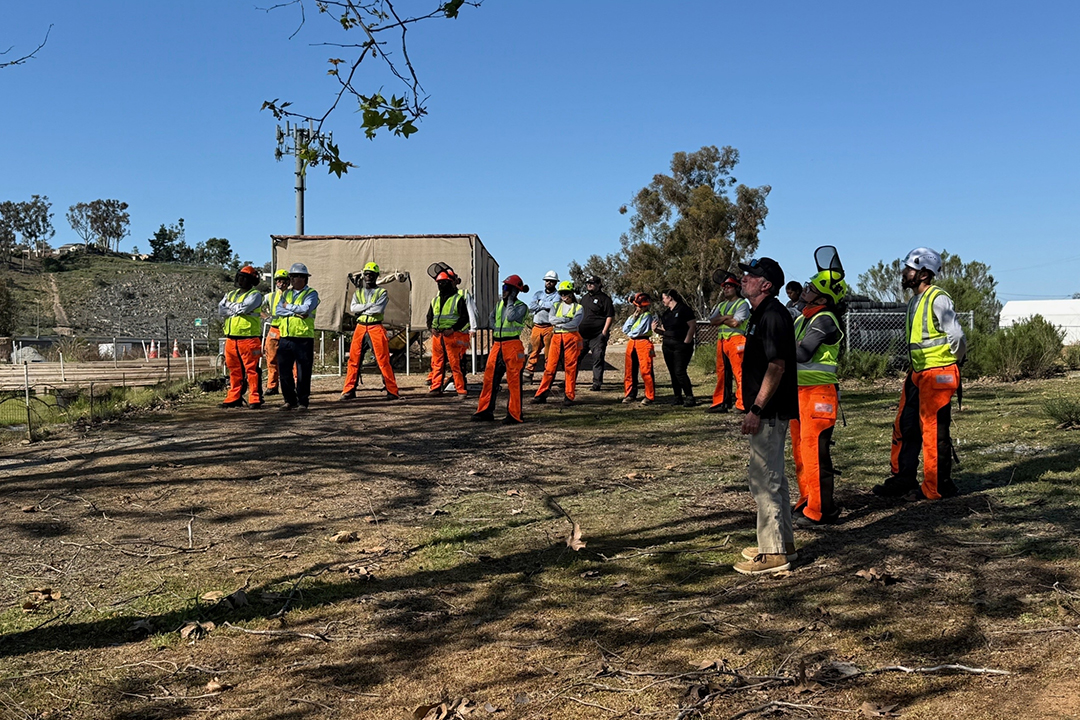
Urban Corps San Diego teams led by development manager Zhenxi Zhong, contributed labor to habitat restoration and site management. Photo: Sweetwater Authority

Urban Corps San Diego teams, led by development manager Zhenxi Zhong, contributed labor to habitat restoration and site management. Photo: Sweetwater Authority

The Authority effort led by project manager Israel Marquez included both its Habitat Maintenance team and Watershed Caretaker team. “Both played essential roles in every phase of the work,” said Marquez.

The Urban Corps of San Diego County, led by development manager Zhenxi Zhong, applied for a Forestry Corps Grant and contributed its labor to habitat restoration and site management. Hazardous non-native invasive trees were removed, slopes stabilized, and fire-resilient native habitat restored.

“Today, the landscape is recovering and becoming a model for wildfire resilience, habitat restoration, and community collaboration,” said Marquez.

The Habitat Restoration team, led by Cesar Alcaraz and Julia Varnergardner, worked side by side with Urban Corps crews, guiding them in collecting and planting cactus cuttings, removing debris, installing erosion-control measures, and stabilizing soils on the steep slope.

In collaboration with the Urban Corps Construction Team, the Watershed Caretaker Team led by Adam Dingley and Richard Cortez handled the heavy lifting of site preparation, field coordination, and tree material reuse. Their work was essential to the project’s success.

Cortez personally contributed a full day of chainsaw safety and arborist training with Urban Corps members, highlighting the Authority’s commitment to workforce development.
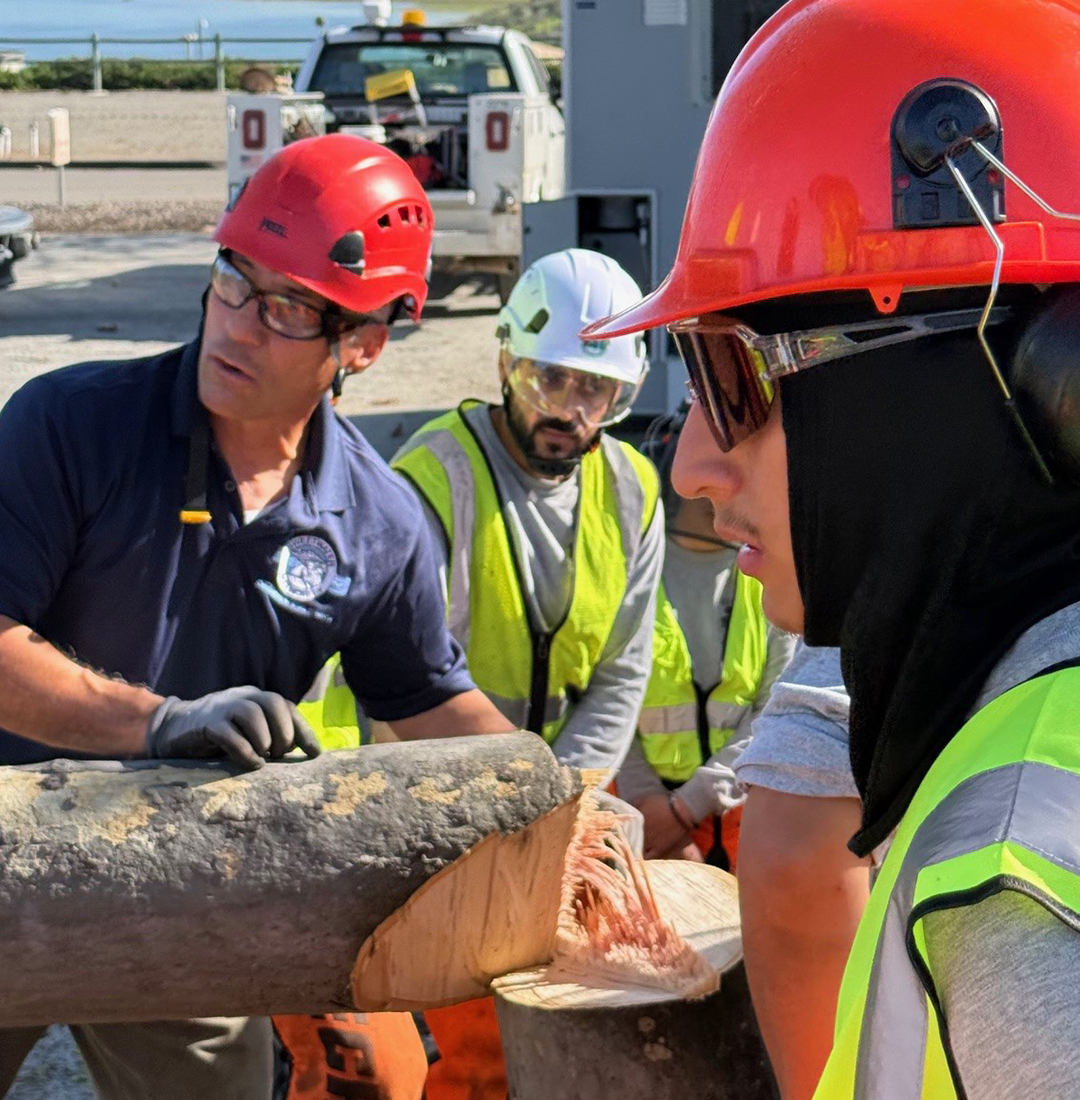
Sweetwater Authority project manager Richard Cortez (far left) with the Watershed Caretakers team and Urban Corps San Diego crew members. Photo: Sweetwater Authority habitat restoration

Sweetwater Authority project manager Richard Cortez (far left) with the Watershed Caretakers team and Urban Corps San Diego crew members. Photo: Sweetwater Authority

Mitigation Efforts Magnified By Flourishing Habitat

Over the past two years, the project has yielded impressive and visible results. The first year focused on removing dozens of dead and dying trees, stabilizing slopes, and beginning the transition to fire-resilient native habitat.

The results were immediate. When the Quarry Fire swept through the area on October 31, 2024, the newly created defensible space and early restoration work helped reduce the potential for the wildfire to spread to the Perdue Plant, protecting the facility and nearby homes.

In the second year, hazardous tree removal was completed. Authority staff and Urban Corps crews returned to the slope to expand restoration efforts by planting native succulent scrub habitat, which is dominated by cacti and adapted to the region’s fire cycles.

Tree branches were chipped and reused as mulch at Authority tank sites and other properties to control weeds and reduce erosion. Selected tree trunks were also repurposed at the Sweetwater Reservoir Recreation Area to help mark roads and trails and reduce trespassing into sensitive habitats.

The native habitat is now flourishing. With the eucalyptus canopy removed and the soil receiving more sunlight and moisture, the slope is healing itself. Native coastal sage scrub species, including some rare plants like California Adolphia and many native annual herbs, are returning to the site. The recovering ecosystem is becoming more resilient, more diverse, and more supportive of native wildlife.

USGS and the wildlife agencies emphasized the importance of expanding succulent scrub habitat to support breeding, foraging, and long-term population stability of threatened bird species, including the coastal cactus wren and the California gnatcatcher, a federally threatened species. Both benefit from the return of coastal sage scrub habitat.

As the slope continues to recover, these species will find new opportunities for nesting, feeding, and moving across the landscape in one of their last remaining strongholds in southern San Diego County.

Restoration and monitoring will continue through 2026, with follow-up maintenance by Sweetwater Authority staff as part of its watershed and habitat protection program.

What was once a hazardous, fire-prone area covered with dead and dying eucalyptus and debris is becoming a healthier, safer, and more resilient habitat that protects critical drinking water infrastructure, supports sensitive wildlife, and strengthens the connection between Sweetwater Authority and the community it serves.

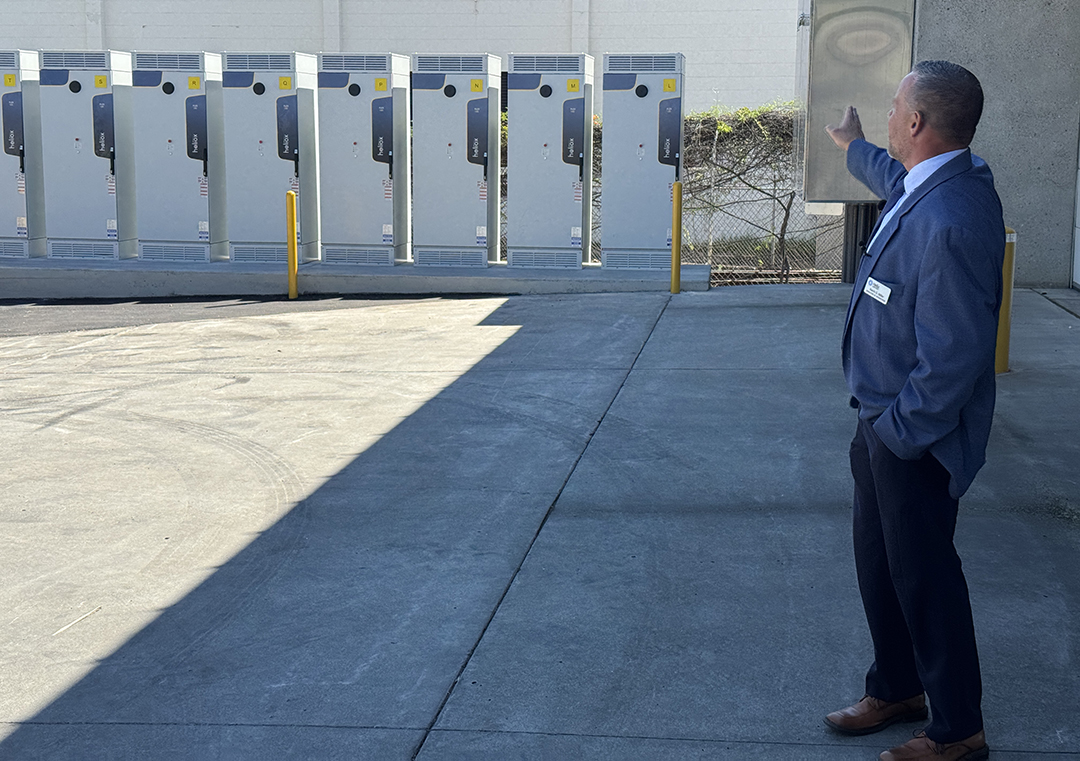
Helix Water District Kevin Miller highlights the new overhead EV charging infrastructure at the Nat L. Eggert Operations Center. Photo: San Diego County Water Authority

Helix Water District Opens Model EV Charging Hub At El Cajon Operations Center

The Helix Water District and invited guests celebrated the opening of its newly upgraded Operations Center in El Cajon, which has been transformed into one of California’s most advanced electric fleet charging hubs. The $11 million project will deliver cleaner air and cost savings for East County residents.

Helix Water District is among the first public agencies to build out its charging infrastructure to meet the California Air Resources Board’s Advanced Clean Fleets Regulation, taking effect in 2030. Local and state public agencies must replace medium- and heavy-duty trucks and equipment with zero-emission models. Fifty percent of new vehicle purchases must be zero emissions by 2027; 100% of vehicle purchases by 2030.

The facility features 87 high‑capacity chargers and nearly six megawatts of power. It meets new California vehicle emission mandates and maintains around-the-clock emergency readiness.

Twenty-eight counties, cities, water districts, and other public agencies came to Helix’s Nat L. Eggert Operations Center on March 27 to attend the ribbon cutting, followed by facility tours and a trade show with the companies involved in its construction. Electric medium- and heavy-duty trucks and equipment were also displayed.

“Helix is clearly ahead of the game,” said Helix Water District Board President Kathleen Coates Hedberg. “Our board saw the impact of this regulation early on. We made the decision to build vehicle charging infrastructure to power our fleet into the future and allow us to serve our customers for decades to come.

“As a civil engineer with a background in public health, I am truly humbled to be part of this project and the impact it will have on our community. Our district’s forward thinking and innovation will help keep East County healthy and thriving, and we are proud to show you what we have accomplished.”

Electric Vehicles Deliver Cost Savings

By converting its fleet and providing the charging infrastructure to support it, Helix expects to see continued cost savings from a zero-emissions fleet. Photo: San Diego County Water Authority EV charging

By converting its fleet and providing the charging infrastructure to support it, Helix expects to see continued cost savings from a zero-emissions fleet. Photo: San Diego County Water Authority

According to the California Air Resources Board, trucks make up just six percent of vehicles on California roads but generate more than 35% of nitrogen oxide emissions and 25% of on‑road greenhouse gas emissions.

By converting its fleet and providing the charging infrastructure to support it, Helix expects to see continued cost savings from a zero-emissions fleet as well as a reduced impact on air pollution.

“The data from our current fleet show that fuel costs for an electric vehicle are one-fifth the fuel costs of a gas or diesel vehicle,” said Helix Water District Operations Director Kevin Miller.

Charging Infrastructure Designed For Critical Infrastructure Operations

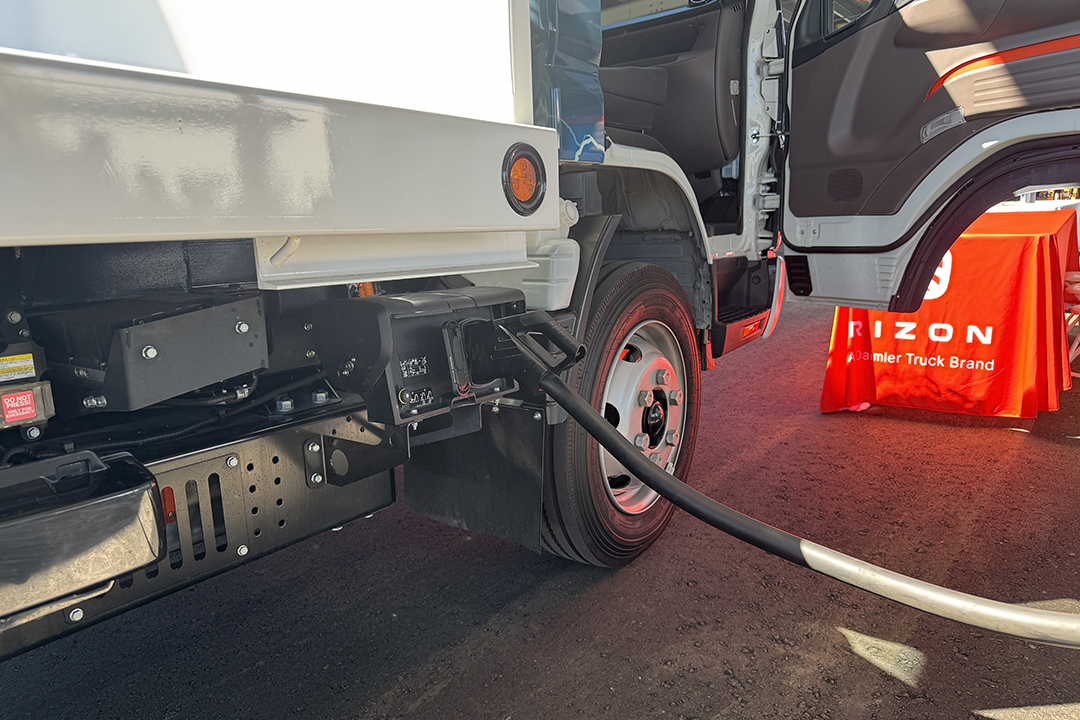
The infrastructure includes 87 chargers, from 40 to 640 kilowatts, manufactured by Heliox and Autel. The largest can recharge medium- and heavy-duty trucks in an hour. Photo: San Diego County Water Authority EV charging

The infrastructure includes 87 chargers, from 40 to 640 kilowatts, manufactured by Heliox and Autel. The largest can recharge medium- and heavy-duty trucks in an hour. Photo: San Diego County Water Authority

Helix operates a fleet of 100 vehicles, from cars and pickup trucks to medium and heavy-duty vehicles, including three-axle dump trucks, backhoes, and skip loaders. The charging infrastructure is designed and engineered to meet four core operational requirements common to many public agencies, including 24-hour emergency response and limited charging during peak hours to take advantage of reduced electricity rates.
Helix also stipulated that it would not add vehicles or staff to compensate for the time spent charging.

The infrastructure includes 87 chargers, from 40 to 640 kilowatts, manufactured by Heliox and Autel. Most are installed overhead. This minimized the need for trenching, which increases construction costs and offers flexibility in daily operations and parking. The larger Autel 640-kilowatt MaxiCharger can recharge medium- and heavy-duty trucks in an hour.

Collaboration Helps Lower Project Costs

Helix Water District officials collaborated with the San Diego County Air Pollution Control District, San Diego Gas and Electric and the California Energy Commission to successfully execute the upgrades. Photo: San Diego County Water Authority
Helix Water District officials collaborated with the San Diego County Air Pollution Control District, San Diego Gas and Electric and the California Energy Commission to successfully execute the upgrades. Photo: San Diego County Water Authority
When planning the project, Helix Water District officials reached out to the San Diego County Air Pollution Control District, San Diego Gas and Electric, and the California Energy Commission to strategize collaboration on the project. The agencies provided more than $10.2 million in grants and rebates, ensuring the project would have minimal impact on water rates.

The grant funding enabled Helix to build the full charging system upfront at a cost savings. Additional savings will come from shared use of the charging system by neighboring cities and public agencies, which will be tracked with software to allocate and recover costs for the district.

The collaborative approach will provide a roadmap for other public agencies planning their own compliance with the Advanced Clean Fleets Regulation.

“This is one of many projects that Helix has done as a sustainable but also fiscally responsible leader in water and energy,” said Kathleen Coates Hedberg. “Twenty years ago, we installed our solar (power) system, and now we’re doing electrification. This is just the beginning of becoming a better steward of our environment.”

The Helix Water District provides water treatment for 500,000 people in San Diego’s east county suburbs and distributes drinking water to 279,000 people in the cities of La Mesa, El Cajon, and Lemon Grove, and the Spring Valley, Mt. Helix, and Lakeside communities.

The Climate Registry recognized Helix Water District as a Water-Energy Leader Gold organization in 2023, and the district was named a Certified Green Business by the Green Business Network in 2025.


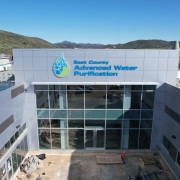
The Education Center will see its staff moving in later this spring. Photo: ECAWP East County AWP Spring 2026

East County AWP Reaches Key Phase of Project in Spring 2026

As spring temperatures rise, the East County AWP Program enters a key phase of the project. The majority of work at the main Santee construction is nearing completion. This year begins with a wave of important new milestones and updates.

Visit the project’s website for more details.

New Signage on Education Center

A new sign has been installed outside the future Education Center. This building will welcome visitors for educational programs. It will also house the lab and administrative offices, making it a hub for learning, innovation, and daily operations. This building is on track for lab staff to begin moving in and occupying in late spring.

Learn more about recent updates in this video presentation.

Sewer Pipeline Infrastructure Progress Report

Construction to install a new nine-mile residuals pipeline and rehabilitate an eight-mile sewer pipeline is moving forward. Work is currently underway in Mission Trails Regional Park, along Mission Gorge Road, and on Camino Del Rio North.

To date, approximately 32,000 linear feet of pipeline have been installed- representing roughly one-third of the total alignment for this phase of the project. In Mission Trails Regional Park, work is about 25% complete.

(photo caption with yellow structures) Pipeline installation on Mission Gorge Road just east of the Mission Vista Drive intersection. 

Mission Trails East Entrance Closed to Vehicles

The vehicle gate at the east end of Mission Trails Regional Park near Bushy Hill Drive is closed through the end of this month. This temporary closure is in place to safely complete pipeline installation on this end of the park.

Vehicles cannot access the Old Mission Dam parking lot. Pedestrians and bicyclists are still able to pass through the gate

Visitors can still use the dirt parking lot at the corner of Bushy Hill Drive and Father Junipero Serra Trail, as well as nearby street parking.

New Detour to Enter Mission Trails Regional Park’s West Entrance

Be informed about road detours off Mission Gorge Road near the east entrance to Mission Trails Regional Park. Photo: ECAWP

Be informed about road detours off Mission Gorge Road near the west entrance to Mission Trails Regional Park. Photo: ECAWP

Pipeline work near the Mission Trails Regional Park Visitor Center necessitates road closures affecting motorists. Currently, the left-hand turn from Mission Gorge Road onto Father Junipero Serra Trail is closed. Detours in place allow access to the park.

Regular vehicles:

  • Drive to Golfcrest Drive, make a U-turn at the light, and then turn right onto Father Junipero Serra Trail to reach the Visitor Center.

 Large vehicles (including school buses):

  • Turn right onto Jackson Drive
  • Turn left onto Navajo Road
  • Turn left onto Golfcrest Drive
  • Turn left onto Mission Gorge Road
  • Then turn right onto Father Junipero Serra Trail to reach the Visitor Center

Final Pipeline Work Underway at Santee Lakes

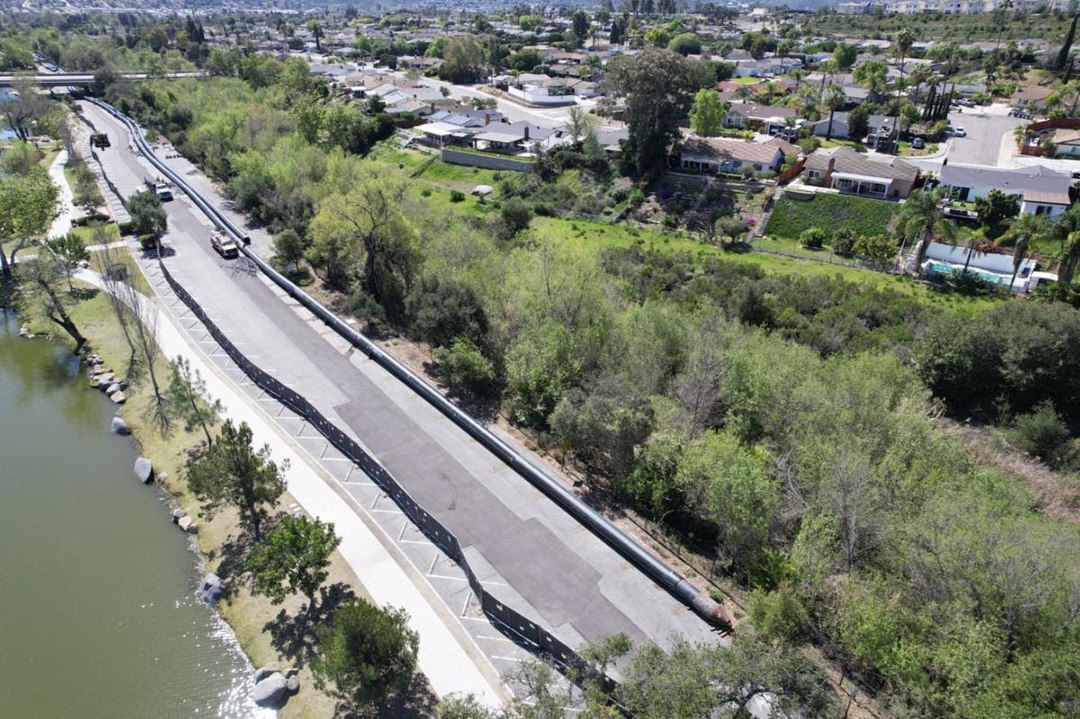
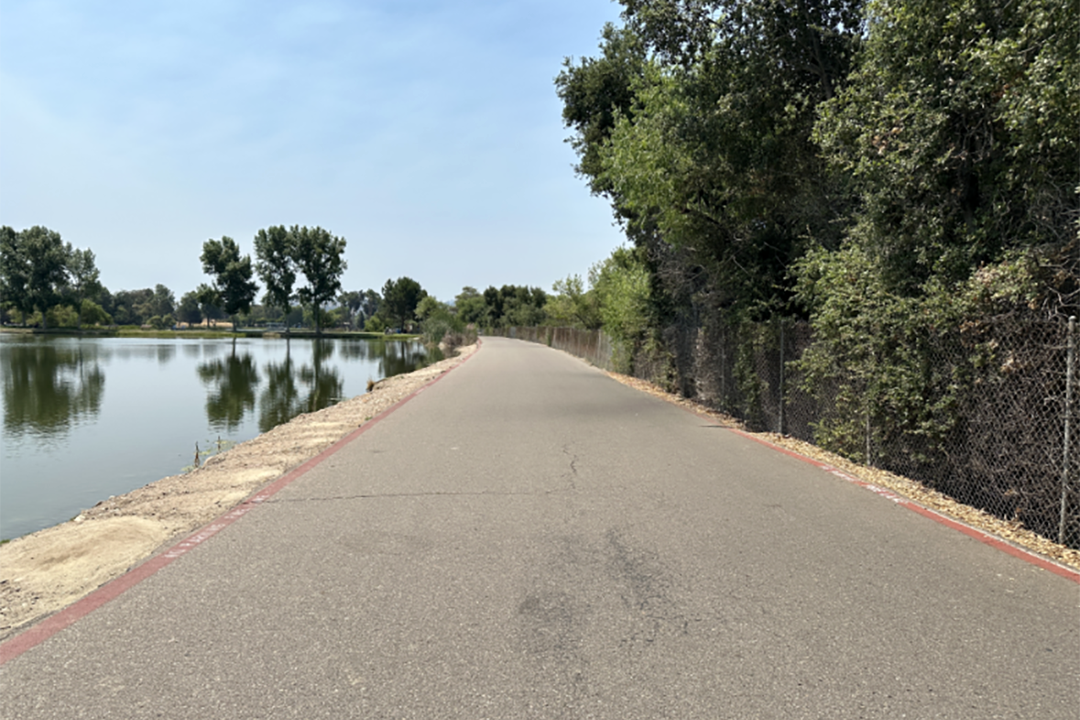
Crews are preparing to install the final run of wastewater pipeline at Santee Lakes for the East County Advanced Water Project. Photo: ECAWP Spring 2026

Crews are preparing to install the final run of wastewater pipeline at Santee Lakes for the East County Advanced Water Project. Photo: ECAWP

Crews are preparing to install the final run of wastewater pipeline at Santee Lakes, marking a major milestone in this important infrastructure project. This is the last 3,500 feet of pipeline essential to the project.

A portion of the west road is temporarily closed to vehicle traffic. The road remains open to pedestrians, so visitors can still enjoy Santee Lakes on foot.

This 36-inch pipeline will be installed using horizontal directional drilling from the west side of Lake 1 to the East Mission Gorge Pump Station at the corner of State Route 52 and Mission Gorge Road.

Horizontal directional drilling is being used instead of traditional open-cut construction to preserve the environment, including the San Diego River and a nearby golf course that the pipeline crosses.

Revitalizing the Former Ray Stoyer Water Recycling Facility Site

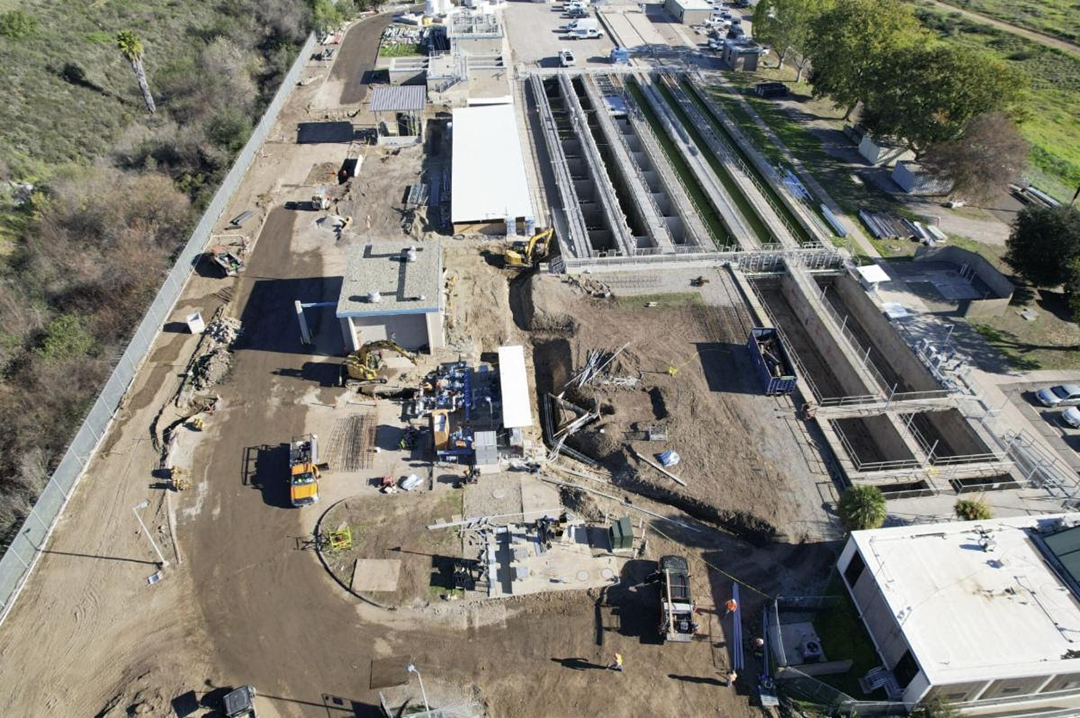
Changes are coming to the former site of the Ray Stoyer Water Recycling Facility as the East County AWP works toward completion. Photo: East County AWP spring 2026

Changes are coming to the former site of the Ray Stoyer Water Recycling Facility as the East County AWP works toward completion. Photo: East County AWP

After the Ray Stoyer Water Recycling Facility was decommissioned by Padre Dam Municipal Water District last fall, the East County AWP Program is repurposing the original site.

Key structures are being repurposed, including the existing chlorine contact basin (the covered tank visible in the top of the photo), which has been disinfecting water for plant washdowns and recycled water distribution since 1997.

The recycled water pump station is also being upgraded with new plant washdown pumps, a modern electrical service, and an emergency generator. This pump station will continue to serve recycled water to customers.

Excavation is underway for new electrical duct banks, and a new sodium hypochlorite chemical feed station is being installed.

The remaining structures on the site are scheduled for demolition later this summer.

Interactive Map Helps Residents Stay Updated On Program Progress

When completed, water from this project will provide potable water to customers in Padre Dam Municipal Water District, Helix Water District, and Lakeside Water District service areas, and the northern portion of the Otay Water District. It has now reached 48,500 views.

With construction in multiple locations throughout East County, the Program’s interactive map offers a useful tool for residents and businesses to track where work is happening. The map is updated regularly and accessible 24/7 through the EastCountyAWP.com website. Information is also available via social media at @eastcountyawp


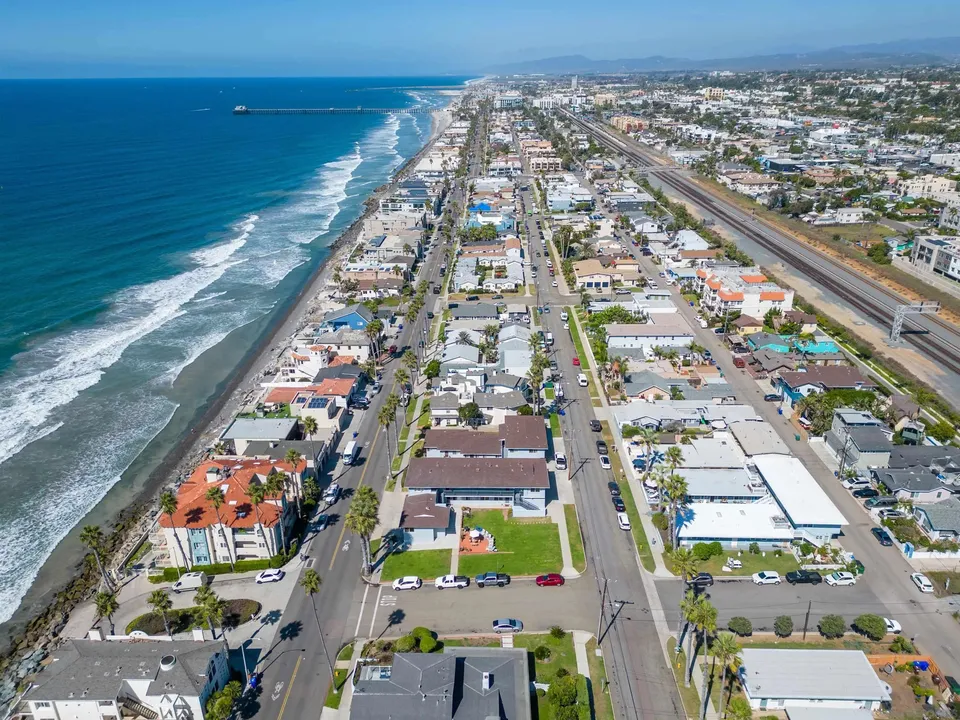
The City of Oceanside begins work on pipeline replacements of aging water and sewer mains. Some are approaching 100 years old, well past their expected useful life. Photo: City of Oceanside

Downtown Oceanside Pipeline Replacements Project Starts March 9

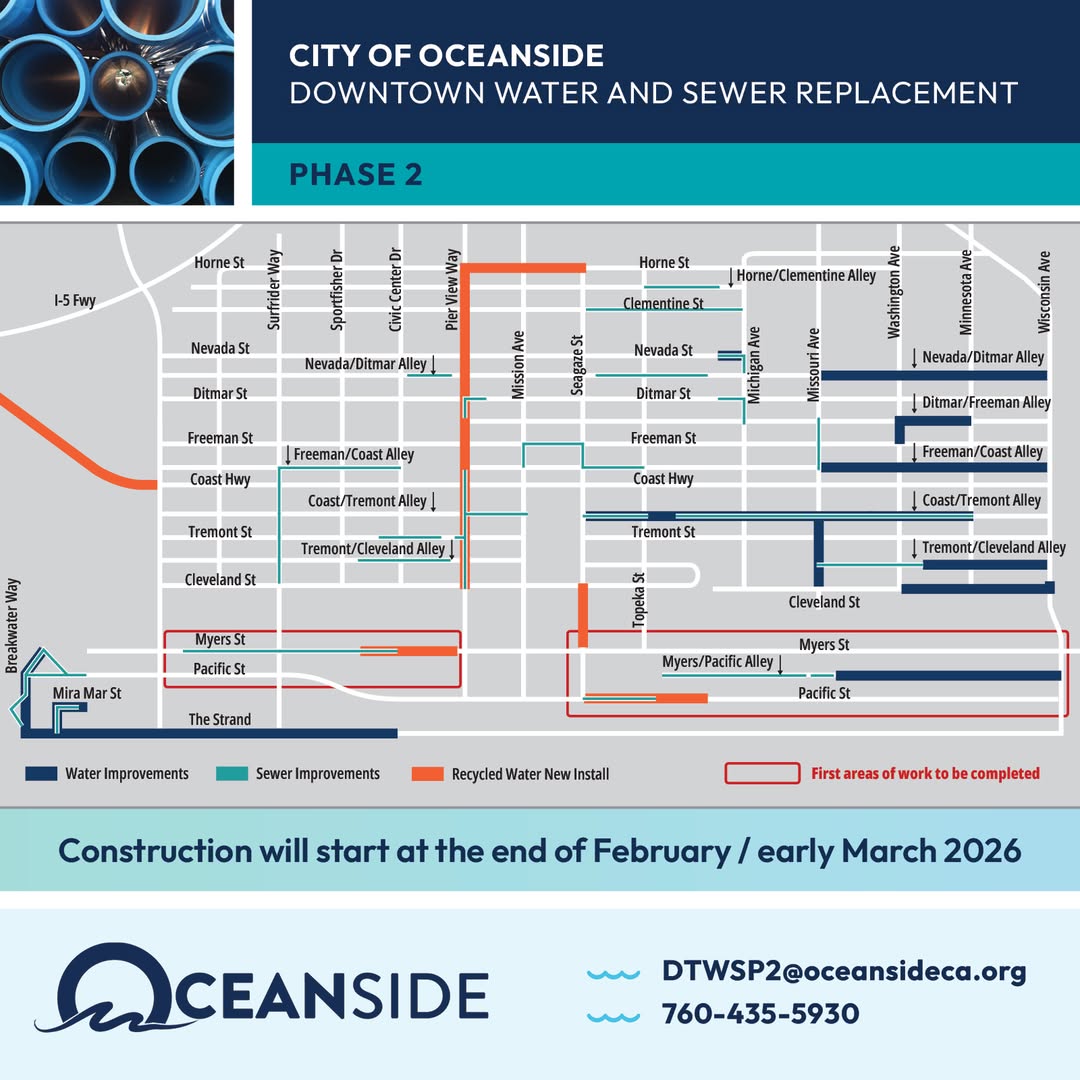
The City of Oceanside will begin construction on the second phase of its downtown water and sewer pipeline replacements project beginning the week of March 9. This project is the second of a five-phase program to replace aging water and sewer mains throughout the downtown Oceanside area.

Phase I located between Neptune and Pier View Way included the replacement of 2.5 miles of water and over 1.5 miles of sewer infrastructure.

Construction on Phase II will begin in the alley located south of Meyer Street and north of Pacific Street.

The Phase II Project includes the replacement of over three miles of sewer pipelines and over 2.5 miles of water infrastructure. It also expands the City of Oceanside’s recycled water system in downtown with nearly a mile of new pipe.

Modernizing Water and Sewer Utilities in Oceanside

The project map displays the locations of Phase II water and sewer pipeline replacements. Photo: City of Oceanside

The project map displays the locations of Phase II water and sewer pipeline replacements. Photo: City of Oceanside

“The City of Oceanside is excited to begin construction on the Downtown Water and Sewer Replacement – Phase 2 project,” said Neil Irani, Senior Civil Engineer for the City of Oceanside. “This project is the second phase of our program to replace aging and undersized water and sewer utilities throughout the downtown Oceanside area.

“Over the next couple of years, approximately three miles of sewer and 2.5 miles of water will be replaced with modernized materials. The project will also expand the recycled water system in the downtown area, continuing Oceanside’s commitment to sustainable water sources. This investment in our utility infrastructure is critical to maintain safe and reliable water and sewer service for our customers,” explained Irani.

Aging Pipeline Replacements Prevent System Failures

Many of the water and sewer mains scheduled for replacement in this project are at an advanced age. Some of the sewer mains are approaching 100 years old, well past their expected useful life.

The old pipelines were made of cast iron. Replacement pipelines are made of polyvinyl chloride pipes. The city will also replace hydrants, water meters, and manhole covers.

This project will continue the City of Oceanside’s commitment to updating the water and sewer systems to current standards while ensuring sufficient capacity to meet the area’s growing needs. The City will also add additional recycled water customers as part of the system expansion, including public, commercial, and mixed-use residential properties.

Recycled water is non-potable water typically used for irrigation. Developing recycled water sources is an important part of Oceanside’s commitment to provide customers with sustainable and alternative water sources.

Minimizing Disruptions To Oceanside Community

Work on this project will be restricted to daytime hours, and will pause during busy summer months to avoid disruptions. Photo: City of Oceanside pipeline replacements

Work on this project will be restricted to daytime hours, and will pause during busy summer months to avoid disruptions. Photo: City of Oceanside

The Phase II construction is expected to last approximately two years. Traffic throughout construction areas will generally be maintained at all times. Road closures or detours with impacts to the public will be allowed as night work only.

Daytime work is restricted from 8 a.m. to 4:30 p.m., with additional restrictions in the busiest areas. No work will be allowed west of Myers Street during the busy summer season.

Work will also be restricted during popular annual events and weekly markets in the downtown area

Nearby properties will receive advanced notice through door hangers. Water and sewer service will be maintained, with short, planned interruptions also communicated in advance through door hangers. There will also be regular updates in the City newsletter, The Oceanside Tide, as the project progresses.

The project cost is approximately $30 million and is funded through previously budgeted capital improvement program funds and state and federal grants.

Please visit the Oceanside Water Utilities webpage for updates on the project. Residents and business owners with questions about the project or traffic impacts can call representatives (760) 435-5930 or email " class="external" rel="nofollow" target="_blank"> for project-related questions.

Construction begins soon on the new East County AWP energy recovery system, which will provide up to 30% of the project’s energy needs, saving the operators and ratepayers money. Photo: East County AWP

East County AWP Reports Progress, Hosts Outreach Event Jan. 17

Construction is progressing at the various project sites for the East County Advanced Water Purification Program. The past year saw a number of accomplishments, bringing the initiative one step closer to the finish line.

Watch the latest East County AWP video presentation.

The East County AWP Outreach team will kick off 2026 with a pop-up event for the public at Mission Trails Regional Park on Saturday, January 17, from 8 a.m. to 11 a.m.

Representatives will answer questions and share information about the pipeline work underway within Mission Trails Regional Park, including rehabilitation of an existing sewer pipeline, and installation of a new nine-mile residuals pipeline along Father Junipero Serra Trail within the park. Visit the project’s website for more details.

Work to install a temporary sewer bypass pipeline is complete, allowing work to continue during rainy months without risking a sewer spill and protecting wildlife and waterways.

Education Center Nears Completion

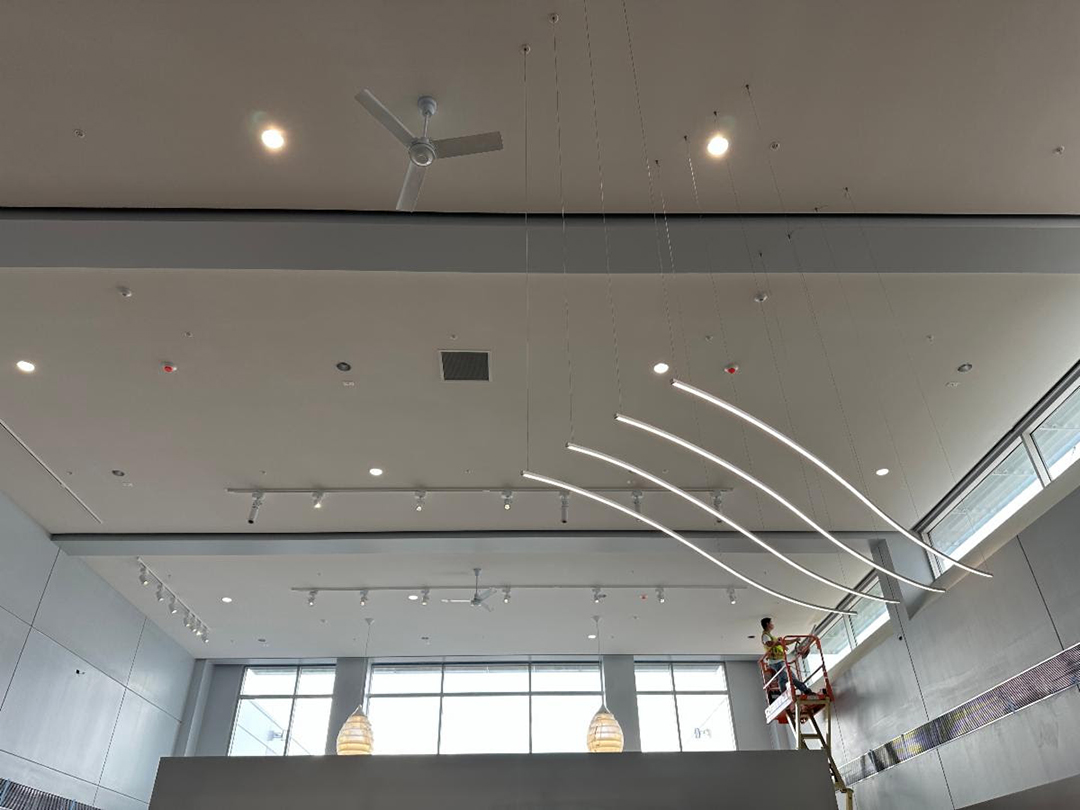
The lights are on at the East County AWP's Education Building, which also houses administrative offices and a new laboratory. Photo: East County AWP

The lights are on at the East County AWP’s Education Building, which also houses administrative offices and a new laboratory. Photo: East County AWP

The new Education Center building, which will also house the administrative offices and a brand-new laboratory, is now 90% complete. San Diego Gas and Electric finished its work on the new treatment facility’s main electrical room, and power is now available for its operations. With electricity in place, the team is gearing up for the next milestone: installing the East County AWP sign outside the building.

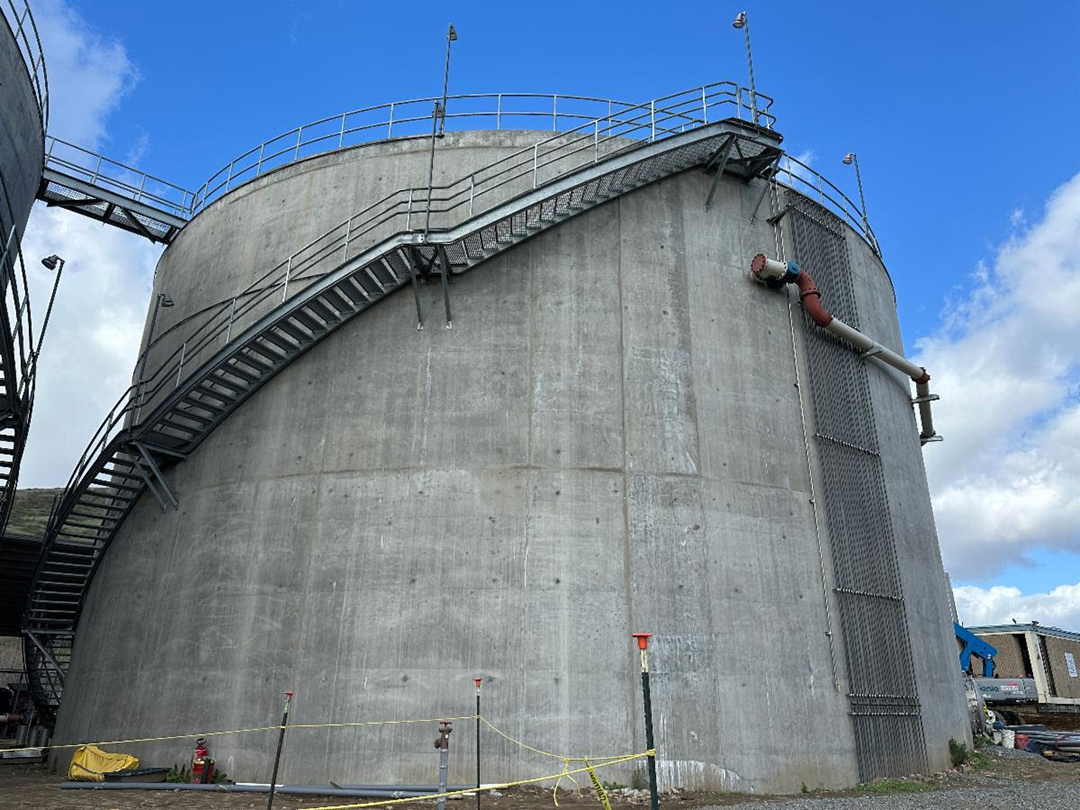
Each digester can store up to 1.4 million gallons, and stands 46 feet high and measures 75 feet in diameter. Photo: East County AWP

Each digester can store up to 1.4 million gallons, and stands 46 feet high and measures 75 feet in diameter. Photo: East County AWP

Next, construction will get underway on the energy recovery system. Located north of the Education Center, Anaergia is working on the final design, with construction scheduled this winter. The methane produced by three digesters will be captured and used to generate both heating and electricity. The energy recovery system will provide up to 30% of the project’s energy needs, saving the operators and ratepayers money.

Crews are preparing for the installation of the final 3,500 feet of 36-inch wastewater pipeline. Work is active at the East Mission Gorge Pump Station and just south of Lake One at Santee Lakes. This segment is set to be completed this summer.

The East County AWP successfully secured two critical water discharge permits from the San Diego Regional Water Control Board, a significant operational milestone.

Mast Boulevard Construction Progress 

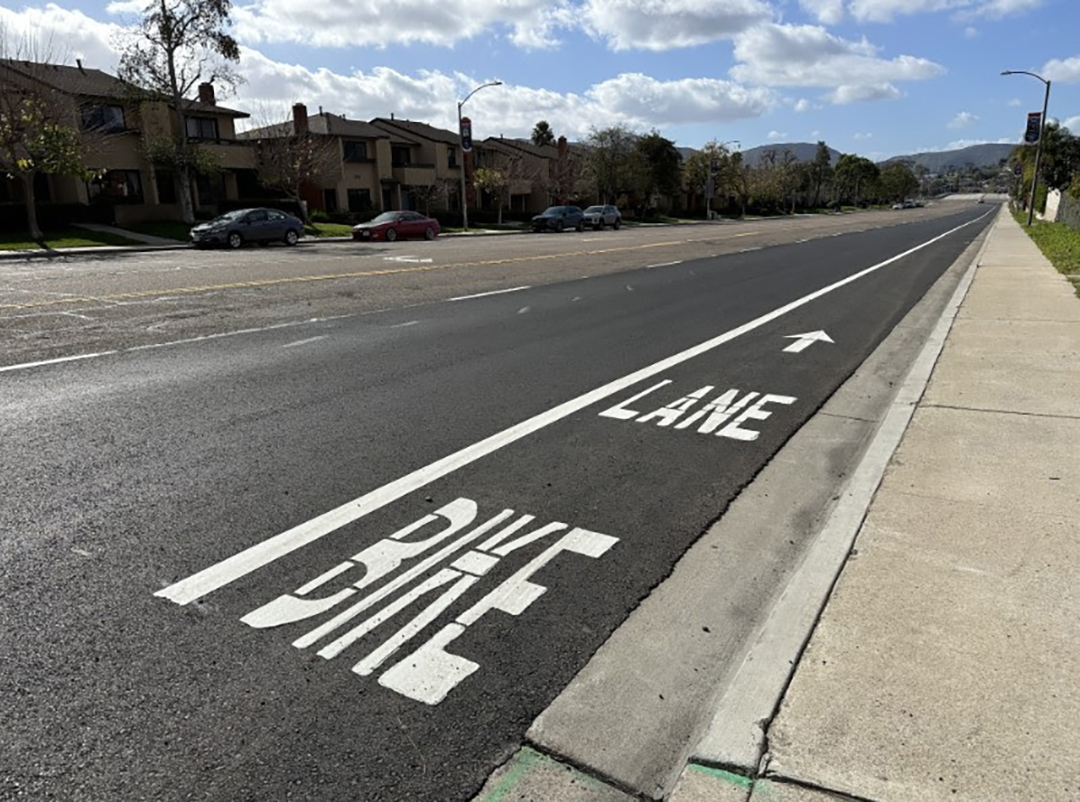
Construction work is complete and Mast Boulevard from Fanita Parkway to Vomac Road is now restored. Photo: East County AWP

Construction work is complete and Mast Boulevard from Fanita Parkway to Vomac Road is now restored. Photo: East County AWP

Mast Boulevard from Fanita Parkway to Vomac Road is a whole lot smoother after completion of final paving and striping work.

Crews are continuing work on Mast Boulevard from Vomac Road to W. Hartland Circle and are expected to wrap up by mid-to-late February. There is a 24-hour temporary closure of the second westbound lane near the work area. Expect paving and striping after these repairs are complete.

Habitat Restoration Restores Native Plants

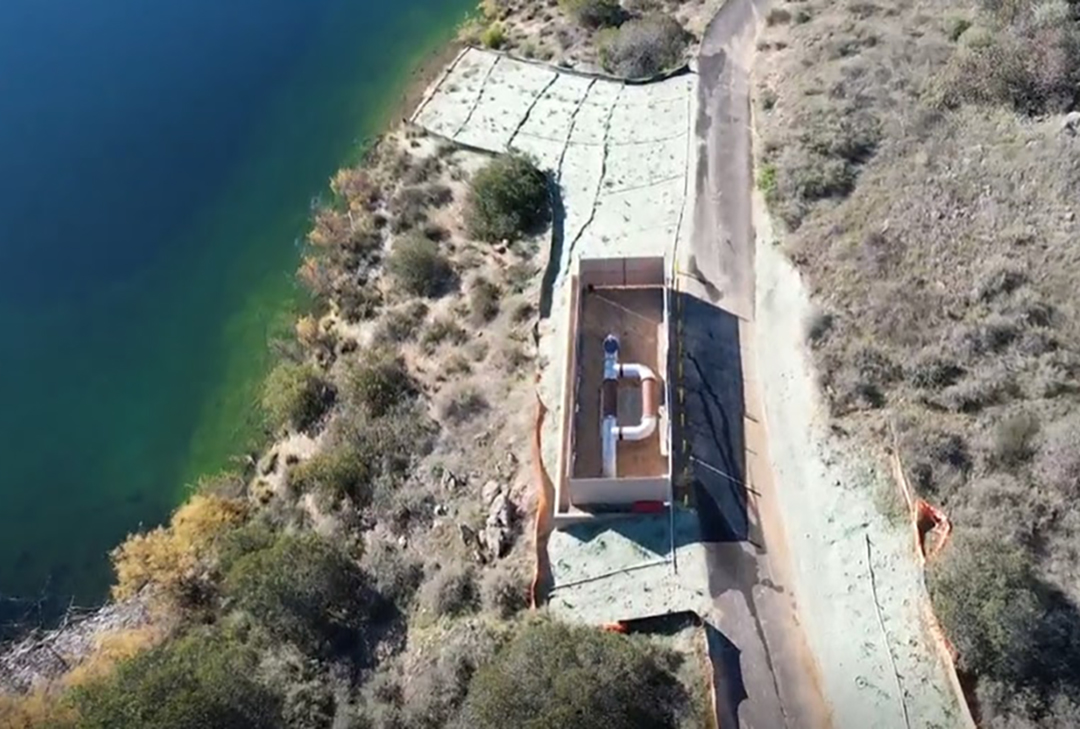
Native plants are being reintroduced after construction has been completed in several areas including at Lake Jennings. Photo: East County AWP

Native plants are being reintroduced after construction has been completed in several areas including at Lake Jennings. Photo: East County AWP

As part of ongoing restoration following the installation of purified and wastewater pipelines, new plantings were installed last month around Lake Jennings, the Historic Flume Trail, El Monte Road, Laurel Canyon Road, and the end of Mast Boulevard.

These plants are native to San Diego and the surrounding area. They include California sagebrush, San Diego County sunflower, bush sunflower, California buckwheat, laurel sumac, lemonade berry, and spiny redberry.

Planting is also being done north of Ganley Road, and hydroseeding near the East Mission Gorge Pump Station and along Fanita Parkway will bring a more vibrant landscape to East County for years to come.

Overnight Work Continues Through February

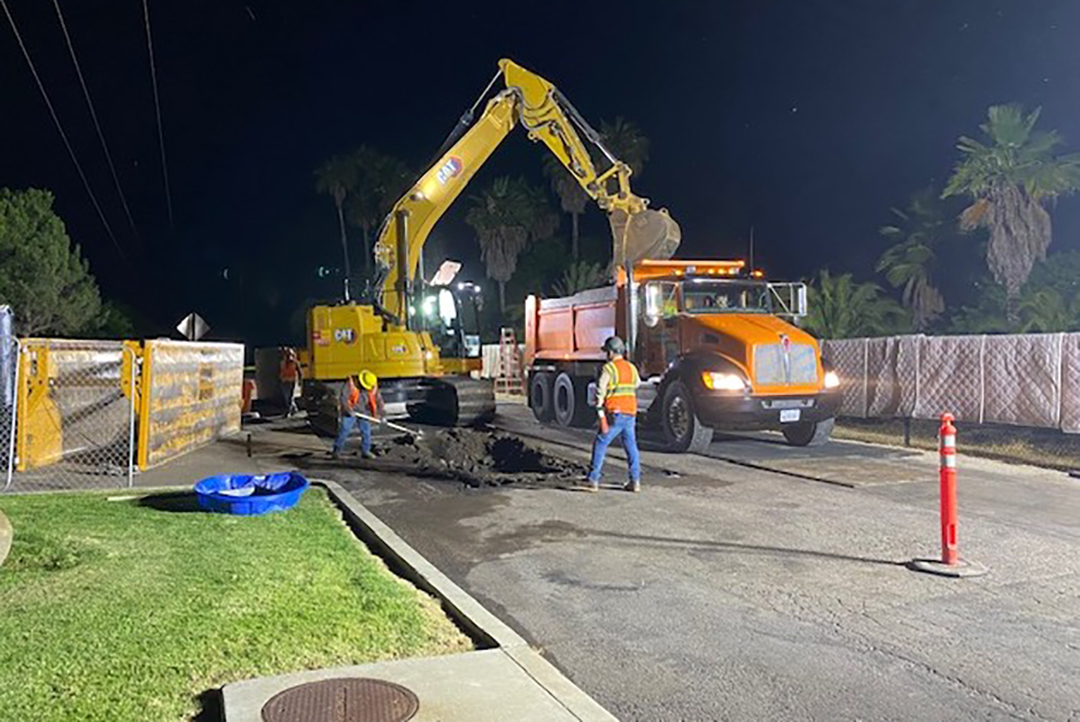
Overnight work on a wastewater pipeline continues along Fairmount Avenue between Twain Avenue and Mission Gorge Road in San Diego between 8:30 p.m. and 5:30 a.m., Monday through Thursday. Noise and bright lights, along with road and lane closures, may affect traffic and nearby residents and businesses. Home access will be maintained at all times. Work should be complete at the end of February.

Interactive Map Helps Residents Stay Updated On Program Progress

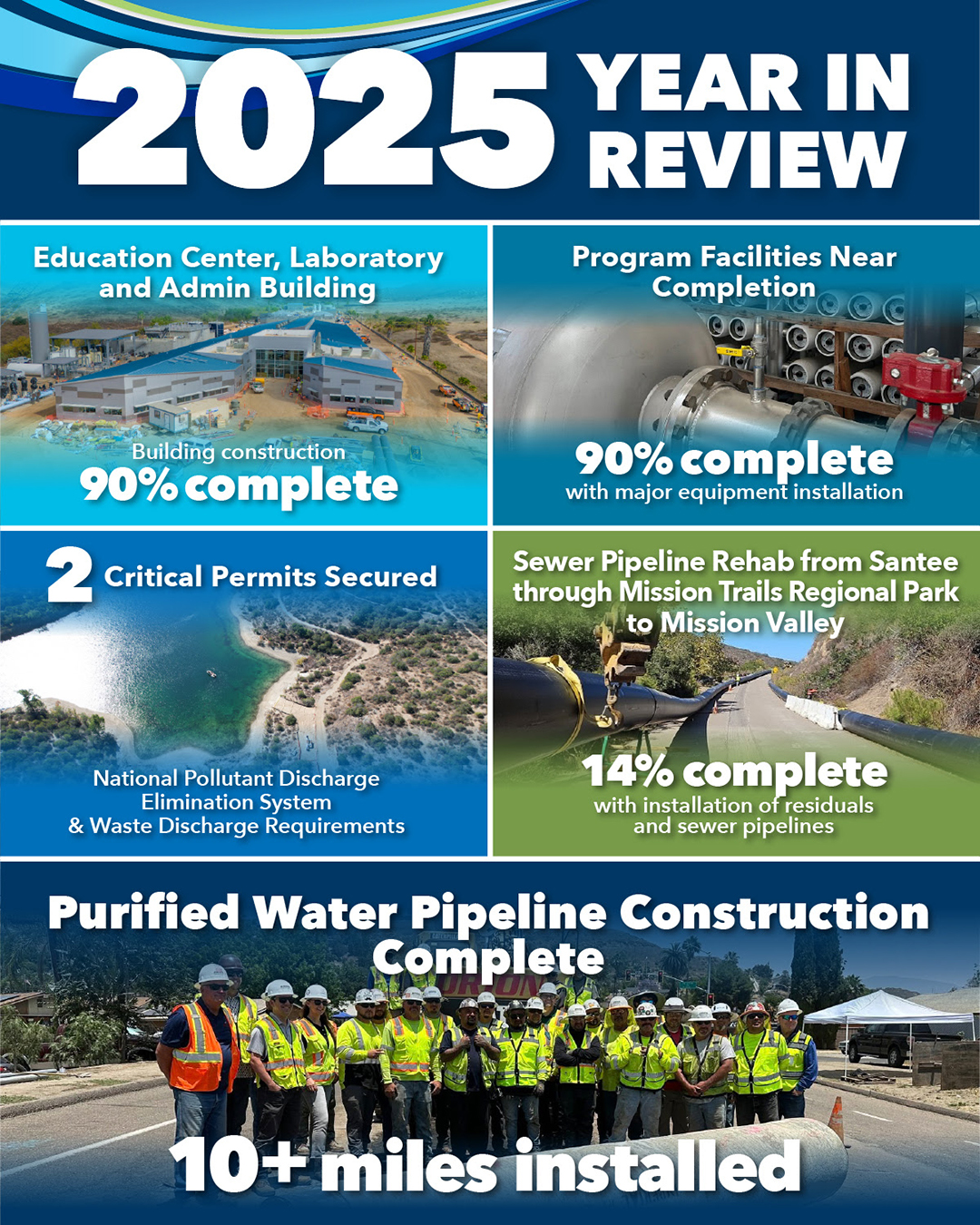
The East County Advanced Water Program made significant progress in 2025.

The East County Advanced Water Program made significant progress in 2025.

When completed, water from this project will provide potable water to customers in Padre Dam Municipal Water District, Helix Water District, and Lakeside Water District service areas, and the northern portion of the Otay Water District.

With construction in multiple locations throughout east county, the Program’s interactive map offers a useful tool for residents and businesses to track where work is happening. The map is updated regularly and accessible 24/7 through the EastCountyAWP.com website. Information is also available via social media at @eastcountyawp


Vallecitos Water District is nearing completion of the Tres Amigos waterline replacement project in the northern part of its district. Photo: Vallecitos Water District

Waterline Replacement Project Enhances Water Supply Reliability

The Vallecitos Water District is nearing completion of a major waterline replacement project, improving water system reliability for generations to come.

The Tres Amigos project serves customers in the northern part of the Vallecitos Water District, northeast of Gopher Canyon Road, along Ormsby Drive and Fairview Drive, with a small extension onto Carrio Drive. The six and eight-inch thin-wall steel pipelines were originally installed in the 1950s and 1960s.

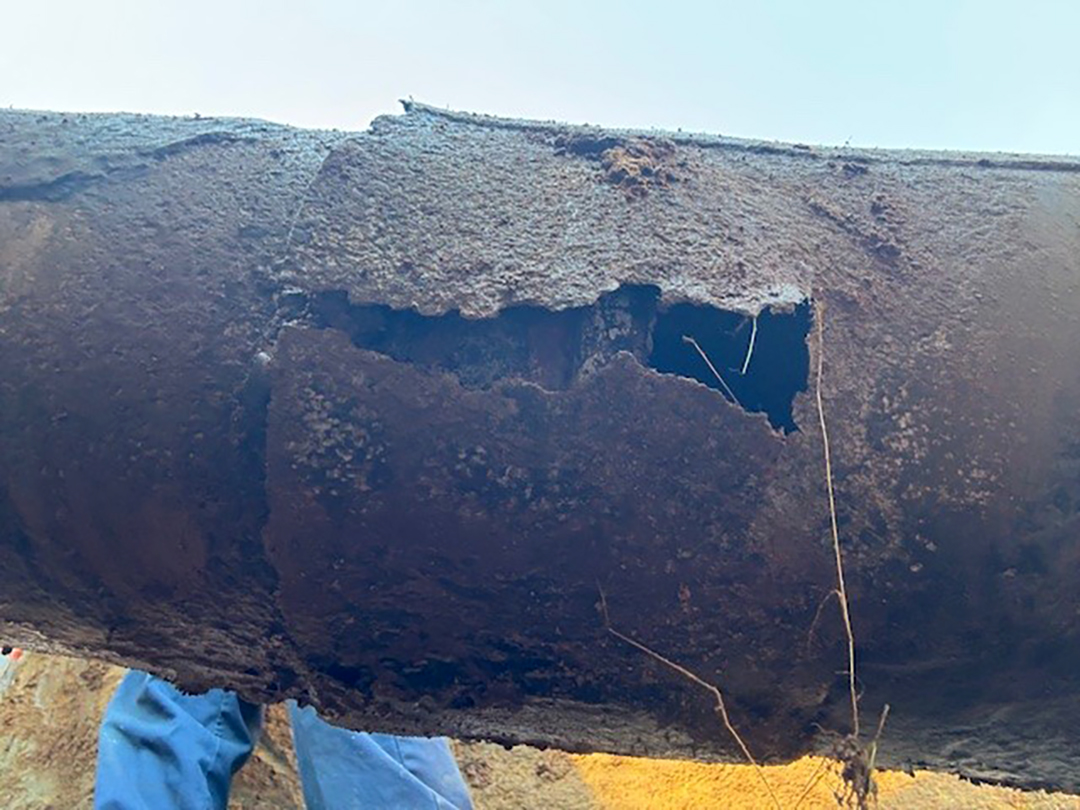
Due to aging and system impact over time, the pipeline had become prone to water main breaks as often as once a month, with considerable disruption for customers.

Long Lasting Relief for Vallecitos WD Customers

Aging thin-wall steel pipelines were responsible for as many as one break per month. Photo: Vallecitos Water District waterline replacement project

Aging thin-wall steel pipelines were responsible for as many as one break per month. Photo: Vallecitos Water District

The Vallecitos Board of Directors approved the replacement of 9,500 feet of pipeline most at risk. In addition, a key objective was to relocate the existing pipeline out of private residential backyards and into the roadways. This included relocating existing residential water meters for improved maintenance accessibility and safety.

Marissa Padilla, Vallecitos WD Capital Facilities Engineer, explained, “By upgrading the existing thin-walled steel pipeline to meet VWD’s current standards, we hope to provide long-lasting relief to our customers who have experienced recurring water main breaks and service interruptions in recent years.

“These improvements will also help reduce the strain on District resources by minimizing the need for ongoing emergency repairs.”

See video of the waterline repair project underway.

The aging steel pipelines are being replaced with new PVC pipes. The estimated lifespan of the new pipelines is 70 years.

The year-long project required extensive communication by the Vallecitos Water District and its contractor with affected residents whose water service would be temporarily disrupted to allow replacement of the pipeline, and coordination with property owners, allowing access by construction crews to remove and move the existing pipelines.

Resident Diane McDaniel said the water leaks had become a significant issue in their rural neighborhood. McDaniel said she was happy to learn about the project, despite the challenge presented by temporary water service disruptions and construction access.

“Vallecitos was always very good about notifying us through the phone system that we would be out of water until in the evening … They always got everything done ahead of time,” said McDaniel.

“I think it went really, really well. It went smoothly with all the input and help from the contractor, the Vallecitos Water District staff that was on the job.”

Construction crews were able to leave customer Diane McDaniel's backyard burial ground for her pets undisturbed. Photo: Vallecitos Water District

Construction crews were able to leave customer Diane McDaniel’s backyard burial ground for her pets undisturbed. Photo: Vallecitos Water District

Crews were even able to work with McDaniel to avoid disturbing an area of her property dedicated to a small pet graveyard near the existing water line that would be removed. “Holly and Goliath and Little Bit and Tutu, they’re all buried over there. And I thought, ‘Oh, my God, they’re going to be digging up dog bones and cat bones. They were able to avoid all that. That’s great!”

Resident Stuart McClure said the short-term inconvenience is an investment in the region’s future. He praised the district’s prompt response and efficient handling of issues, even at odd hours.

“Those breaks affect your life in a daily way. It’s surprising how important water is for our survival,” observed McClure. “It’s a major thing to have proper infrastructure.

“They might infringe upon your life for a few minutes, here and there. You’re going to get some valuable infrastructure that will serve you later on in life, especially if there’s a big fire.”

Project Prevents Future Breaks and Repairs

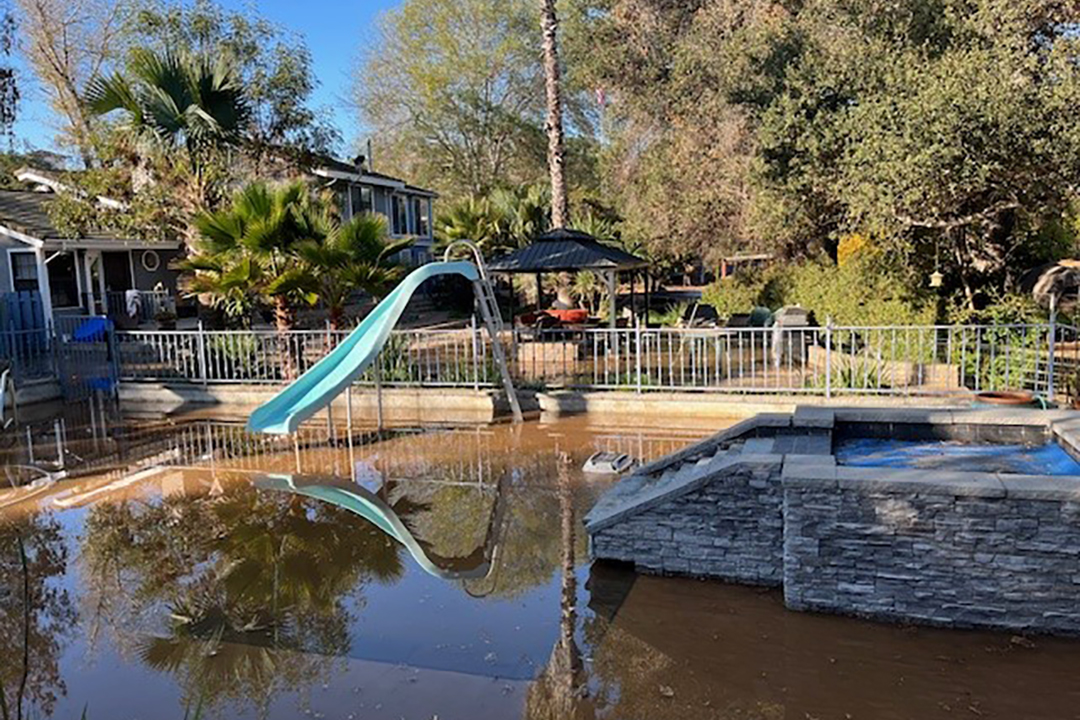
The replacement pipes made of PVC have a lifespan of 70 years and will prevent flooding like this long into the future. Photo: Vallecitos Water District

The replacement pipes made of PVC have a lifespan of 70 years and will prevent flooding like this long into the future. Photo: Vallecitos Water District

The installation of thicker, more durable PVC C900 DR 14 pipe is a significant improvement that will help prevent future breaks and repairs. Relocating the pipeline to more accessible areas will facilitate future maintenance and lessen the impact on local residents, securing a more reliable water system while also helping protect private properties.

Delivering safe, reliable water service while minimizing impacts to residents and the environment by investing in this infrastructure today will conserve a precious resource and ensure reliable service for generations to come.

Residents can learn more about the project on the Vallecitos Water District website.


A Reason To Survive (ARTS) interns co-designed, fabricated, and installed seven new pieces of community art at the Sweetwater Spigot, elevating a free water source and highlighting the importance of water conservation. Photo: A Reason To Survive

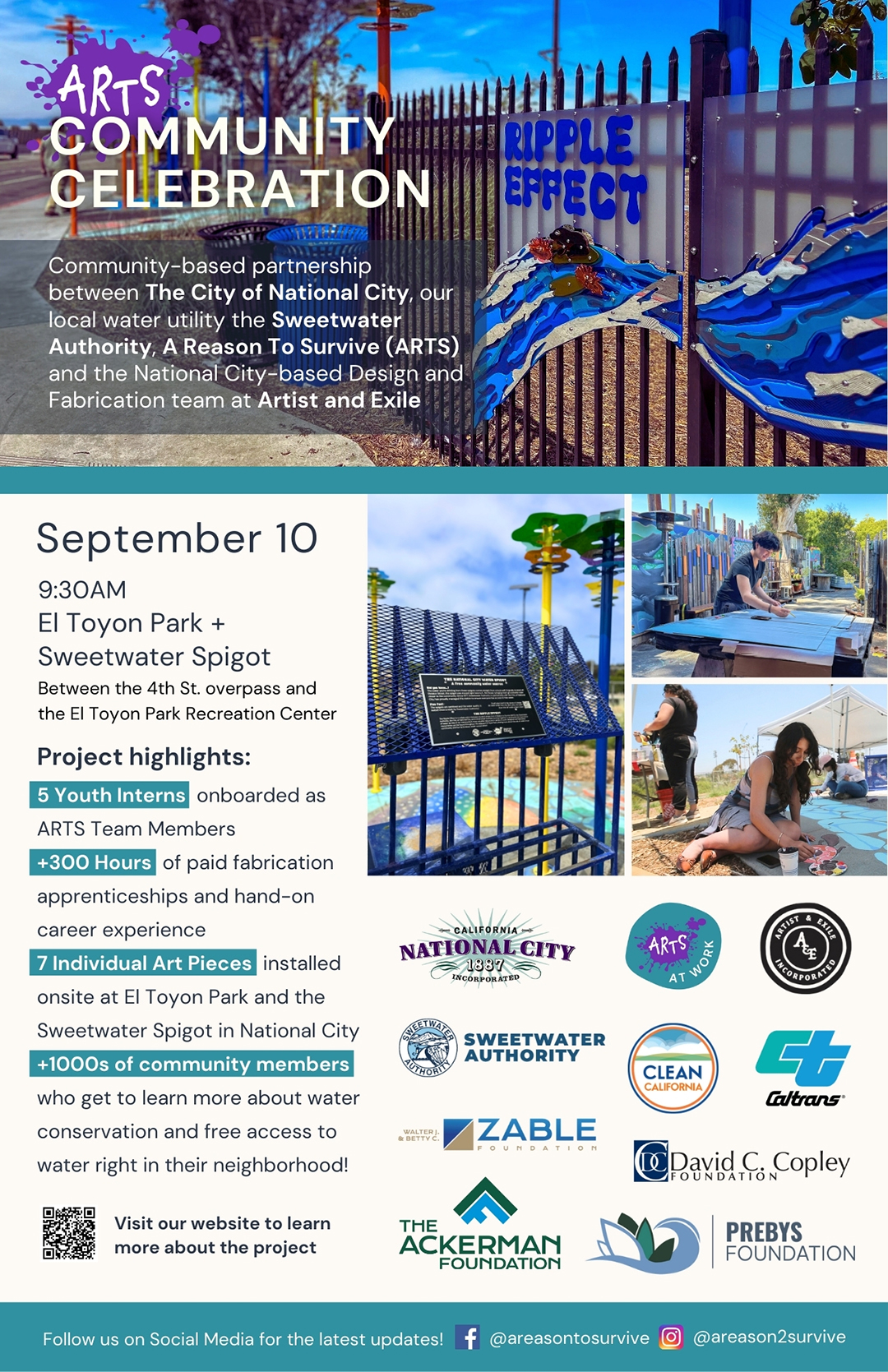
Ribbon Cutting For New Public Art at Sweetwater Spigot on Sept. 10

Sweetwater Authority invites the public to a community celebration and ribbon cutting for a new public artwork project titled “Ripple Effect” at the Sweetwater Spigot, the only publicly owned well station providing potable drinking water in San Diego County.

The event takes place on Wednesday, September 10, at 9:30 a.m. in El Toyon Park in National City. The water station is located at 1925 E. 4th Street by El Toyon Park, near the Interstate 805 bridge.

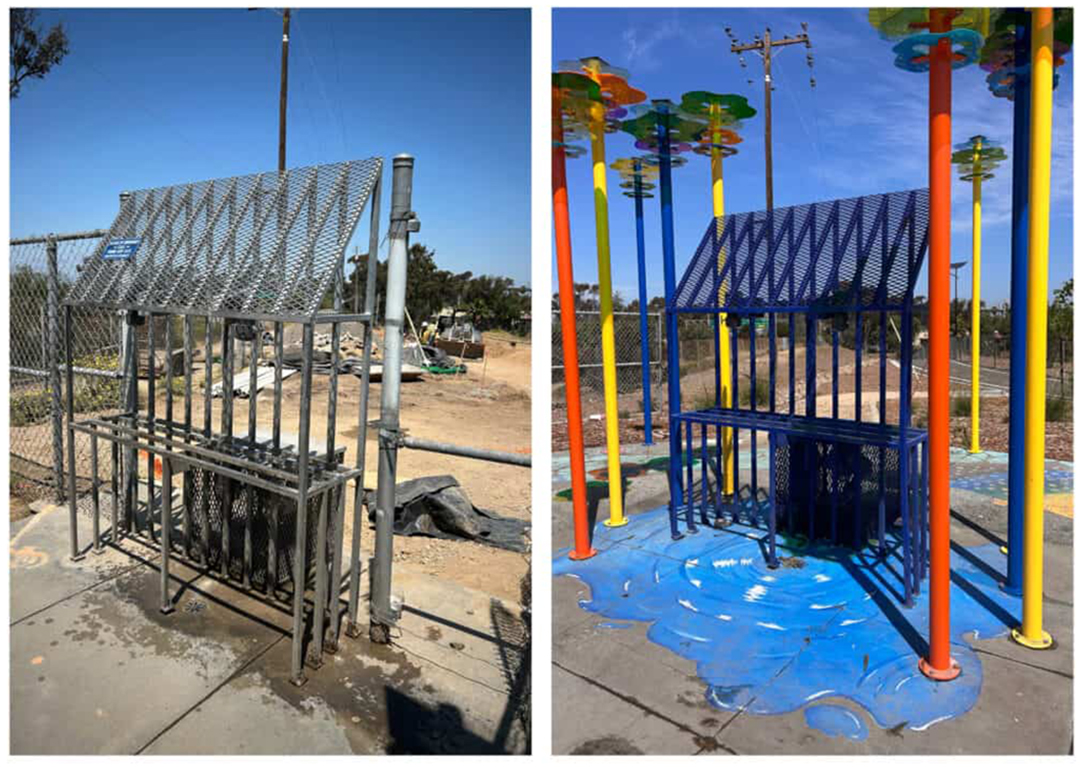
The Sweetwater Spigot before and after its renovation and makeover. Photo: San Diego Architectural Foundation

The Sweetwater Spigot before and after its renovation and makeover. Photo: San Diego Architectural Foundation

Ripple Effect represents a community-based partnership between City of National City, the Sweetwater Authority, the nonprofit A Reason To Survive (ARTS), and the National City-based Design and Fabrication team at ARTIST AND EXILE dba F-GMENT, where young people co-designed, fabricated, and installed seven new pieces of community art, elevating a free water source and highlighting the importance of water conservation.

The City of National City obtained funding for the public art enhancement to beautify the water station area through Caltrans’ Clean California Grant Fund.

Ripple Effect is nominated this year in the Public Art category in the annual San Diego Architectural Foundation “Orchids & Onions” awards. SDAF recognizes projects in the built environment with an impact on the San Diego region, whether positive or negative.

ARTS Interns Create New Public Artwork at Sweetwater Spigot

A Reason To Survive (ARTS) intern Addie E. works on the artwork titled "Mother Nature’s Conversion of Conservation" now installed at the Sweetwater Spigot. Photo: A Reason To Survive

A Reason To Survive (ARTS) intern Addie E. works on the artwork titled “Mother Nature’s Conversion of Conservation” now installed at the Sweetwater Spigot. Photo: A Reason To Survive

Five interns from ARTS invested 300 hours of work through its apprenticeship training program. ARTS provides arts education focused on design thinking, cultural equity, and healing-centered engagement to youth in the South County communities of San Diego County.

ARTS Youth Intern Addie E. worked on “Mother Nature’s Conversion of Conservation,” one of the seven artworks. She said of the experience, “I think it’s made me quite confident. I feel very happy that I’ve been able to excel and that I’ve been able to have an impact in the community. I mean, this is already brightening people’s days! It’s only been here for a short while, but there’s just been so much positive feedback.”

The finished artwork "Mother Nature’s Conversion of Conservation" is already drawing attention from visitors. Photo: A Reason To Survive

The finished artwork “Mother Nature’s Conversion of Conservation” is already drawing attention from visitors. Photo: A Reason To Survive

Groundwater Sources Remain Key Water Supply

The free water station is operated by the Sweetwater Authority and is open to the public for drawing water from a local well.

The station draws water from the San Diego Formation. The San Diego Formation is a geological feature primarily composed of marine sandstone and conglomerate sediments. It was formed roughly 1.5 million to 3.5 million years ago. This thick wedge of sediment acts as an important aquifer in the region, with ample storage capacity in the Lower and Middle Sweetwater Basins.

This aquifer is one of two groundwater sources used by the Sweetwater Authority. It draws groundwater from deep wells located in the San Diego Formation to help supply water to its customers. It is naturally filtered, then disinfected, and tested for safety before being offered to the public.

Sweetwater Authority customers receive an average of 70% of their water from local water supplies, including the Sweetwater River and the San Diego Groundwater Formation. The remainder is obtained from imported water sources.

The public is invited to attend the ribbon cutting ceremony on Sept. 10 for "Ripple Effect" at the Sweetwater Spigot. Photo: Sweetwater Authority

The public is invited to attend the ribbon-cutting ceremony on Sept. 10 for “Ripple Effect” at the Sweetwater Spigot. Photo: Sweetwater Authority

Any member of the public can access the well water directly from the spigots. The Sweetwater Authority provides water free of charge as part of a commitment it made when it acquired the water wells from the city upon its formation in 1977.


The East County AWP construction team is working to install a 28-inch bypass pipeline along Mission Gorge Road. It is 20,500 linear feet, or about 3.9 miles long. Photo: East County AWP

Construction Heats Up This Summer On East County AWP

Summer 2025 marks the third year of construction on the East County Advanced Water Purification Program facilities in Santee.

Progress on the East County Advanced Water Purification Program (East County AWP) continues on schedule at multiple East County locations, with significant steps forward reached as the project works its way toward completion.

The last piece of purified water pipeline was installed at Riverside Drive and Valle Vista Road in Lakeside. Photo: East County AWP

The last piece of purified water pipeline was installed at Riverside Drive and Valle Vista Road in Lakeside. Photo: East County AWP

A major project milestone was reached in June. Purified water pipeline construction is officially complete. The final 20-foot piece of the pipeline was installed in Lakeside last month.

Since construction began in 2022, just over 51,000 linear feet of purified water pipeline has been installed. This 10-mile pipeline will transport purified water from the East County AWP Facility in Santee to Lake Jennings. Restoration and roadway paving is wrapping up this portion of the project 

See a brief video update on the East County AWP progress here.

Mission Trails Regional Park Closures

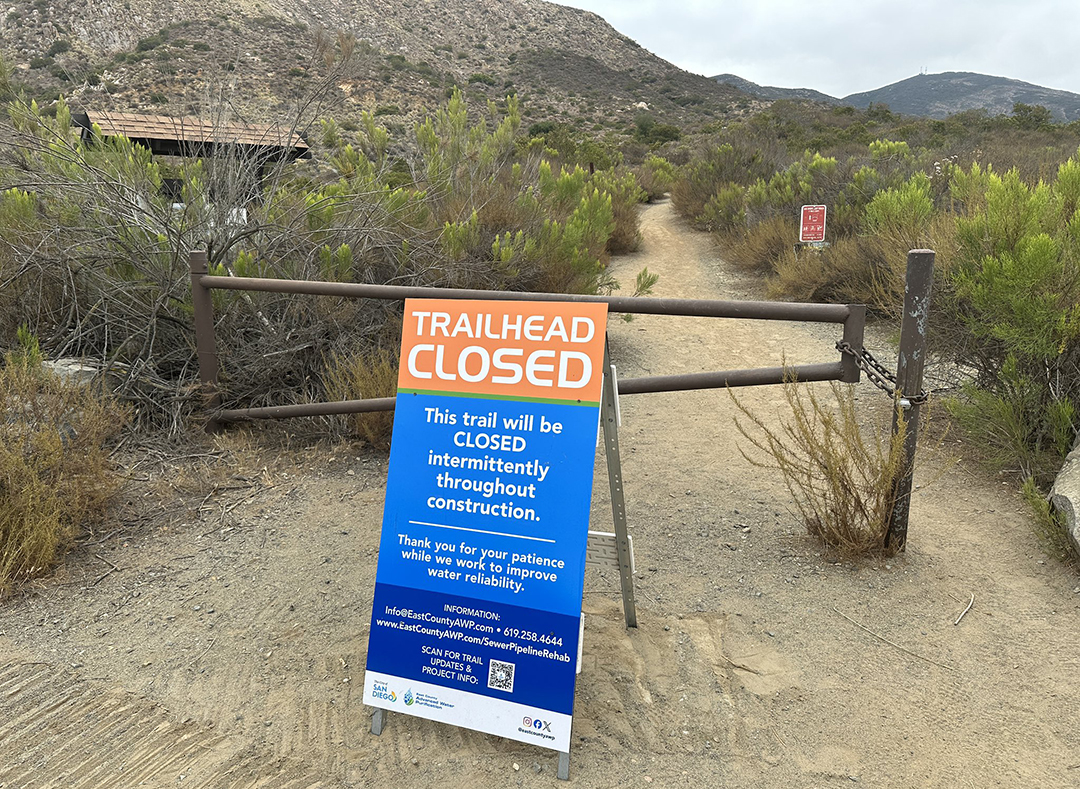
Visitors to Mission Trails Regional Park may have seen the installation of a project bypass pipeline along the Father Junipero Serra Trail. This bypass pipeline serves to protect Mission Trails Regional Park against sewer spills once construction is underway to rehabilitate a sewer pipeline and install a new residuals pipeline.

Temporary closure of trailheads in Mission Trails Regional Park will take place through summer 2028. Photo: East County AWP

Temporary closure of trailheads in Mission Trails Regional Park will take place through summer 2028. Photo: East County AWP

The 28-inch bypass pipeline is being installed along the entire 2.6 mile stretch of the trail with crews working east to west, fusing the pipeline sections together and undergrounding it when they reach intersections and trailheads.

The project requires the temporary closure of trailheads for up to two to three-day periods from 7 a.m. to 3:30 p.m.

It has also resulted in a long-term closure of the Father Junipero Serra Trail to all vehicles from the gate near the Visitor Center to the Old Mission Dam parking lot. This closure will last through summer 2028. The trail will remain open to pedestrians and bicyclists.

Overnight Work Underway At Santee Lakes

Overnight work is underway at Santee Lakes for the East County AWP. Photo: East County AWP

Overnight work is underway at Santee Lakes for the East County AWP. Photo: East County AWP

Overnight work on the east side of Santee Lakes is now underway. Crews are working at various locations on the east road from the roundabout near the park entrance on Fanita Parkway up to the East County Advanced Water Treatment Facility, just north of the lakes.

A 20-inch sludge line is being installed using a trenchless construction method called sliplining which may result in noise and bright lights for nearby neighbors. This overnight work is expected to be completed by the end of November 2025.

Work will take place during the following days and hours:

Monday night to Thursday morning from 7 pm. to 6 a.m.

Thursday night to Saturday morning from 7 p.m. to 5:30 a.m.

West Side of Santee Lakes Reopens For Summer

The west side of Santee Lakes is now reopened for recreation. Photo: East County AWP

The west side of Santee Lakes is now reopened for recreation. Photo: East County AWP

Great news for Santee Lakes visitors. The west road where wastewater and brine pipelines were being installed has been reopened. Pedestrians, bicyclists and cars are able to use the roadway following the completion of this pipeline work, marking another project milestone.

Interactive Map Keeps Residents Updated On Progress

When completed, water from this project will provide potable water to customers in Padre Dam Municipal Water District, Helix Water District, and Lakeside Water District service areas, and the northern portion of the Otay Water District.

With construction in multiple locations throughout east county, the Program’s interactive map offers a useful tool for residents and businesses to track where work is happening. The map is updated regularly and accessible 24/7 through the EastCountyAWP.com website. Information is also available via social media at @eastcountyawp

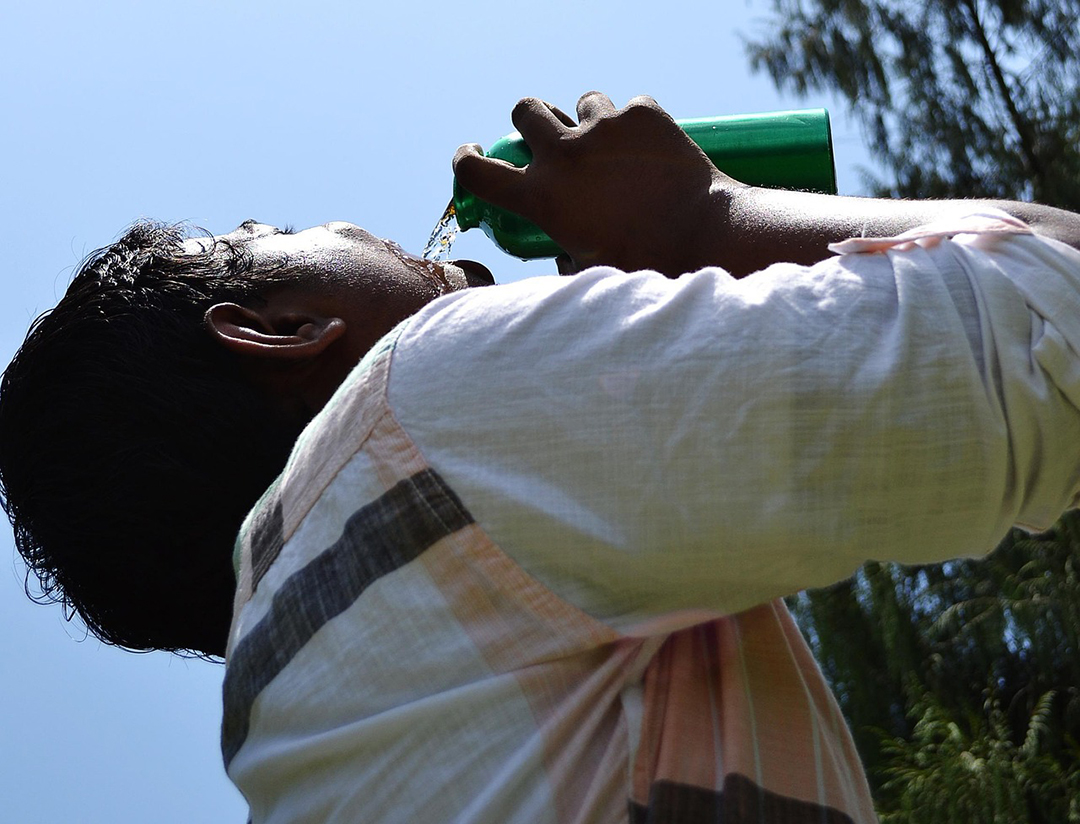
On National Hydration Day on June 23, fill up your reuseable bottle with tap water to stay healthy. Photo: GSquarePhoto

National Hydration Day Highlights Safe, Reliable Drinking Water

National Hydration Day is June 23, a time to recognize the essential role of one of humanity’s resources: safe, reliable drinking water.

National Hydration Day was originally established in 1991 at the start of the summer season to remind athletes of the importance of hydration and to promote the benefits of proper hydration for overall health.

It also demonstrates the availability of the healthiest way to stay hydrated: the drinking water provided by water agencies like the 22 member agencies of the San Diego County Water Authority.

Hydration Matters To Your Health

Stay aware of your hydration by monitoring your thirst, especially when working or playing outdoors in warm summer weather. Photo: Nuzree

Stay aware of your hydration by monitoring your thirst, especially when working or playing outdoors in warm summer weather. Photo: Nuzree

Water makes up 50 to 70% of the healthy human body weight. It lubricates joints, regulates your body temperature, flushes toxins via urine and sweat, and supports every organ system from brain function to heart health.

Scientific studies underline hydration’s importance. Proper hydration supports cognitive performance, mood stability, and may slow age-related cellular decline.

The American Heart Association recommends that men drink about fifteen and a half cups of water and women drink about eleven and a half cups of water each day. Older adults should pay extra attention to hydration needs to prevent rapid fluid loss from decreased total body water or medication effects .

Water and water-rich foods are the best sources of hydration to keep your heart healthy and maintain a regulated temperature. Relying on sodas, sports drinks, or sweetened coffee and frozen drinks to stay hydrated can introduce too much sugar into your diet.

Safe Drinking Water Delivered Daily

Drought-Safe, Supply Investments-Carlsbad Desalination Plant-drought

The San Diego region’s diversified water supply portfolio includes highly reliable, locally controlled and drought-proof supplies from the Claude “Bud” Lewis Carlsbad Desalination Plant. Photo: San Diego County Water Authority

On National Hydration Day — and every day — the mission of the San Diego County Water Authority and its 22 member agencies is to ensure that every tap delivers water that meets or exceeds federal and state standards.

Federally regulated under the Safe Drinking Water Act, public water systems are monitored for contaminants, including microbial threats, chemical hazards, or disinfection byproducts. All water and wastewater systems are regularly tested to ensure quality on a regular basis.

The delivery of safe water to the Water Authority’s 22 member agencies and their customers is the top priority for the Water Authority. Regular water quality monitoring and the use of online monitoring equipment ensure that the Water Authority is delivering high-quality, safe water to its member agencies 24 hours a day, seven days a week.

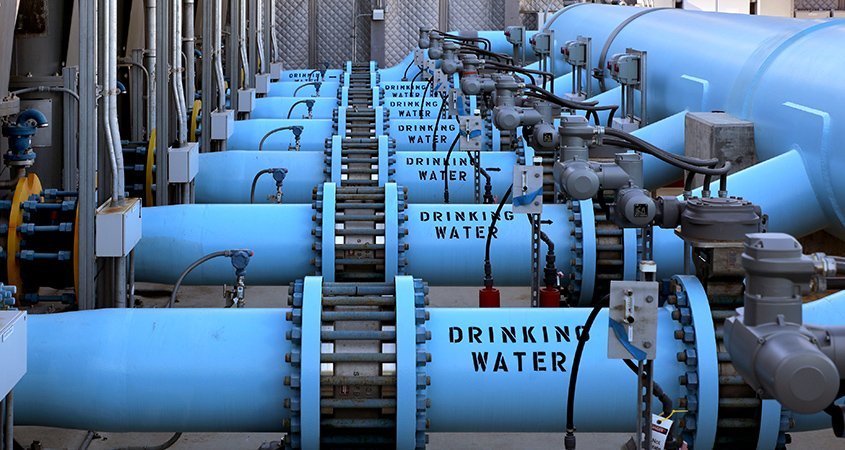
Potable water supplied by the Water Authority to its member agencies comes from three primary sources. Whether the water is treated by the Metropolitan Water District, the Water Authority, or a local agency, all treated water served in San Diego County meets or exceeds rigorous state and federal water quality standards.

Each member water agency publishes an annual Water Quality Report, such as this example from the City of San Diego, and from the Padre Dam Municipal Water District, which provide details about treatment and compliance.

Are Your Hydration Habits Healthy?

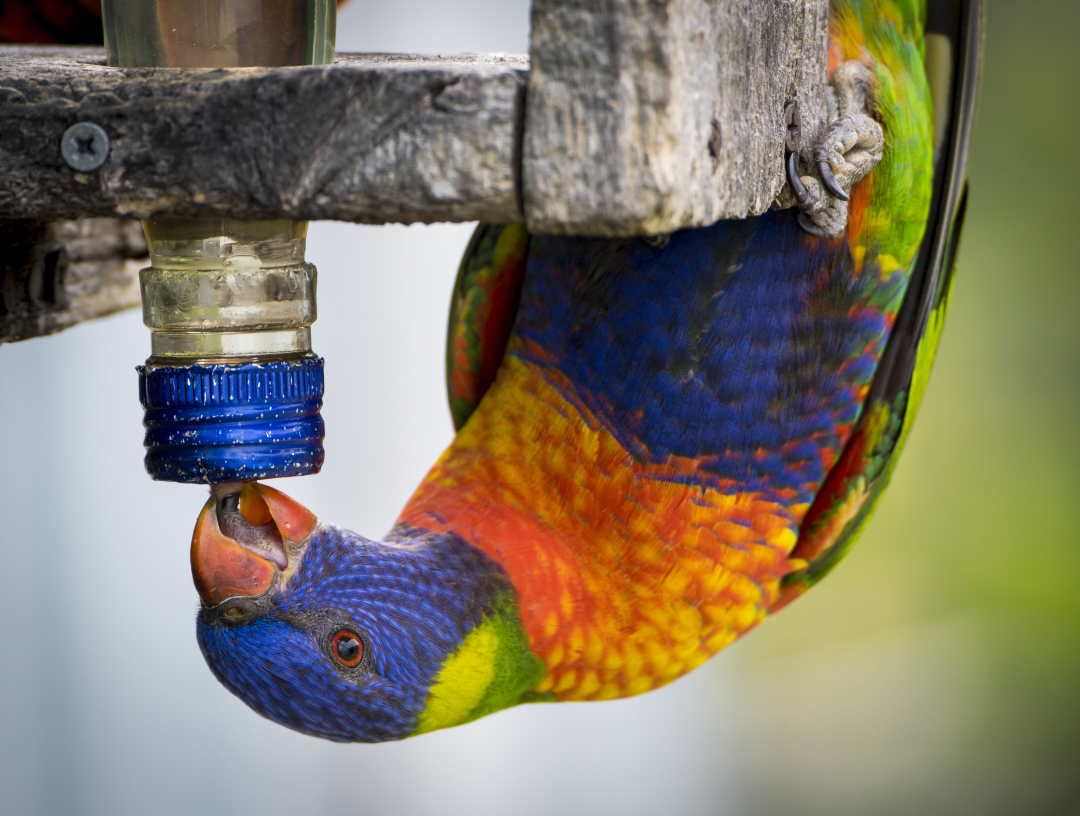
Your lorikeet can get its drinking water this way. You should fill your reusable water bottles and chill them in the refrigerator for your cold drinking water. Photo Wade Tregaskis/CC

Your lorikeet can get its drinking water this way. Fill your reusable water bottles with water and chill them in the refrigerator for cold drinking water. Photo: Wade Tregaskis/CC

You can use National Hydration Day as a reminder to check your own hydration habits.

Make water your primary source of hydration. Fill your reuseable bottle with tap water and put it into your refrigerator at night so it’s ready and waiting for you in the morning.

Choosing tap water over bottled beverages is eco‑friendly, budget‑friendly, and health‑friendly. Public water systems are strictly regulated, while bottled water is less so. Reusable bottles reduce plastic waste. Save money and save the environment by using tap water.

If your taste buds need more variety than plain water, add lemon, cucumber, or mint to your reusable drinking water bottle. National flavoring can help you ensure you reach your daily hydration goals.

Learn the signs of dehydration from experts such as the Mayo Clinic, which can show up quickly during hot summer days, especially if you are outside and active. It is especially dangerous for infants, children, and older adults.

Commitment to Community Well‑Being

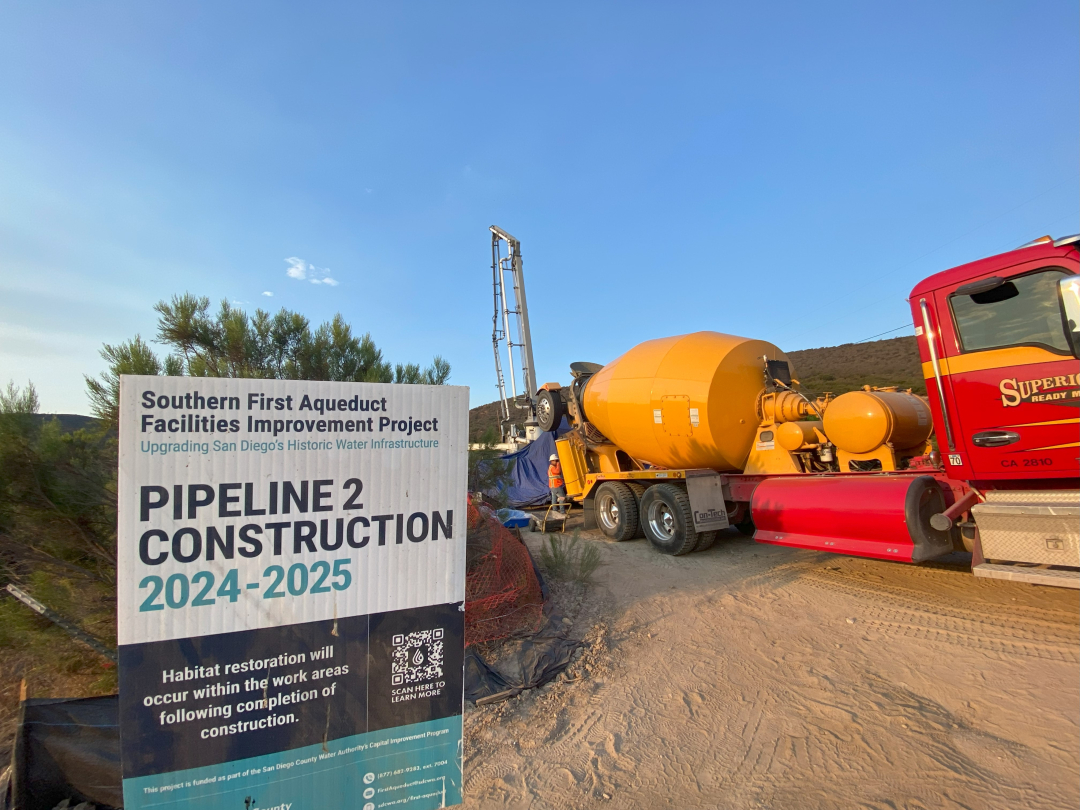
Work continues on the Water Authority's historic First Aqueduct to ensure safe, reliable water supplies for the San Diego region well into the future. Photo: San Diego County Water Authority

Work continues on the Water Authority’s historic First Aqueduct to ensure safe, reliable water supplies for the San Diego region well into the future. Photo: San Diego County Water Authority

Investments by the San Diego County Water Authority and its member agencies in treatment plants, pipeline maintenance, and highly trained water professionals at all levels ensure safe, reliable water is available to support your health on National Hydration Day and every day.