Tag Archive for: Water Conservation

IRWM-SanDiego Wild Animal Park-Water Conservation

State Awards $15 Million for San Diego Regional Water Projects

The California Department of Water Resources has awarded more than $15 million in grant funds to advance several regional water projects in San Diego County, ranging from water recycling and reuse to water conservation.

The San Diego County Water Authority submitted the funding request on behalf of the San Diego Integrated Regional Water Management Program, or IRWM. The San Diego IRWM Program began in 2005 as an effort by water agencies, wastewater agencies, stormwater and flood managers, watershed groups, business leaders, disadvantaged communities, tribes, agriculture, and nonprofit stakeholders to improve water resources planning in the region.

The statewide IRWM Program is supported by bond funding from the California Department of Water Resources to fund competitive grants for projects that improve water resources management.

Collaboration with county agencies, nonprofits improves water supply and conservation

“These grants will provide much-needed funding for important local water supply projects and water-use efficiency measures, along with a disadvantaged community project in National City,” said Water Authority Board Chair Jim Madaffer. “Regional collaboration by the Water Authority and a host of partners makes these projects possible. Once again, this shows how San Diego County is stronger together.”

Madaffer praised the San Diego IRWM Regional Water Management Group and the Regional Advisory Committee for their work over the past year to secure the $15,336,336 grant. Since 2008, the San Diego region has secured more than $111 million in funds for 74 high-priority water management projects through the IRWM process. The projects help to achieve goals established in the San Diego IRWM Program and the Water Authority’s Urban Water Management Plan.

The following regional water projects will receive funding in the current round:

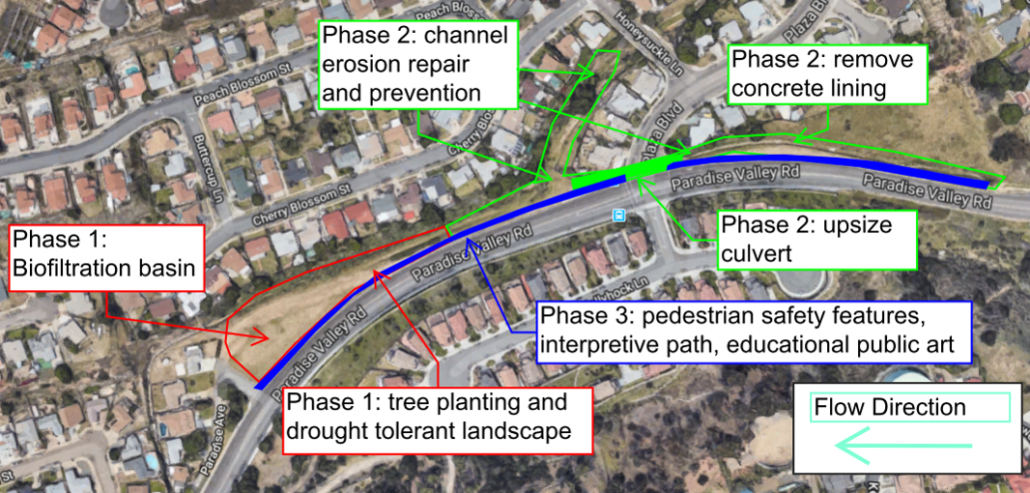
  • Paradise Valley Creek Water Quality and Community Enhancement, City of National City, Flood Damage Reduction, $3,681,056
  • Pure Water Oceanside, City of Oceanside, Water Supply–Groundwater, $3,115,000
  • North County Recycled Water Project, San Elijo Joint Powers Authority, Water Supply–Recycled Water, $2,820,000
  • North City Pure Water Facility Influent Pump Station and Conveyance Pipeline, City of San Diego, Water Supply–Recycled Water, $1,477,600
  • 2020 Regional Water-Use Efficiency Programs, San Diego County Water Authority, Water Conservation, $1,440,000
  • San Elijo Stormwater Capture & Reuse, San Elijo Joint Powers Authority, Water Supply–Recycled Water, $1,195,000
  • Lower Santa Margarita River Indirect Potable Reuse Pilot Project, Fallbrook Public Utility District, Water Supply–Recycled Water, $687,500

In addition, the grant allocates $920,180 to the Water Authority to administer the grant.
National City-IRWM Grants-Water Resilience

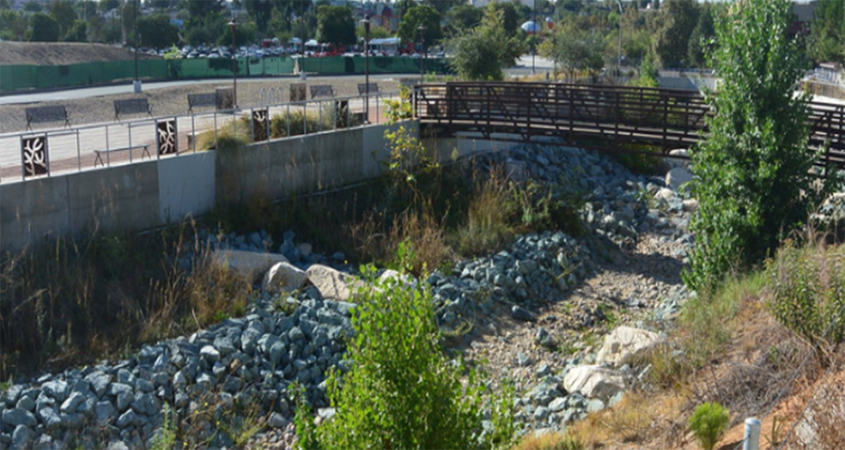
The Paradise Valley Creek Water Quality and Community Enhancement project in the City of National City is among water projects receiving state grant funds. Graphic: City of National City

Regional approach to create resilient and diverse water supply portfolio

“By working together for more than 12 years, the regional IRWM Program has created a legacy of collaboration by public agencies and nonprofit organizations in the region to increase the long-term reliability and resiliency of the San Diego region’s water supply and diversify our local supply,” said Mark Stadler, San Diego regional IRWM program administrator. “Investing in water reuse, water efficiency, and conservation projects are key parts of our success to ensure a regional approach to integrated watershed management.”

On November 4, 2014, California voters approved Proposition 1, the Water Quality, Supply, and Infrastructure Improvement Act of 2014. Proposition 1 authorized $510 million in IRWM funding. Funds are allocated to 12 hydrologic region-based funding areas.

The Proposition 1 IRWM Grant Program, administered by DWR, provides funding for projects that help meet the long-term water needs of the state, including:

  • Assisting water infrastructure systems adapt to climate change;
  • Providing incentives throughout each watershed to collaborate in managing the region’s water resources and setting regional priorities for water infrastructure; and
  • Improving regional water self-reliance, while reducing reliance on Sacramento-San Joaquin Delta.

“Water is such a vital resource, that it is critical we continue to take action to ensure communities have access to clean water supplies, reliable flood protection and healthy ecosystems.” said DWR Director Karla Nemeth when announcing the San Diego regional grant on July 3. “These grants will support agencies and projects to continue local momentum in creating a more diverse water supply portfolio, strengthening partnerships and addressing climate change.”
Local Leaders Discuss Impacts of Water Conservation Laws

Four elected officials representing area water districts expressed frustration with state laws aimed at water conservation during an American Liberty Forum of Ramona informational meeting Saturday, June 27.

Roughly 50 attendees gathered at Ramona Mainstage to hear the “Water Regulations Today and Tomorrow” presenters discuss the pending impacts of Senate Bill 606 and Assembly Bill 1668, which were signed into law by former Gov. Jerry Brown in May 2018.

NV5 Awarded $3M to Support Water Conservation in the Western US

Funding from NASA and the California Department of Water Resources asks Quantum Spatial to provide remote sensing services.

Less Water Could Sustain More Californians If We Make Every Drop Count

California isn’t running out of water,” says Richard Luthy. “It’s running out of cheap water. But the state can’t keep doing what it’s been doing for the past 100 years.”

Luthy knows. As a professor of civil and environmental engineering at Stanford, as well as director of a National Science Foundation center to re-invent urban water supply (known as ReNUWIt), he has spent decades studying the state’s metropolitan areas.

Take Ten Minutes to Track Down Leaks During Fix-A-Leak Week 2020

Easily fixed water leaks in American households account for nearly one trillion gallons of water wasted annually. The average household leaks nearly 10,000 gallons of water every year. This would wash 300 loads of laundry and could cost you an additional 10% on your water bill.

Fix-A-Leak Week 2020 is March 16-22. It was created by the U.S. Environmental Protection Agency and is supported by WaterSense partners across the U.S. and Canada, including the San Diego County Water Authority and many of its 24 member agencies.

‘This System Cannot Be Sustained’

The Colorado River Basin is the setting for some of the most drawn-out and complex water issues in the Western U.S. In 2019, the Colorado River Drought Contingency Plan — a water-conservation agreement between states, tribal nations and the federal government for the basin, now in its 20th year of drought — passed Congress. This year, it goes into effect.

2020 will also see the start of the renegotiation of the Colorado River Interim Guidelines. The guidelines, which regulate the flow of water to users, were created in 2007 without tribal consultation and are set to expire in 2026. The 29 tribal nations in the upper and lower basins hold some of the river’s most senior water rights and control around 20% of its annual flow.

West’s Biggest Reservoir Is Back on the Rise, Thanks to Conservation, Snow

LAS VEGAS—The largest reservoir in the Western U.S., Lake Mead, is rising again after more than a decade of decline, and at least some credit goes to the local National Hockey League team.

“Reality check!” Ryan Reaves, right wing for the Vegas Golden Knights, yells as he body-slams a man through a plate-glass window for excessive lawn watering in a television commercial. “Vegas is enforcing water waste big time.”

Ads like this began airing last year as part of a campaign by the Southern Nevada Water Authority to persuade the more than two million residents of this sprawling desert metropolis to use less water. Using a carrot-and-stick approach, including paying landowners to remove grass and fining for overuse, the agency said it has cut total Colorado River water consumption by 25% over the past two decades, even as the population it serves has grown around 50%.

Driving Water Conservation

As California approaches what could be another drought, water utilities are eager to find new ways of curbing water demand. Stanford researchers have developed a machine learning model that detects unexpected water-use consumption patterns – data water utilities can use to inform resource planning and water conservation campaigns.

Projects Create Wetlands, Improve Water Quality in San Diego Region

Since 2005, the San Diego Integrated Regional Water Management Program has supported and funded water conservation, water quality and resource projects throughout San Diego County.

Program partners, including staff of the San Diego County Water Authority and its 24 member agencies, the California Department of Water Resources, and regional water industry leaders, met at the Water Conservation Garden at Cuyamaca College Monday to celebrate 15 years of achievements.

The program facilitates collaboration on water resources planning and projects in the region by water retailers, wastewater agencies, stormwater and flood managers, watershed groups, the business community, tribes, agriculture, and nonprofit stakeholders.

IRWM - SD Wild Animal Park Biofiltration Wetland

Projects Create Wetlands, Improve Water Quality in San Diego Region

Since 2005, the San Diego Integrated Regional Water Management Program has supported and funded water conservation, water quality and resource projects throughout San Diego County.

Program partners, including staff of the San Diego County Water Authority and its 24 member agencies, the California Department of Water Resources, and regional water industry leaders, met at the Water Conservation Garden at Cuyamaca College Monday to celebrate 15 years of achievements.

The program facilitates collaboration on water resources planning and projects in the region by water retailers, wastewater agencies, stormwater and flood managers, watershed groups, the business community, tribes, agriculture, and nonprofit stakeholders.

Collaboration improves regional water quality

Projects supported and funded by the program, or IRWM, have increased long-term water supply reliability, improved water quality, created wetlands and increased local water supply sources. Funding for the IRWM projects is provided from several propositions approved by voters and administered through the California DWR.

“Since it started, the Water Authority has been a strong supporter of the IRWM, partnering with the City and County of San Diego to develop the program,” said Water Authority General Manager Sandra L. Kerl, in a keynote address at the Monday meeting. “Bringing diverse stakeholders together through collaboration funds water reliability projects throughout the San Diego region.”

The collaboration has resulted in improved water supply reliability through the successful funding of conservation, water reuse, and other supply projects throughout the region, she said.

Another benefit of collaborating through the program is it brings traditionally underrepresented communities to the table to have projects funded.

Environmental health and safety, open space

The San Diego IRWM program has helped fund 25 projects in disadvantaged and underrepresented communities supporting the improvement of water reliability and water reliability in all parts of the region.

A project in Encanto to improve Chollas Creek was funded under the IRWM Program and sponsored by the Jacobs Center for Neighborhood Innovations Project.

The restoration of Chollas Creek was intended to improve environmental health and safety, surface water quality, and availability of green open space for Encanto, a disadvantaged urban community in San Diego.

IRWM Program - Chollas Creek - WNN

A project in Encanto to improve Chollas Creek was funded under the IRWM Program. Photo: Jacobs Center for Neighborhood Innovations Project

Wetlands, educational opportunities

Another project funded under the IRWM program, created wetlands to improve water quality at the San Diego Wild Animal Park. The biofiltration wetland project, sponsored by the San Diego Zoo Global, has also served to educate thousands of students, teachers, and park visitors through various programs.

The IRWM continues to identify opportunities to fund projects to bring multiple benefits to the region.

The program is included in California’s draft Water Resilience Portfolio, released in January. Three state agencies created the portfolio, which proposes recommended actions to help California cope with more extreme droughts and floods, rising temperatures, declining fish populations, aging infrastructure and other challenges.

Several state officials visited San Diego County on July 18, 2019 to assess the region’s water projects as part of their role in developing a water portfolio strategy for the state.