Tag Archive for: Water Conservation

Urban Water Management Plan-2020-San Diego County Water Authority-San Vicente Dam

Water Authority Board Approves 2020 Urban Water Management Plan

The San Diego County Water Authority Board of Directors May 27 approved the Water Authority’s 2020 Urban Water Management Plan for timely submission to the state. The plan highlights how regional investments in a “water portfolio approach” to supply management and a sustained emphasis on water-use efficiency mean that San Diego County will continue to have reliable water supplies through the 2045 planning horizon – even during multiple dry years.

The Board approved the final plan following a public hearing on March 25 and a 60-day public comment period which ended May 6. The final 2020 UWMP will be submitted to the California Department of Water Resources by the July 1, 2021, deadline.

“Successful efforts to create a reliable water supply coupled with the development of new local sources by the Water Authority and its 24 member agencies ensure that the region will weather dry times over the next two decades,” said Water Authority Board Chair Gary Croucher. “We continue to collaborate with our member agencies on investments in infrastructure and local supply sources to benefit the region’s ratepayers now and in future years.”

Collaboration with member agencies

The Water Authority started the current UWMP process in September 2018, coordinating closely with its 24 member agencies, most of which must submit their own plans to the state. Member agencies provided input into the final plan as part of the Water Authority’s ongoing effort to align local and regional projections as closely as possible while still following applicable guidelines and using regional models. The plan’s long-range demand forecast shows an increase in regional demands of less than 1% per year through 2045. This change in demand is consistent with the change forecasted by other large water suppliers in the state, including the City of San Diego and the Metropolitan Water District of Southern California.

Multiple supply and demand projections factor into Urban Water Management Plans, which are mandated by the state to ensure sufficient supplies over 25 years. The plans are not used to set water rates; rates are set annually based on multiple financial factors at the time, not long-term projections about water supplies.

Water supply availability

Urban Water Management Plans are dictated by statutory guidelines, Water Authority Board direction and an agreement with the San Diego Association of Governments to use its regional growth forecast. The plans also support state laws that link approval for large housing developments to water supply availability.

By law, the plans must be updated every five years. Per state guidelines, the Water Authority’s Urban Water Management Plan includes:

  • Projected water demands under normal weather and dry weather scenarios
  • Conservation savings information
  • A process to conduct an annual water supply and demand assessment
  • Supply reliability analysis

The demand forecast accounts for changes in socio-economic factors, such as the number of projected housing units, the mix of single-family and multi-family dwellings, and employment growth.
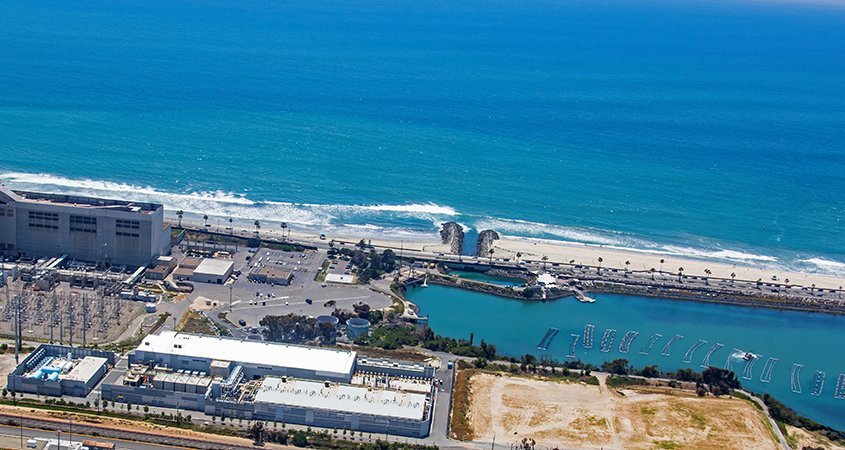
2020 Urban Water Management Plan-San Diego County Water Authority-desalination

The 2020 UWMP highlights the value of the Water Authority’s long-term strategy to invest in highly reliable and locally controlled supplies from the Claude “Bud” Lewis Carlsbad Desalination Plant. Photo: San Diego County Water Authority

Investments in local water supply

Conservation projections account for continued adoption of water-use efficiency measures, compliance with landscape water-use ordinances for new residential construction, and continued installations of sustainable landscapes at existing homes. Since 1991, San Diego County ratepayers have conserved more than 1 million acre-feet of water, and per capita potable water use in the region decreased nearly 50% between fiscal years 1990 and 2020.

The 2020 UWMP also highlights the value of the Water Authority’s long-term strategy to invest in highly reliable and locally controlled supplies from the Claude “Bud” Lewis Carlsbad Desalination Plant and the nation’s largest conservation-and-transfer agreement, which provides high-priority, low-cost water from the Colorado River.

In addition to the UWMP, the Water Authority also regularly updates its Regional Water Facilities Optimization and Master Plan, which focuses on the infrastructure necessary to meet projected long-term demands, and its Long-Range Financing Plan. Those documents work together to ensure the right mix of supplies and facilities to meet the region’s needs at an affordable cost.
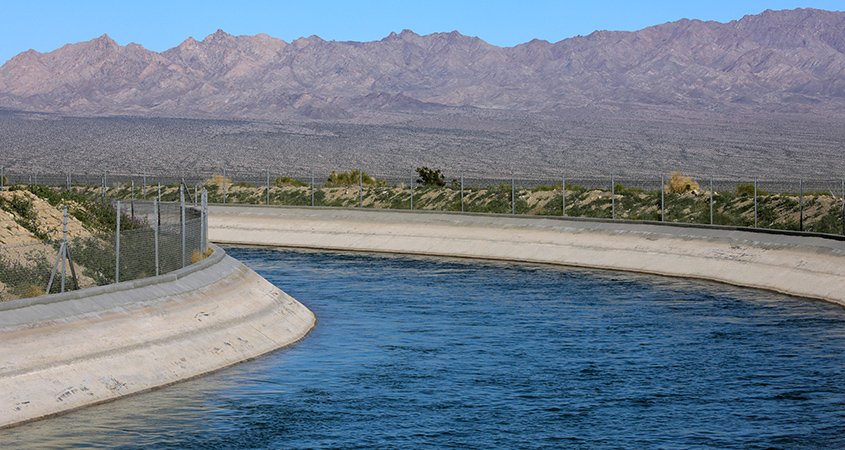
Colorado River Aqueduct-Urban Water Management Plan-Water Authority

The nation’s largest conservation-and-transfer agreement, which provides high-priority, low-cost water from the Colorado River, is one of several investments that ensures a reliable, plentiful water supply for the San Diego County region. Photo: San Diego County Water Authority


Oceanside Wins Mayor’s Challenge For Water Conservation

The city of Oceanside placed first in the 2021 Wyland National Mayor’s Challenge for Water Conservation, it was announced today.

The annual competition was held during Earth Month to bring awareness to the importance of using water efficiently, especially as California moves into its second consecutive dry year.

Mayors nationwide participated in the competition by challenging their residents to pledge to conserve water, reduce carbon emissions, reduce waste, and take other sustainable actions on behalf of their communities.

“The Oceanside community has always been a leader when it comes to sustainability, and I am honored to be the mayor of the most water-wise city in the nation,” Mayor Esther Sanchez said. “Oceanside has proven that our residents know how to protect the environment, improve water efficiency, reduce waste, and continue to implement actions that will create a better future.”

San Francisco Water Use Has Declined Since Last Drought — What Else Can You Do to Conserve?

We’re once again going to be having conversations this summer about water use, and hearing about ever more strict mandates coming down from counties and the state about what we use water for. But is San Francisco’s household water use really the problem?

The drought is bad, and it’s getting worse. A big swath of the Bay Area was just put in the “exceptional” drought tier last week by the U.S. Drought Monitor, and the rest of the Bay Area is in the second-worst or “extreme” drought category, along with about three-quarters of California.

Melting Snow Usually Means Water for the West. But This Year, It Might Not Be Enough

There’s still snow in Colorado’s mountains near the headwaters of the South Platte River, and Brian Domonkos has strapped on a pair of cross-country skis to come measure it.

He’s the Colorado Snow Survey supervisor, and knowing how much snowpack is left from the winter to runoff into streams, rivers and reservoirs this summer is crucial, especially in a year when much of the West is in extreme drought. As it melts, the snowpack here will become the primary source of water for millions of people in Colorado and across the West.

Drought Intensifies and Expands in the American West

The scale of the drought hitting the American West is beginning to crystallize as Nevada, New Mexico and Arizona experienced their driest year in terms of precipitation on record, according to the National Center for Environmental Information.

In Utah and California, it was the second-driest winter on record. For Wyoming, it was the third-driest ever. For Colorado, only three winters were ever drier in the 127-year history of record-keeping at the center.

“This is extreme,” said Peter Gleick of the Pacific Institute.

Vista Irrigation District Contests Award Student Scholarships, Art Prizes

Eight North San Diego County high school seniors and three fourth-grade students were the winners of two separate Vista Irrigation District sponsored contests.

Kulpreet Chhoker from Mission Vista High School, Kylie Konyn from St. Joseph Academy, and Delanee Haskins from North County Trade Tech High School each received $2,000 as winners of the Vista Irrigation District 2021 scholarship contest.

Izak Bunda from Guajome Park Academy, Anthony Jones and Malia Leonard from Rancho Buena Vista High School, and Colby Rafail and Juan Ramirez from Vista High School each received $500 as runners-up in the scholarship contest.

California’s 2021 Drought: What’s Happening Now and What the Water Shortages Mean For You

In the Bay Area, most people get their water from big utilities that have lots of water, even during a drought. Your tap is not at risk of running dry.

The San Francisco Public Utilities Commission and East Bay Municipal Water District, two of the region’s largest suppliers, have already said they’re likely to get by this summer without the need for water restrictions. They’re still urging conservation, however.

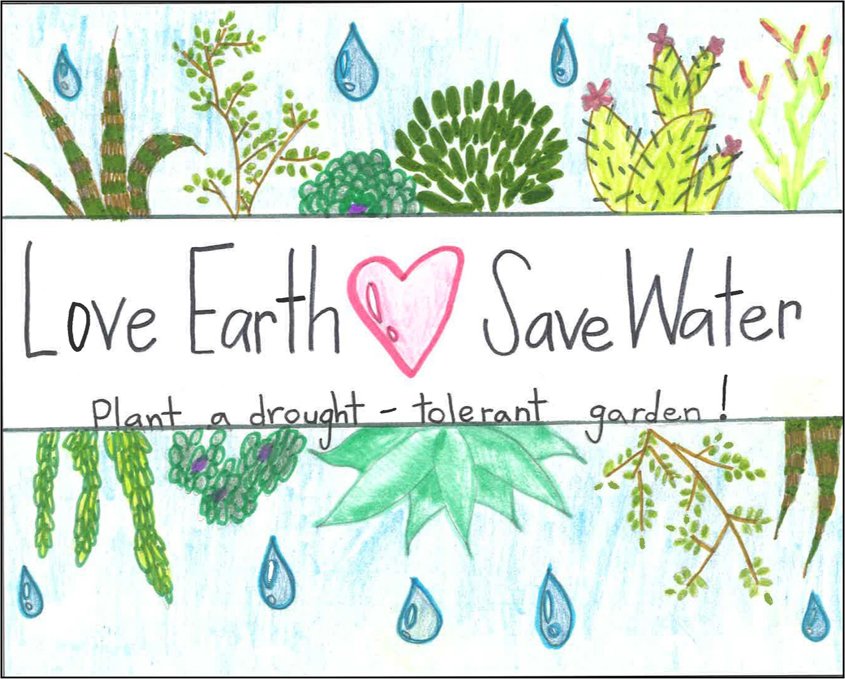
Student poster contest winner Emaline Kennedy illustrated her entry with low water use plants. Photo: Vista Irrigation District Contests

Vista Irrigation District Contests Award Student Scholarships, Art Prizes

Eight North San Diego County high school seniors and three fourth-grade students were the winners of two separate Vista Irrigation District sponsored contests.

Vista Irrigation District Scholarship winners in 2021 include (Top Row, L to R) Kulpreet Chhoker, Kylie Konyn, Anthony Jones, Delanee Haskins; Second Row, (L to R): Colby Rafail, Malia Leonard, John Ramirez. Not pictured:  Izak Bunda. Photo: Vista Irrigation District

Vista Irrigation District Scholarship winners in 2021 include (Top Row, L to R) Kulpreet Chhoker, Kylie Konyn, Anthony Jones, Delanee Haskins; Second Row, (L to R): Colby Rafail, Malia Leonard, John Ramirez. Not pictured: Izak Bunda. Photo: Vista Irrigation District

Kulpreet Chhoker from Mission Vista High School, Kylie Konyn from St. Joseph Academy, and Delanee Haskins from North County Trade Tech High School each received $2,000 as winners of the Vista Irrigation District 2021 scholarship contest.

Izak Bunda from Guajome Park Academy, Anthony Jones and Malia Leonard from Rancho Buena Vista High School, and Colby Rafail and Juan Ramirez from Vista High School each received $500 as runners-up in the scholarship contest.

Open to high school seniors living or attending school within the Vista Irrigation District’s service area, the scholarship contest helps create awareness and increase knowledge about water-related issues impacting the Vista Irrigation District and the region where students live.

Poster Contest winners depict theme “Love Water, Save Water”

Open to District students in the fourth grade, the annual Student Poster Art Contest is designed to promote understanding of water issues in elementary schools.  This year’s theme was “Love Water, Save Water.”

Student poster contest winner Emaline Kennedy illustrated her entry with low water use plants. Photo: Vista Irrigation District Contests

Student poster contest winner Emaline Kennedy illustrated her entry with low water use plants. Photo: Vista Irrigation District

Grapevine Elementary School fourth-grader Emaline Kennedy received first place honors for her Water Awareness Poster Contest entry.  She received a $100 award.

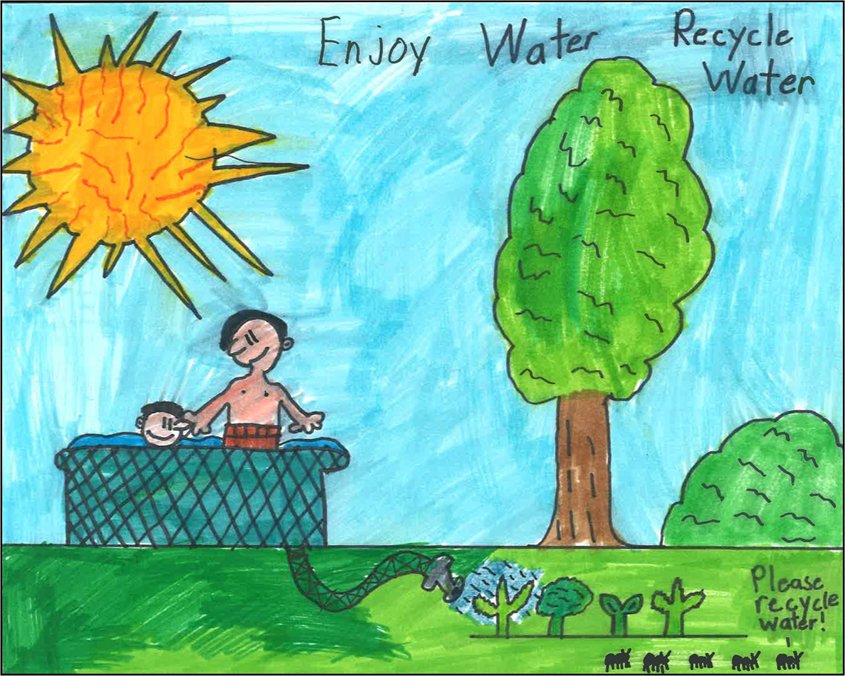
Second place winner Paul Gomez focused on enjoying water responsibly. Photo: Vista Irrigation District

Second place winner Paul Gomez focused on enjoying water responsibly. Photo: Vista Irrigation District

Fourth-grader Paul Gomez from Empresa Elementary School received a second-place award of $50.

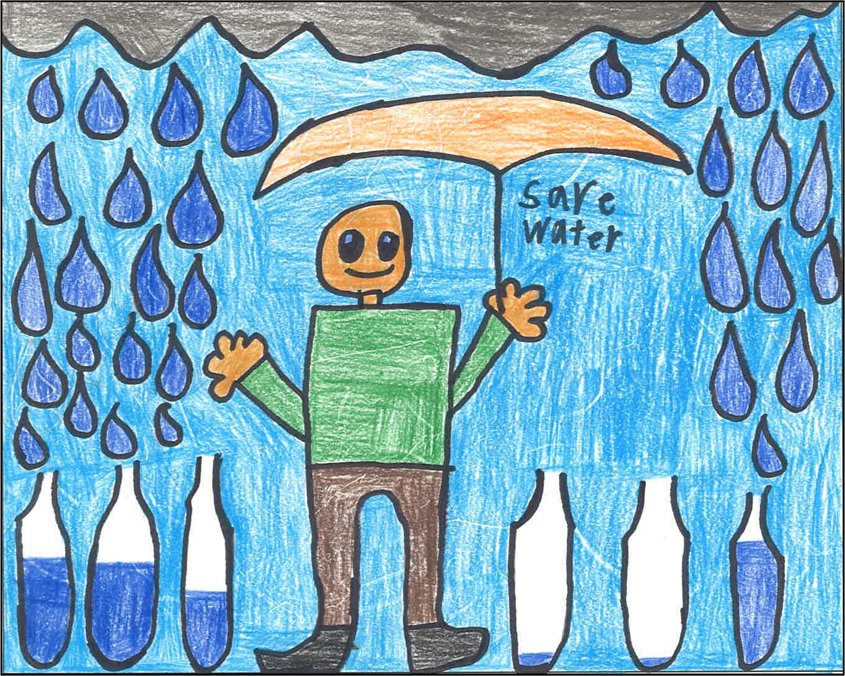
Third place winner Matthew Potter depicts rainfall as a precious water resource.

Third place winner Matthew Potter depicts rainfall as a precious water resource. Photo: Vista Irrigation District

Matthew Potter, a fourth-grader attending Alamosa Park Elementary School, received a third-place award of $25.

The three winning posters were selected from 249 entries based on the theme, artwork, originality, and poster design.  Emaline’s poster will appear in the 2022 Water Awareness Calendar, which will be available free of charge at the district’s office in November 2021.

(Editor’s note: The Vista Irrigation District is one of the San Diego County Water Authority’s 24 member agencies that deliver water across the metropolitan San Diego region.)

Recycled Water Facility is Plant of the Year

Olivenhain Municipal Water District’s 4S Ranch Water Reclamation Facility is the California Water Environment Association‘s Plant of the Year.

The District’s Board of Directors accepted the award at its May 19 meeting from California Water Environment Association San Diego section. The Plant of the Year award acknowledges OMWD’s accomplishments in compliance, innovative practices, and cost‐effectiveness.

“Our board is thrilled that 4S WRF has been recognized for industry‐leading procedures and techniques to produce high‐quality recycled water, increase water reliability, and operate safely, effectively, and economically,” said Olivenhain Municipal Wate District Vice President Kristie Bruce‐Lane. “We need to focus on keeping water affordable and accessible to everyone. Diversifying California’s water portfolio by investing more in recycled water is a critical strategy in doing so, now and for our future generations.”

Severe Drought, Worsened by Climate Change, Ravages the American West

This year, New Mexican officials have a message for farmers who depend on irrigation water from the Rio Grande and other rivers: Unless you absolutely have to plant this year, don’t.

Years of warming temperatures, a failed rainy season last summer and low snowpack this winter have combined to reduce the state’s rivers to a relative trickle. The agency that controls irrigation flows on the Rio Grande forced the issue. To conserve water, it opened its gates a month later than usual.

Severe drought — largely connected to climate change — is ravaging not only New Mexico but the entire Western half of the United States, from the Pacific Coast, across the Great Basin and desert Southwest, and up through the Rockies to the Northern Plains.

In California, wells are drying up, forcing some homeowners to drill new ones that are deeper and costlier. Lake Mead, on the border of Arizona and Nevada, is so drained of Colorado River water that the two states are facing the eventual possibility of cuts in their supply.