Tag Archive for: Water Conservation

Sweetwater Authority-Landscape Makeover-Native Plants-Drought

Native Plants Highlight Sweetwater Landscape Contest Winner

Chula Vista resident Paul Rodriguez gave up struggling to maintain his thirsty green lawn in favor of a new landscape design featuring California native plants and shrubs. The Sweetwater Authority Board of Directors selected Rodriguez’s makeover as its 2021 Landscape Makeover winner.

The Rodriguez home before its landscaping makeover. Photo: Sweetwater Authority

The Rodriguez home before the landscaping makeover. Photo: Sweetwater Authority

The WaterSmart Landscape Contest is an opportunity for homeowners to showcase landscape designs focusing on beautiful alternatives to traditional turf-oriented designs. Entries in the makeover competition are judged on five qualities:

  • Overall attractiveness
  • Appropriate plant selection
  • Design
  • Appropriate maintenance
  • Efficient irrigation methods

Native plants and a natural habitat

A trail lets visitors stroll through the property. Photo: Sweetwater Authority

A trail lets visitors stroll through the property. Photo: Sweetwater Authority

Rodriguez and his wife participated in a free Water Authority WaterSmart Landscape Makeover Series course. It provided the foundation allowing them to embrace a design replacing the lawn. They also attended several native plant workshops hosted by the San Diego Chapter of the California Native Plant Society. The family were attracted to gardening with native plants due to their low water and no fertilization needs. They also liked the added benefit of creating a natural habitat for pollinators and birds.

Winning entry a pollinator paradise
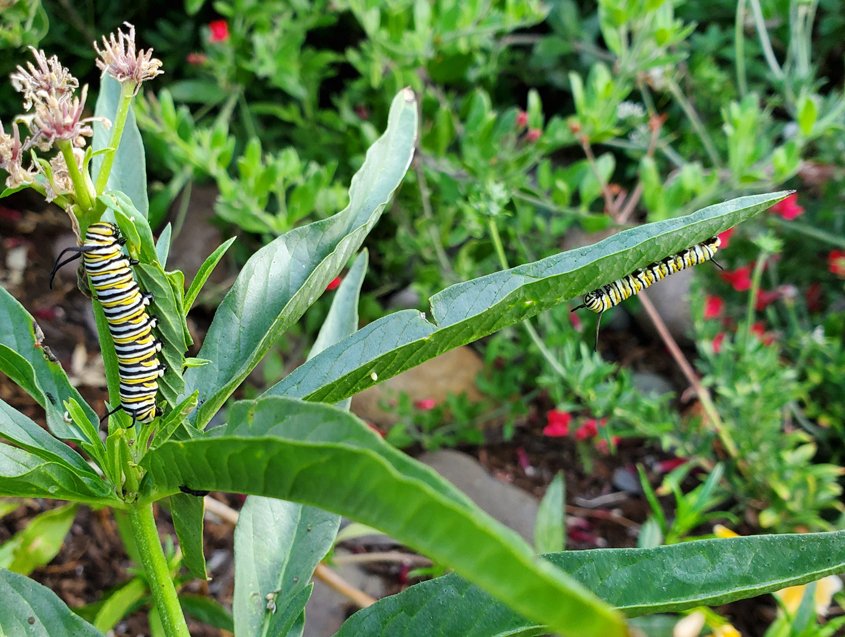
Milkweed provides food for endangered Monarch butterfly caterpillars. Photo: Sweetwater Authority

Milkweed provides food for endangered Monarch butterfly caterpillars. Photo: Sweetwater Authority

The transformed landscape now includes several manzanitas and large Ceanothus shrubs in the back yard, which reminds Paul Rodriguez of hikes in Mission Trails Regional Park. The front yard adopted a California Coastal Sage scrub garden habitat. It only requires hand watering twice a month during the dry season.

It is a pollinator’s paradise with sages, buckwheats, and verbenas that attract birds and bees. Milkweed provides a food source for endangered Monarch butterflies. Milkweed leaves are the only food monarchs will eat. They also lay eggs on the undersides of the leaves. Striped caterpillars feed on the leaves as they develop.
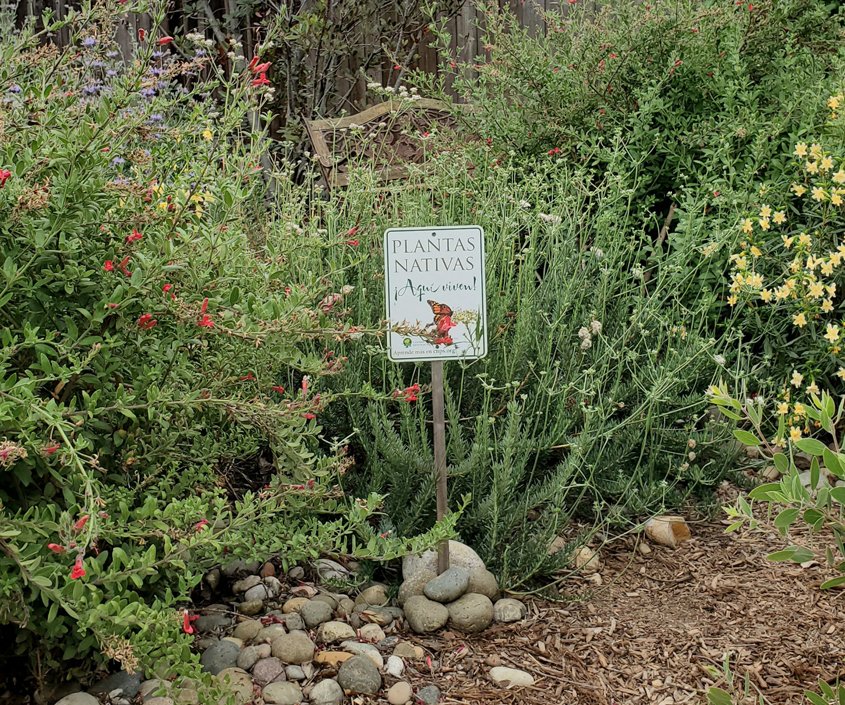
The new landscaping features native plants. Photo: Sweetwater Authority

The new landscaping features native plants. Photo: Sweetwater Authority

As the winner of the 2021 WaterSmart Landscape Contest, Sweetwater Authority presented the Rodriguez family with a certificate of recognition and gift card as a thank you for setting a waterwise example for other residents.

(Editor’s note: The Sweetwater Authority is one of the San Diego County Water Authority’s 24 member agencies that deliver water across the metropolitan San Diego region.)

Less Water May Mean Less Power for California

The summer of 2021 could go down as one of the hottest and driest summers in California’s history.

“In Northern California, where we get a lot of our water supply, it has been one of the driest 18 months on record in 120 years,” said Goldy Herbon, a Senior Water Resources Specialist for the San Diego County Water Authority.

Herbon said there is no snowpack in Northern California and the Colorado River is almost down to 60% of its normal water levels.

That’s usually very bad for counties that import a lot of their water. However, Herbon said the San Diego County Water Authority and its member agencies like the city of San Diego have invested billions of dollars in infrastructure improvements over the last 30 years that have given San Diego County enough to withstand any potential water restrictions brought on by drought.

NASA Images Show Effects of Drought on California’s Largest Reservoirs

Satellite images recently released by NASA show how drought has affected Northern California’s Shasta Lake and Lake Oroville, the largest reservoirs in the state. NASA compared images taken earlier in June with images taken in the summer of 2019 to illustrate how water levels have declined over the two-year period.

San Diego Region is Drought-Safe This Summer

The San Diego County Water Authority announced June 21 that the region is protected from drought impacts this summer, and through 2045, despite continued hot and dry conditions.

Statewide drought conditions are highlighting the value of regionally and locally controlled water supplies in San Diego County. No shortages or regional water-use mandates are in the forecast, the result of three decades of strategic investments that create an aquatic safety net for San Diego County’s $253 billion economy and quality of life for 3.3 million residents.

San Diego County Water Authority Confirms Region ‘Drought Safe’ This Summer

Despite continued hot and dry conditions in California, the San Diego region is protected from drought impacts this summer and through 2045, the San Diego County Water Authority announced Monday.

According to a statement released by the Water Authority, “no shortages or regional water-use mandates are in the forecast, the result of three decades of strategic investments that create an aquatic safety net for San Diego County’s $253 billion economy and quality of life for 3.3 million residents.”

Gary Croucher, Water Authority Board chairman, thanked San Diegans for their efforts to “make sure that we have enough water to meet the region’s needs now and for decades into the future.”

San Diego Region ‘Drought-Safe’ This Summer, Water Authority Says

Despite continued hot and dry conditions in California, the San Diego region is protected from drought impacts this summer and through 2045, the San Diego County Water Authority announced Monday.

County Water Authority: Region “Drought-Safe”’ This Summer

Despite continued hot and dry conditions in California, the San Diego region is protected from drought impacts this summer and through 2045, the San Diego County Water Authority announced today.

According to a statement released by the Water Authority, “no shortages or regional water-use mandates are in the forecast, the result of three decades of strategic investments that create an aquatic safety net for San Diego County’s $253 billion economy and quality of life for 3.3 million residents.”

San Diego Region is Drought-Safe This Summer

June 21, 2021 – Statewide drought conditions are highlighting the value of regionally and locally controlled water supplies in San Diego County, where the San Diego County Water Authority today announced that the region is protected from drought impacts this summer, and through 2045, despite continued hot and dry conditions. No shortages or regional water-use mandates are in the forecast, the result of three decades of strategic investments that create an aquatic safety net for San Diego County’s $253 billion economy and quality of life for 3.3 million residents.

Here Are Some Things to Know About the Extreme Drought in the Western U.S.

Almost half of the U.S. has been in a drought since the start of 2021.

Compounding factors, including low rainfall and snowpack, climate change and persisting droughts from previous years, have escalated into extreme dryness.

The prolonged dryness means low water levels are endangering fish species in Oregon and Colorado, 30% of California’s population is in a drought emergency, and the nation’s two biggest reservoirs on the Colorado River — Lake Powell and Lake Mead — are two-thirds empty.

If Lake Powell’s Water Levels Keep Falling, A Multi-State Reservoir Release May Be Needed

Lake Powell’s water level is the lowest it’s been in decades, and the latest 24-month projections from the Arizona and Utah reservoir show that it’s likely to drop even further — below a critical threshold of 3,525 feet by next year.