Tag Archive for: Water Conservation

A Tiny Piece of Plastic Is Helping Farmers Use Far Less Water

On the bone-dry western flank of Arizona, where the Colorado River Basin meets the Mojave Desert, sit 11,000 acres of alfalfa, sorghum, wheat, and Sudan grass belonging to the Colorado River Indian Tribes (CRIT), all destined to be harvested and sold for animal feed. For anything to grow here, irrigation is a must. Less than a quarter inch of rain has fallen so far this year, according to Josh Moore, who manages the farm on behalf of his tribe.

Following a few smart irrigation tips will make the most of the water applied to your landscaping. Photo: Vallecitos Water District

Smart Landscape Irrigation Tips Save Water

During drought, it’s more important than ever to conserve water used for irrigation. When you follow just a few smart landscaping irrigation tips, you can get the most from every drop of water applied to your landscaping.

Don’t overspray your landscaping
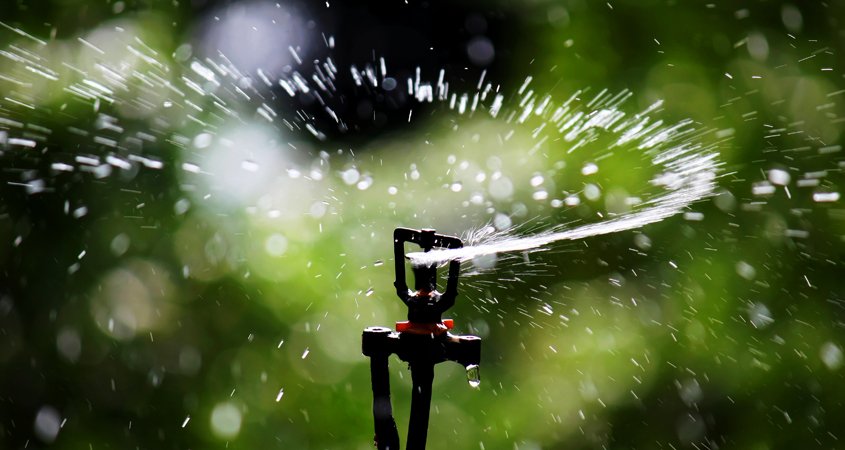
Don't allow your spriinklers to overspray your landscaping and waste water. Photo: Wikimedia irrigation tips

Don’t allow your sprinklers to overspray your landscaping and waste water. Photo: Wikimedia

Watch your irrigation while the system is running. Check to make sure sprinkler heads aren’t spraying water onto sidewalks, patios, or structures.

If water is being applied too fast for your soil to absorb, runoff will occur. This needs to be prevented.

Puddling and pooling water may be an indication your water is being applied too fast or too often. Adjust your system until this isn’t happening anymore.

Repairs to broken pipes and sprinkler heads should be made immediately, or your system should be turned off until those repairs can be made.

Eliminate runoff with cycle and soak programming

Watch how quickly runoff happens when running irrigation. This is the maximum run time for your irrigation controller in a particular hydrozone.

Divide the total irrigation minutes recommended for the specific hydrozone condition into shorter blocks of time before runoff starts. For example, if you should irrigate for 15  minutes but runoff starts within five minutes, irrigate in three five-minute cycles. Allow a 30-minute rest period in between irrigation cycles.

Hand watering that works
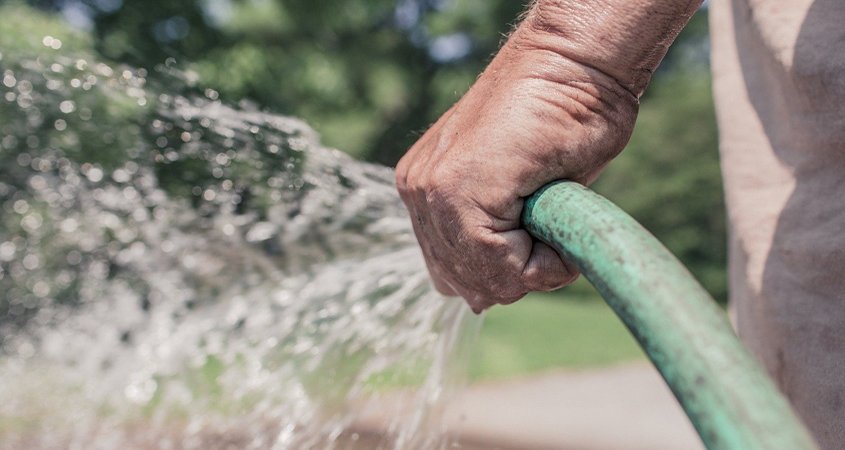
Hand watering can be an effective method to water your landscaping. Photo: Ryan McGuire / Pixabay irrigation tips

Hand watering can be an effective method to water your landscaping. Photo: Ryan McGuire / Pixabay

Hand watering is especially good when your garden is getting established. You can spend more time watching your plants to be sure they are flourishing in the early stages.

When your landscape plants are new, you may need to water more frequently because roots are shallower. Roots on a newly planted one-gallon plant are only four to ten inches deep. This is why it’s a smart idea to plant during the rainy season.

Before hand watering, look at your plants. Do they appear droopy? Is the soil very dry? If so, give the plants a good drink. Don’t water more than two days in a row. Let the soil dry out completely before watering again. Overwatering and underwater symptoms can be similar.

Once your plants are established after the first year, your sustainable garden will  not need watering more than once or twice a month – if at all. Stop watering after the first seasonal rains begin and let nature take over.

This article is part of a year-long series inspired by the 71-page Sustainable Landscapes Program guidebook. The Water Authority and its partners also offer other great resources for landscaping upgrades, including free WaterSmart classes at WaterSmartSD.org.

Top 10 Tips for Saving Water This Fall

As drought conditions persist throughout the Southwest, the San Diego County Water Authority and its member agencies continue to actively support the state’s call for a 15% voluntary reduction in water use.

San Diego County residents and businesses can continue WaterSmart practices this fall by following these simple and easy tips to save water.

Much of California Missing the Mark in Water-Conservation Efforts During Drought

 Months after Governor Gavin Newsom asked Californians to voluntarily cut back on their water use during this severe drought, much of the state is missing the mark.

While the initial data is limited, the Southern California region has so far managed to cut its water consumption by just a tenth of a percent.

Despite Newsom’s Call to Cut Water Use, L.A. and San Diego Didn’t Conserve in July

Despite an appeal by Gov. Gavin Newsom for all Californians to voluntarily cut water use by 15%, Southern California has lagged in conservation efforts and even increased water consumption slightly in Los Angeles and San Diego, according to newly released data.

More than two months after Newsom stood by a depleted reservoir in San Luis Obispo County to make his plea, figures released Tuesday by the State Water Resources Control Board show that conservation efforts have varied widely from north to south.

Southwest U.S. Drought, Worst in a Century, Linked by NOAA to Climate Change

Human-caused climate change has intensified the withering drought gripping the Southwestern United States, the region’s most severe on record, with precipitation at the lowest 20-month level documented since 1895, a U.S. government report said on Tuesday.

Over the same period, from January 2020 through August 2021, the region also experienced the third-highest daily average temperatures measured since record-keeping began near the end of the 19th century, according to the National Oceanic and Atmospheric Administration’s (NOAA) drought task force

As California’s Drought Deepens, Water Use Drops Only 1.8%

Californians reduced their water use at home by a meager 1.8% statewide in July compared to last year, even after Gov. Gavin Newsom urged residents to conserve 15% and drought continues to spread across the state.

Officials today warned water providers south of the Delta who rely on state water allocations — already slashed to 5% this year — to brace for the possibility of zero supply next year.

Higher Water Costs on the Horizon for San Diego Region

San Diego County residents should expect to pay a lot more for water in the near future.

The San Diego County Water Authority, which controls most of the region’s water resources from the drought-stressed Colorado River, is predicting anywhere from a 5.5 to 10 percent increase in the cost of water beginning in 2023, with hefty hikes continuing in the years thereafter.

The agency pointed to multiple drivers, chief among them an expected drop in demand as more cities build water recycling projects and the Los Angeles-based Metropolitan Water Authority, which controls San Diego’s access to the Colorado River, continues raising its rates.

Newsom Asked Californians to Conserve Water in the Drought. It’s Been a Slow Start

In the first test of their willingness to cut back on water use during the drought, Californians reduced residential consumption by just 1.8% in July compared to a year earlier — well short of what Gov. Gavin Newsom has been seeking.

The statistics released Tuesday by the State Water Resources Control Board suggest Californians haven’t been enthusiastically embracing Newsom’s appeal for 15% reductions, at least in the early going.

Chair Croucher: Epic Drought Means Everyone Should Find Even More Ways to Make a Meaningful Impact

Sept. 21, 2021 – San Diego County Water Authority Board Chair Gary Croucher today issued a statement in response to the State Water Resources Control Board announcement of water conservation figures for July.

“Over the past three decades, the water ratepayers in the San Diego region have done an extraordinary job of voluntarily reducing water use by nearly 50%. Those conservation efforts are enhanced by the Water Authority’s investments in a diversified water supply portfolio and regional facilities, including water transfers, seawater desalination, canal lining and reservoirs. That long-term track record of stewardship is a primary reason why we have reliable supplies during this record-breaking drought and for future years.

“While we should all be proud of our long-term track record of conservation, we need to do more to help eliminate water waste during this epic drought. The Water Authority offers numerous tools to enhance water sustainability, including free water-use check-ups for homes and businesses, along with rebates for WaterSmart upgrades. As a community, it’s important that we find ways to be even more water-efficient to ensure that we have reliable water supplies not just for today, but for future generations.”

— Gary Croucher, Board Chair, San Diego County Water Authority