Tag Archive for: Helix Water District

Helix Water District Logo Square officers for 2021

Regional Collaboration on Water Purification Project Expands Local, Drought-Proof Supply of Drinking Water

The Helix Water District Board of Directors authorized its General Manager to sign water purchase agreements for the East County Advanced Water Purification project at a special meeting on May 27, 2020.

East County Advanced Water Purification Program Moves Forward

The East County Advanced Water Purification Joint Powers Authority Board of Directors unanimously approved water and wastewater service agreements this week, moving this significant drinking water project one-step closer to reality. These water and wastewater agreements are critical to the JPA’s eligibility for key program financing opportunities.

Water purchase agreements were approved between the East County AWP JPA and Padre Dam Municipal Water District and between the East County AWP JPA and Helix Water District. The water purchase agreements cover the terms and conditions for water delivery volumes and water pricing for the purchase of purified water by Helix as well as Padre Dam’s purchase of purified water and Title 22 recycled water. The water service agreement was previously approved unanimously by Padre Dam’s Board of Directors on May 20, 2020. It is anticipated that Helix Water District will consider approval of the agreement at a Special Board meeting scheduled on May 27, 2020.

East County Advanced Water Purification Joint Powers Authority JPA Logo

East County Advanced Water Purification Program Moves Forward

May 22, 2020, Santee, CA – The East County Advanced Water Purification (AWP) Joint Powers Authority (JPA) Board of Directors unanimously approved water and wastewater service agreements this week, moving this significant drinking water project one-step closer to reality. These water and wastewater agreements are critical to the JPA’s eligibility for key Program financing opportunities.

National Public Works Week Recognizes Essential Employees

Every time you fill up a water bottle or give the kids a bath, it’s due to the people working as essential employees behind the operation of water and wastewater systems within the San Diego County region’s public works infrastructure.

National Public Works Week takes place the third week of May annually in recognition of the public works professionals who provide and maintain vital public works infrastructure for the key contribution they make every day.

Water industry professionals are committed to serving San Diego County year-round by ensuring the seamless delivery of a safe and reliable water supply. During the coronavirus pandemic, dedicated essential employees have demonstrated exceptional dedication and creativity, making 2020 National Public Works Week especially significant.

Supervisors Back East County Water Recycling: 15 Million Gallons Daily

The San Diego County Board of Supervisors Wednesday unanimously approved a service agreement for a major drinking water recycling project in East County.

East County Advanced Water Purification is a regional project that includes the county Sanitation District, Padre Dam Municipal Water District, the city of El Cajon and Helix Water District. Those entities are also part of a joint powers authority, which was formed last November.

The agreement covers the amount of wastewater capacity and financial obligations for the Sanitation District, city of El Cajon and the Padre Dam district.

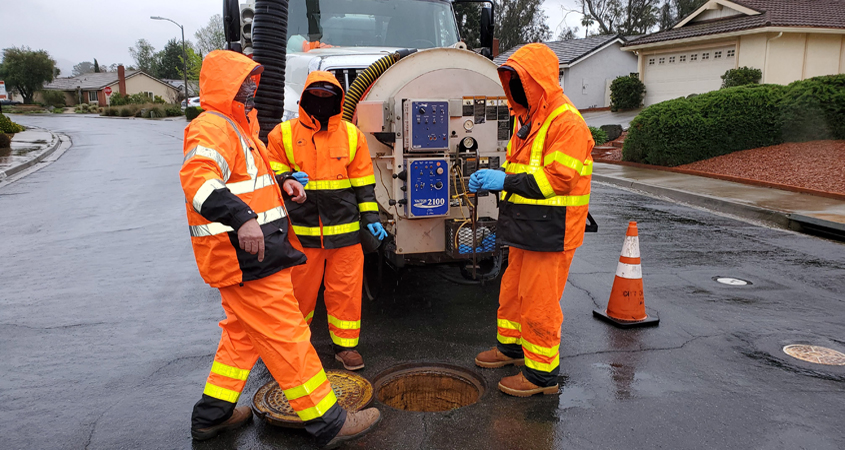
Chris Walter, Helix Water District Inspector II, works while wearing a mask as an essential employee. Photo: Helix Water District

National Public Works Week Recognizes Essential Employees

Every time you fill up a water bottle or give the kids a bath, it’s due to the people working as essential employees behind the operation of water and wastewater systems within the San Diego County region’s public works infrastructure.

National Public Works Week takes place the third week of May annually in recognition of the public works professionals who provide and maintain vital public works infrastructure for the key contribution they make every day.

Water industry professionals are committed to serving San Diego County year-round by ensuring the seamless delivery of a safe and reliable water supply. During the coronavirus pandemic, dedicated essential employees have demonstrated exceptional dedication and creativity, making 2020 National Public Works Week especially significant.

Essential workers keep the water flowing

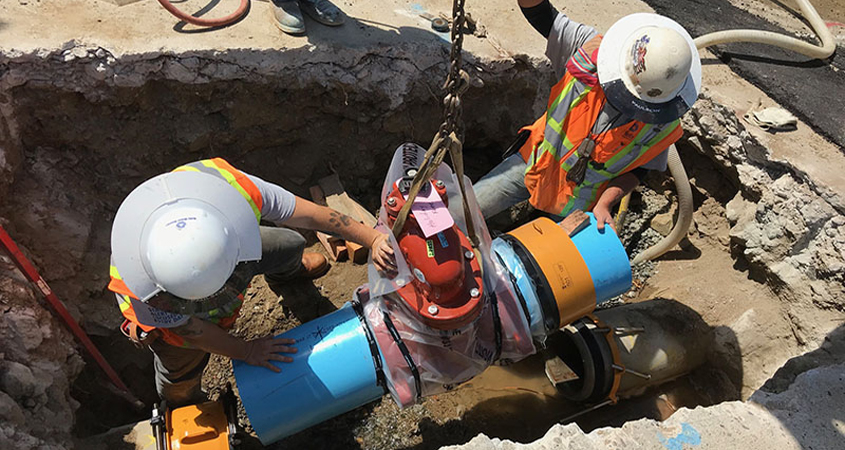
Helix Water District crews remain on the job during the coronavirus pandemic as essential employees being honored during National Public Works Week. Photo: Helix Water District

Helix Water District crews remain on the job during the coronavirus pandemic as essential employees being honored during National Public Works Week. Photo: Helix Water District

“Our employees are essential workers and they don’t take that lightly,” said Eric Heidemann, City of Poway director of public works. “From our water treatment plant operators to our technicians out in the field, they care for our Poway community and are committed to keeping our water supply safe during this crisis.”

Most of the infrastructure responsible for delivering the water the public depends on every day is hidden. This can make it easy to take a safe and reliable water supply for granted.

Bernardo Separa represents thousands of essential employees in public works being recognized during National Public Works Week. Photo: Otay Water District

Bernardo Separa of the Otay Water District represents thousands of essential employees in public works being recognized during National Public Works Week. Photo: Otay Water District

“It is very rewarding to complete projects as a team,” said Bernardo Separa, engineering design technician with the Otay Water District. “Knowing that you contributed and made a difference as a team member is a tremendous feeling.”

Safe, reliable water supply

“Our dedicated Helix employees help keep East County communities running by providing a safe and reliable water supply, 24/7,” said Carlos Lugo, General Manager, Helix Water District. “During National Public Works Week, we want to say thank you to our Helix employees for keeping the water flowing.”

Career opportunities available in water and wastewater industry

(L to R): Terry Zaragoza, Chad Weigel and Vernon Fitzpatrick from the City of Poway perform routine maintenance on a wastewater pipeline as essential employees. Photo: City of Poway

(L to R): Terry Zaragoza, Chad Weigel and Vernon Fitzpatrick from the City of Poway perform routine maintenance on a wastewater pipeline as essential employees. Photo: City of Poway

Public agencies like the San Diego County Water Authority and its 24 member agencies play an important role in the region, both in terms of employment and providing critical services to support 3.3 million residents.

With approximately 1,400 water and wastewater jobs expected to open up across San Diego County in the next five years due to the “silver tsunami” wave of Baby Boomers reaching retirement age, career opportunities have never been more promising.

The Water Authority and its member agencies have created a regional workforce development task force to address the “Silver Tsunami” of retirees. The task force reported that there are approximately 4,500 water and wastewater positions in the San Diego region.

Helix Water District Employees Fundraiser Not Just Food for Thought

“Helix Helps,” the Helix Water District’s employee volunteer program, started a “virtual food drive” on Wednesday in partnership with the Jacobs & Cushman San Diego Food Bank, and had raised more than $1,860 Friday morning, with more expected.

COVID-19: Water Use When We Stay Home

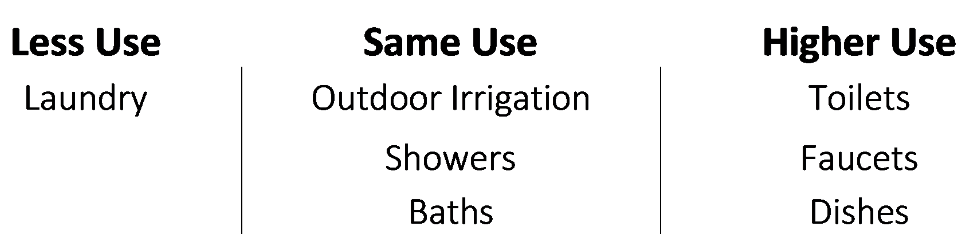
Now that most of us are at home more, you may be wondering “how much more water am I using?” The good news is, it’s probably less than you think. This is because the activities that use the most water  – such as outdoor irrigation, showering and doing laundry – happen at the same weekly frequency regardless if you and the family are spending your days at home or not.

Laundry dryer-Helix Water District-COVID-19-coronavirus 2020

COVID-19: Water Use When We Stay Home

Now that most of us are at home more, you may be wondering “how much more water am I using?” The good news is, it’s probably less than you think. This is because the activities that use the most water  – such as outdoor irrigation, showering and doing laundry – happen at the same weekly frequency regardless if you and the family are spending your days at home or not.

Your water use will increase only slightly

Unlike our use of electricity, which we use continuously as we light our rooms, run our computers or stream shows, our use of water is more intermittent. This means that although we are home the entire time, using water may be limited to bathroom visits, washing our hands, cleaning dishes or doing laundry. This is good news for your water bill.

What about all the handwashing?

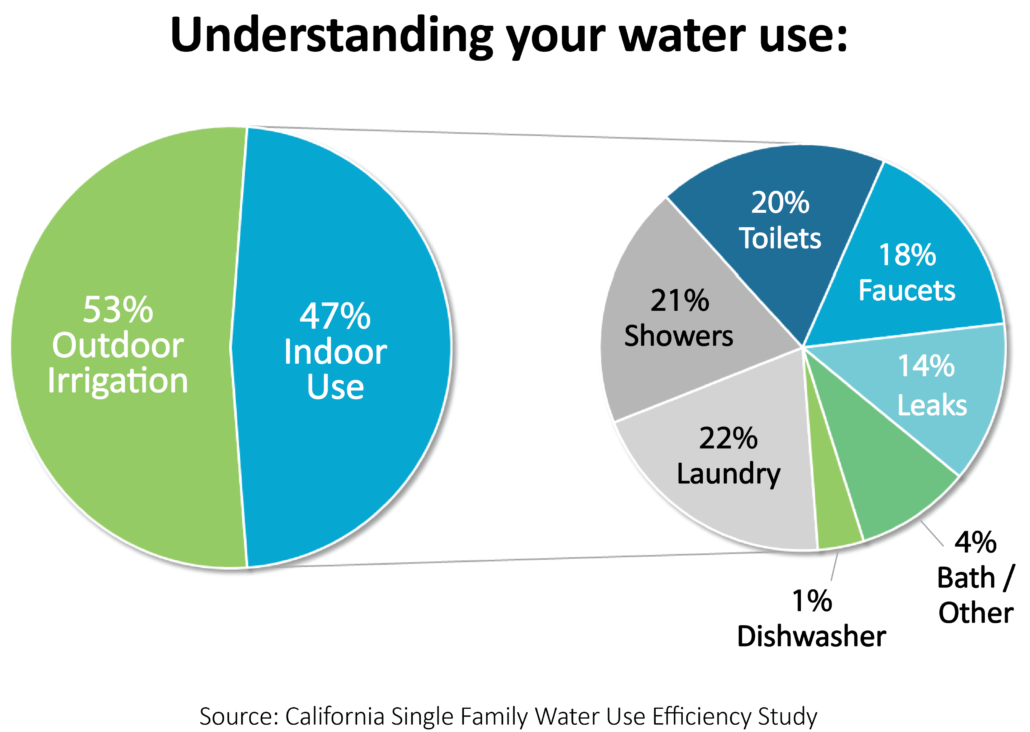
Surprisingly, washing your hands for the recommended 20 seconds does not use that much water. If you have faucet aerators or a newer faucet, each 20-second hand wash with the water running uses less than half of a gallon. Even still, faucets are responsible for 18% of the typical indoor water consumption. It takes 24 extra handwashing events per day over a 60 day billing cycle to increase your bill by one unit, which equals 748 gallons and costs you $4.98. You can use less water if you shut the faucet off while you soap up your hands, but you don’t have to. Public health is more important than water conservation. Wash your hands and stay safe.

What about additional toilet flushing?

Since you are at home and not at work, you are flushing your toilets more, this is where you may see a slight increase in your indoor use. After all, toilets make up an average of 20% of the typical indoor water consumption. The good news – it takes a lot of flushes to really increase your bill.  The most common toilets in everyone’s homes use 1.6 gallons per flush, while newer toilets use 1.1 gallons per flush or less. It will take 467 flushes of al 1.6 gallon per flush toilet to use one unit of water. Note that older toilets can use 4-6 gallons per flush, and that changes the picture dramatically.

Do not flush ‘flushable’ wipes

It’s also important to note that you should not use your toilet as a garbage can. Do not flush “flushable” wipes, paper towels or disinfecting wipes down the toilet. These items wreak havoc on sewer systems. The last thing any of us need at this time is a backed up sewer.

What about the dishes from extra cooking and snacking?

You may be creating more dishes due to extra cooking and snacking, but fortunately, dishwashing does not use much water either. If you want to use less water, use the dishwasher. Dishwashers recirculate water and are highly efficient, only using 4-5 gallons per load.

Showering and laundry at home

The good news is that even though you and your family are home all day, you’re most likely not showering any more than you typically would. Showers are a larger portion of our indoor consumption, around 21 percent. The same is true for your laundry, which can be around 22 percent of indoor water use. But, not dressing for work each day may reduce your weekly laundry, offsetting increased us of water for other needs.

Our home’s ‘other half’

The big piece that is missing is what we use on our landscapes, and thankfully, this should not change. Outdoor watering is responsible for half of Helix Water District customers’ total use. So, while we may be concerned that being home will increase our indoor use, the largest potential for savings is still outdoors. An irrigation controller has more to do with the typical home’s water consumption than our indoor behaviors. If you have not been outside lately, the soil is still wet and most of us can leave our irrigation controllers in the off position for the time being.

This article was written by Helix Water District Conservation Technician Vince Dambrose, whom is currently working from home to keep his coworkers safe and healthy so that the district can keep your water flowing.

Along with the rest of California's lakes and reservoirs, Lake Jennings is currently closed to fishing. Photo: Lake Jennings

Reservoirs, Lakes Remain Closed to Fishing Due to COVID-19 Pandemic

Although San Diego County’s lakes and reservoirs remain closed to fishing and other recreational activities for safety reasons due to the coronavirus pandemic, staff and volunteers continue to work. Crews are maintaining facilities, providing security, and sharing photos of wildlife and native blooms enjoying the arrival of spring.

Popular overnight campsites remain open at Santee Lakes, operated by the Padre Dam Municipal Water District. Photo: Padre Dam MWD

Popular overnight campsites remain open at Santee Lakes, operated by the Padre Dam Municipal Water District. Photo: Padre Dam Municipal Water District

Popular overnight campsites remain open at Santee Lakes, owned and operated by the Padre Dam Municipal Water District.

“Camper well-being is important to us and Santee Lakes didn’t want to displace people,” said Melissa McChesney, Padre Dam communications manager. She said that includes long-term campers who spent winter at the lake.

“It is important to note that Santee Lakes is not promoting recreation at this time, and the day use section of the park is closed,” said McChesney. “The park is able to provide a safe alternative to any RVers currently on the road in California because we have full electric, water, sewer and WiFi at each site. Santee Lakes is currently only taking reservations for self-contained RVs.”

Campers can reserve space for a maximum of six months. McChesney said campers should still shelter in place and practice physical distancing at the 300 campsites and 10 cabins.

At Santee Lakes, campers can also enjoy spring birdwatching. Two hundred and thirty different bird species have been spotted at the lake.

Nature takes flight at Lake Jennings

Two of the three resident bald eagles at Lake Jennings. Photo: Lake Jennings

At Lake Jennings, Recreation Manager Kira Haley says eight volunteers continue to live and work from their campground homes in recreational vehicles and campers. She said their days remain “pretty typical” even though they see more wildlife and not people.

“Our volunteers handle emerging maintenance, take calls from the public, and provide security,” said Haley. “They’re happy to be there, not having interaction with people during this time.”

Although new camping reservations are closed, Haley said campers currently at the Lake Jennings campgrounds were allowed to finish their stay. She said only one person, from out of state, will be the only camper at the entire park through the end of April.

A wood duck and her ducklings swimming across Santee Lakes. Photo: Santee Lakes/Facebook

Haley and her volunteers are sharing photos of the active wildlife and plant growth on social media. Currently, there are three bald eagles at the lake.

On the Lake Jennings Facebook page, Haley noted with a photo of a bald eagle in flight, “Lake Jennings Social Distancing: Always keep an eagle’s wingspan between you and others.” According to National Geographic, a bald eagle’s typical wingspan measures from six to eight feet – the recommended social distancing minimum.

According to National Geographic, a bald eagle’s typical wingspan measures from six to eight feet – the recommended social distancing minimum. Photo: Lake Jennings/Facebook

City of San Diego lakes and reservoirs closed until further notice

Paddleboarding-Lake Hodges-coronavirus-845x450

Paddleboarders will have to wait to get on Lake Hodges. The City of San Diego has closed all reservoirs due to the coronavirus pandemic. Photo: City of San Diego

The City of San Diego’s reservoirs and lakes are closed due to the coronavirus pandemic. The city closed the reservoirs to the public on March 18 to protect the public and minimize the spread of the COVID-19 virus. The nine water supply storage reservoirs are operated by the City’s Public Utilities Department.