Tag Archive for: Water Conservation

While compost and mulch may seem interchangeable, they have distinctly different uses in your sustainable landscaping. Photo: Water Authority Compost vs. Mulch

Using Compost and Mulch to Build Healthy Soil

When undertaking a WaterSmart landscape renovation, strive to continuously feed as much organic matter as possible to the landscape soil to keep it healthy. Start first with compost and mulch to jump-start the process. Eventually, your plants will feed themselves with their own leaf litter.

Organic matter feeds microbes living in the soil that make soil fluffy. It’s similar to bread rising because of yeast.

Learn more about healthy soil in this instructional video

Compost and mulch – what’s the difference?

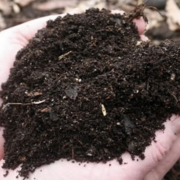
Compost is a soil amendment. It looks like soil and it’s hard to tell what it once was. That is because it is food scraps, landscape debris and/or manure from livestock, or biosolids (human manure) and other organic matter that already has been partially consumed and mostly decomposed by micro-organisms. Good compost brings oxygen, water, and life in one package.

Compost can be store-bought or made at home. The compost-making process, or composting, involves creating optimal conditions for the microbes to do their transformative work. When compost looks like soil, it can be worked directly into the soil. The more coarse or visible the bits of the compost are, the more likely it is to be used as mulch on top of the soil rather than as an incorporated amendment.

Compost works in several ways. First, the compost itself contains particles improving soil structure. Next, as compost decomposes in soil it encourages the formation of soil macroaggregates. The resulting macroaggregates are composed of existing soil particles and decomposed organic matter, which combine to create a more stable and better functioning soil structure.
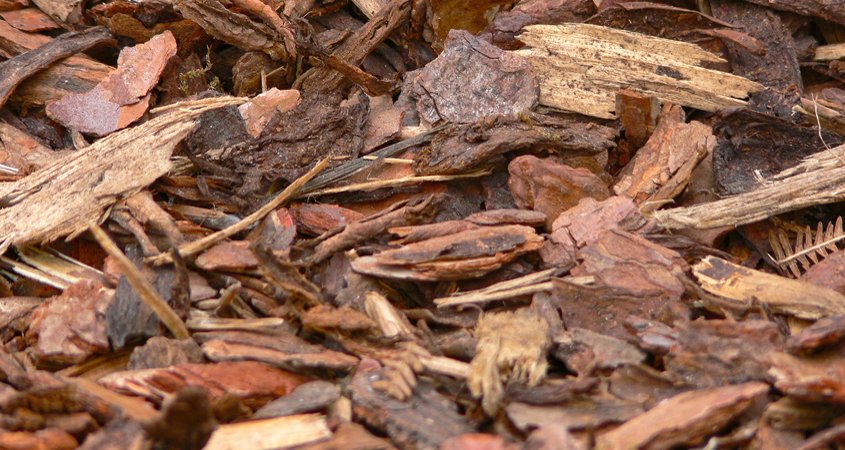
Mulch builds soil structure over time and holds in moisture. Photo: Monsterkoi/Pixabay compost

Mulch builds soil structure over time and holds in moisture. Photo: Monsterkoi/Pixabay

Mulch is a soil topping. Mulch may be organic or inorganic material covering soil. It’s made of larger particles and looks like recycled debris. Mulch can be made from organic matter such as grass clippings, leaf litter, and shredded wood trimmings, or inorganic materials such as gravel or decomposed granite.

The microbes in healthy, biologically diverse mulch bind the organic matter together, forming a thick blanket. This cover protects soil and plant roots from temperature change, keeps moisture in by slowing evaporation from the surface of the soil, and keeps weeds from sprouting by reducing sunlight penetration to the soil surface.

Mulch always stays on top of the soil. Unlike compost, it is never worked in. Recycled organic debris is the most effective type of mulch because it builds soil structure over time and provides a durable, protective surface barrier. The smaller the debris and the more mixed leaves with wood chips, the faster it decomposes. When building soil, small and mixed is best.

Composted material, especially coarse composts, also can be used as mulch. Artificial and inorganic mulches (decomposed granite, gravel, rubber chips, and other rubble) are primarily decorative since they do not contribute to soil life or plant health. They may be used in limited applications such as pathways.

__________________________________________________

WaterSmart Living-Logo-San Diego County Water Authority

(Editor’s Note: The San Diego County Water Authority and its 24 member agencies offer programs, resources, and incentives to improve water-use efficiency for residential, commercial, and agricultural users. WaterSmart choices are a way of life in the region. Stay WaterSmart San Diego! For more water-use efficiency resources, go to WaterSmart.SD.org.)

Water Efficient Yard is 2022 Helix Water District Landscape Contest Winner

A thriving, water-efficient yard in La Mesa is the winner of the Helix Water District’s 2022 WaterSmart Landscape Contest.

Homeowner Nick Voinov worked for a decade to transform his turf into its current WaterSmart residential landscape. It didn’t always look as bright and colorful as it does today.

“I love plants and found them more appealing than a lawn,” said Voinov. “I thought it was a bit of a waste because I had to water it every day, and then once you mowed it, it was hauled off to the dump. It was like a crop that you grew and then threw away.”

Tightening Water Restrictions Lead More San Diegans to Replace Their Lawns

They’ve been part of the American Dream, Southern California style for decades. But verdant lawns are disappearing more and more thanks to shrinking water supplies.

The Golden State is now in its third year of drought. A study published by the journal Nature Climate Change in February found this is the worst drought in what is now the western United States in 1,200 years.

La Mesa resident Nick Voinov stands in front of his 2022 Helix Water District Landscape Contest winning yard. Photo: Helix Water District water efficient yard

Water Efficient Yard is 2022 Helix Water District Landscape Contest Winner

A thriving, water-efficient yard in La Mesa is the winner of the Helix Water District’s 2022 WaterSmart Landscape Contest.

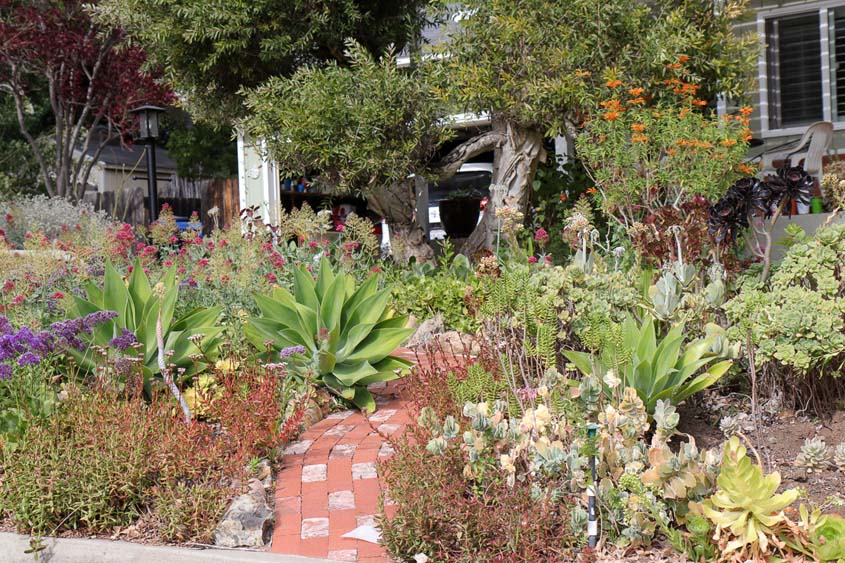
Nick Voinov used multiple layers of succulents, plants and trees to create his winning landscaping. Photo: Helix Water District water efficient yard

Nick Voinov used multiple layers of succulents, plants, and trees to create his winning landscaping. Photo: Helix Water District

Homeowner Nick Voinov worked for a decade to transform his turf into its current watersmart residential landscape. It didn’t always look as bright and colorful as it does today.

“I love plants and found them more appealing than a lawn,” said Voinov. “I thought it was a bit of a waste because I had to water it every day, and then once you mowed it, it was hauled off to the dump. It was like a crop that you grew and then threw away.”

Proper preparation yielded impressive results

Proper soil preparation was a key to the success of this award winning watersmart landscape. Photo: Helix Water District

Proper soil preparation was a key to the success of this award-winning Watersmart landscape. Photo: Helix Water District

Voinov removed his old lawn and composted it into the soil. He added nutrients by mixing in manure from a local horse ranch. Once he prepared the soil and had an open canvas, he began planting.

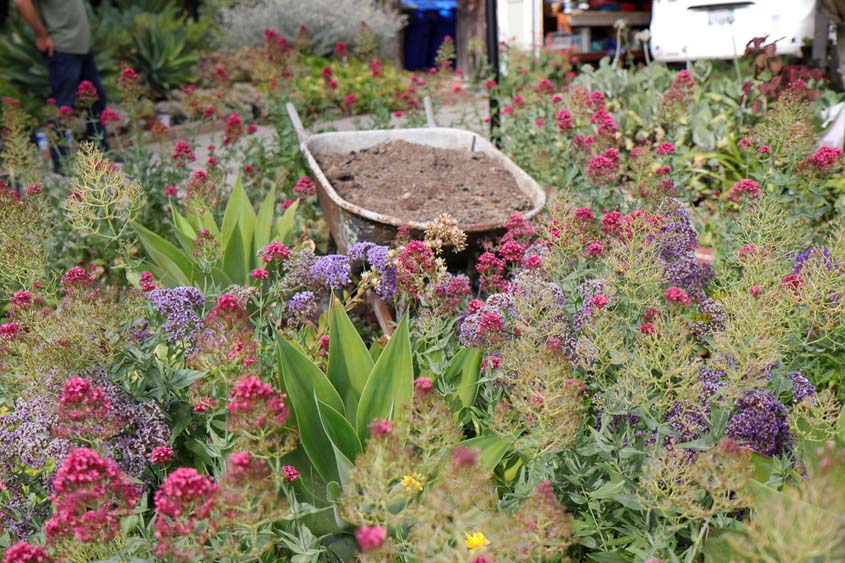
The result is multiple layers of succulents, drifts of flowering low-water use plants, and colorful trees, giving the garden a theme with design consistency. Voinov based his design around maintaining a natural appearance to make the garden more welcoming. Plants grow together and spill over walkways and walls, softening transitions and borderlines.

Plants spill over walkways and planters for a lush appearance. Photo: Helix Water District

Plants spill over walkways and planters for a lush appearance. Photo: Helix Water District

“Succulents were my top choice of plants. People would give me clippings; I love them because you can clip them off and start new ones. Anyone can do it,” said Voinov. He said it’s also also cost-effective.

Voinov irrigates efficiently by deep watering with sprinklers once every two weeks during the summer season. Letting the soil dry out between watering encourages plants to grow deeper roots and helps them access more water, maximizing irrigation. During the cooler months, the plants do not require any irrigation.

Homeowner Nick Voinov maximizes rainwater capture and use where possible. Photo: Helix Water District

The landscape uses rainwater as a resource. The current rainwater catchment system can collect 700 gallons and refills after most storms. During large storms, Voinov directs surplus rainwater to his fruit trees to maximize the amount of water that reaches his landscape.

“I like to make things as efficient as possible. Rainwater is free, and if I can save and collect that water, I will,” said Voinov.

Water-efficiency

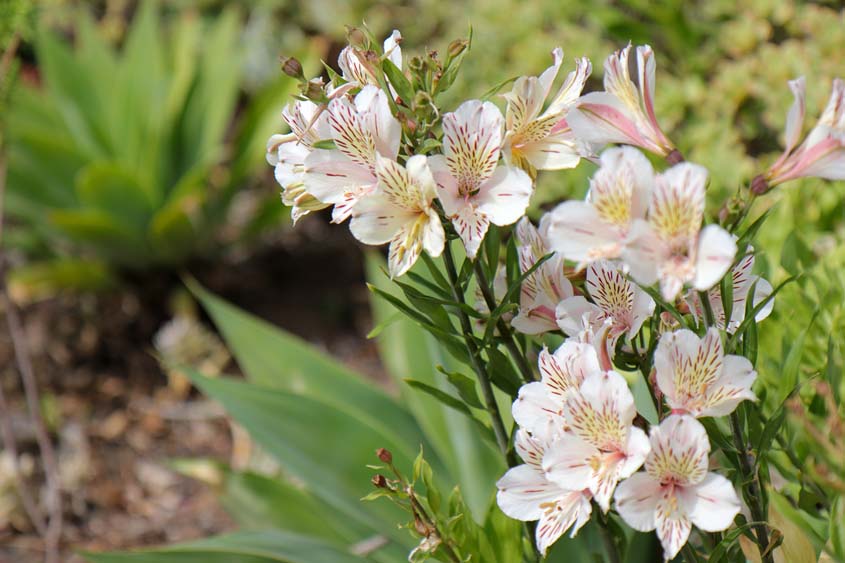
The charming, colorful landscape demonstrates the many options for watersmart landscaping. Photo: Helix Water District

With a water-efficient yard, a rainwater capture system, and WaterSmart home habits like collecting and reusing shower warm-up water, Nick Voinov and his family of five use a maximum of 20 units of water each 60-day billing cycle. That is less than half of what a typical family of five with a similar-sized landscape uses.

“I make a great effort with my family to conserve water because it is important to us,” said Voinov. “We know how precious water is in California, and I really wanted to see if what I do does make a difference.”

The Helix Water District Board of Directors recognized Nick Voinov at its June board meeting, complimenting his work and presenting him a $250 gift card, a yard sign, and an award certificate.

The annual landscape contest runs from January through mid-May each year.

(Editor’s note: The Helix Water District is one of the San Diego County Water Authority’s 24 member agencies that deliver water across the metropolitan San Diego region.)

Helix Water District Logo Square officers for 2021

Helix Water District Announces 2022 WaterSmart Landscape Contest Winner

What was once a thirsty lawn is now a peaceful, thriving, water-efficient paradise.

Helix Water District announced Nick Voinov as the winner of its 2022 WaterSmart Landscape Contest. The annual competition recognizes outstanding water-wise residential landscapes based on overall attractiveness, design, efficient irrigation and appropriate plant selection and maintenance.

Water Authority Proposes 2023 Rates and Charges for Member Agencies

The San Diego County Water Authority is taking strategic steps to minimize 2023 rate increases for its 24 member agencies and their customers while ensuring a safe, reliable, and affordable water supply as drought grips California for a third consecutive year.

Water Authority staff proposed increasing 2023 rates and charges for member agencies by 5.2% for treated water and 3.7% for untreated water. The increases are attributable to historically high inflation, significant energy cost increases from SDG&E, and continued cost increases by the Metropolitan Water District of Southern California.

California Drought: “Smart” Water Meters Coming to San Jose, Other Bay Area Cities in Latest Effort to Boost Conservation

You’ve got a smartphone. Maybe a smart watch. Or even a smart doorbell.

In the coming months and years as California struggles with worsening droughts, millions of Bay Area residents will soon be getting a smart water meter.

To Survive Severe Drought This Summer, California Should Learn From Cape Town’s Water Crisis

In my household we shower every few days. We don’t flush every time. After a dinner party, I empty my guests’ water glasses into the houseplants. It’s been four years since I lived through Cape Town’s water crisis, but hard-earned habits die hard. My water conservation routines may sound like too much information, or even borderline unhygienic, but as the threat of water scarcity looms large around the world, they may well be worth adopting.

How the Desert Gets Water, Imperial Irrigation and Coachella Valley Water Districts

The Colorado River provides water to seven states in the western part of the country and serves about 40 million people, including Southern California.

But as of Tuesday, the Bureau of Reclamation is urging three major water districts, including the Imperial Irrigation and Coachella Valley Water Districts, to cut back by mid-August.

So, how does a desert even get its water in the first place?

Major Water Cutbacks Loom as Shrinking Colorado River Nears ‘Moment of Reckoning’

As the West endures another year of unrelenting drought worsened by climate change, the Colorado River’s reservoirs have declined so low that major water cuts will be necessary next year to reduce risks of supplies reaching perilously low levels, a top federal water official said Tuesday.

Bureau of Reclamation Commissioner Camille Calimlim Touton said during a Senate hearing in Washington that federal officials now believe protecting “critical levels” at the country’s largest reservoirs — Lake Mead and Lake Powell — will require much larger reductions in water deliveries.

(Editor’s Note: Sandra L. Kerl, general manager of the San Diego County Water Authority, issued a statement on U.S. Bureau of Reclamation Commissioner Camille Touton’s testimony today before the Senate Committee on Energy and Natural Resources on the severity of the drought on the Colorado River and need for near- and long-term innovation and investment: https://www.waternewsnetwork.com/san-diego-county-water-authority-general-manager-issues-statement-on-colorado-river-conditions-and-sustainability/)