Tag Archive for: Water Conservation

San Diego County Water Authority Water Resources Specialist Efren Lopez joined CBS 8’s Carlo Cechetto to discuss additional ways San Diegans can reduce their water use. Photo: CBS 8 water saving tips

Water Authority Offers Water Saving Tips on CBS 8

As the current drought stretches into a third year, the San Diego County Water Authority is providing water saving tips as part of a drought survival kit to San Diegans.

Scientists confirm California and the Southwest U.S. is experiencing the worst megadrought in the last 1,200 years. It has prompted Governor Gavin Newsom to order new emergency water rules and cutbacks with the goal of preparing the state for a 10% decrease in the available water supply by 2040.

“The hots are getting a lot hotter, the dries are getting a lot drier and … the wets are getting wetter,” Newsom said in announcing the plan at a desalination plant under construction in Antioch, 45 miles inland from San Francisco, that will turn brackish water into drinking water.

Water saving tips

Many years ago, San Diego regional water leaders had the foresight to call for conservation efforts to help build our resilience. Now we are in a more fortunate position thanks to our diversified water supply than much of the state.

San Diegans have learned how to conserve water, but there is always more we can do. San Diego County Water Authority Water Resources Specialist Efren Lopez joined CBS 8 Anchor and Reporter Carlo Cecchetto on the news program “The Four” to discuss the Governor’s report and offer additional ways San Diegans can reduce water use.

Water conservation is a way of life

“San Diego’s great at conservation. Conservation is a way of life here, but there is always something more we can do,” said Lopez. He suggests homeowners use a shutoff nozzle when hand watering using their garden hose and test soil with a moisture sensor to determine when soil is dry enough before irrigating.

In addition to water-saving measures, San Diego County residents can take advantage of the Water Authority’s rebate programs for turf replacement, irrigation devices, and WaterSmart landscape gardens. Countywide, San Diegans have removed more than one million square feet of turf through rebate programs, resulting in annual water savings of 36.5 million gallons.

“In San Diego, we’ve been diversifying our water supply for decades,” said Lopez. “So we’re prepared for this drought. It’s great to see the governor supportive of resilient supplies and a portfolio approach to our water supply so that we don’t rely on just one source.”

Lopez encouraged San Diego County residents to get additional tips for saving water at www.watersmartSD.org.

California Unveils Water Strategy, Planning for Greater Scarcity

California Governor Gavin Newsom unveiled a new water strategy on Thursday that plans for a future with 10% less water and shifts the emphasis from conservation to capturing more water that otherwise flows out to sea.

Climate change has contributed to more severe drought but has also set the stage for more intense flooding when rain does fall, as was demonstrated last week in California’s Death Valley, one of the hottest, driest parts of the United States.

Urban Water Suppliers Report Water Savings Progress Statewide

Following Governor Gavin Newsom’s recent executive order and a State Water Board emergency regulation, members of the California Urban Water Agencies, or CUWA, including the San Diego County Water Authority continue to advance water-saving efforts, yielding measurable results. These efforts come on the back of the driest first quarter in California’s history, which prompted the Governor to call for local water conservation steps rather than a one-size-fits-all approach.

L to R: Governor Gavin Newsom; Clifford Chan, East Bay Municipal Utility District: Rick Cailender, Valley Water District; Joaquin Esquivel, State Water Resources Control Board; and Sandy Kerl, San Diego County Water Authority met on July 29 to discuss ways to maximize water supplies. Photo: San Diego County Water Authority water savings

Urban Water Suppliers Report Water Savings Progress Statewide

Following Governor Gavin Newsom’s recent executive order and a State Water Board emergency regulation, members of the California Urban Water Agencies, or CUWA, including the San Diego County Water Authority continue to advance water-saving efforts, yielding measurable results.

These efforts come on the back of the driest first quarter in California’s history, which prompted the Governor to call for local water conservation steps rather than a one-size-fits-all approach. As severe drought conditions persist, state and local agencies are working together to support the Governor’s call to action and lower water use across all sectors through a variety of measures.

“Water conservation a way of life”

“Governor Newsom has demonstrated strong leadership in directing water agencies to implement actions that are the best fit for the communities we serve,” said Water Authority General Manager and CUWA Board Chair Sandy Kerl. “We look forward to continued collaboration at the state and local level as we collectively prepare for a more resilient future.”

“While we have made historic investments to protect our communities, economy, and ecosystems from the worsening drought across the West, it is clear we need to do more,” said Governor Newsom in a press release. “Amid climate-driven extremes in weather, we must all continue to do our part and make water conservation a way of life.”

Water savings increase; long-term drought resilience the goal

Carlsbad Desalination Plant-Water Supply Portfolio-desalination

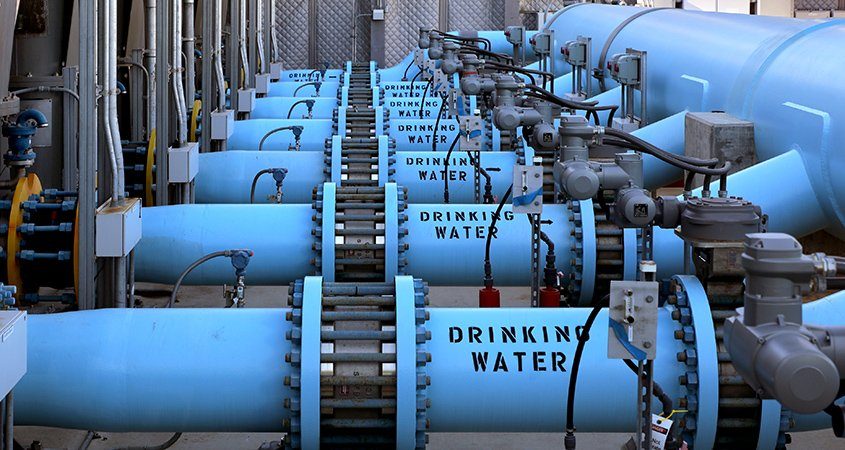
The Carlsbad Desalination Plant uses reverse osmosis to produce approximately 10% of the region’s water supply; it is a core supply regardless of weather conditions, and it is blended with water from other sources for regional distribution. Photo: San Diego County Water Authority

Over the past few months, the Governor has convened a series of meetings with local water agencies, including Kerl and other CUWA representatives, to discuss progress and call for continued action. Since the first meeting in May, Californians have made substantial progress in conservation. Preliminary numbers suggest overall water use was down 7.5% in June compared to June 2020.

Based on an analysis of provisional data, CUWA agencies anticipate even greater water savings in July — about 10% on average compared to 2020, with several agencies exceeding 15% savings. This is due to significant investments in conservation rebates, turf replacement programs, public messaging, and outreach including stringent water use restrictions where necessary.

Beyond the immediate need for water conservation, Governor Newsom supports long-term drought resilience. “We are dealing with a changed climate in California that demands we reimagine not just how we use water, but how we capture, store and distribute it throughout the state,” Newsom said in a recent meeting.

In alignment with state priorities, CUWA members continue to invest in storage and drought-resilient supplies, such as water reuse and desalination, through local and collaborative regional efforts.

Caring For Your WaterSmart Living Landscape

Whether you install a new WaterSmart Living landscape or are just looking for tips on how to conserve water in your existing landscape, the following section can help you make an immediate impact on your landscape water savings.

Bring a New Water-Saving Landscape to Life with Native California Plants

With your new water-saving landscaping plans complete, demolition and turf removal done, and your new irrigation system in place, it’s time to get started on the plant installation. For most homeowners, this is the most rewarding part of the process — seeing your new landscaping come to life.

WaterSmart homeowner Jeff Moore's back yard zen garden featuring his landscape work fit beautifully into his area's climate zone. Photo: Water Authority caring for

Caring For Your WaterSmart Living Landscape

Whether you install a new WaterSmart Living landscape or are just looking for tips on how to conserve water in your existing landscape, the following section can help you make an immediate impact on your landscape water savings.

View these tips, and follow the guidelines below

Plan ahead. Keep a copy of the plant legend, irrigation plan, and runtime schedule to make it easy to buy replacement plants and parts. This will also help locate and troubleshoot pipes to make repairs or adjustments if needed in the future.

Monitor and minimize watering. When set up correctly, your smart controller will automatically adjust watering times to respond to changes in weather. To maximize water savings, program your controller to apply only the amount of water needed for each zone. A good rule of thumb is to water only when the top inch of soil is dry. If you see runoff before the end of the irrigation cycle, adjust the schedule to more often for a shorter duration each time.

To schedule your irrigation correctly, you must know your equipment type, plant water use, soil texture, and watering zone. Use the Watering Calculator on bewaterwise.com to create a basic watering schedule for your property. Adjust as needed for optimum plant growth and water efficiency.

Water at appropriate times. If possible, schedule your irrigation system to run in the early morning. It is best to avoid watering at night to prevent fungus and mildew problems from night time watering. Avoid watering midday to eliminate excessive evaporation.

Managing irrigation schedules is a key part of caring for your WaterSmart Living landscaping. Photo: Irrigation Association

Managing irrigation schedules is crucial to caring for your WaterSmart Living landscaping. Photo: Irrigation Association

Check irrigation equipment. You may not witness the system running in the early morning hours. Be sure to manually turn the system on seasonally and after severe weather changes to catch potential problems. Check drip systems to ensure emitters are working and clean out filters as needed. Over time, drip emitter locations may need to be relocated as your plants grow. Adjust spray sprinklers to prevent overspray and runoff.

Fertilizing tips. Use an organic fertilizer or compost. Compost can be made from garden waste and some kitchen waste to continually enrich your soil. For more information and recipes for do-it-yourself compost, see the Water Authority’s eGuide to a WaterSmart Lifestyle.

Weed control. Weed naturally whenever possible. Using herbicides can be costly and, if not correctly applied, can damage the environment. Designing and maintaining a healthy landscape can be the best defense against weeds. Hand pull any weeds that come up in your garden every few weeks. Pull them before they go to seed.

Manage pests. The key to controlling pests and diseases is to maintain healthy soil and select plant species that are not prone to pest problems. Consider following Integrated Pest Management (IPM) practices. Use chemical control only as a last resort. Try spraying pests with a blast of water, release beneficial bugs (ladybugs and lacewings), spray insecticidal soap, or use compost tea. Consider replacing pest-prone plants. See our eGuide for more information on natural pest control and compost tea. When using chemical control, always follow the manufacturer’s dosage, application and safety information.

Maintain a two-to-three-inch layer of mulch. Replace the mulch as needed.

Use a broom or blower to clean driveways and sidewalks instead of a hose.

Make a plant maintenance checklist. Keep a copy of your plant list and make a checklist of maintenance requirements for each plant.

Monitor your monthly costs and water use on an ongoing basis.

Enjoy the peace of mind from knowing you did your part to protect our natural resources and the environment.

___________________________________________________________

WaterSmart Living-Logo-San Diego County Water Authority

(Editor’s Note: The San Diego County Water Authority and its 24 member agencies offer programs, resources, and incentives to improve water-use efficiency for residential, commercial, and agricultural users. WaterSmart choices are a way of life in the region. Stay WaterSmart San Diego! For more water-use efficiency resources, go to WaterSmart.SD.org.)

California Drought 2022: Two Water Districts Eye Hefty Colorado River Cuts

Two powerful Southern California water districts are actively negotiating an agreement for hefty voluntary cuts of Colorado River supply to farmers and reduced delivery of water to greater Los Angeles, as part of urgent efforts across seven states and Mexico to stave off the collapse of the drought-stricken river system that provides drinking water and irrigation for nearly 40 million people.

Responding to a June mandate from the U.S. Bureau of Reclamation for all those who rely on the river to cut 2 million to 4 million acre-feet of water usage within 60 days, Imperial Irrigation District and Metropolitan Water District officials are negotiating “around half a million, between 400,000 and 500,000 acre-feet” in combined reductions, IID general manager Enrique Martinez said on Monday.

How to Properly Install Irrigation for a New Water-Saving Home Landscape

Successfully installing water-saving irrigation starts long before you get out your tools. You need to complete an assessment of your landscape plan’s specific water needs, draw a complete plan showing the layout, then select your irrigation and purchase your irrigation equipment. If your soil needs amendments (and it almost certainly does), you must get this done first. With all of this important prep work complete, you can start to implement the design.

California Water Agencies Cope With Diminishing Water Supply

As of Spring 2022, National Integrated Drought Information System (NIDIS) data show nearly 70 percent of the lower 48 U.S. states in drought, affecting more than 100 million residents.

California in particular is facing a deepening water crisis, with over 93 percent of the state experiencing extreme drought. 2022 is the state’s driest year on record for the past 128 years, while 58 counties in the state are currently under a U.S. Department of Agriculture (USDA) disaster designation.