FPUD to Use MWD Refund for CUP Loan Repayment
The San Diego County Water Authority has filed multiple rate lawsuits against the Metropolitan Water District of Southern California and has been awarded legal damages and interest payments.
The three major U.S. rating agencies reported strong credit ratings and credit quality for the San Diego County Water Authority kicking off 2022. Newly released analysis by Fitch Ratings, S&P Global, and Moody’s allow the Water Authority to optimize its debt portfolio and minimize the cost of financing vital water reliability projects.
The ratings reports were issued Jan. 27 in anticipation of Water Authority plans to sell $170 million of bonds the week of Feb. 7. Proceeds will be used to finance a portion of the design, acquisition, and construction of various capital projects.
All three rating agencies highlighted the strength of the Water Authority’s significant investments in supply diversification, which allow the agency to meet demands in its service area despite ongoing drought conditions. The Water Authority’s credit quality is deemed strong, in part because the agency adopted its Long-Range Financing Plan in 2021. S&P said, “the LRFP reflects strong management of the authority’s financial and capital needs balanced with long-term affordability for its member agencies.”
Water Authority General Manager Sandra L. Kerl said, “These credit ratings reflect the importance of the Water Authority’s successful effort to diversify the San Diego region’s water supply portfolio combined with strategic financial practices. Consistent investments are protecting the region’s ratepayers from persistent drought conditions while maintaining a safe and affordable water supply.”
In affirming their credit ratings, the services cited the Water Authority’s financial leadership, including prudent strategies to manage issues related to COVID-19, its success diversifying water supply sources, its commitment to infrastructure maintenance, and its financial reserves for managing contingencies, among other factors.
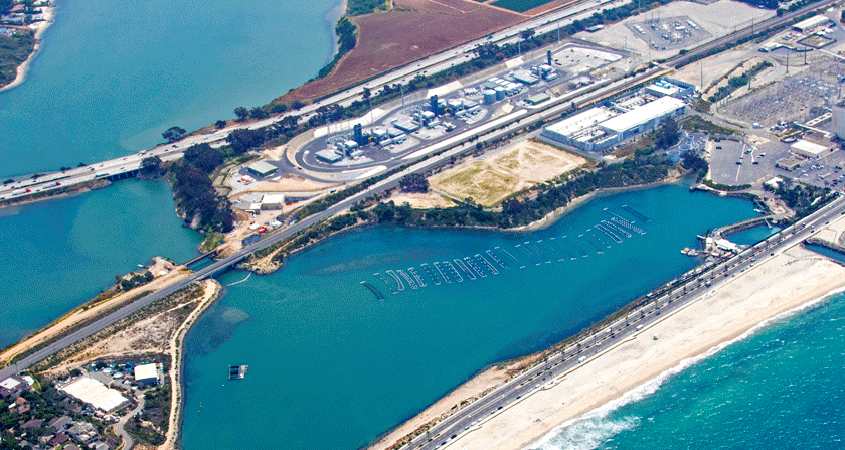
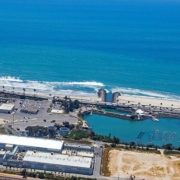
Significant projects completed over the past two decades include the San Vicente Dam Raise, Olivenhain Dam, and Twin Oaks Valley Water Treatment Plant. The Carlsbad Desalination Plant has also been completed as a joint project of the Water Authority and Poseidon Water.
To read the most recent rating agency reports for the Water Authority, go to www.sdcwa.org/wp-content/uploads/2022/01/Credit-Rating-Reports-2022.pdf.
(Editor’s Note: All three rating agencies cited ongoing uncertainty resulting from two member agencies’ applications to detach from the Water Authority. Moody’s said detachment could lead to a credit downgrade, which would increase borrowing costs for critical water reliability projects. S&P Global said detachment could challenge affordability and create long-term political risk for the agency, especially if the process sets a precedent that “members can easily detach from the authority.” Information about detachment is at www.sdcwa.org/member-agencies/lafco-reorganization/.)
February 2, 2022 – The three major U.S. rating agencies reported strong credit ratings and credit quality for the San Diego County Water Authority kicking off 2022. Newly released analysis by Fitch Ratings, S&P Global, and Moody’s allow the Water Authority to optimize its debt portfolio and minimize the cost of financing vital water reliability projects.
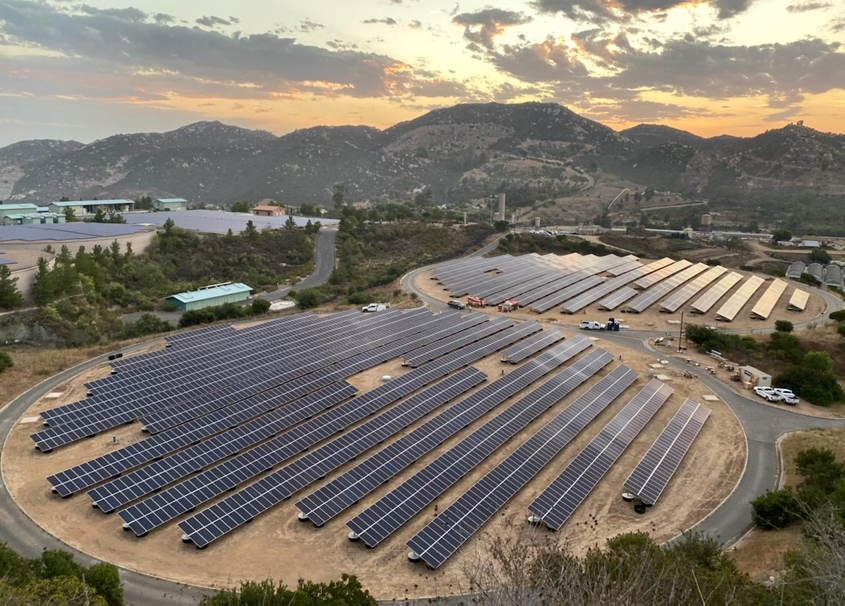
Partners the City of San Diego and the San Diego County Water Authority will begin negotiations on a project development agreement with the BHE Kiewit Team to develop Phase 1 of the potential 500 MW San Vicente Energy Storage Facility Project.
The proposed project, which could generate enough energy for about 135,000 households, is subject to a full environmental review and regulatory approvals. If the authority and the city decide to proceed after completing environmental review, the San Vicente Energy Storage Facility would provide up to 500 MW of long-duration stored energy to help meet peak electrical demands throughout southern California and help meet California’s renewable energy goals.
There’s been a lot of talk lately about the cost of water — and that makes sense given the economic realities faced by many residents, farmers, and businesses. But it also seems that newer generations of San Diegans do not know that there was a time when we didn’t have water when and where we needed it.
Thankfully, that’s not a problem in San Diego County today even though elsewhere drought-stricken communities face the potential of only having enough water to meet basic health and safety needs.
January 27, 2022 – As partners, the City of San Diego and the San Diego County Water Authority will begin negotiations on a project development agreement with the BHE Kiewit Team to develop Phase 1 of the potential San Vicente Energy Storage Facility Project, which could generate enough energy for about 135,000 households.
The proposed project is subject to a full environmental review and regulatory approvals. If the Water Authority and City of San Diego decide to proceed after completing environmental review, the San Vicente Energy Storage Facility would provide up to 500 megawatts of long-duration stored energy upon completion to help meet peak electrical demands throughout Southern California and help meet California’s renewable energy goals.
Enhancing the financial literacy of employees at the San Diego County Water Authority was a primary objective when staff submitted a grant application for a portion of $1.4 million in funds available to public employers by the Mission Square Research Institute.
The Water Authority was among 24 public sector employees selected for a grant and received $24,884 to implement its three-year strategic plan to help employees improve their financial wellness.
Enhancing the financial literacy of employees at the San Diego County Water Authority was a primary objective when staff submitted a grant application for a portion of $1.4 million in funds available to public employers by the Mission Square Research Institute.
The Water Authority was among 24 public sector employees selected for a grant and received $24,884 to implement its three-year strategic plan to help employees improve their financial wellness.
While the Water Authority had an existing lunch and learn program which occasionally touched on financial wellness topics, the water agency did not have a comprehensive financial wellness program or a way of extending educational resources to its member agencies.
The grant funds enabled the agency to contract with a nonprofit and other organizations to offer specific financial courses, incentive prizes, and an online, interactive financial wellness platform to employees of all 24 member agencies. The majority of financial education sessions were provided during lunchtime and recorded, if possible, for those who couldn’t attend. Additional self-paced education was offered through an online platform available to employees 24/7.
On average, 60 individuals attended remote lunch and learns, which garnered an average 95% high satisfaction evaluation rate.
For the online self-service platform, 58 employees registered, 50 completed a financial checkup, and 16 courses were completed. The post-program financial literacy quiz was completed by 46 individuals, and the stress level of employees decreased from 3 of 10 at program start to 2 of 10 near the end of the measurement period. Most impressive, the average financial literacy test score rose from 66% (out of 100%) prior to the program, to 71% after the program.
Participant comments included:
“This is a great program. It’s great to learn about topics that I knew I needed to learn about.”
“I really appreciate this program. Learning about things like Long Term Care will help me protect me and my family in the future.”
Moving forward, the Water Authority plans to evaluate the attendance, engagement, and effectiveness of the entire financial wellness program on an annual basis to determine if any adjustments to program delivery are necessary.

The information collected from the Water Authority and other grant recipients resulted in a series of Financial Wellness Fact Sheets, providing key lessons learned and best practices for other state and local jurisdictions to adopt or customize to help employees reduce debt, save for retirement, or reach other financial goals.
Each fact sheet provides a summary of the jurisdiction’s approach, outcomes, lessons learned, and future plans. Additionally, the fact sheets provide ideas, advice, and networking opportunities for other public employers exploring financial wellness programs.
“It is encouraging to see the wide variety of innovative programs implemented under the grant program to improve the financial well-being of the public workforce,” said Rivka Liss-Levinson, PhD, MissionSquare Research Institute Senior Research Manager and lead author of the fact sheet series. “Well-designed financial wellness programs are a win-win for employees and employers, especially at a time when governments are struggling to recruit and retain workers.”
“We know financial wellness can result in more productive and engaged employees, improve morale, lower absenteeism, alleviate burnout, and reduce health care costs. We hope the Financial Wellness Fact Sheets spark ideas for leaders exploring programs for their employees. Ultimately, these programs improve employees’ ability to deliver vital public services,” said Liss-Levinson.
MissionSquare Research Institute promotes excellence in state and local government and other public service organizations to attract and retain talented employees. The organization identifies leading practices and conducts research on retirement plans, health and wellness benefits, workforce demographics and skill set needs, labor force development, and topics facing the not-for-profit industry and education sector.