Tag Archive for: Recycled Water

As soon as 2026, the East County Advanced Water Program will deliver water to the faucets of customers. Photo: East County AWP milestone

East County Advanced Water Program Hits Multiple Milestones  

Work on the East County Advanced Water Purification Program facilities and pipelines reached multiple milestones at the start of 2024, and construction continues on schedule at multiple East County locations through 2025. As soon as 2026, the AWP will deliver water to the faucets of customers in the Padre Dam Municipal Water District, Helix Water District, Lakeside Water District service areas, and the northern portion of the Otay Water District service area.

At the main construction site north of Santee Lakes, more than 60% of the concrete has been poured for the water recycling, solids handling, and advanced water purification facilities. Nearly 60% of the 2.3 total miles of open-cut construction on wastewater pipelines that make up the AWP Program are complete.
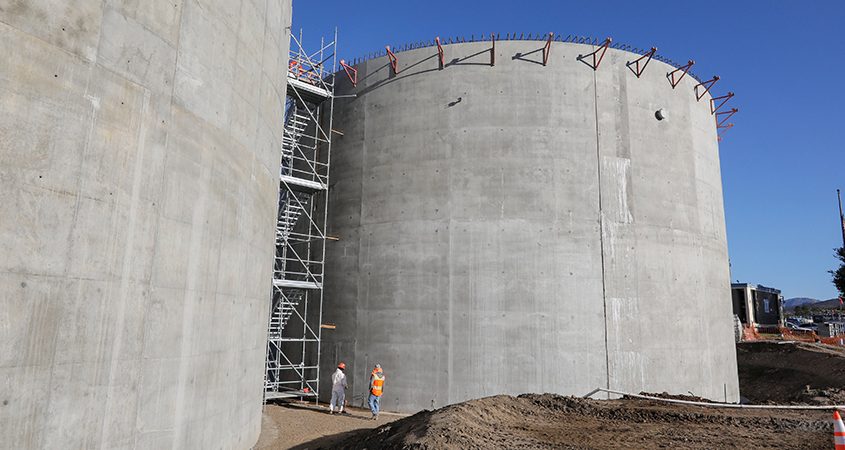
More than 60% of the concrete has been poured for the East County Advanced Water Program water recycling, solids handling and advanced water purification facilities. Photo: East County AWP

More than 60% of the concrete has been poured for the East County Advanced Water Program water recycling, solids handling and advanced water purification facilities. Photo: East County AWP

Construction also continues on Fanita Parkway, north of Ganley Road in Santee, and within Santee Lakes Recreational Preserve. Pipeline water testing is now underway on that installed pipeline.
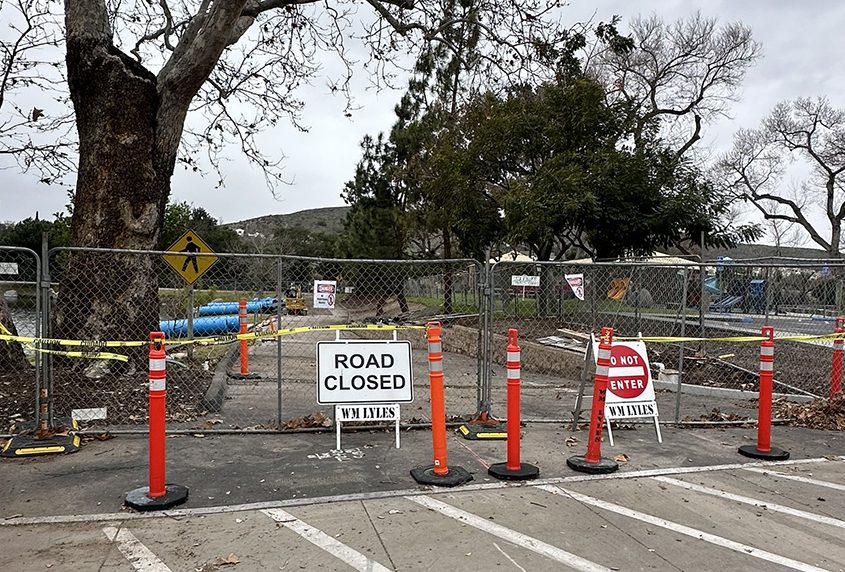
Work on the pipelines for the East County Advanced Water Program is affecting access to the Santee Lakes Recreational Preserve, which remains open. Photo: East County AWP

Work on the pipelines for the East County Advanced Water Program is affecting access to the Santee Lakes Recreational Preserve, which remains open. Photo: East County AWP

In addition, pipeline work at Santee Lakes is occurring between Lakes 3 and 4. There is a road closure and no parking in some areas. The Kiwanis Playground at Lake 4 remains open and parking has been preserved for playground visitors.

“Roughly a year and a half ago, we started with a blank slate and since then, the Joint Powers Authority and its project partners have made significant achievements at each of the construction sites,” said Mark Niemiec, director of the East County AWP. “It’s during these ongoing activities within the community including at Santee Lakes that we really appreciate our neighbors’ patience and understanding.”

Pipeline undergrounding scheduled this spring
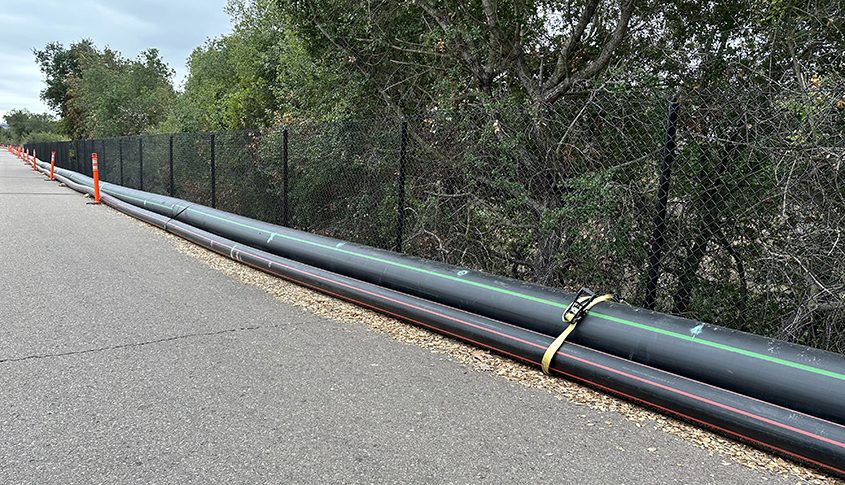
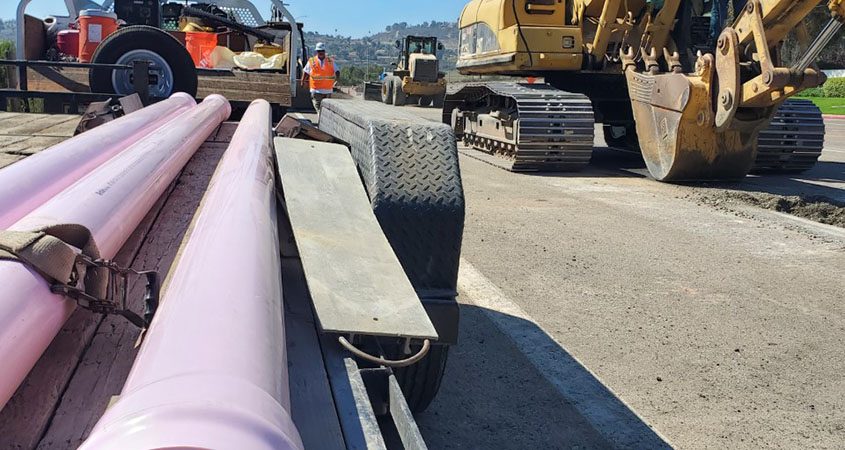
These new pipelines servicing the East County Advanced Water Program will soon be moved underground. Photo: East County AWP

These new pipelines servicing the East County Advanced Water Program will soon be moved underground. Photo: East County AWP

The wastewater pipelines that will run from the East Mission Gorge Pump Station near State Route 52 to the first lake at Santee Lakes will soon be pulled underground. This trenchless construction method called “Horizontal Directional Drilling” minimizes the impacts to nearby waterways, including the San Diego River. The process takes an estimated 24 to 36 straight hours.

Elsewhere, Fanita Parkway will be temporarily closed for up to one week in March between Ganley Road and Lake Canyon Road to allow for paving on both sides of the street. Residents will see detour signs prior to the closure. The road closure will occur during the day from 7 a.m. to 5 p.m.

Purified water pipeline construction is continuing west on Mast Boulevard in Santee, as well as west on Mapleview Street in Lakeside and from Laurel Canyon Road to El Monte Road. Lane closures can be expected.
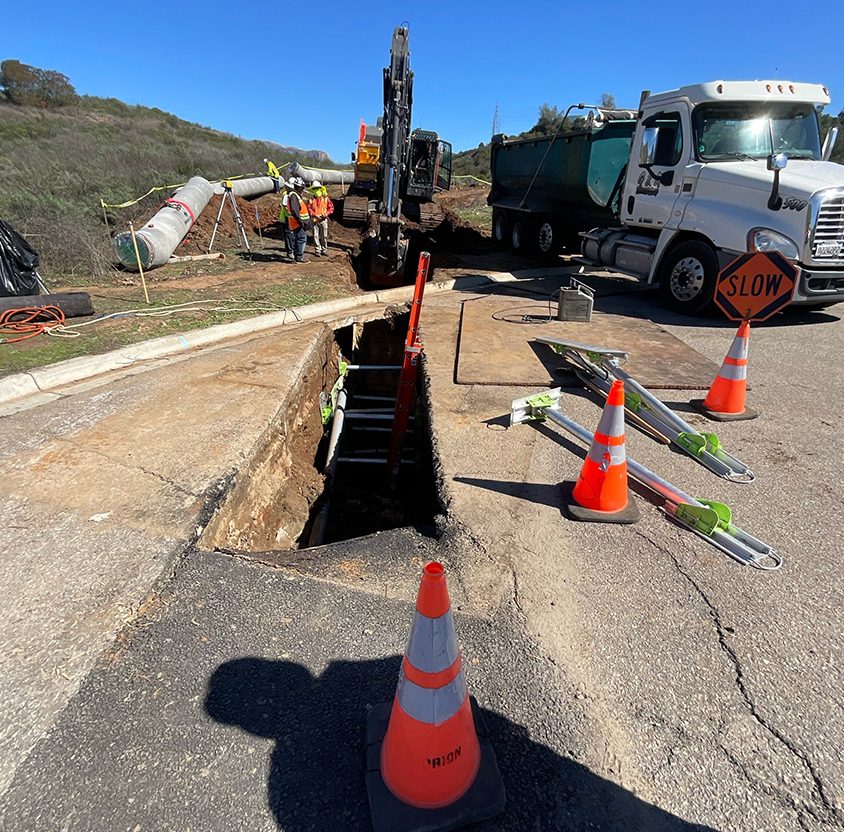
Residents and commuters in Santee and Lakeside can monitor road closures on the East County AWP website. Photo: East County AWP

Residents and commuters in Santee and Lakeside can monitor road closures on the East County AWP website. Photo: East County AWP

Construction on the 23,000-square-foot Visitors Center is in progress and will be completed by the end of 2025. It will house administrative offices, the operation control center, a testing laboratory, and a community room. The steel beam installation, including 66 columns and 100 beams, will use 350,000 pounds of U.S. steel.

The Flume Trail at Lake Jennings is officially back open following a 10-month closure for purified pipeline construction. The trail will close again during the summer for a couple of months to allow for additional pipeline construction near the shoreline.
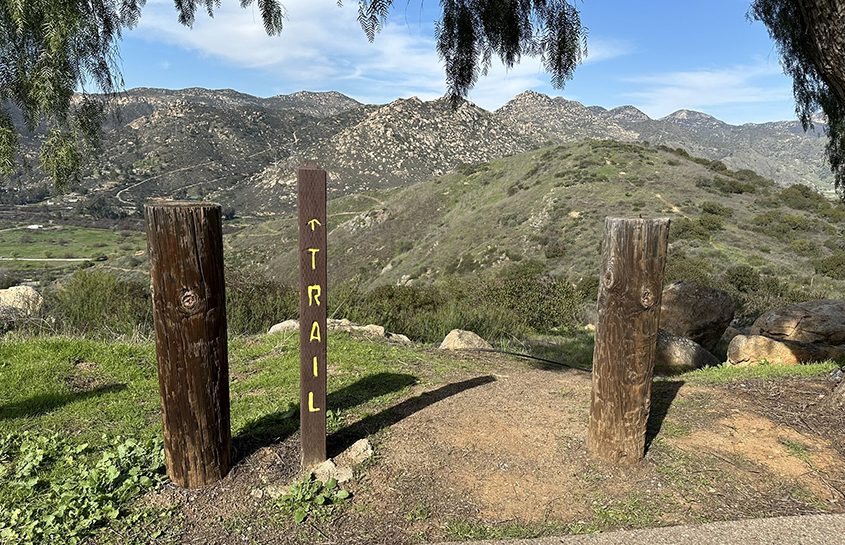
The Flume Trail at Lake Jennings is officially back open following a 10-month closure. It will close again for additional construction later this summer. Photo: East County AWP

The Flume Trail at Lake Jennings is officially back open following a 10-month closure. It will close again for additional construction later this summer. Photo: East County AWP

When complete, the East County AWP Program will be able to create up to 11.5 million gallons of purified water per day, which is enough to serve an estimated 400,000 people, or roughly 30% of East San Diego County’s water supply.

The East County AWP Program includes construction of the following:
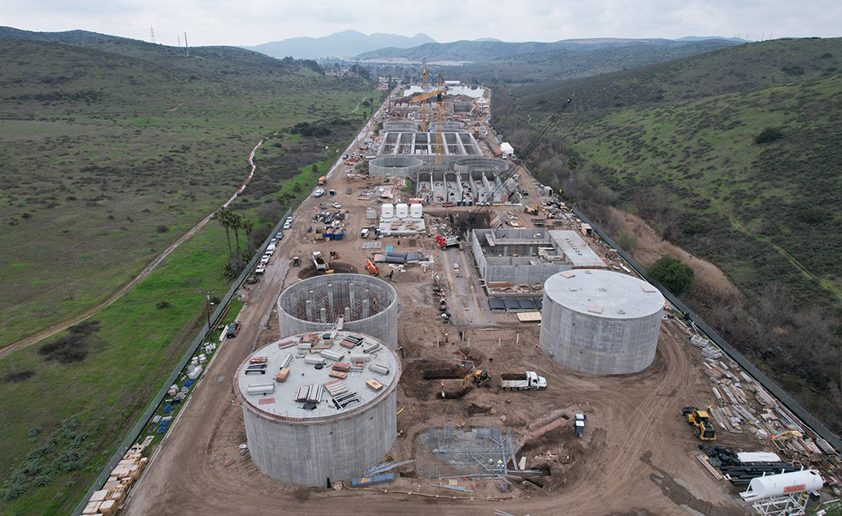
When operational, the East County AWP will be able to create up to 11.5 million gallons of purified water per day which is enough to serve roughly 30% of East San Diego County’s water supply. Photo: East County AWP

When operational, the East County AWP will be able to create up to 11.5 million gallons of purified water per day which is enough to serve roughly 30% of East San Diego County’s water supply. Photo: East County AWP

  • Water recycling facility treating 16 million gallons per day (MGD) of wastewater.
  • Advanced water purification facility treating and purifying 11.5 MGD.
  • Purified water pipeline transporting purified water 10 miles to Lake Jennings.
  • Wastewater and residual pipelines. Each segment is three miles long.
  • East Mission Gorge Pump Station (retrofitted) and City of San Diego partnership of regional brine and wastewater pipelines traveling from the pump station in Santee to the City of San Diego’s sewer line in Mission Valley.
  • Energy recovery system creating three megawatts of renewable energy.

To stay up-to-date with project schedules, community impacts and work descriptions, check the East County Advanced Water Purification Program’s interactive map on  www.eastcountyawp.com or visit @eastcountyawp on social media
Recycled Water Supervisor, Mike Piper, Earns Kudos and Enjoys Helping Colleagues

It’s always nice to get a thank-you or two from those you work alongside like Recycled Water Supervisor Mike Piper. He recently was handed a card and box of chocolates as a sincere gesture from a young utility worker he had mentored. The worker expressed gratitude for Piper’s guidance and dedication, noting that Piper went above and beyond, even on days off, to help him meet professional standards.

Final Leg of Pure Water Project Pipeline Installed At Miramar Reservoir

The final segment of the Pure Water pipeline is being installed underwater at the Miramar Reservoir. San Diego’s Pure Water project will supply half of the city’s drinking water by 2035. The city says this is the last segment of the pipeline that will carry purified water from the North City Pure Water Facility through eight miles of pipeline to the reservoir. Crews have already tunneled more than 1,000 feet and now work is underway to finish building the pipeline.

Olivenhain Water District Helps Reduce Local Water Demand

Olivenhain Municipal Water District continues to reduce its imported drinking water demand by converting seven meters within the Village Park Manor condominium community to recycled water.

Olivenhain Municipal Water District Logo landscape design workshops

Olivenhain Municipal Water District Partners with Village Park Manor Condos to Reduce Drinking Water Demand

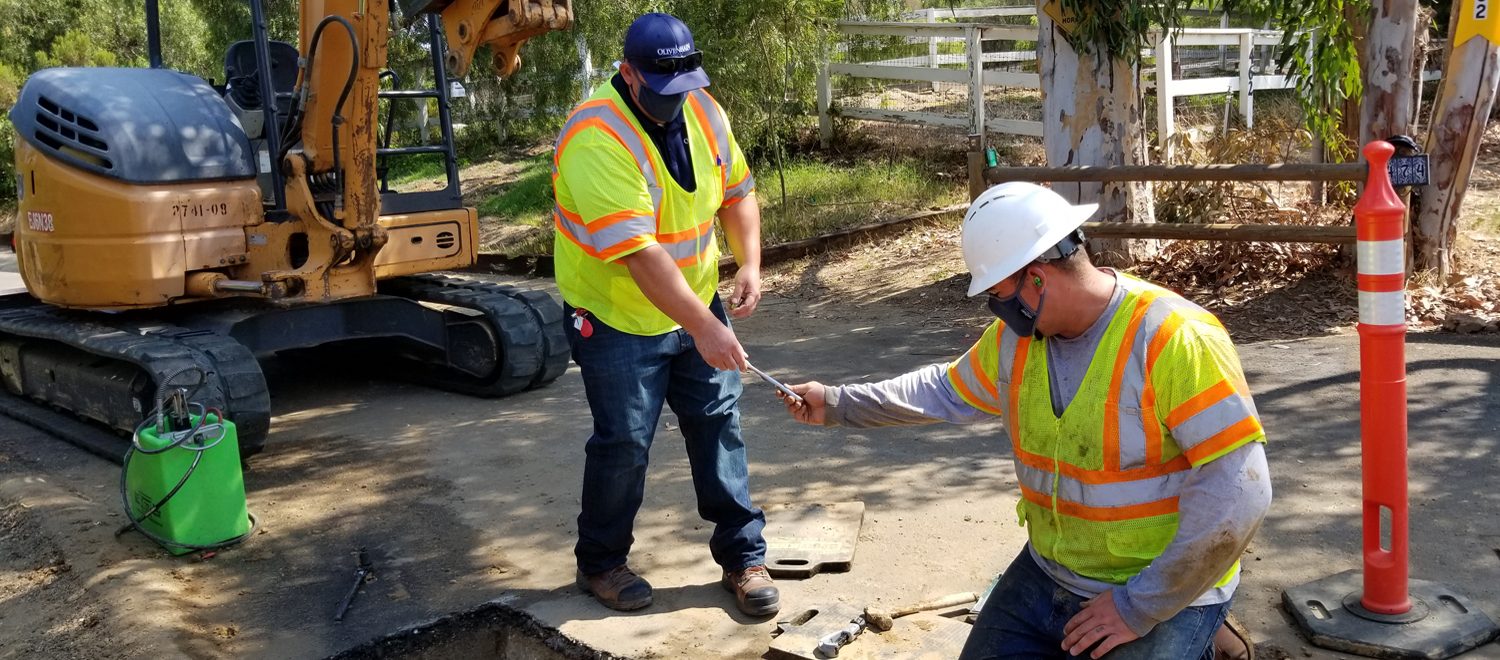
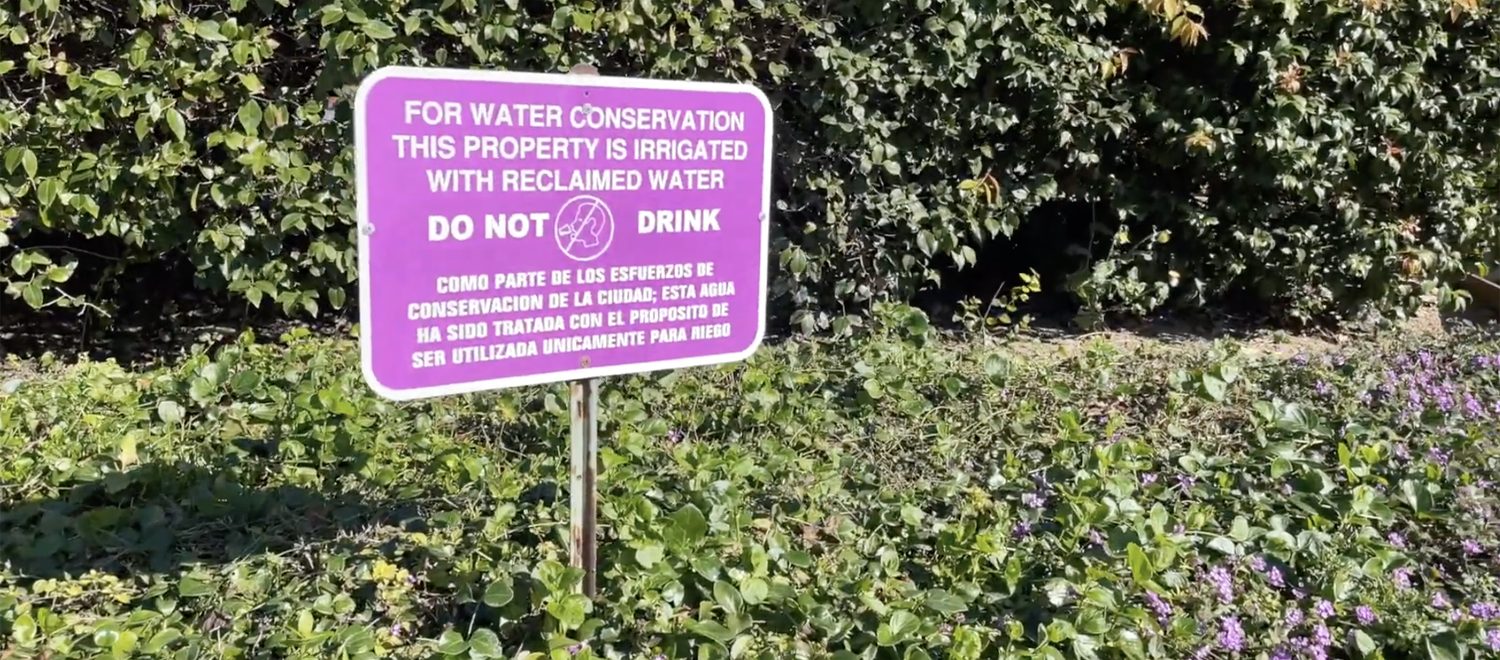
Encinitas, CA—Olivenhain Municipal Water District continues to reduce its imported drinking water demand by converting seven meters within the Village Park Manor Condominium community to recycled water. Village Park Manor is located in Encinitas and began in December irrigating its common areas using recycled water.

With the successful conversion of the seven meters to recycled water, Village Park Manor will save nearly six million gallons of imported water each year.

Long term drought and dwindling Colorado River supplies have Phoenix urgently pursuing highly treated recycled sewage as a drinking water supply. Photo: Wikimedia Commons

Colorado River Shortages Drive Major Advances in Recycled Sewage Water Use

After more than two decades of drought, water utilities serving the largest urban regions in the arid Southwest are embracing a drought-proof source of drinking water long considered a supply of last resort: purified sewage.

Water supplies have tightened to the point that Phoenix and the water supplier for 19 million Southern California residents are racing to adopt an expensive technology called “direct potable reuse” or “advanced purification” to reduce their reliance on imported water from the dwindling Colorado River.

“[Utilities] see that the river is overallocated, and they see that the climate is changing,” said Kathryn Sorensen, former director of Phoenix Water Services Department. “They’re looking at this and understanding that the river supply is highly variable and extremely uncertain in the future.”

The Colorado River that sustains nearly 40 million people and more than 4 million acres of cropland across seven states is shrinking because of climate change and overuse. The river’s flows have declined approximately 20 percent over the past century, and a more than two-decade drought that began at the turn of this century has pushed the system to its limits.

With so much at stake, cities dependent on the river are strengthening water conservation measures and pursuing new sources of water with urgency.

Read more

Opinion: We Must Approach Recycled Water Solution With Open Mind

In Marin County, we have limited options when we face the next, inevitable drought. Recycled water, the reuse of purified wastewater, is one of the most viable options and belongs in the water supply of every urban area of coastal California.

Ukiah Celebrates One Billion Gallons of Recycled Water Served

Ukiah’s recycled water project, known as the “purple pipe,” held a celebration October 5 to commemorate one billion gallons of recycled water water served since the project began. The event took place at the recycling facilities on 300 Plant Road in Ukiah, and included Congressman Jared Huffman and other elected officials, agency representatives, project staff, and a visit by Mrs. Williams’ 5th grade class at Yokayo Elementary School in Ukiah.

Olivenhain Municipal Water District Marks Milestone Recycled Water Anniversary

Water recycling reduces the need to import or develop additional drinking water supplies. It is a vital water management strategy to ensure a safe, reliable, and locally controlled water supply to support healthy environments, robust economies, and high quality of life.

Water and wastewater agencies in San Diego County are developing or expanding their water recycling infrastructure. Among those at the forefront is the Olivenhain Municipal Water District. OMWD marks a significant milestone in August: the 20th anniversary of its award-winning 4S Ranch Water Reclamation Facility, which began serving high-quality recycled water for irrigation in August 2003.

4S Ranch Water Reclamation Facility-CWEA 2022 Plant of the Year

Olivenhain Municipal Water District Marks Milestone Recycled Water Anniversary

Water recycling reduces the need to import or develop additional drinking water supplies. It is a vital water management strategy to ensure a safe, reliable, and locally controlled water supply to support healthy environments, robust economies, and high quality of life.

Water and wastewater agencies in San Diego County are developing or expanding their water recycling infrastructure. Among those at the forefront is the Olivenhain Municipal Water District. OMWD marks a significant milestone in August: the 20th anniversary of its award-winning 4S Ranch Water Reclamation Facility, which began serving high-quality recycled water for irrigation in August 2003.

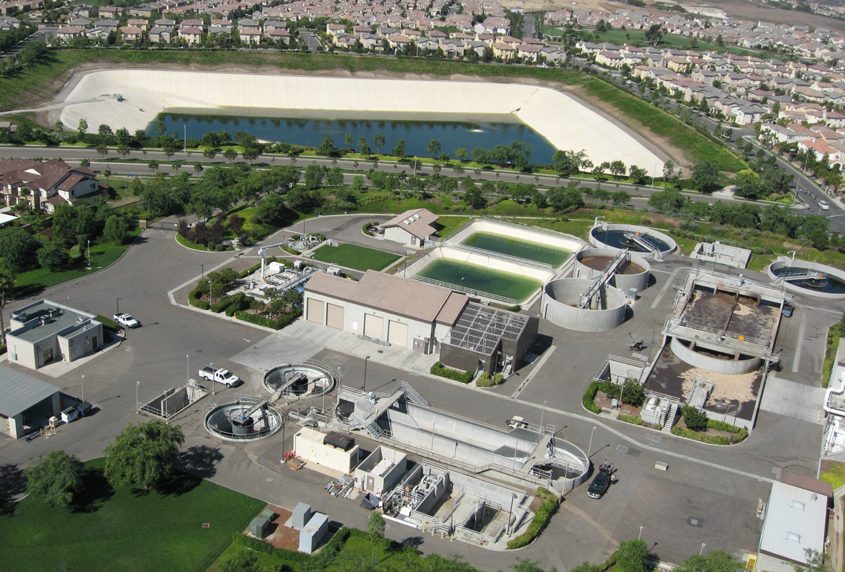
The Olivenhain Municipal Water District's award winning 4S Ranch Water Reclamation Facility celebrates its 20th anniversary in August 2023. Photo: Olivenhain Municipal Water District

The Olivenhain Municipal Water District’s award-winning 4S Ranch Water Reclamation Facility celebrates its 20th anniversary in August 2023. Photo: Olivenhain Municipal Water District

OMWD annexed the 4S Ranch and Rancho Cielo Sanitation Districts from the County of San Diego in 1998. OMWD also took ownership of a small wastewater treatment facility in 4S Ranch. This facility had the capability to treat 0.25 million gallons per day (MGD) of wastewater from the surrounding commercial center and condominium complex. Treated wastewater was disposed of by spraying it on nearby unimproved pastures.

Recognizing the significant development plans for the 4S Ranch area, OMWD expanded the capacity of the facility to 2.0 MGD. As part of this expansion, OMWD also incorporated additional treatment phases of filtration and ultraviolet disinfection, improving water quality. OMWD required area developers to install the entire recycled water infrastructure for their planned communities.

Today, the facility produces over one million gallons of recycled water per day. It is delivered to irrigation customers in the southeastern portion of OMWD’s service area for use at HOA common areas, schools, parks, streetscapes, and golf courses. Together with recycled water purchased from nearby water and wastewater agencies to serve customers in portions of Encinitas and Carlsbad, OMWD now serves up to 15 percent of its customers’ total water demand with recycled water.

“For 20 years, OMWD has proudly served 4S Ranch and neighboring communities with high-quality recycled water, reducing the use of drinking water for irrigation,” said OMWD Vice President Matthew Hahn. “As California continues to face water supply challenges, the expansion of our recycled water system strengthens our water supply reliability and promotes sustainable water management.

How water recycling helps build water reliability

OMWD serves up to 15% of its overall demand from recycled water treated through its award-winning 4S Ranch facility. Photo: Olivenhain Mu recycled water

OMWD serves up to 15% of its overall demand from recycled water treated through its award-winning 4S Ranch facility. Photo: Olivenhain Municipal Water District

Water recycling is the process of capturing and treating wastewater, for non-domestic purposes such as irrigation and industrial processes.

Water and wastewater agencies across San Diego County are developing or expanding their recycled water systems to reduce the need to import or develop other supplies.

Since 2003, OMWD has significantly increased its recycled water purchases through connections with neighboring agencies, including the City of San Diego, San Elijo Joint Powers Authority, Rancho Santa Fe Community Services District, and Vallecitos Water District. OMWD now serves over two and a half million gallons of recycled water every day. Each year, OMWD installs additional recycled water pipelines and converts more customers from potable water to recycled water.

By 2027, the volume of recycled water produced in the U.S. is projected to increase 37% from 4.8 billion gallons per day to 6.6 billion gallons per day, according to a recent survey by Bluefield Research.

OMWD leadership in developing water recycling

SLIDER OMWD Year in Review

In 2021, the Olivenhain Municipal Water District completed several replacement and upgrade projects at its 4S Ranch Water Reclamation Facility. Photo: Olivenhain Municipal Water District

As a founding member of the North San Diego Water Reuse Coalition, OMWD works with nine northern San Diego County water and wastewater agencies across jurisdictional boundaries to reduce the impact of water supply shortages on San Diego County’s $268 billion economy. This regional approach has proven successful in developing local projects as well as obtaining $9 million in funding, significantly reducing the costs of water recycling projects for North San Diego County water ratepayers.

In addition, the Coalition has also secured federal funding of $23.8 million to help cover costs for water reclamation projects through 2025.

Expanding capacity for the future

Water and wastewater agencies across San Diego County including OMWD are developing or expanding water recycling projects, because every gallon of recycled water reduces the need to import or develop other supplies. Photo: Olivenhain Municipal Water District recycled water

Water and wastewater agencies across San Diego County including OMWD are developing or expanding water recycling projects, because every gallon of recycled water reduces the need to import or develop other supplies. Photo: Olivenhain Municipal Water District

As it looks forward to the next 20 years, OMWD continues to expand its recycled water capacity. It began construction this summer on three recycled water pipelines near Calle Barcelona in Carlsbad and in Village Park in Encinitas. Once complete, OMWD can convert up to 27 meters to recycled water, offsetting 12.7 million gallons of potable water used annually for irrigation.

OMWD has long pursued alternative water supplies like recycled water, a reliable, drought-proof approach for complementing existing water sources.

The San Diego County Water Authority has supported the development of recycling projects for decades, through membership in groups such as the WateReuse Association and collaborative efforts to promote local reuse efforts. Approximately 35,000 acre-feet of recycled water is beneficially reused within the Water Authority’s service area annually, and the volume is expected to continue growing as new and expanded plants come online.

(Editor’s note: The Olivenhain Municipal Water District is one of the San Diego County Water Authority’s 24 member agencies that deliver water across the San Diego County region.)