Tag Archive for: Recycled Water

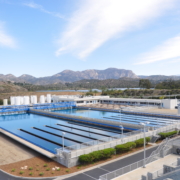
Helix Water District's R.M Levy Water Treatment Plant

Water Recycling Project to Expand San Diego Region’s Local Supply

A water recycling project that will purify treated wastewater into drinking water for East San Diego County is moving toward its completion date after the Helix Water District Board of Directors authorized the signing of water purchase agreements.

The East County Advanced Water Purification Project is a collaborative, regional effort to diversify the district’s water portfolio and provide a drought-proof supply. The  water reuse project will further enhance reliability by purifying treated wastewater using Lake Jennings and other facilities.

The Helix Water District Board of Directors authorized its General Manager to sign water purchase agreements for the East County Advanced Water Purification Project at a special meeting on May 27.

Water recycling project ‘investment in water supply reliability’

The $681 million project, led by the East County AWP Joint Powers Authority, will recycle daily wastewater flows from Santee, El Cajon, Lakeside, Winter Gardens and Alpine. Treated water will undergo membrane filtration, reverse osmosis and advanced oxidation to produce water that is near-distilled in quality.

The purified water will be piped into Helix’s Lake Jennings before undergoing additional processing at the district’s R.M. Levy Water Treatment Plant and then distributed as safe, clean drinking water.

“I’m looking forward to the development of this project and I believe it’s an investment that strengthens our district’s water supply reliability and security,” said Helix Water District Board President Mark Gracyk. “This is a great example of what can be accomplished by working with our neighboring agencies.”

Water reuse will reduce dependence on imported water

East County AWP project water will reduce east San Diego County’s dependence on imported water by almost 30% once full operations begin in 2026. The project will create a local supply for the East County at about the same cost as what Helix pays now for imported water, according to the Helix Water District.

San Diego County water agencies, including Helix, Padre Dam, and the cities of San Diego and Oceanside, are developing or expanding water recycling projects. Diversifying local supply sources remains a priority for the San Diego County Water Authority. Imported sources, including water from the Colorado River and State Water Project, can be cutback during times of drought.

“The project was conceived by JPA members as a way to reduce rising wastewater costs for their customers,” said Helix Water District General Manager Carlos Lugo. “For Helix to participate, the project had to make financial sense for our ratepayers as well. By expanding our local supply, the East County AWP project water will help ensure that we are better able to navigate future droughts.”

The 30-year purchase agreements establish the cost and quantity of water that Helix will purchase from the East County AWP JPA under the proposed project.

Agency collaboration on sustainability

East County Advanced Water Purification Project-Visitor Center rendering-June 2020-Helix

An artist’s rendering of the new East County Advanced Water Purification Facility. The water recycling project is a partnership between Padre Dam MWD, Helix Water District, San Diego County and the City of El Cajon Graphic: Courtesy Padre Dam Municipal Water District

Helix and the JPA members – Padre Dam Municipal Water District, San Diego County Sanitation District and the City of El Cajon – have been working together to evaluate the ECAWP plan since 2014. Each JPA member has until 2021 to make a final decision on the feasibility of the project and participation.

Helix has invested $850,000 and significant board and staff resources to study the feasibility of the project, including a tracer study with Scripps Institution of Oceanography to learn how water moves and mixes in Lake Jennings.

“We are committed to exploring sustainable projects that benefit our customers,” said Gracyk. “The ECAWP project will be a great complement to our other ongoing investments in regional water supply projects, such as the Carlsbad Desalination Plant, to ensure we have enough water to meet demand.”

City Attorney Blasts SDSU Sale Plan; Says Ambitious Wastewater Plans in Danger

Friday, the San Diego City Council is set to review and give final approval to the historic deal to transfer the city’s Mission Valley land to San Diego State University. But late Friday, City Attorney Mara Elliott sent around another list of concerns this time focused on the city’s long-term plans to recycle wastewater. Elliott’s deputies wrote that city would face  “dire consequences in the future” if the deal goes forward as SDSU has sketched out in its final purchase and sales agreement.

If you have some quarantine time to kill, you can read the full memo, which includes background and explanation of the dilemma. The land is largely owned by the city in its Water Utility Fund and a large groundwater aquifer that the city could use to store water in the future.

The city plans to recycle water to such an extent that someday it will make up about a third of the city’s water source. It’s called the Pure Water project.

RWQCB Approves Camp Pendleton Waste Discharge Order Rescission

The San Diego Regional Water Quality Control Board approved a rescission of the waste discharge order for Camp Pendleton’s California Sewage Treatment Plant No. 9.

The 7-0 board vote May 13 eliminates the waste discharge requirements for the Las Pulgas plant which has been replaced.

The RWQCB initially issued a waste discharge order for the plant in 1998. The sewage has since been diverted to Camp Pendleton’s Southern Regional Tertiary Treatment Plant and Northern Regional Tertiary Treatment Plant, which supports the production of recycled water for landscape irrigation and seawater intrusion mitigation.

Between 1999 and 2012 the United States Marine Corps received 12 staff enforcement letters regarding California Sewage Treatment Plant No. 9 and three notices of violation for the waste discharge order. During that time 94 violations for deficient monitoring, overflow events, and exceeding the pH limit occurred. No violations took place during the final seven years of the California Sewage Treatment Plant No. 9 operation.

South Orange County Water Reservoir, Dam Project Still Moving Forward

A water dam and reservoir under construction on land acquired from Rancho Mission Viejo has not been affected by the coronavirus pandemic, according to Santa Margarita Water District Deputy General Manager Don Bunts.

Recent rainfall, however, has affected the Trampas Canyon Dam and Reservoir project, which intends to store recycled water. Work on the project restarted on Monday, April 27, after being delayed for a few weeks, Bunts said.

Recycled Water Project: Pure Water Expansion Report, Conditional Approval to be Considered

Amid continuing debate over the role the proposed Pure Water Monterey recycled water project expansion will play in the Monterey Peninsula’s water supply, the proposal has reached a key stage.

Treated Wastewater May be Safe for Aquaculture

Although aquaculture in treated wastewater is practiced worldwide, there is scant scientific research concerning whether organic micropollutants are present at safe levels for consumption.

A new study in Aquaculture by researchers at Ben-Gurion University of the Negev has determined that organic micropollutants in the water—trace elements of heavy metals, pharmaceuticals and personal care products as well as pesticides, solvents, and detergents—result in minimal accumulation in fish. Additionally, the wastewater does not appear to affect other commercially important traits of fish.

First Purewater Plant in San Diego County Breaks Ground in Oceanside

Oceanside is the first municipality in San Diego County to bring a pure water facility on line.

The city’s utility director Cari Dale officially broke ground the $71 million facility on Wednesday saying the plant will bolster the city’s drinking water supply.

City worker Sara Davis says the plant takes in recycled water, which is clean enough for lawns but not clean enough to drink.

Water Agencies Team Up to Reduce Potable Water Use

The Olivenhain Municipal Water District and Leucadia Wastewater District are reducing potable water use by switching to recycled water to flush sewer lines in their service areas.

With the recent installation of new equipment by both agencies, recycled water is now available to Leucadia for sewer line maintenance in the Village Park neighborhood in Encinitas and in the La Costa neighborhood in Carlsbad.

Sweetwater Authority Eyes Recycled Water That Otay Water District Doesn’t Use

Sweetwater Authority’s governing board has its eyes on recycled water — specifically, an excess of recycled water that a neighboring water agency, the Otay Water District, buys from the city of San Diego.

The governing boards of the two water agencies, which combined serve southern and eastern San Diego County, recently created a joint committee to explore a potential arrangement that would allow
Sweetwater to purchase recycled water from Otay.

The board presidents of both water agencies said the idea could benefit customers on both ends.

FPUD Approves 2020 Rates

The Fallbrook Public Utility District approved FPUD rates and other charges for calendar year 2020.

FPUD’s board vote 4-0, Dec. 9, with Don McDougal absent, adopted the 2020 rates and charges for water, recycled water and wastewater delivery and services. Water and wastewater rates will increase by 8% while the increase for recycled water will be 4.5%.