Tag Archive for: Infrastructure

New Wildfire Fighting Tool Unveiled in North County

A new water tank to help fight fires from the air was unveiled in San Marcos Tuesday.

Helicopters with capabilities to drop water onto fires aerially are one of the most crucial firefighting tools. The New HeloPod can be filled with 5,000 gallons of water in under three minutes.

Damage Found Inside Glen Canyon Dam Increases Water Risks On The Colorado River

Federal officials have discovered damage inside Glen Canyon Dam that could force limits on how much Colorado River water is released at low reservoir levels, raising risks the Southwest could face shortages that were previously unforeseen.

The damage was recently detected in four 8-foot-wide steel tubes — called the river outlet works — that allow water to pass through the dam in northern Arizona when Lake Powell reaches low levels. Dam managers spotted deterioration in the tubes after conducting an exercise last year that sent large flows from the dam into the Grand Canyon.

Violent Thunderstorms Saturate San Diego County, With More Rain to Come

The violent second wave of a massive Pacific storm lashed San Diego County on Tuesday, bringing enough rain to flood the San Diego River and thunderstorms that led to a brief — and rare — tornado warning.

Water Saving Solar Panels, Coming Soon To A Canal Near You

The upcoming COP28 climate conference has suddenly blown up in a wave of scandal, but the energy transition marches on. Exhibit A is the idea of shading irrigation canals with solar panels for a planet-saving win-win-win. The cooling effect of the water improves solar conversion efficiency, the shade prevents excess water loss from evaporation, and the use of built infrastructure preserves land from development. What’s not to like?

Feds Are Flooding California’s Water Market

WATER PRICE LINE RISING: Who could forget last May, when Arizona, California and Nevada made a three-year pact to conserve water from the Colorado River? Many thought it couldn’t be done, but with Lake Mead reservoir levels at a historic low, and the federal government poised to wrest control of the process, the states agreed to conserve 10 percent of their water — nearly a billion gallons — between now and 2026.

National Climate Assessment Predicts Growing Threats to Society, Economy

A long-awaited federal climate report, released Tuesday, delivers a blunt warning: Rapidly curb planet-warming emissions or face dire consequences to human health, infrastructure and the economy.

The fifth installment of the National Climate Assessment presents the most comprehensive evaluation to date of U.S. climate science, impacts and action. Dozens of authors, including representatives from multiple federal agencies, contributed to the congressionally mandated report.

Eden Bruckman-sustainability-San Diego County

Eden Brukman is San Diego County’s New Chief Sustainability Officer

Eden Brukman is the new chief of the San Diego County Office of Sustainability and Environmental Justice (OSEJ). In addition to her unbridled passion for service and helping others, Brukman brings more than two decades of sustainability leadership experience to the role.

Brukman boasts a diverse portfolio of environmentally minded building and infrastructure projects along with many years of experience in climate justice policies.

She is also on a mission to make the world a better place and is inspired by the theme of “tikkun olam,” a Hebrew phrase meaning “repair the world” — something that has been at the center of her identity from a young age.

“This is not just about the environmental issues that we must address, but also is fundamentally about human relationships and connections – ways of seeing each other and supporting one another,” Brukman said.

Eden Bruckman-sustainability-environmental justice-San Diego County

Eden Bruckman says a major part of her job is to strive to reduce environmental and health disparities and expand opportunities in traditionally underserved areas by elevating community strengths. Photo: San Diego County

Before joining the County team, she worked for the San Francisco Environment Department and chaired the Municipal Green Building Task Force while aiding in the development of the San Francisco 2021 Climate Action Plan.

Before that role, she held various positions as a developer and director of global standards, licensed architect, and sustainability coordinator in Portland, Oregon, the UK, Los Angeles, and the Bay Area.

“I’m inspired by common themes across children’s books that teach youth that they should feel empowered to dream big and create their own realities when the existing paradigm doesn’t match their vision,” Brukman said.

Brukman came to the County in March of this year and now oversees a team of 12 people. She says a major part of her job is to strive to reduce environmental and health disparities and expand opportunities in traditionally underserved areas by elevating community strengths.

“To me, it is about finding new ways to understand barriers and identifying that seed that creates something new and allows for scalable solutions,” Brukman said.

Zero Carbon Emissions

OSEJ focuses on both regional initiatives and County operations. The office seeks to achieve its goals by establishing meaningful connections, listening and elevating community needs, including those of our area Tribal nations, to achieve zero carbon emissions.

“We are creating a roadmap for stronger tribal partnerships, to ensure a mindful approach to fostering cross-governmental relationships and a mutual awareness on matters and opportunities for the health and well-being, quality of life, and sustainability of tribes throughout the County,” Brukman said.

Sustainability programs

Brukman said she was drawn to this role because of the County’s continued commitment to environmental justice through community engagement and its sustainability programs, including the Regional Decarbonization Framework and Climate Action Plan. The move also provided the opportunity to come back to the county in which she was raised.

“It is an honor and privilege to connect with San Diegans and our partners throughout the region to build the Office of Sustainability and Environmental Justice,” said Brukman. “I look forward to our continued collaboration to cocreate and advance initiatives that help foster a region where all people can live in and enjoy a clean and healthy environment.”

Brukman is a graduate of UC Berkeley where she received a B.A. in Architecture and a minor in Visual Studies. She also received a Master of Design at the Edinburgh College of Art.

She also received many awards, including the Women in Sustainability Leadership Award, the Buckminster Fuller Challenge and the Portland Business Journal 40 Under 40 Award. She is a U.S. Green Building Council LEED Fellow, Living Future Hero, and a children’s book author and illustrator.

As leader of the County’s Office of Sustainability and Environmental Justice, Brukman will bolster the County’s dedication to achieving a more sustainable, healthy, and just environment for area residents.

Council Member Defends Water Rate Increases for Residents

Reacting to the City Council’s recent approval of his amendment to spread out an approximately 19% increase in water rates Citywide over a longer period, District 1 Councilmember Joe LaCava (above) said it was necessary to soften the financial blow.

The City Council voted 5-3 to increase water rates by 5% beginning Dec. 1, 2023, then increase another 5.2% effective July 1, 2024, for a total one-year increase of 10.2%. Another increase of 8.7% overall will take effect the following year on Jan. 1, 2025.

Newsom Signs Bills to Speed up Infrastructure Projects

California Governor Gavin Newsom signed a package of bills Monday aimed at streamlining the construction of solar and wind farms, reservoirs, bridges, railways and other infrastructure projects in the Golden State.

California snowlines-Scripps Institution of Oceanography-study-Climate Change

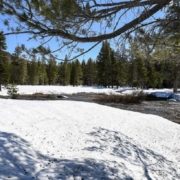
California Snowlines On Track To Be 1,600 Feet Higher by Century’s End

This winter produced record snowfall in California, but a new study suggests the state should expect gradually declining snowpacks, even if punctuated with occasional epic snowfalls, in the future.

An analysis by Tamara Shulgina, Alexander Gershunov, and other climate scientists at UC San Diego’s Scripps Institution of Oceanography suggest that in the face of unabated global warming, the snowlines marking where rainfall turns to snow have been rising significantly over the past 70 years. Projections by the researchers suggest the trend will continue with snowlines rising hundreds of meters higher by the second half of this century.

California snowlines and lower-elevation ski resorts

In the high Southern Sierra Nevada range, for instance, snowlines are projected to rise by more than 500 meters (1,600 feet) and even more when the mountains get precipitation from atmospheric rivers, jets of water vapor that are becoming an increasingly potent source of the state’s water supply.

“In an average year, the snowpack will be increasingly confined to the peak of winter and to the highest elevations,” the study says.

Diminished snowfall is a consequence of a changing climate in which places like California will get an increasing portion of their winter precipitation as rain instead of snow. The authors said this study and related research suggest water resource managers will need to adapt to a feast-or-famine future. California’s water supply will arrive less through the gradual melt of mountain snowpack that gets the state through hot summers and more via bursts of rain and runoff delivered by atmospheric rivers, which are boosted by warming and are associated with higher snowlines than other storms.

Warmer summers

Such events will further complicate the balancing act between protecting people and infrastructure from winter flooding and ensuring enough water supply during warmer summers.

“This work adds insight into the climate change narrative of more rain and less snow,” said California Department of Water Resources Climatologist Mike Anderson. “DWR appreciates our partnership with Scripps to help water managers develop, refine, and implement adaptation efforts as the world continues to warm and climate change impacts are realized.”

The study, funded by the U.S. Bureau of Reclamation and the DWR, appears in the journal Climate Dynamics today.

“This is the longest and most detailed account of snow accumulation in California,” said Gershunov, “resolving individual storms over 70 years of observed weather combined with projections out to 2100.”

Climate change impacts to ski industry

The authors make note of what this could mean for ski resorts around the state if climate change progresses unabated. For example, Mammoth Mountain, at an elevation between 2,400 and 3,300 meters (7,900 – 11,000 feet), is projected to receive 28 percent less snowfall in the latter half of the century. Lower elevation ski resorts such as Palisades and Northstar, both near Lake Tahoe, span elevational ranges of around 1,900 and 2,700 meters (6,200 – 8,900 feet). They are projected to lose more than 70 percent of their snow accumulation in an average winter.

“Snowlines will keep lifting”

“Observations and future climate projections show that already rising snowlines will keep lifting,” said Gershunov. “Epic winters will still be possible, though, and unprecedented snowfalls will ironically become more likely due to wetter atmospheric rivers, but they will be increasingly confined to the peak of winter and to the highest elevations of the Southern Sierra Nevada.”

Study co-authors include Kristen Guirguis, Daniel Cayan, David Pierce, Michael Dettinger, and F. Martin Ralph of Scripps Oceanography, Benjamin Hatchett of the Desert Research Institute of Reno, Nev., Aneesh Subramanian of University of Colorado at Boulder, Steven Margulis and Yiwen Fang of UCLA, and Michael L. Anderson of the California Department of Water Resources.

(Editor’s Note: Story by Robert Monroe, at UC San Diego Scripps Institution of Oceanography. The San Diego County Water Authority has partnered with the Scripps Institution of Oceanography at UC San Diego to better predict atmospheric rivers and improve water management before, during, and after those seasonal storms.)