You are now in Features Heroes category.

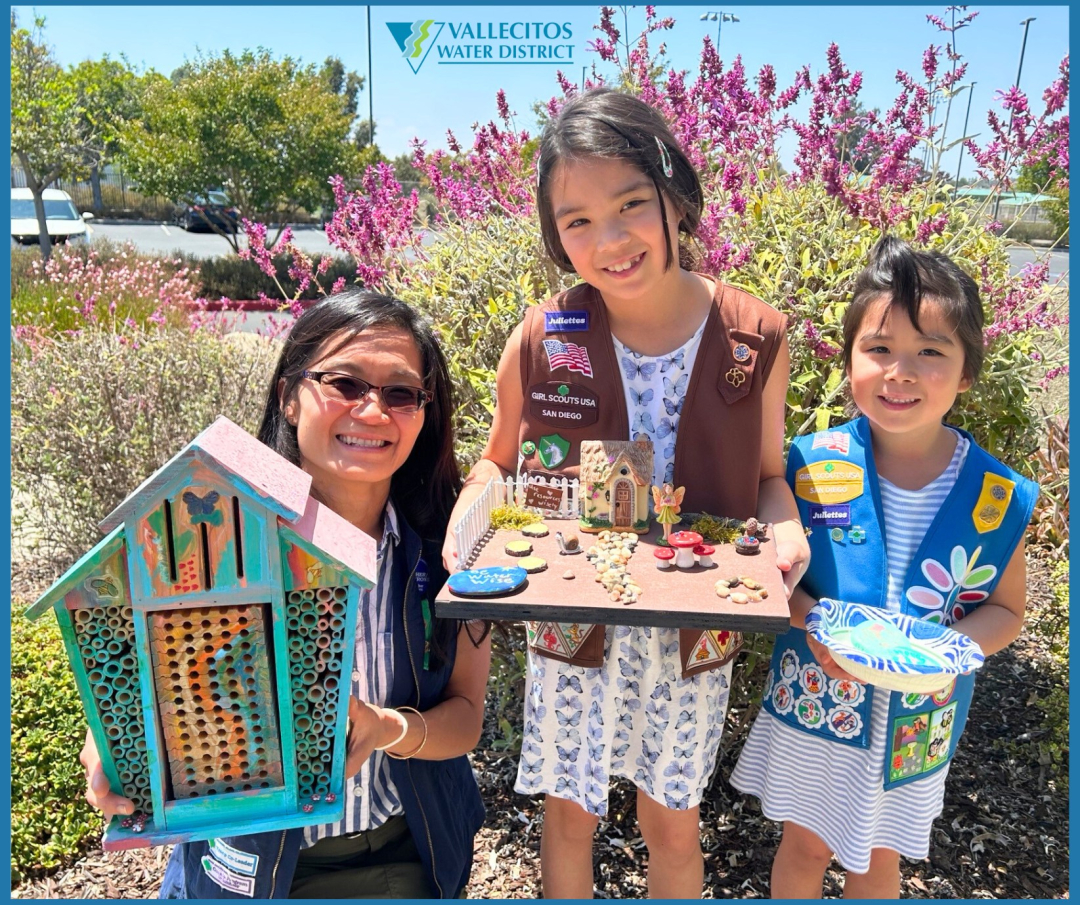
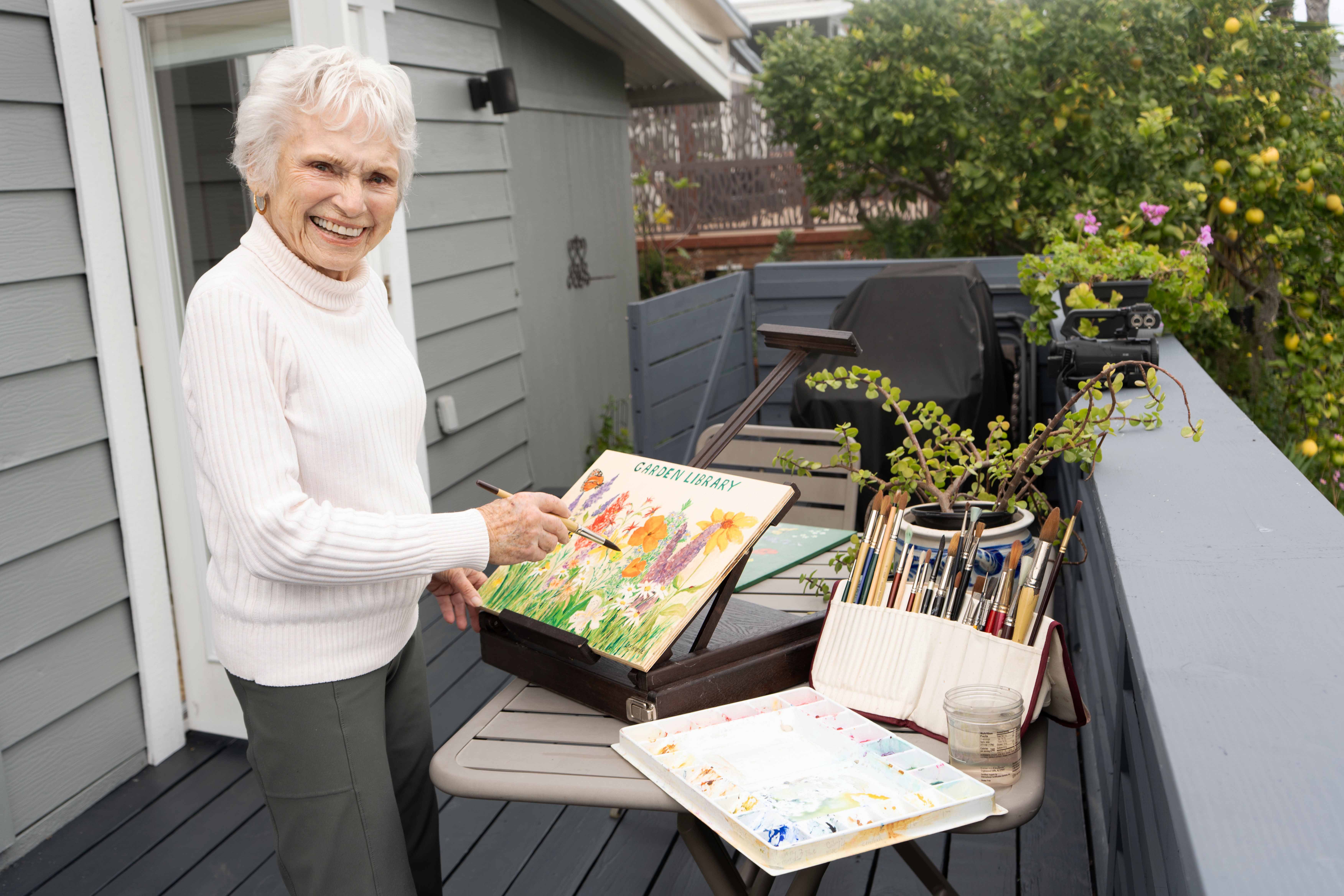
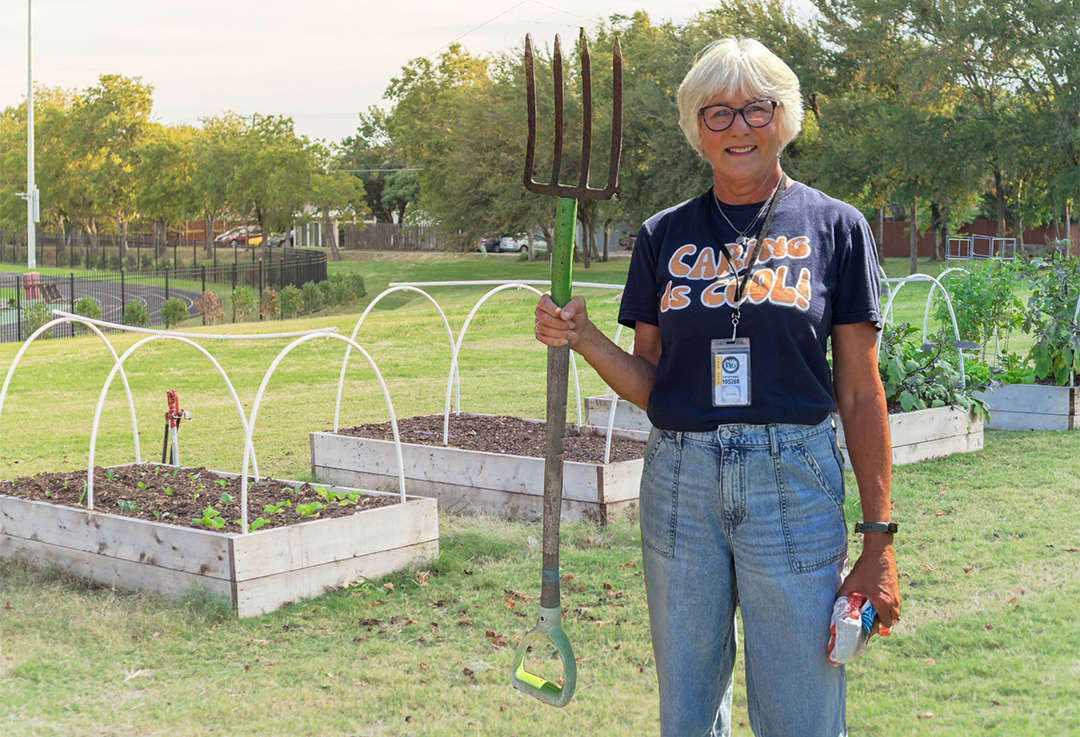
The Native Plant Seed Library established by the Vallecitos Water District is a success thanks in part to community contributors known as “Seed Heroes.” Photo: Vallecitos Water District

Seed Heroes Helps Vallecitos Water District Seed Library Flourish

After two years, the Native Plant Seed Library established by the Vallecitos Water District is flourishing thanks to community contributors known as “Seed Heroes.”

The seed library is located in the Sustainable Demonstration Garden at the district’s headquarters in San Marcos. The district originally partnered with the San Diego Bird Alliance (formerly the Audubon Society) to launch the groundbreaking initiative to safeguard botanical heritage for future generations.

The seed library focuses on San Diego County’s indigenous plants. Native plants benefit local wildlife and typically use less than half the water required by most drought-tolerant plants, such as rosemary or lavender.

Seed Library Helps Remove Barriers to Growing Native Plants

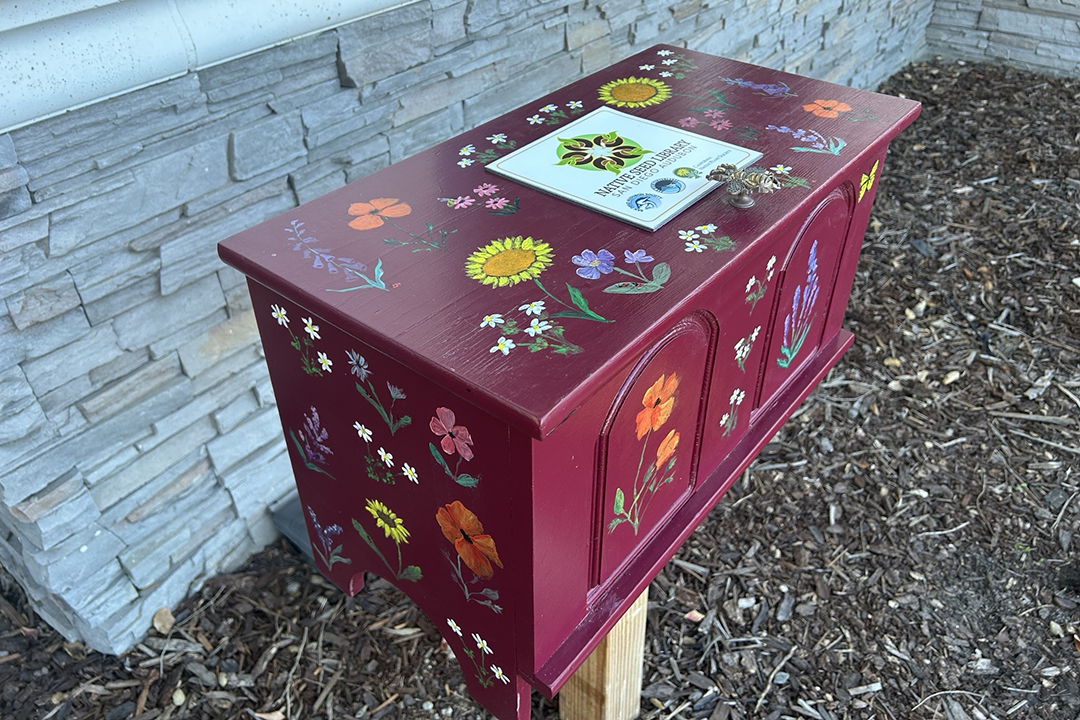
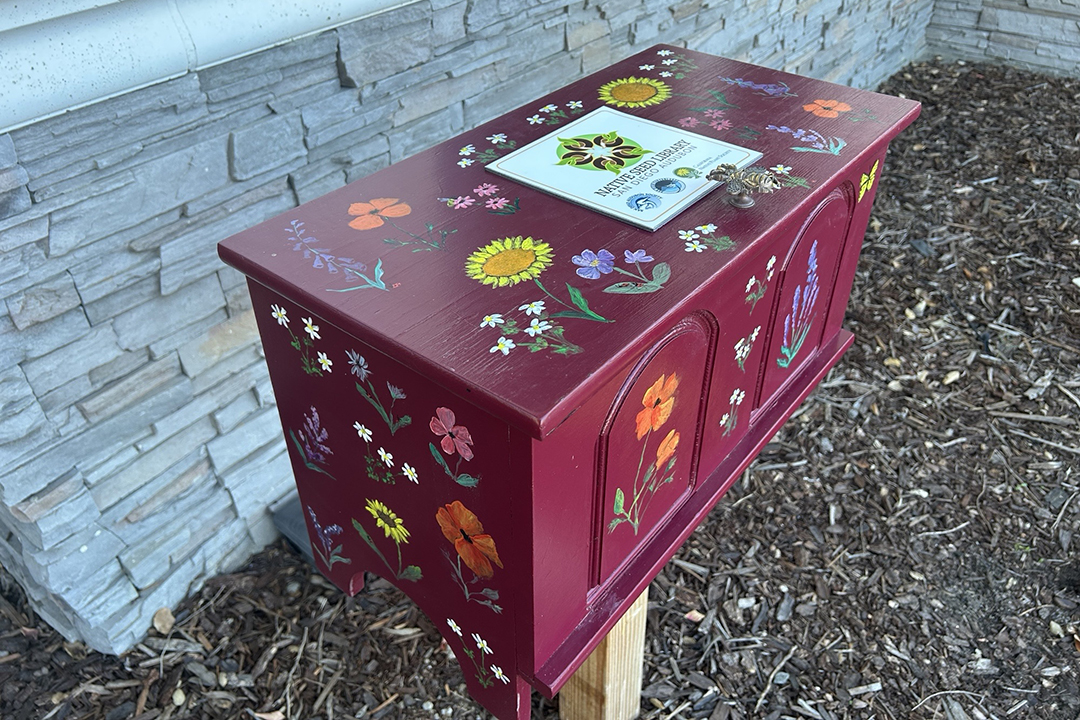
The Vallecitos Seed Library is located at the district's headquarters in San Marcos. Photo: Vallecitos Water District

The Vallecitos Seed Library is located at the district’s headquarters in San Marcos. Photo: Vallecitos Water District

Vallecitos Water District public information representative and UCCE Master Gardener Lisa Urabe had wanted a California native plant garden for years for its many benefits, but finding a wide selection of native plants was becoming time-consuming and costly. Her experience helped inspire the Native Plant Seed Library initiative at Vallecitos.

“The original goal for the native seed library was to remove some of the barriers to growing native plants, mainly the difficulty in obtaining California native plants and the cost,” explained Urabe.

“By offering our customers and residents a zero-cost, fun, and easy way to include California native plants in their gardens, we’ve created a way to reduce landscape water usage while creating habitat that supports birds, pollinators, and other local wildlife.”

To date, the seed library has distributed 2,000 individual seed envelopes. Urabe worked with the U.S. Environmental Protection Agency (EPA) to help it write best management practices on running native seed library programs.

Urabe retired at the end of 2025, leaving the seed library in good hands with help from the community seed heroes and Vallecitos’ Conservation team.

“From the popularity of the seed library, we know that the seeds are being planted. It’s the greatest retirement gift to know that this little seed library has created wildlife habitat for generations to come!” said Urabe.

Recognition for Contributors as “Seed Heroes”

Urabe said recognizing the dedicated contributors as “Seed Heroes” was the district’s way of highlighting community members who have embraced and supported this project through their seed donations and native plant expertise.

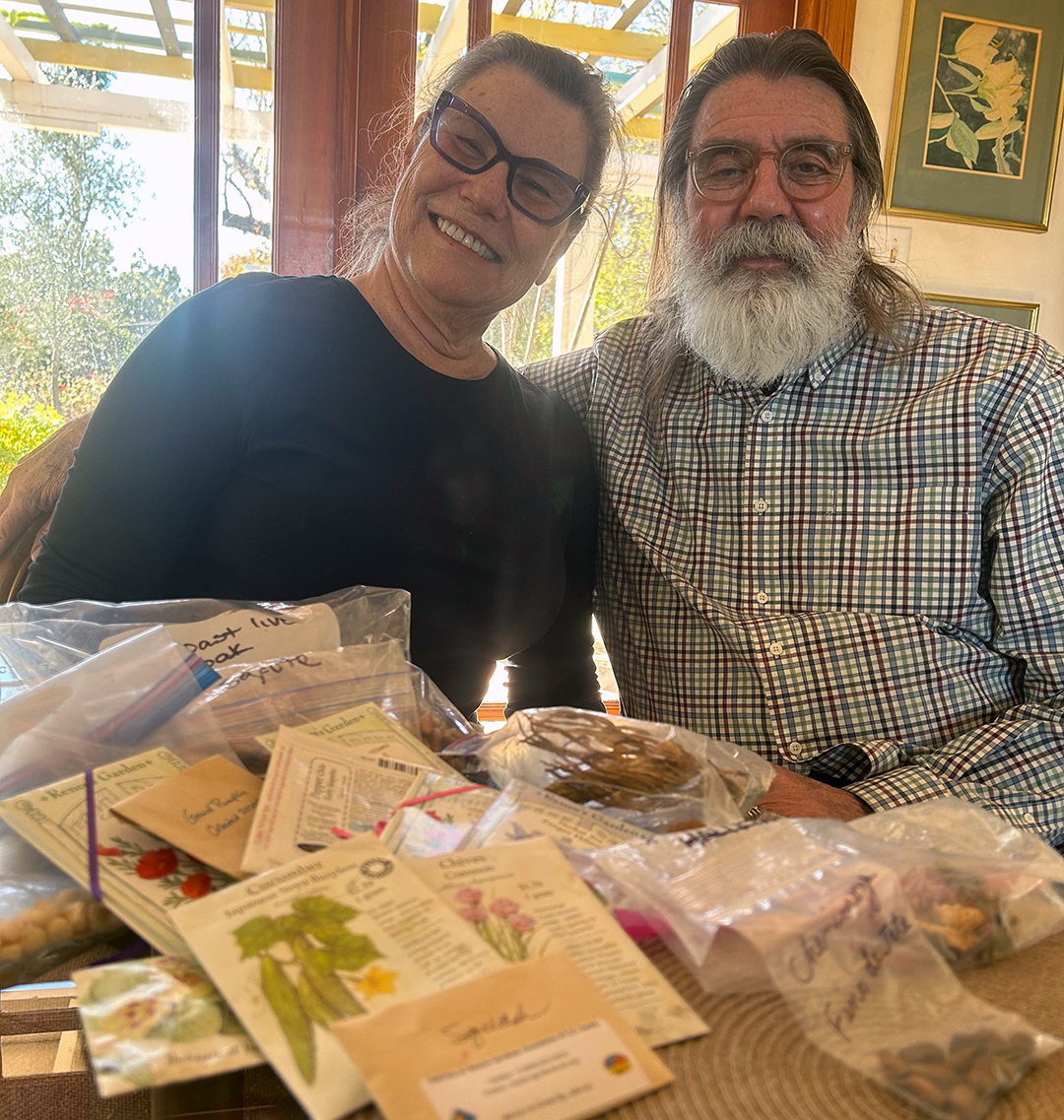
Donn and Terry Reese with examples of the seeds they have contributed to the Vallecitos Water District Seed Library. Photo: Vallecitos Water District

Donn and Terry Reese with examples of the seeds they have contributed to the Vallecitos Water District Seed Library. Photo: Vallecitos Water District

Donn and Terry Reese contributed seeds from native Coast Live Oaks, along with exotic fruits from their home garden, including cherimoya and sapote, and a variety of vegetable seeds. Donn Reese is a UC Master Gardener. Non-native seeds are also included in the seed library.

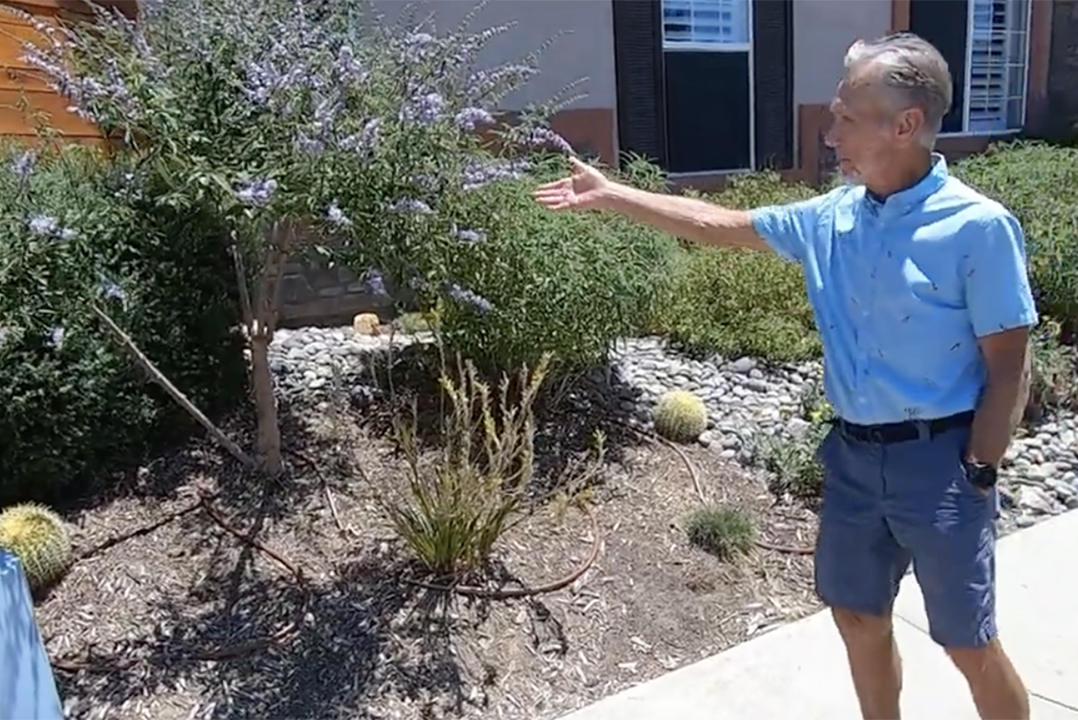
Dean Williams, the Vallecitos Water District 2023 Landscape Makeover Contest winner, is an avid seed hero who used seeds from the library to help create a wildlife garden.

Williams was brand new to gardening when he undertook his award-winning makeover project. Several years later, he is hooked. He enjoys the activity in his garden every day. “It’s kind of a place for all the insects and birds. It’s neat to watch all the wildlife. I get a kick out of it.”

Dean Williams won the 2023 Vallecitos Water District Landscape Makeover contest, which jump started his interest in gardening. Photo: Vallecitos Water District

Dean Williams won the 2023 Vallecitos Water District Landscape Makeover contest, which jump started his interest in gardening. Photo: Vallecitos Water District

Williams used the PlantNet app to identify the plants. All are drought tolerant and attract native wildlife and pollinators. Williams has planted Viguera, Red Bush Monkeyflower, Desert Globemallow, Elegant Clarkia, and Succulent Lupine with seeds from the library.

In return, Williams often restocks the library with seeds harvested from the plants he’s grown. “It’s a nice way to give back and keep the library stocked with various kinds of seeds.” Williams is creating an edible garden this year and plans to contribute cilantro seeds to the library.

Milkweed is one of the many types of seeds contributed from the personal garden of Dean WIlliams. Photo: Courtesy Dean Williams

Milkweed is one of the many types of seeds contributed from the personal garden of Dean WIlliams. Photo: Courtesy Dean Williams

Williams encourages beginners to seek out resources from their water district and other organizations for help. “If I could do this, anybody could do it. I couldn’t grow anything before!”

Seed Library Preserves Local Biodiversity

Seeds currently available at the library include California poppy, black sage, and narrow-leaf milkweed, a species that supports monarch butterfly populations. By promoting the cultivation of indigenous species, the library seeks not only to preserve biodiversity but also to support the health and resilience of local ecosystems.

California poppy seeds are available in the Seed Library, contributed by Dean Williams. Photo: Courtesy Dean Williams

California poppy seeds are available in the Seed Library, contributed by Dean Williams. Photo: Courtesy Dean Williams

The Native Plant Seed Library Program, launched three years ago by volunteers from the San Diego Bird Alliance, addresses the critical lack of native habitat in San Diego County.

With more than 60 Native Seed Libraries established and supported by staff and organizations such as the California Native Plant Society (San Diego Chapter), the program educates the community about the importance of native plants and provides accessible seeds.

An interactive map helps locate the nearest library. Users are encouraged to return clean, mature seeds to sustain both plant life and the free libraries. For more details, visit the map or email

The seed box is available during normal business hours. The address is 201 Vallecitos De Oro, San Marcos. Learn more about the Native Plant Seed Library at its webpage.

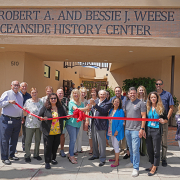
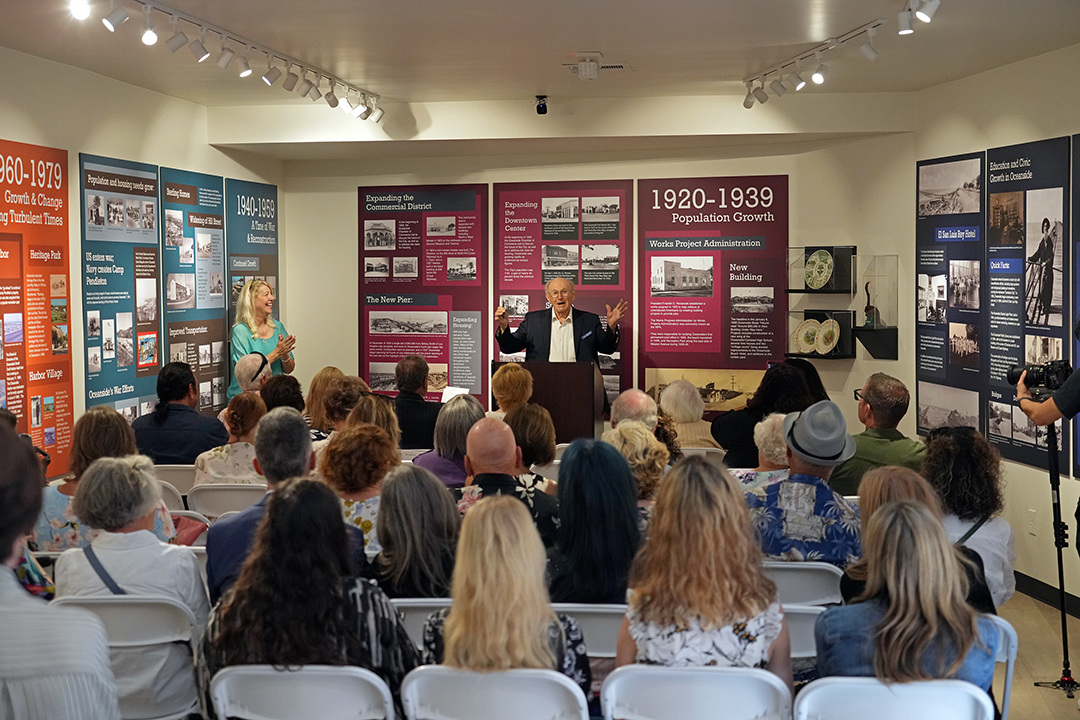
Tom Weese, son of Robert and Bessie Weese and historian Kristie Hawthorne perform the ribbon cutting at the new location of the Weese Oceanside History Center with members of the Oceanside Historical Society. Photo: Zach Cordner/The Osider.

Oceanside History Center’s New Home Named After Water Pioneer

The Oceanside Historical Society opened the Weese Oceanside History Center at its new permanent home with a ribbon-cutting on August 29. It is now located at 510 Civic Center Drive next to The Star Theatre.

The Weese Oceanside History Center is named in honor of Robert and Bessie Weese. Robert Weese dedicated more than 40 years of service to the City of Oceanside Water Department and to the San Diego region as a San Diego County Water Authority board member. He was known as “Mr. Water” for his expertise.

Weese Honored For 40 Years of Water Industry Service

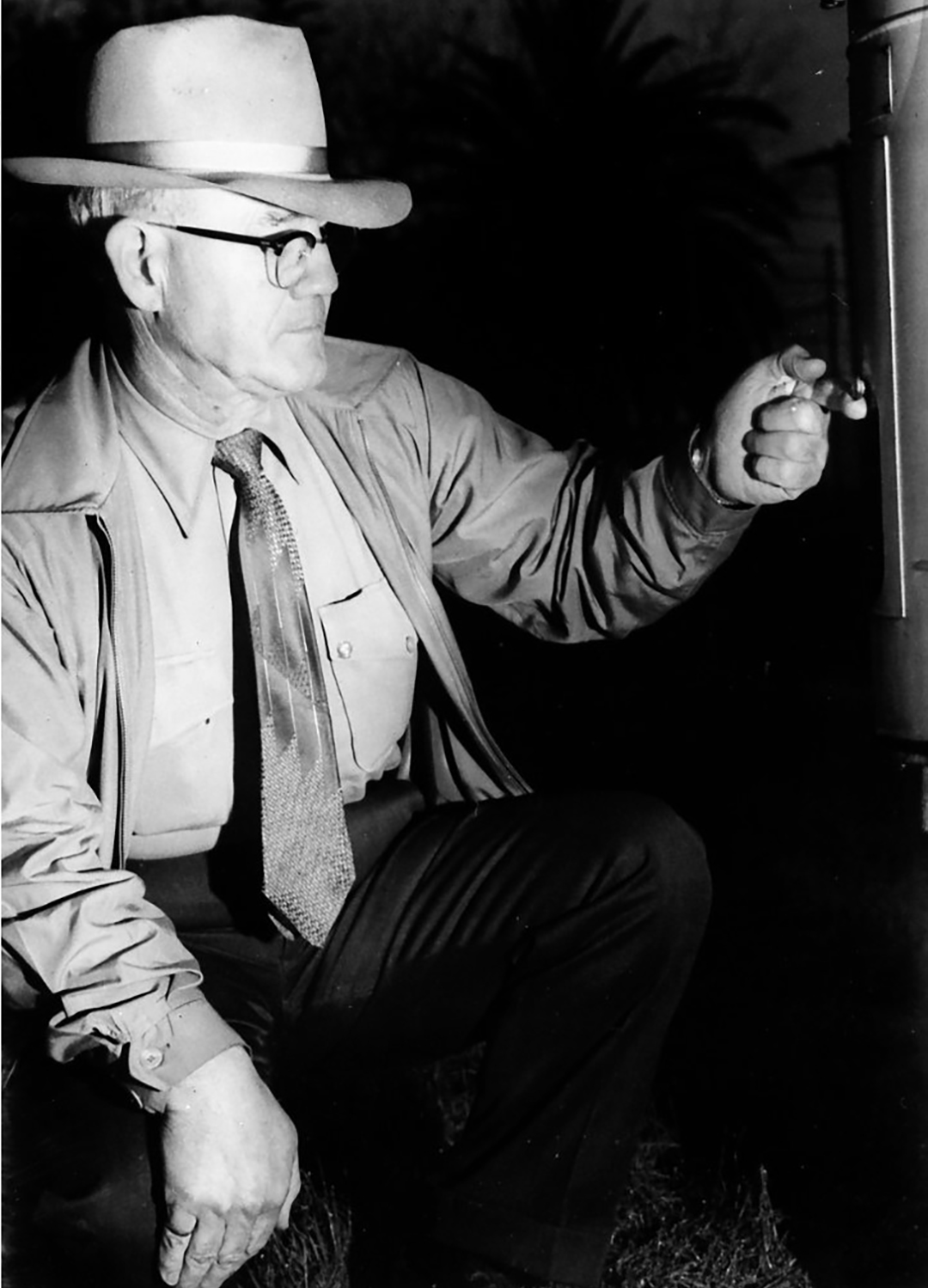
Robert A. Weese worked for the City of Oceanside water department for 40 years. Photo: City of Oceanside

Robert A. Weese worked for the City of Oceanside water department for 40 years. Photo: City of Oceanside

Weese, a native of Ontario, Canada, came to the U.S. and became a naturalized citizen after serving in the Canadian Army as a teenager. He drove an ambulance in England during World War I.

He joined the U.S. Navy in 1924 and was stationed on the USS Arizona based in San Diego. After meeting and marrying his wife Bessie, he was discharged from the Navy and went to work for the Oceanside Water Department as a meter reader, beginning a life of service in the water industry.

Weese gained a firsthand knowledge of the water system by reading and repairing every water meter in Oceanside, and through weekly checks of the city’s wells and the water table. In 1935, the federal Works Progress Administration (WPA) built a new pumping station and reservoir at Buddy Todd Park, where Weese would chlorinate the water.

In 1938, Weese was appointed Oceanside’s Water Superintendent, a position he held until his retirement in 1968.

Weese had the foresight to divert sewer effluent away from the Pacific Ocean into Whelan Lake. He also proposed an underground barrier at the mouth of the San Luis Rey River as a means of holding back the ocean during periods when the water table was pumped below sea level.

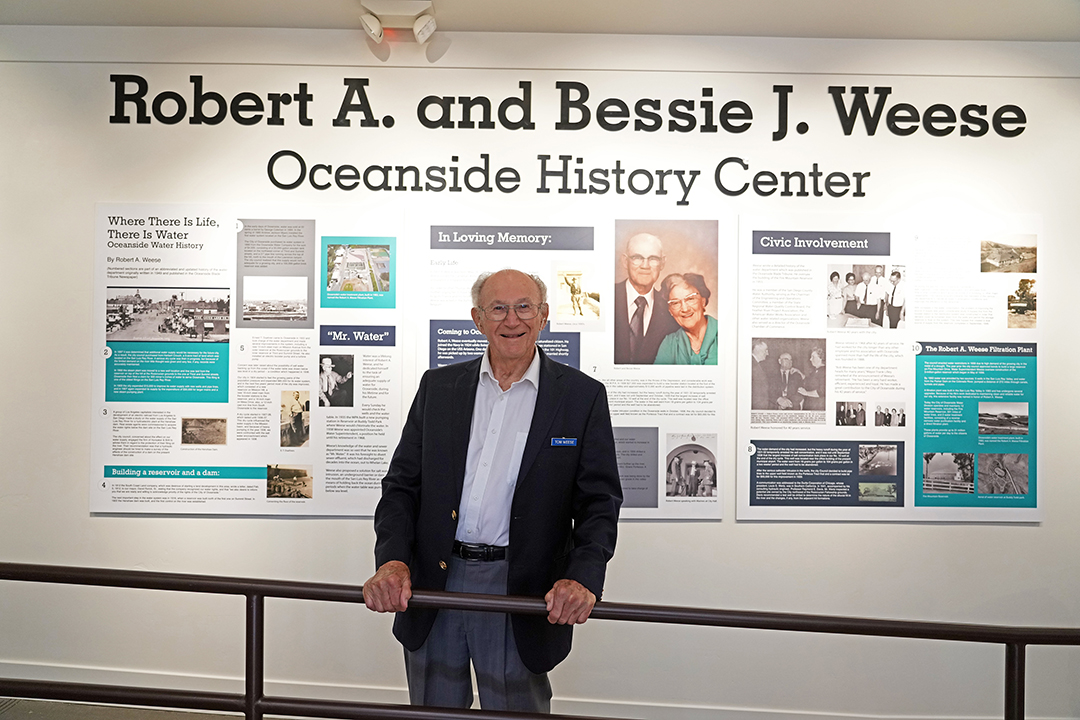
Tom Weese, son of Robert and Bessie Weese, in front of an exhibit honoring his parents at the Reese Oceanside History Center. Photo: Zach Cordner/The Osider.

Tom Weese, son of Robert and Bessie Weese, in front of an exhibit honoring his parents at the Weese Oceanside History Center. Photo: Zach Cordner/The Osider.

Weese wrote a history of the water department, which was published in the Oceanside Blade Tribune newspaper. He oversaw the building of the Fire Mountain Reservoir in 1955.

In addition to serving as chairman of the Water Authority’s Engineering and Operations Committee, Weese was a member of the State Regional Water Quality Control Board, the Feather River Project Association, the American Water Works Association, and other water-related organizations. Weese also served as a director of the Oceanside Chamber of Commerce.

Oceanside’s water treatment plant, built in 1983, was named the Robert A. Weese Filtration Plant.

New Exhibit Space Includes Weese Papers

Tom Weese, son of Robert and Bessie Weese, speaks at the August 29 ribbon cutting event for the relocated Reese Oceanside History Center as historian Kristi Hawthorne looks on. Photo: Zach Cordner/The Osider.

Tom Weese, son of Robert and Bessie Weese, speaks at the August 29 ribbon-cutting event for the relocated Weese Oceanside History Center as historian Kristi Hawthorne looks on. Photo: Zach Cordner/The Osider.

The new location of the Weese Oceanside History Center has more than 3,000 square feet of exhibits spanning a century from the 1880s to the 1980s. Among the exhibits is a collection of Weese’s personal and professional papers, donated by his son Thomas Weese in 2022.

Hours are Monday through Friday, 10 a.m. to 2 p.m. Admission to the history center is free.


Water Utility Hero of the Week-Michelle McMahon-Olivenhain MWD

Water Utility Hero of the Week: Michelle McMahon, Olivenhain MWD

Editor’s Note: This feature highlights water utility employees in the San Diego region working during the coronavirus pandemic to ensure a safe, reliable and plentiful water supply. The water industry is among the sectors that are classified as essential. Michelle McMahon, Olivenhain Municipal Water District IT Coordinator, is the Water Utility Hero of the Week.

Water Utility Hero of the Week: Michelle McMahon

Job/Agency: Olivenhain Municipal Water District IT Coordinator

How did you become interested in working in the water industry?

I worked long hours in a previous career, feeling unappreciated, and heard that OMWD was a great place to work. Best professional change I ever made! I feel that my work has a positive impact within OMWD. What I do matters to the people I support and the ratepayers we serve. It has been good for my work/life balance.

How has your job changed during the pandemic?

Things got crazier. Then it calmed down as it settled into the new normal. Equipment became difficult to purchase. Deliveries, especially those coming from China (computers and their components), took what felt like a lifetime. Purchasing, programming, deploying equipment, and training end-users were a priority. Everything was (and still is) sanitized repeatedly. Remote support has become prominent, even for users located on-site. End users are more understanding of what it takes to make their computers, cell phones, tablets, and desk phones working properly.

How are you keeping safe?

I have acquired a collection of nearly 100 personal masks and a dozen OMWD masks! I have hand sanitizer and alcohol wipes easily accessible. OMWD has placed these items throughout for everyone’s use. I try to help people remotely from my computer whenever possible. I disinfect my workspace each day and other workstations with every support call.

What are you most looking forward to after the crisis ends?

I look forward to the new normal. I am curious what the “new normal” will be. This really is an unprecedented time. I think it will be a hybrid of “before the pandemic” and “during the pandemic” for some time, perhaps years. I look forward to spending time with friends, sharing their joy of finally returning to work, and being free to get my hair or nails done whenever I would like!

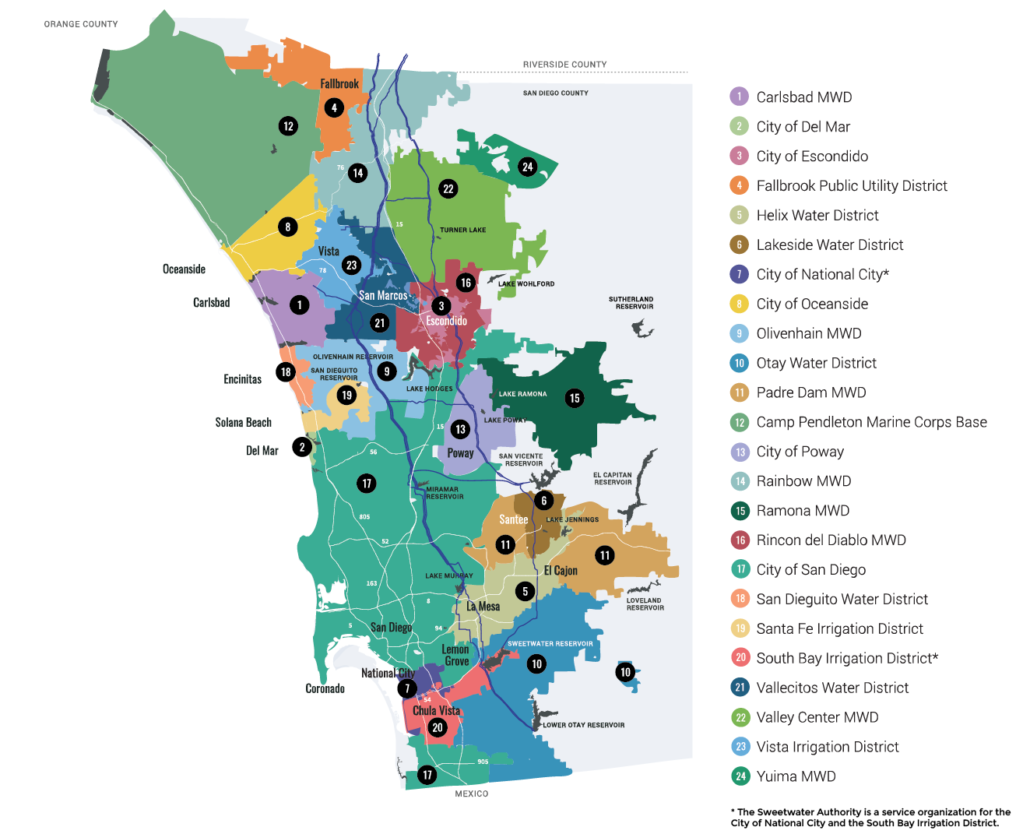
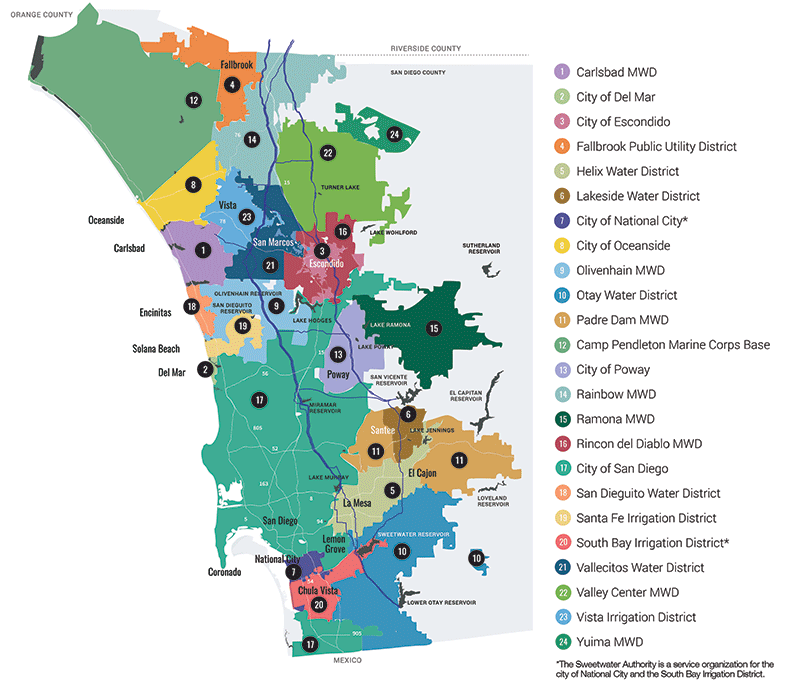
The Water Utility Hero of the Week highlights essential work performed during the COVID-19 pandemic by employees of the San Diego County Water Authority’s 24 member agencies.

San Diego County Water Authority Member Agency Map

Water Utility Hero of the Week-Phil Stevens-Primary-Padre Dam MWD

Water Utility Hero of the Week, Phil Stevens, Padre Dam MWD

Editor’s Note: This feature highlights water utility employees in the San Diego region working during the coronavirus pandemic to ensure a safe, reliable and plentiful water supply. The water industry is among the sectors that are classified as essential. Phil Stevens, Padre Dam Municipal Water District Senior Lab Analyst, is the Water Utility Hero of the Week.

Water Utility Hero of the Week: Phil Stevens

Job/Agency: Padre Dam Municipal Water District Senior Lab Analyst

How did you become interested in working in the water industry?

After serving in the military, I decided to attend college majoring in Biology. Upon graduation, I began searching for a field that is intellectually challenging, has an important role in the community, and contributes a positive impact in the environment. I found a job announcement for a laboratory analyst at Padre Dam Municipal Water District. I was not very familiar with the water industry at the time, but after doing further research it seemed like it would be a great fit for me. I have now been in this field for 18 years and still find this career very rewarding.

How has your job changed during the pandemic?

As one would imagine, work done in a water quality laboratory cannot be done remotely. There have been staffing challenges when a member of the lab staff cannot come into work due to potential COVID-19 exposure or caring for a family member. Early on in the pandemic we also found it hard to get some of the supplies we needed.

How are you keeping safe?

I am keeping safe by following the health guidelines that have been established. My coworkers and I wear a mask and practice social distancing at all times and do our best to stay safe outside of work.

What are you most looking forward to after the crisis ends?

I miss my family and close friends very much and cannot wait to spend time with them. I am also looking forward to attending my children’s sporting events.

The Water Utility Hero of the Week highlights essential work performed during the COVID-19 pandemic by employees of the San Diego County Water Authority’s 24 member agencies.

Water Utility Hero of the Week-Otay Water District-primary

Water Utility Hero of the Week, Matthew Carriveau, Otay Water District

Editor’s Note: This feature highlights water utility employees in the San Diego region working during the coronavirus pandemic to ensure a safe, reliable and plentiful water supply. The water industry is among the sectors that are classified as essential. Matthew Carriveau, Otay Water District Customer Pump Mechanic I, is the Water Utility Hero of the Week.

Water Utility Hero of the Week: Matthew Carriveau

Job/Agency: Otay Water District Pump Mechanic I

How did you become interested in working in the water industry?

When I was in the U.S. Navy I worked on distilling units turning seawater into drinking water. I really enjoyed operating and maintaining that equipment so I was open to a career that involved similar work.

How has your job changed during the pandemic?

My partner and I drive separate vehicles and we wear masks. Our meetings involve Zoom and take place on the computer.

How are you keeping safe?

I wash my hands a lot more and try to stay away from other people as much as possible.

What are you most looking forward to after the crisis ends?

I look forward to travelling around the country. I have had to cancel 3 or 4 trips that I had planned due to COVID-19 restrictions. My wife and I want to go back to Kauai and that will probably be our first destination when travelling becomes safer.

The Water Utility Hero of the Week highlights essential work performed during the COVID-19 pandemic by employees of the San Diego County Water Authority’s 24 member agencies.

San Diego County Water Authority Member Agency Map

Litsa Tzotzolis-Water Utility Hero of the Week-Essential workers

Water Utility Hero of the Week, Litsa Tzotzolis, San Diego County Water Authority

Editor’s Note: This feature highlights water utility employees in the San Diego region working during the coronavirus pandemic to ensure a safe, reliable and plentiful water supply. The water industry is among the sectors that are classified as essential. Litsa Tzotzolis, San Diego County Water Authority Public Affairs Representative, is the Water Utility Hero of the Week.

Water Utility Hero of the Week: Litsa Tzotzolis

Job/Agency: San Diego County Water Authority Public Affairs Representative

How did you become interested in working in the water industry?

I always wanted to work for a  governmental organization. When moving back to the U.S. in 2010, I discovered a website that promoted government jobs. I saw that the Water Authority was hiring and they were looking for someone that had my skills and I applied. Working for a governmental organization impacts the lives of others and I wanted to impact the lives of others. At the Water Authority, we provide water to people, so it is public service work.  I worked at San Diego State University for nearly four years before coming to the Water Authority. Like working for water, at the university I was able to impact the lives of students in a positive way.

How has your job changed during the pandemic?

Not much, 100% of my job is done on the computer. The only thing that has changed is the way I interact with colleagues. We have moved to interacting virtually. I connect with colleagues through Microsoft Teams which I am able to train and advise them on graphic matters.

How are you keeping safe?

I’m usually always home and only go out to walk, play tennis or grocery shop. I try to exercise daily, eat home cooked meals, eat as many fruits and vegetables as I can.

What are you most looking forward to after the crisis ends?

To go visit family in Chicago, Italy and Greece.

The Water Utility Hero of the Week highlights essential work performed during the COVID-19 pandemic by the San Diego County Water Authority and employees of the San Diego County Water Authority’s 24 member agencies.

San Diego County Water Authority Member Agency Map

Water Utility Hero of the Week-Otay Water District-Essential Workers

Water Utility Hero of the Week, Dana Gutierrez, Otay Water District

Editor’s Note: This feature highlights water utility employees in the San Diego region working during the coronavirus pandemic to ensure a safe, reliable and plentiful water supply. The water industry is among the sectors that are classified as essential. Dana Gutierrez, Otay Water District Customer Service Representative II, is the Water Utility Hero of the Week.

Water Utility Hero of the Week: Dana Gutierrez

Job/Agency: Otay Water District Customer Service Representative II

How did you become interested in working in the water industry?

After several years working in a call center environment, it was time for a change in my career path. I had read a posting in a local publication for a customer service position with Otay and decided to test my luck. I was fortunate. Although there is so much more to absorb in the water industry, I was able to bring my customer service skills to a whole new level. The staff was so friendly and knowledgeable that I had no problems intercepting the traditions and behaviors of the District.

How has your job changed during the pandemic?

Soon after the pandemic began, our lobby shut down and all staff was sent to work from home. It has been a major adjustment, but our IT staff has done an excellent job in providing us with the equipment and tools needed to complete our daily responsibilities. We are on a rotating schedule now, with only 2-3 reps in our office at a time while the rest of us work from home. We can communicate with one another via text, email, phone, or a video chat.

How are you keeping safe?

Otay has done an excellent job in providing staff with safety aids and tips on how to endure this pandemic. We have temperature kiosks in which we must have a temp scan prior to reporting to the building. The District has also installed several hand sanitizing stations and provided masks and gloves to staff when dealing with the public. While at home, it’s a simple practice of follow the guidelines and recommendations of the CDC.

What are you most looking forward to after the crisis ends?

It would be nice to be normal again. Just being able to socialize with family and friends again without the partition.

The Water Utility Hero of the Week highlights essential work performed during the COVID-19 pandemic by employees of the San Diego County Water Authority’s 24 member agencies.

San Diego County Water Authority Member Agency Map

Water Utility Hero of the Week-Sandra Louis-Essential Workers

Water Utility Hero of the Week, Sandra Louis, San Diego County Water Authority

Editor’s Note: This feature highlights water utility employees in the San Diego region working during the coronavirus pandemic to ensure a safe, reliable and plentiful water supply. The water industry is among the sectors that are classified as essential. Sandra Louis, San Diego County Water Authority Receptionist, is the Water Utility Hero of the Week.

Water Utility Hero of the Week: Sandra Louis

Job/Agency: San Diego County Water Authority Receptionist

How did you become interested in working in the water industry?

I just had my second baby in March 2006 and I tried to be a stay-at-home mom, but I was restless. I applied with Volt Temp Services and was sent to work in a temporary, one month job as a receptionist for the Water Authority.  My one month was extended for another six months. Then, I applied for the full-time staff receptionist position in December 2006 and got the job. So, I would say the water industry was interested in me.

How has your job changed during the pandemic?

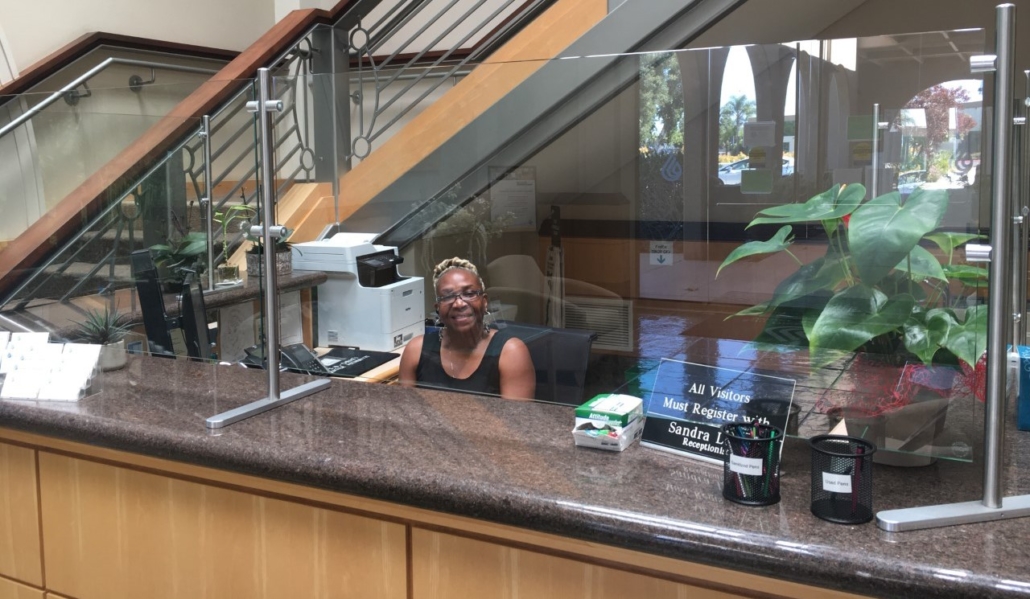
I miss my co-workers, since most of the Water Authority staff are working remotely. Our main office in Kearny Mesa is closed to the public and delivery drivers have to buzz me from the outside before dropping packages at the front door. New safety protocols are in place for staff coming to the office, including temperature checks before entering the building. One change is that all staff entering the building now have to sign-in with me at the front desk and check out when they leave. Another change is the front reception desk where I work is now surrounded by clear, plexiglass shield barriers, also part of our pandemic safety protocols.

Sandra Louis-Water Utility Hero of the Week-San Diego County Water Authority

The San Diego County Water Authority reception desk, where Sandra Louis works, is surrounded by clear, plexiglass shield barriers, part of the safety protocols due to the coronavirus pandemic. Photo: San Diego County Water Authority

How are you keeping safe?

Wearing my face mask, washing my hands a lot more, cleaning the work area, and checking my temperature before coming into the building.

What are you most looking forward to after the crisis ends?

Spending time with my elder aunties and uncles, going to church, and going to events.

The Water Utility Hero of the Week highlights essential work performed during the COVID-19 pandemic by the San Diego County Water Authority and employees of the San Diego County Water Authority’s 24 member agencies.

San Diego County Water Authority Member Agency Map

Emily Fleming-Padre Dam MWD-Water Utility Hero of the Week-Essential Workers

Water Utility Hero of the Week: Emily Fleming, Padre Dam Municipal Water District

Editor’s Note: This feature highlights water utility employees in the San Diego region working during the coronavirus pandemic to ensure a safe, reliable and plentiful water supply. The water industry is among the sectors that are classified as essential. Emily Fleming, Padre Dam Municipal Water District Customer Service Representative, is the Water Utility Hero of the Week.

Water Utility Hero of the Week: Emily Fleming

Job/Agency: Padre Dam Municipal Water District Customer Service Representative

How did you become interested in working in the water industry?

Nearly ten years ago, after a long and successful career in retail banking, I fell victim to a series of armed robberies over a two-year period. These violent encounters took a toll and made me seriously consider a career change. A conversation with an acquaintance led me to explore the possibility of working at Padre Dam. There was so much to learn about the water industry, however the staff and management at Padre Dam made me feel right at home and they were supportive during the entire process. Working with the public and providing the best customer service possible is second nature to me. I strive to make each encounter personal and informative.

How has your job changed during the pandemic?

Not long after the pandemic started we began alternating work schedules in the Customer Service Department. Some people work from home, and we have a minimal staff at the administrative office. Our IT staff did a phenomenal job of ensuring we had everything we needed to work from home. To most of our customers, the transition has been seamless. We have worked out most of the bugs since then and now it has become second nature to our department.

How are you keeping safe?

My husband does all the grocery shopping for the family and I so appreciate that, it minimizes the exposure for me. Padre Dam meets all the safety requirements and more when I’m not working from home. We like to support the mom and pop shops so we order food to go now and then. Finally yet equally important, I wear my mask and wash my hands regularly to protect my friends and family.

What are you most looking forward to after the crisis ends?

I get emotional when I talk about this one. I became a grandmother on February 26, 2020, to a beautiful baby boy.  He was only 3 weeks old when the shutdowns started. Although his parents are great about sending pictures and videos, it is not quite the same. I am most looking forward to holding him, and watching him grow and play without the fear of getting sick. I cannot wait!

The Water Utility Hero of the Week highlights essential work performed during the COVID-19 pandemic by employees of the San Diego County Water Authority’s 24 member agencies.

San Diego County Water Authority Member Agency Map

Water Utility Hero of the Week-Santa Fe Irrigation District-LaMont Foster

Water Utility Hero of the Week: LaMont Foster, Santa Fe Irrigation District

Editor’s Note: This feature highlights water utility employees in the San Diego region working during the coronavirus pandemic to ensure a safe, reliable and plentiful water supply. The water industry is among the sectors that are classified as essential. LaMont Foster, Santa Fe Irrigation District Utility Worker I, is the Water Utility Hero of the Week.

Water Utility Hero of the Week: LaMont Foster

Job/Agency: Santa Fe Irrigation District Utility Worker I

How did you become interested in working in the water industry?

I’ve had a few careers before working here at Santa Fe. After being laid off from a job I was at for more than 20 years, I was working as a bus driver for a school district. Someone had mentioned the water and wastewater internship managed by the San Diego County Water Authority. I applied and was accepted and worked with some great people at Otay and Helix and transitioned to a full-time job at SFID. I really enjoy working in the water industry. Water puts everyone on the same level. We all need it, and we all appreciate it even more when there is a problem getting it.

How has your job changed during the pandemic?

We used to drive around in crews of two together, but we drive separately now. We are also moving around the building a little differently and changing reporting times so there are fewer people in one place at a time, but other than that, the work is the same. We respond to customer concerns, fix what needs to be fixed and keep our maintenance schedule.

How are you keeping safe?

I’ve got some high-risk people in my family, so I am doing what I can to limit my exposure to people and going places. Just me and the family at the house and I am always sure to mask up. It’s important.

What are you most looking forward to after the crisis ends?

My life isn’t all that much different, but I really look forward to taking my wife and son out for a nice meal and enjoying ourselves. Not be worried or anxious about the people around me. I am really looking forward to that.

The Water Utility Hero of the Week highlights essential work performed during the COVID-19 pandemic by employees of the San Diego County Water Authority’s 24 member agencies.

San Diego County Water Authority Member Agency Map