Discounted Rain Barrels and Workshops Available For San Diego Residents
With San Diego’s rainy months just ahead, Solana Center for Environmental Innovation (Solana Center) and Think Blue San Diego (the City of San Diego Stormwater Department) are providing discounted rain barrels to encourage City of San Diego residents to collect and conserve rainwater and reduce stormwater pollution.
Rain barrels are $30 each for City of San Diego residents after the $75 discount (original price $105), while supplies last. By using a rain barrel, San Diegans can collect water for later use and reduce runoff to the ocean.
Free Rainwater Harvesting Workshops
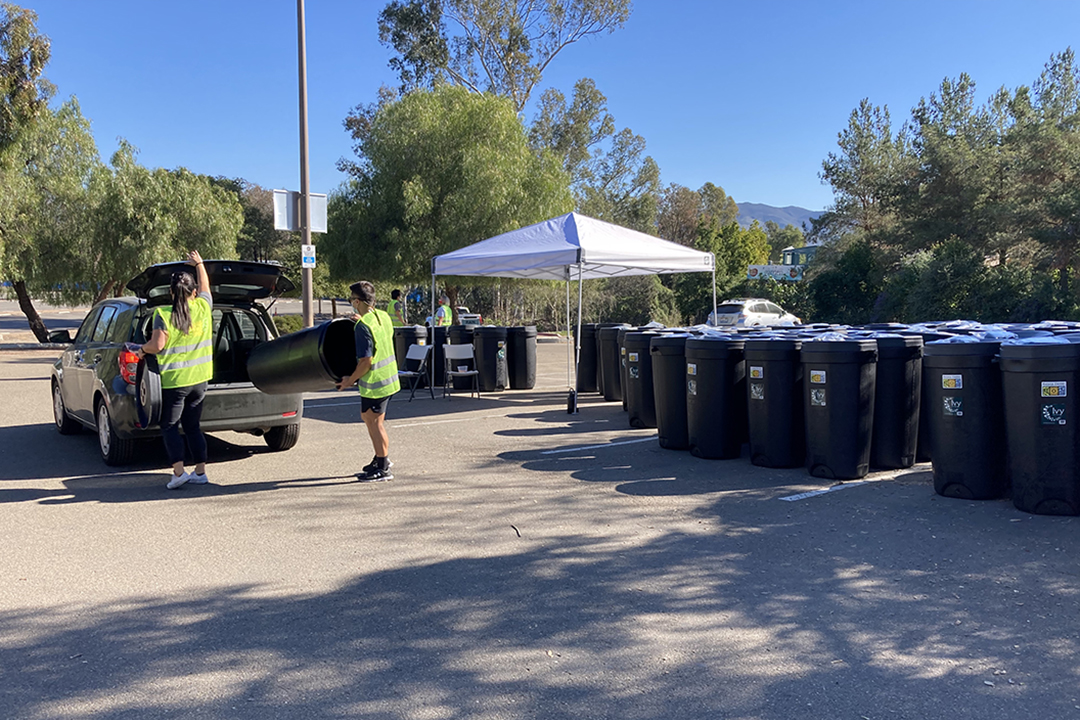
Participants in two upcoming workshops can pick up their new discounted rain barrels at the same time. Photo: Courtesy: Solana Center for Environmental Innovation
City of San Diego residents may attend a free rainwater harvesting webinar on Wednesday, February 26, 2026, to learn more about whether rainwater harvesting is the right fit for their household before ordering their rain barrel. They may also attend a rain barrel and rain harvesting workshop on Sunday, March 29, 2026, or Sunday, April 19, 2026, and pick up their discounted barrels afterward at the same location.
“Rain barrels provide free, untreated water for gardening and landscaping,” says Solana Center educator and rain barrel specialist, Sarah Van Horn. “Collecting rainwater is also an easy step households can take to keep our local waterways clean and free from contaminants.”
Benefits of Rain Barrels
When it rains, stormwater flows from roofs, sidewalks, and other hard urban surfaces onto city streets, picking up pollution and trash along the way. Water that enters the stormwater system flows untreated directly into our creeks, rivers, bays, beaches, and, ultimately, the ocean. Instead of letting fresh rainwater flow off of your property, you can collect some of it in rain barrels where it can be saved and used to irrigate yards and plants that need it most.
Just one inch of rain yields 600 gallons per 1,000 square feet of roof space, depending on your roof configuration. That’s a lot of free, fresh water for San Diegans to divert and help their plants thrive. The rain barrels provided can store up to 50
gallons of rainwater for later use each time it rains, and include screens to prevent mosquito entry and breeding.
Collecting rainwater from your roof can contribute to water conservation by reducing the need to use potable municipal water for irrigation, helping to reduce pollutant flows to local waterways, and reducing flooding around your property and neighborhood.
Rain Barrel Program Details
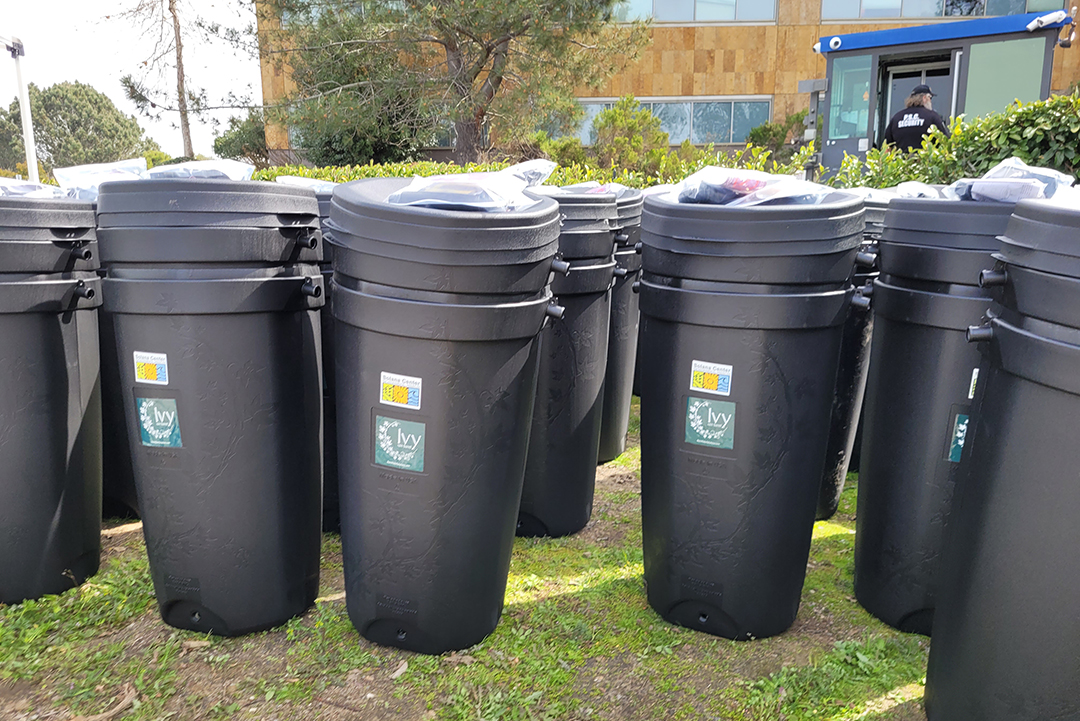
City of San Diego residents eligible for discounted rain barrels can attend a virtual or an in-person workshop to learn more about maximizing their benefits. Photo: Courtesy: Solana Center for Environmental Innovation
Here’s how the program works:
1. Check your address to ensure you qualify as a City of San Diego resident.
2. Register for the rain barrel distribution event of your choice:
Sunday, Mar. 29, 2026: Mountain View Community Center – 641 S Boundary St., San Diego, CA 92113
Sunday, April 19, 2026: North Clairemont Recreation Center – 4421 Bannock Ave, San Diego, CA 92117
3. Register to attend a workshop or webinar to learn more about rainwater harvesting
and how to use your rain barrel:
Webinar: Thursday, Feb. 26, 2026 – 6 – 7 p.m.
In-Person Workshop: Sunday, Mar. 29, 2026 – 10 – 11 a.m. – Mountain View Community Center
In-Person Workshop: Sunday, Apr. 19, 2026 – 11 a.m. – 12 p.m. – North Clairemont Recreation Center
Check your eligibility for the program here on the website.
Funding for this project has been provided in full or in part from the Water Quality, Supply, and Infrastructure Improvement Act of 2014 and through an agreement with the State Department of Water Resources.
Solana Center for Environmental Innovation (Solana Center) is an award-winning 501(c)(3) nonprofit organization based in Encinitas, CA that has provided waste diversion and environmental education in San Diego County for over 40 years. Solana Center’s work centers on community education, direct resource conservation and waste reduction, and innovative environmental research and development. Learn more at www.solanacenter.org.
To help educate San Diegans about the importance of stormwater services to neighborhood quality of life, Think Blue San Diego is the City of San Diego’s longest-running and most successful public education and outreach program. For more than 20 years, this Stormwater Department program has implemented innovative, proactive steps to stop pollution before it gets into storm drains.