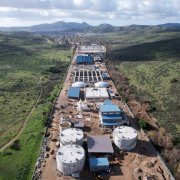
East County AWP Reports Progress, Hosts Outreach Event Jan. 17
Construction is progressing at the various project sites for the East County Advanced Water Purification Program. The past year saw a number of accomplishments, bringing the initiative one step closer to the finish line.
Watch the latest East County AWP video presentation.
The East County AWP Outreach team will kick off 2026 with a pop-up event for the public at Mission Trails Regional Park on Saturday, January 17, from 8 a.m. to 11 a.m.
Representatives will answer questions and share information about the pipeline work underway within Mission Trails Regional Park, including rehabilitation of an existing sewer pipeline, and installation of a new nine-mile residuals pipeline along Father Junipero Serra Trail within the park. Visit the project’s website for more details.
Work to install a temporary sewer bypass pipeline is complete, allowing work to continue during rainy months without risking a sewer spill and protecting wildlife and waterways.
Education Center Nears Completion
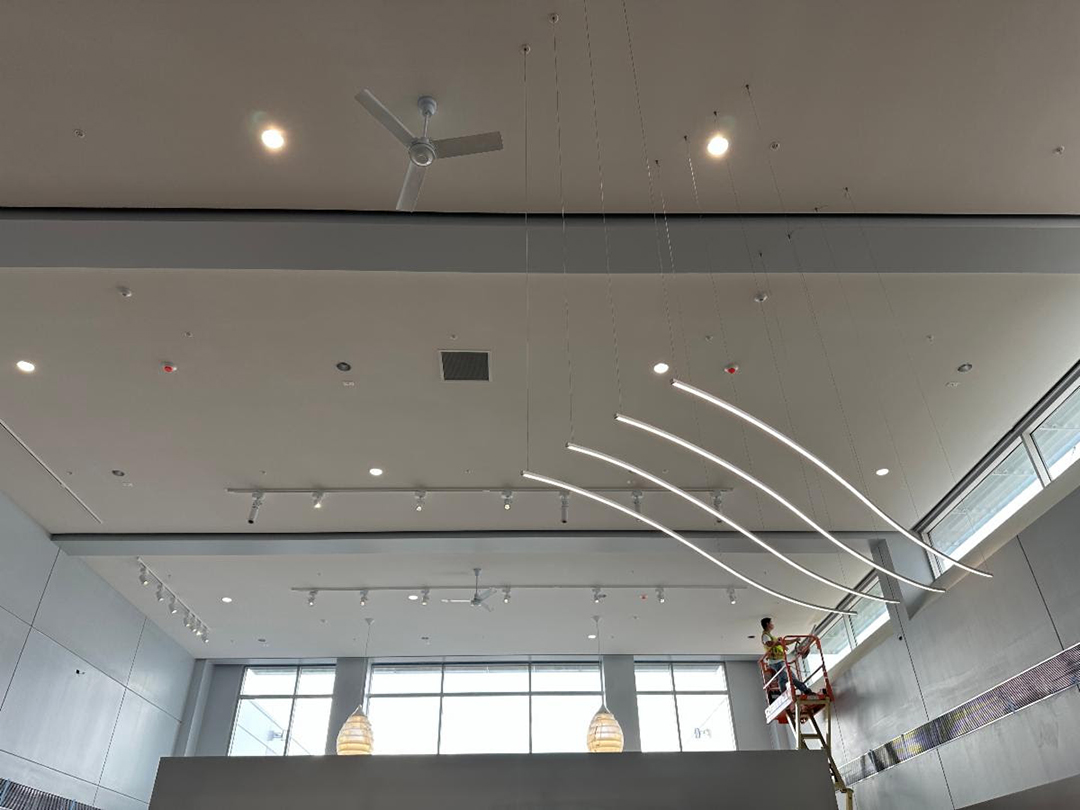
The lights are on at the East County AWP’s Education Building, which also houses administrative offices and a new laboratory. Photo: East County AWP
The new Education Center building, which will also house the administrative offices and a brand-new laboratory, is now 90% complete. San Diego Gas and Electric finished its work on the new treatment facility’s main electrical room, and power is now available for its operations. With electricity in place, the team is gearing up for the next milestone: installing the East County AWP sign outside the building.
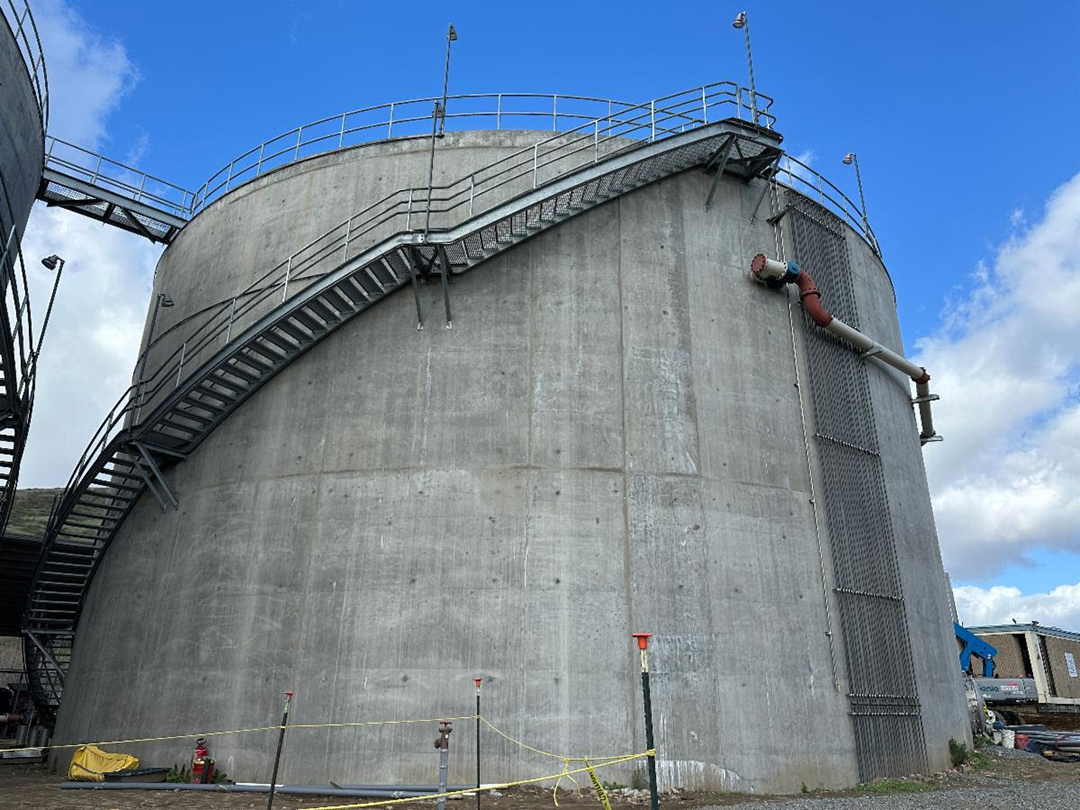
Each digester can store up to 1.4 million gallons, and stands 46 feet high and measures 75 feet in diameter. Photo: East County AWP
Next, construction will get underway on the energy recovery system. Located north of the Education Center, Anaergia is working on the final design, with construction scheduled this winter. The methane produced by three digesters will be captured and used to generate both heating and electricity. The energy recovery system will provide up to 30% of the project’s energy needs, saving the operators and ratepayers money.
Crews are preparing for the installation of the final 3,500 feet of 36-inch wastewater pipeline. Work is active at the East Mission Gorge Pump Station and just south of Lake One at Santee Lakes. This segment is set to be completed this summer.
The East County AWP successfully secured two critical water discharge permits from the San Diego Regional Water Control Board, a significant operational milestone.
Mast Boulevard Construction Progress
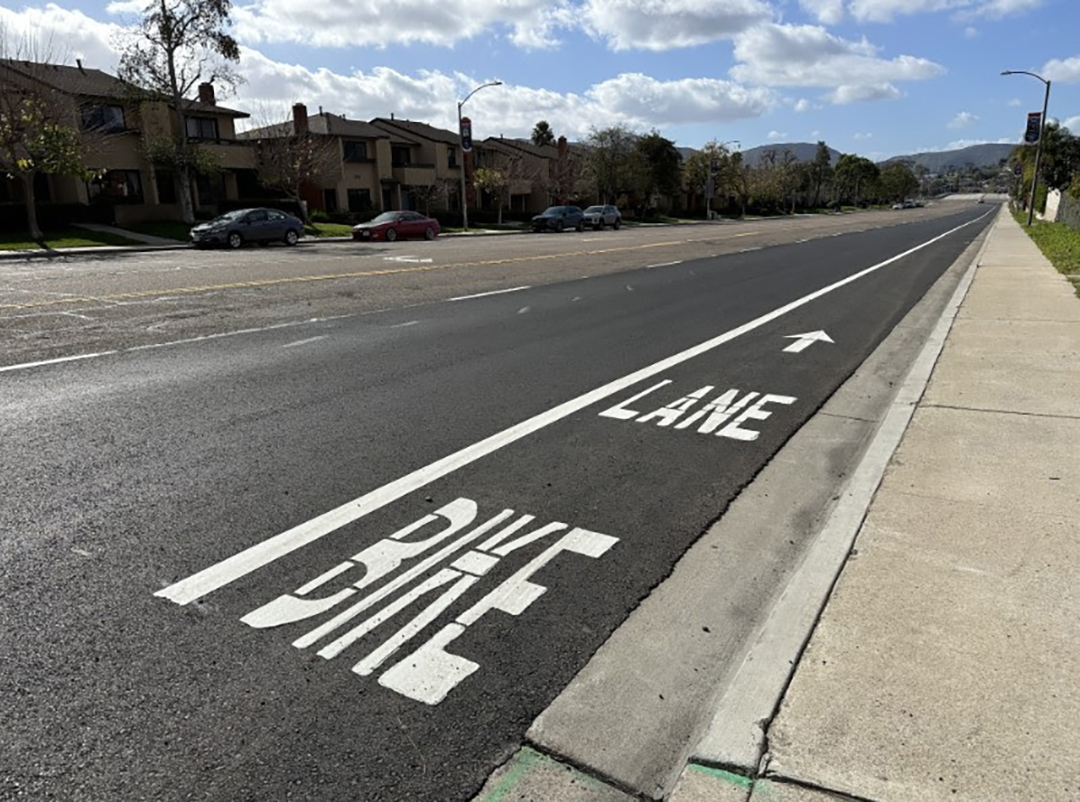
Construction work is complete and Mast Boulevard from Fanita Parkway to Vomac Road is now restored. Photo: East County AWP
Mast Boulevard from Fanita Parkway to Vomac Road is a whole lot smoother after completion of final paving and striping work.
Crews are continuing work on Mast Boulevard from Vomac Road to W. Hartland Circle and are expected to wrap up by mid-to-late February. There is a 24-hour temporary closure of the second westbound lane near the work area. Expect paving and striping after these repairs are complete.
Habitat Restoration Restores Native Plants
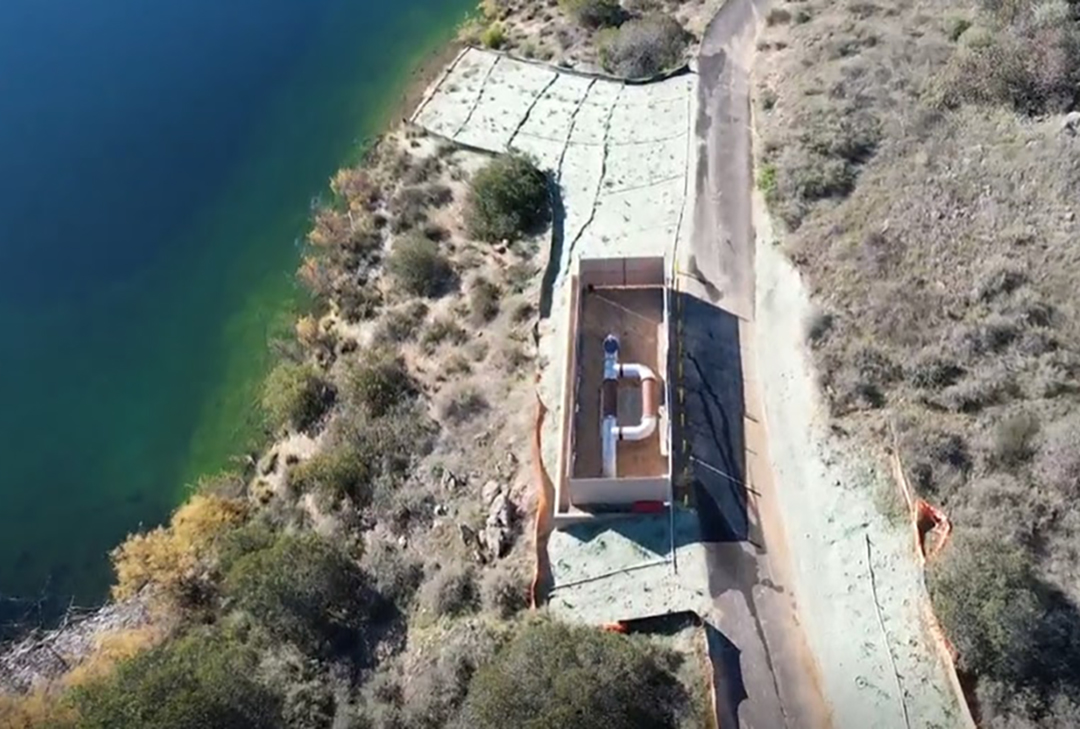
Native plants are being reintroduced after construction has been completed in several areas including at Lake Jennings. Photo: East County AWP
As part of ongoing restoration following the installation of purified and wastewater pipelines, new plantings were installed last month around Lake Jennings, the Historic Flume Trail, El Monte Road, Laurel Canyon Road, and the end of Mast Boulevard.
These plants are native to San Diego and the surrounding area. They include California sagebrush, San Diego County sunflower, bush sunflower, California buckwheat, laurel sumac, lemonade berry, and spiny redberry.
Planting is also being done north of Ganley Road, and hydroseeding near the East Mission Gorge Pump Station and along Fanita Parkway will bring a more vibrant landscape to East County for years to come.
Overnight Work Continues Through February
Overnight work on a wastewater pipeline continues along Fairmount Avenue between Twain Avenue and Mission Gorge Road in San Diego between 8:30 p.m. and 5:30 a.m., Monday through Thursday. Noise and bright lights, along with road and lane closures, may affect traffic and nearby residents and businesses. Home access will be maintained at all times. Work should be complete at the end of February.
Interactive Map Helps Residents Stay Updated On Program Progress
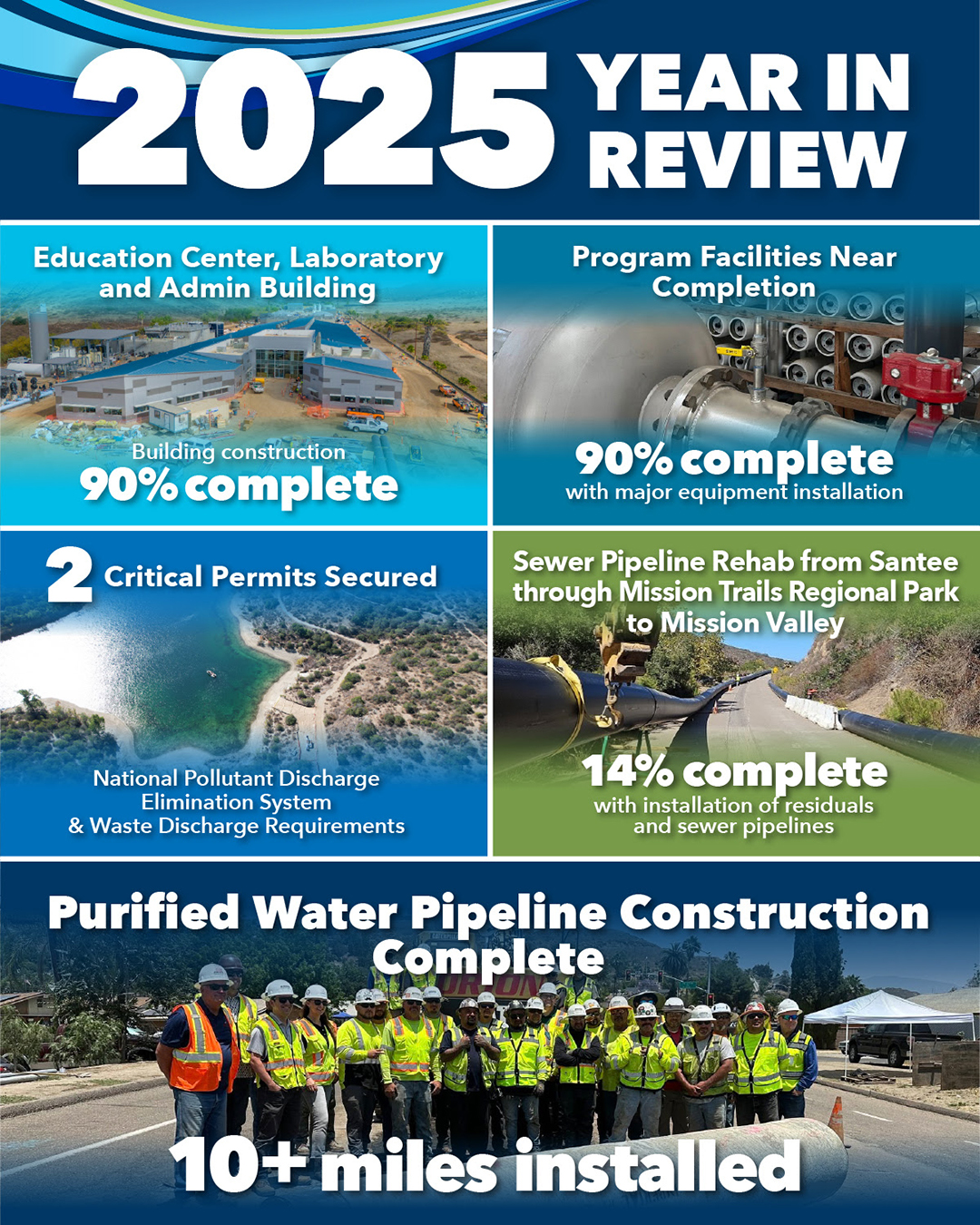
The East County Advanced Water Program made significant progress in 2025.
When completed, water from this project will provide potable water to customers in Padre Dam Municipal Water District, Helix Water District, and Lakeside Water District service areas, and the northern portion of the Otay Water District.
With construction in multiple locations throughout east county, the Program’s interactive map offers a useful tool for residents and businesses to track where work is happening. The map is updated regularly and accessible 24/7 through the EastCountyAWP.com website. Information is also available via social media at @eastcountyawp