Tag Archive for: Infrastructure

The Helix Water District's Tunnel Hill storage tank rehabilitation project took approximately two years to complete. Photo: Helix Water District

Tunnel Hill Water Tanks Rehabbed and Upgraded by Helix Water District

The Helix Water District recently completed an extensive rehabilitation of its Tunnel Hill water storage tanks. The two tanks are above Interstate 8 near the Los Coches freeway exit. The tanks play an important role in the water infrastructure system by storing and providing water to thousands of Helix Water District customers in Lakeside and El Cajon.

The project took two years to complete in several phases. The first phase of the project involved stripping the exterior of the smaller and newer, reinforced concrete tank. The new, natural concrete finish does not require paint and will reduce long-term maintenance costs.
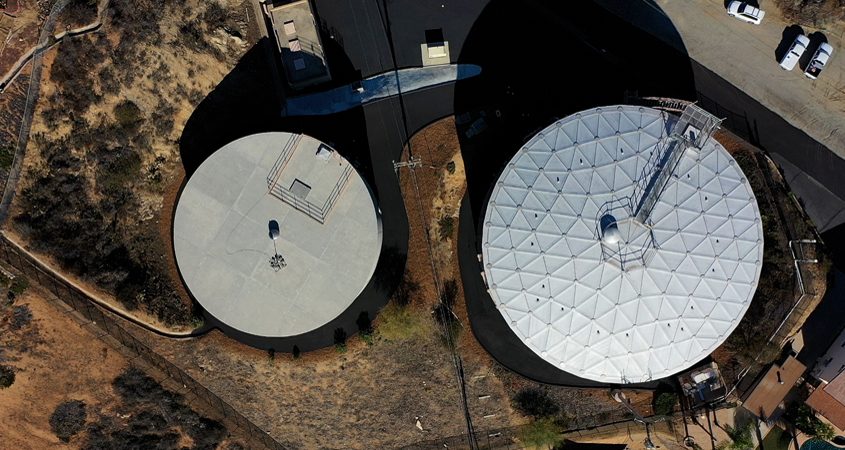
The larger steel Tunnel Hill water tank received a corrosion-resistant aluminum dome roof. Photo: Helix Water District

The larger steel Tunnel Hill water tank received a corrosion-resistant aluminum dome roof. Photo: Helix Water District

Next, the larger steel tank received new paint and a corrosion-resistant aluminum dome roof. The height of the tank was extended by five feet to improve the tank’s performance and safety in an earthquake, especially to protect nearby neighborhoods. The exterior of the steel tank was recoated.

Both tanks received new interior coatings to prevent corrosion and were replumbed with flexible fittings to prevent breaks and keep the tanks connected during an earthquake.

Asset Management
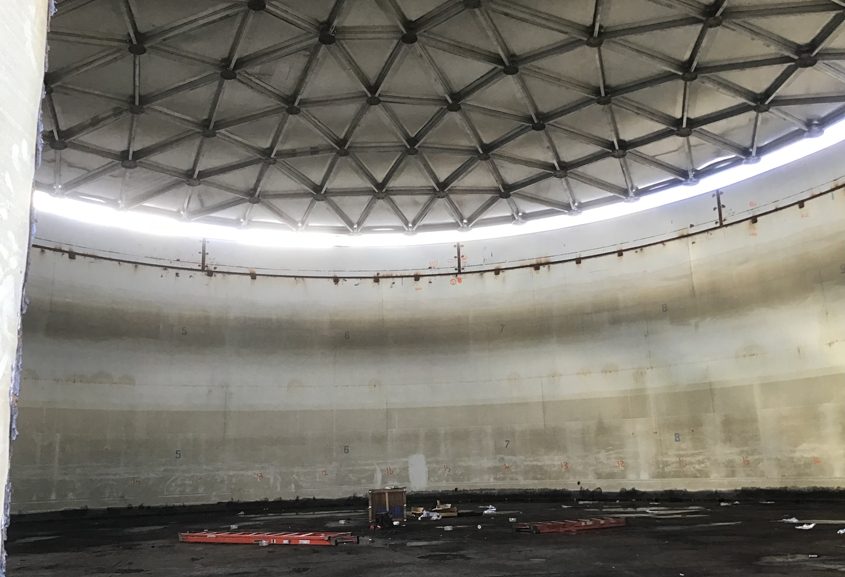
Both tanks received new interior coatings to prevent corrosion and were replumbed with flexible fittings to prevent breaks and keep the tanks connected during an earthquake. Photo: Helix Water District

Both tanks received new interior coatings to prevent corrosion and were replumbed with flexible fittings to prevent breaks and keep the tanks connected during an earthquake. Photo: Helix Water District

“The Tunnel Hill Tank improvements are a great example of successful asset management,” said Helix Water District Board President Kathleen Coates Hedberg. “It would have cost over $10 million dollars if we had to replace the tanks. However, rehabilitating cost $3.5 million dollars. Our District is over 100 years old, and it is important to stay on top of our aging water system. We continuously monitor and manage our infrastructure because it’s the best long-term solution for our customers.”

The completed improvements will extend the life of the Tunnel Hill tanks for another 50 to 75 years.

Watch video of the Tunnel Hill Tank rehabilitation project in progress

Vital Roles In Water Infrastructure

Tanks are the most visible parts of water infrastructure and play a vital role in supplying water for the daily needs of residents and businesses, as well as for emergencies. The Helix Water District operates and maintains 25 tanks across its 50-square-mile service area. Proactive rehabilitations are less expensive than the construction of a new tank.
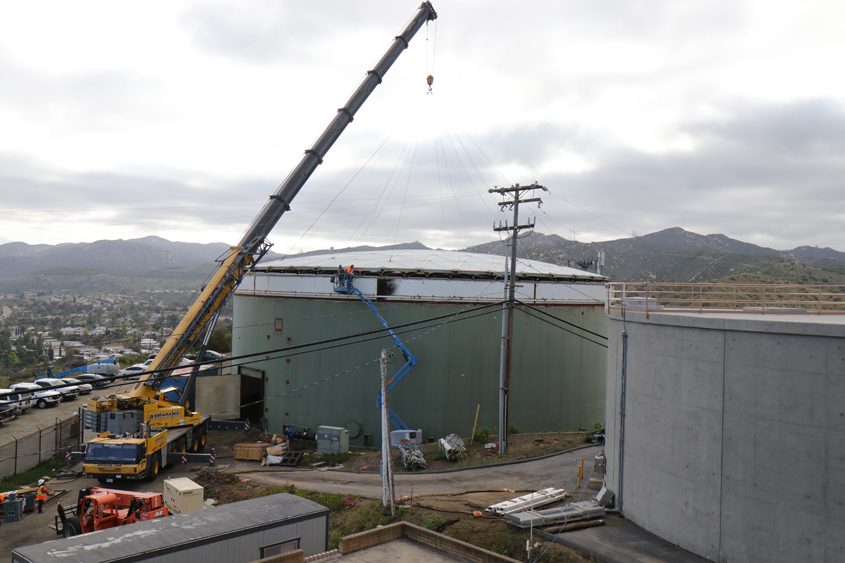
The height of the larger tank was extended by five feet to improve the tank’s performance and safety in an earthquake, especially to protect nearby neighborhoods. Photo: Helix Water District

The height of the larger tank was extended by five feet to improve the tank’s performance and safety in an earthquake, especially to protect nearby neighborhoods. Photo: Helix Water District

Eight additional water storage tanks were inspected and repaired in 2022. In addition, as part of its proactive maintenance, crews replaced 11,560 feet of cast-iron pipeline and surveyed 14,728 feet of pipeline route for design.

The district pulled electromagnetic detectors through 12,000 feet of the 36-inch diameter pipeline that delivers water from the Colorado River and Northern California to the R.M. Levy Water Treatment Plant in Lakeside. The detectors measure the pipe wall and identify weak points, facilitating faster, more precise and less expensive repairs. Based on the data, the Helix Water District replaced 805 feet of pipe and installed 34 steel plates and 10 new access manways.

(Editor’s note: The Helix Water District is one of the San Diego County Water Authority’s 24 member agencies that deliver water across the San Diego County region.) 

Over $63M in Federal Funding Announced for 22 San Diego-Area Projects

More than $63 million in proposed federal funding was announced Tuesday to support nearly two dozen projects across the San Diego region.

Sen. Alex Padilla, D-California, said in a statement that the Fiscal Year 2023 appropriations package that will deliver funding for 22 projects slated for the San Diego region will head next to both chambers of Congress for final passage.

Among the projects expected to receive funding in the package are:

— $3.45 million for the City of Oceanside‘s Loma Alta Creek Sewer Relocation, which will move a sewer main from a creek bed to a roadway to minimize environmental damage in the event of a sanitary sewer overflow.

— $3.45 million for the Smuggler’s Gulch Dredging Project, which will clear trash and sediment to protect downstream communities, and protect human and environmental health in the Tijuana River Watershed and coastal waters.

— $3.39 million for Borrego Water District‘s Borrego Spring Transmission Main, which will update the water distribution system and reduce water pipeline breaks.

— $3.06 million for the Valley Center Municipal Water District‘s Lilac Road Pipeline Replacement, which is aimed at reducing water loss and improving water conservation, among other benefits of the 60-year-old pipeline’s replacement.

Los Angeles is Running Out of Water, and Time. Are Leaders Willing to Act?

On a clear afternoon recently, Mayor Eric Garcetti looked down at the Hollywood Reservoir from 1,200 feet in the air.

“It’s as low as I can ever remember it being,” Garcetti said of the reservoir from the back seat of a Los Angeles Department of Water and Power helicopter. “You can see the bathtub ring.”

New Cracks Found in Lake Hodges Dam Will Lengthen Repair Work, Delay Re-opening of Fishing, Boating

The discovery of previously unknown cracks and other concrete defects in the Hodges Dam will extend ongoing repair work by several months, forcing San Diego officials to restrict recreational activities on Lake Hodges and keep its levels low for longer.

The newly discovered defects could prompt state regulators to lower the 104-year-old dam’s rating from “poor” to “unsatisfactory” and order all water removed, but city Public Utilities Director Juan Guerreiro said he hopes the ongoing repairs will prevent that.

Temporary Watering Ban Lifted in Los Angeles County as Pipeline Repair Completed Early

Southern California water officials on Monday lifted a temporary ban on outdoor watering in portions of Los Angeles County after completing emergency repairs on a critical pipeline two days early.

The 36-mile Upper Feeder pipeline, operated by the Metropolitan Water District of Southern California, is a major conduit for supplying water to the region from the Colorado River. Officials shut it down Sept. 6 so they could address a leak, and called on nearly 4 million residents to halt all outdoor irrigation — including sprinkling and hand watering — for 15 days while they did the work.

City Finds More Issues at 104-Year-Old Hodges Dam, Repair Timeline Pushed Back to 2023

While repairing parts of Hodges Reservoir Dam, city workers found additional defects that need to be addressed, likely delaying the completion of repairs by several months, the city announced Monday.

During a prior inspection, city workers identified areas in the dam wall that required repair and needed to be sealed. To access areas on the dam for repair, the water level of the reservoir was lowered 18 feet to an elevation of 275 feet by transferring water to other reservoirs and treatment plants, officials said.

Lake Hodges Dam Repair Continues

The lower water levels people might be seeing at Lake Hodges are not drought-related but instead are due to the ongoing work repairing the 100-year-old Lake Hodges Dam. The emergency work on the dam began in May and is expected to be completed by October.

15-Day Watering Ban in Portions of L.A. County Due to Pipeline Leak

Drought-pummeled lawns across Los Angeles County will be a little bit thirstier for 15 days in September when officials suspend outdoor watering in several areas to repair a leaking pipeline, the Metropolitan Water District of Southern California announced Monday.

The emergency repair will shut down the 36-mile Upper Feeder pipeline — which delivers water from the Colorado River to Southern California — from Sept. 6 to 20, the MWD said. The leak was discovered this year, and the pipeline has been operating at reduced capacity under a temporary fix while officials designed a more permanent solution.

Lake Hodges-Hodges Reservoir-Hodges Dam

Repair Work on Hodges Dam to Begin

As part of continuing efforts to maintain and invest in City of San Diego infrastructure, repair work starts within the next two weeks on Hodges Dam, at the Hodges Reservoir north of Rancho Bernardo.

“It’s been over a century since Hodges Dam was constructed, and we are making significant investments to maintain this vital asset,” said Alia Khouri, Deputy Chief Operating Officer. “Projects like this one are crucial for the City’s aging infrastructure system in order to maintain the safe and efficient delivery of City services.”

During a recent inspection, staff identified areas in the dam wall that require repair and need to be sealed. To access these areas, the water level of the reservoir needs to be lowered by approximately 18 feet from its current level to an elevation of 275 feet. The reservoir may need to be lowered below 275 feet if additional areas needing repair are identified during the project. The repair project is expected to continue for an estimated five months.

Water transfers to maximize savings

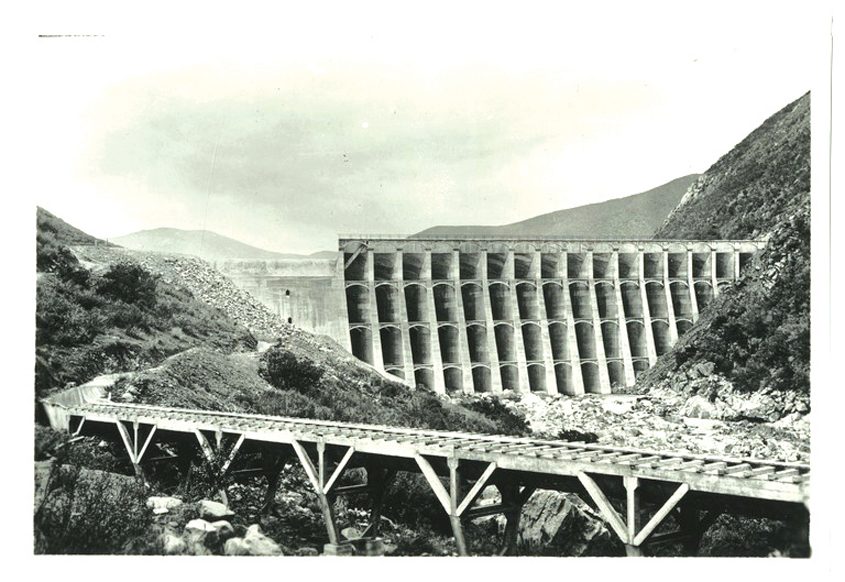
The Hodges Dam, shown here in 1929, was built in 1918. Photo: UCSD

The Hodges Dam, shown here in 1929, was built in 1918. Photo: UC San Diego

The primary function of Hodges Reservoir is to store water for potable use. The City is working with its regional water agency partners on a plan to draw down the reservoir level to maximize water savings. Most, if not all, of the water will be transferred to other reservoirs, while some water may be released into the San Dieguito River.

“The City of San Diego is committed to maintaining Hodges Dam to ensure the protection of our water resources and public enjoyment of the reservoir,” said Juan Guerreiro, Interim Director of the City’s Public Utilities Department. “We appreciate the public’s patience while we complete the project.”

To access areas of the Hodges Dam for repairs, the water level of the reservoir needs to be lowered by approximately 18 feet from its current level to an elevation of 275 feet. As a result of the lower water level, the Hodges Reservoir will be closed for recreation while the repair project is underway. Boating and fishing will still be available at other City of San Diego reservoirs. The San Dieguito River Park trails and facilities around Hodges Reservoir will not be impacted during the drawdown or dam construction work.

Operated and maintained by the San Diego Public Utilities Department, the reservoir currently serves the San Diego County Water Authority, San Dieguito Water District, and Santa Fe Irrigation District, and the City of San Diego. San Diego operates nine reservoirs, including Hodges.

(Editor’s note: The City of San Diego, San Dieguito Water District, and the Santa Fe Irrigation District are three of the San Diego County Water Authority’s 24 member agencies that deliver water across the metropolitan San Diego region.)

Manchester Avenue Potable Water Pipeline Replacement Project Completed

The Olivenhain Municipal Water District recently completed the Manchester Avenue Potable Water Pipeline Project. In total, 3,700 linear feet of aged potable water pipeline was replaced along Manchester Avenue, Rancho Santa Fe Road and Encinitas Boulevard.

The pipelines previously serving water in this area were installed in 1961 and were approaching the end of their lifespan.