You are now in Agency News News category.

Olivenhain Municipal Water District Logo landscape design workshops

Olivenhain Municipal Water District and County of San Diego Department of Parks and Recreation Partnership Receives State Recognition

County Named Recycled Water Customer of the Year 

Encinitas, Calif. — The WateReuse Association of California recognized County of San Diego Department of Parks and Recreation as a 2020 Recycled Water Customer of the Year today. The award was presented at WateReuse’s first virtual conference. Olivenhain Municipal Water District nominated the County for its dedication to using sustainable recycled water to irrigate County parks in OMWD’s service area.

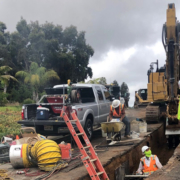
The Sweetwater Authority will use innovative technology to flush all 400 miles of its system pipelines. Pnoto: Sweetwater Authority

Sweetwater Authority Taps Innovative Technology to Ensure Water Quality

The Sweetwater Authority recently began a multiyear water main flushing program using innovative technology to clean all 400 miles of pipeline in its system. It’s part of Sweetwater Authority’s use of the latest technology to deliver a safe, reliable water supply to its South San Diego County customers.

Water main flushing cleans pipeline interiors by sending a rapid flow of water through them. Sweetwater’s program is the first in the region to use a new, innovative technology resulting in less environmental impact.

“We’re committed to providing our customers with high-quality water, ensuring that every drop meets safety standards and protects public health,” said Tish Berge, Sweetwater Authority general manager. “We’re also dedicated to providing the safe, reliable water through the use of best available technology and sustainable practices.”

See the system in action in the following video. A Spanish language version is also available.

New method avoids storm drain discharge

Traditional flushing methods release water from fire hydrants at a high speed in order to flush out naturally occurring sediments accumulating in water pipes over time. Although the sediment itself is harmless, it can eventually affect water color and taste. The water used to clean the pipes often cannot be captured and ends up in the storm drain system.

The bulk of Sweetwater Authority‘s flushing program now eliminates the need to discharge water from fire hydrants during the cleaning process while delivering the same results.

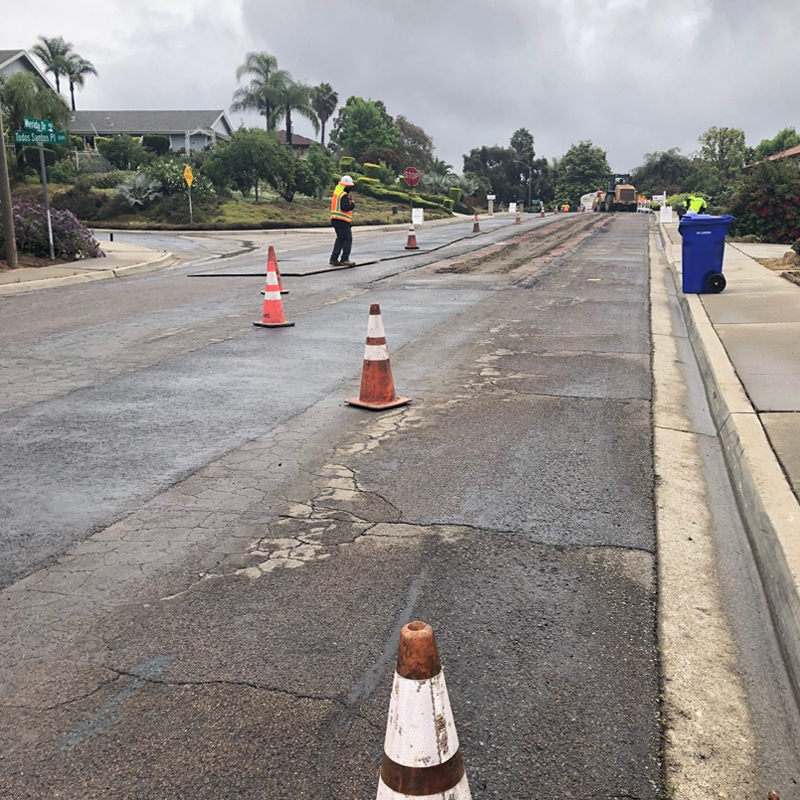
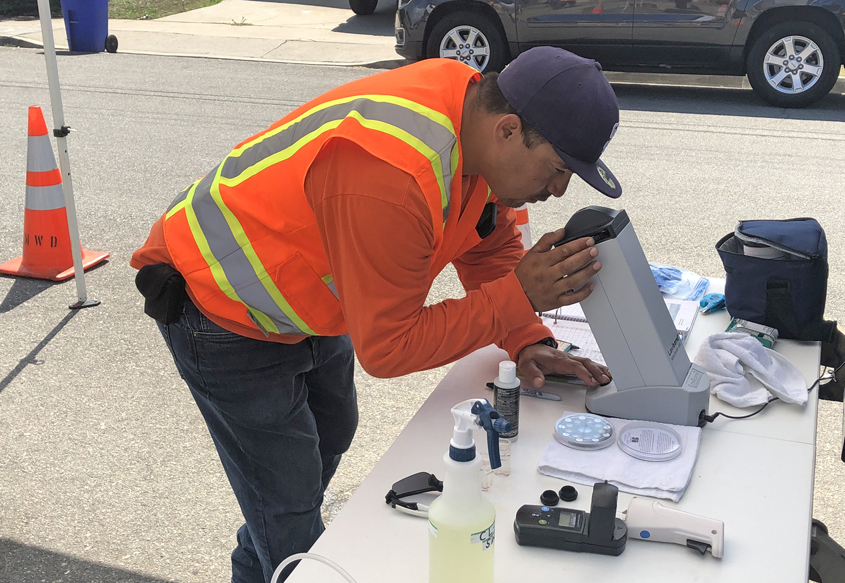
With the closed-loop system and increased controls, crews are able to effectively and thoroughly flush large sections of pipeline with a single setup and staging area. This more efficient setup is less labor-intensive and allows the crew to maintain a safe hub for operations. Photo: Sweetwater Authority

With the closed-loop system and increased controls, crews are able to effectively and thoroughly flush large sections of pipeline with a single setup and staging area. This more efficient setup is less labor-intensive and allows the crew to maintain a safe hub for operations. Photo: Sweetwater Authority

Crews identify all pipes, valves, and fire hydrants located in the area to be flushed. Next, crews connect one end of a hose to a hydrant and the other end of the hose to the no discharge, or NO-DES flushing unit. The process repeats, connecting a second hose to another hydrant and the other end back into the flushing unit, creating a temporary closed loop.

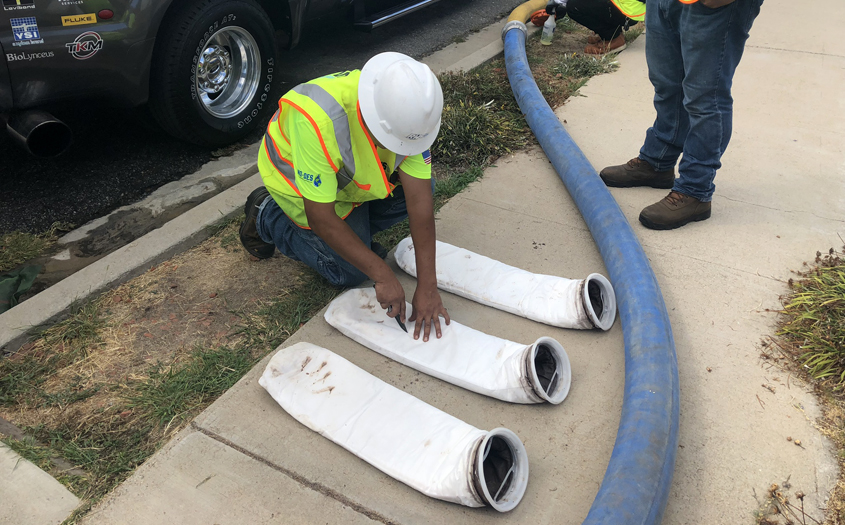
Once the NO-DES flushing unit is turned on and the hydrants are open, water will push through the loop at high pressure, disrupting any accumulated sediment on the inside of the pipes. The water is pushed through a series of sock-like filters, which remove those sediments and return clean, high-quality water back into the system.

Crews closely monitor the filtration system and water quality to determine when flushing of each pipeline segment is complete.

Innovative technology, efficient and environmentally responsible

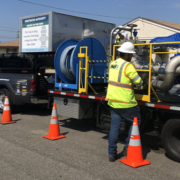
Additional member water agencies have indicated an interest in the cost-effectiveness of purchasing the NO-DES flushing units for the region and collaborating to create a shared-use program with the technology. Photo: Sweetwater Authority

Additional member water agencies have indicated an interest in the cost-effectiveness of purchasing the NO-DES flushing units for the region and collaborating to create a shared-use program with the technology. Photo: Sweetwater Authority

With the closed-loop system and increased controls, crews are able to effectively and thoroughly flush large sections of pipeline with a single setup and staging area. This more efficient setup is less labor-intensive and allows the crew to maintain a safe hub for operations.

In the National City area 75.8 miles of pipeline was recently flushed. Crews are now completing work in the Bonita area, and then will start work in Chula Vista.

Additional water agencies have indicated an interest in the cost-effectiveness of purchasing the NO-DES flushing units for the region and collaborating to create a shared-use program with the innovative technology.

“Securing a local water supply to ensure the water delivered is of the highest quality through the best technology in our projects and programs helps to maximize value for our customers while also being sustainable,” said Berge.

For more information on the program, go to www.sweetwater.org/flushing.

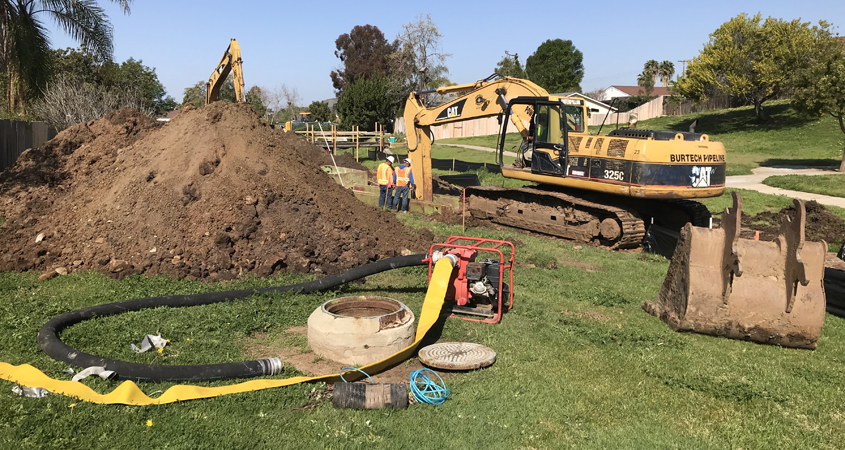
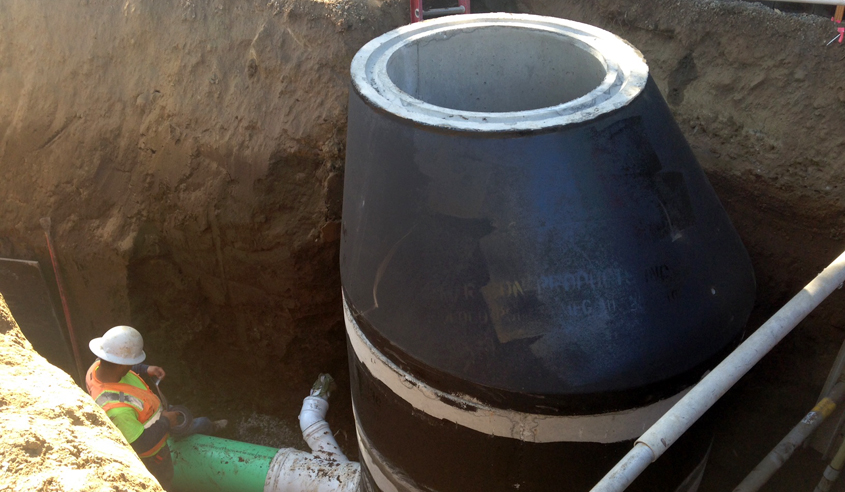
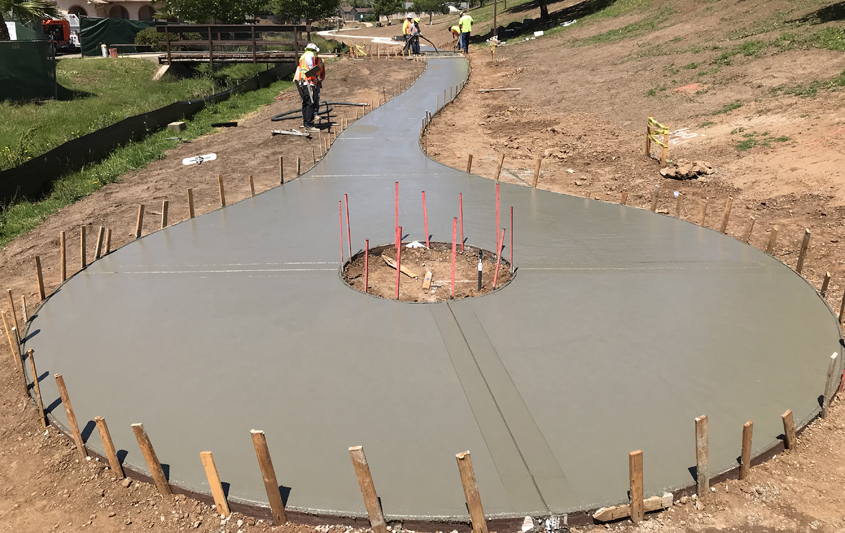
This temporary bridge allowed Vallecitos Water District crews to repair a manhole without affected sensitive habitat. Photo: Vallecitos Water District rehab manhole

Vallecitos Water District Crews Rehab Manhole, Protecting Environment  

Vallecitos Water District crews sprang into action to repair and rehabilitate a manhole in danger of failing, successfully preventing a spill, which could have resulted in significant environmental damage.

Located just off Palomar Airport Road in a shared 30-foot easement with the Buena Sanitation District in Carlsbad, the manhole is part of a 30-inch outfall providing a main sewage drain for the City of San Marcos. The line feeds directly into the Encina Wastewater Treatment plant a half-mile from the project site.

Originally constructed in the 1980s, turbulence generated by a hard right-turn along the sewer easement creates hydrogen sulfide gases. These gases corrode concrete and weakened the manhole over the years. Flooding also occurs in the area and allows rainfall to infiltrate the manhole.

Preventing harm to sensitive habitat areas

Vallecitos Water District staff became concerned the structure could fail. The result would be a major sewage spill affecting the nearby Encinas Creek Habitat Conservation Area, ultimately spilling into the Pacific Ocean a mile downstream. The Habitat Conservation Area is owned by the Center for Natural Lands Management, which supports its management through an endowment.

The Encinas Creek HCA is also part of the City of Carlsbad’s habitat management preserve. It includes riparian habitat and is known to be home to state and federally protected species. The Center for Natural Lands Management works to protect the property from trespassing, nonnative invasive plant and animal species, and other issues.

The District determined emergency repairs were required. Although the Vallecitos Water District has proper easement rights to access, operate, and maintain the pipeline, the agency must avoid any impact to the existing habitat while repairing the manhole. This required some creativity by the work crews.

Creative thinking provides access for repairs

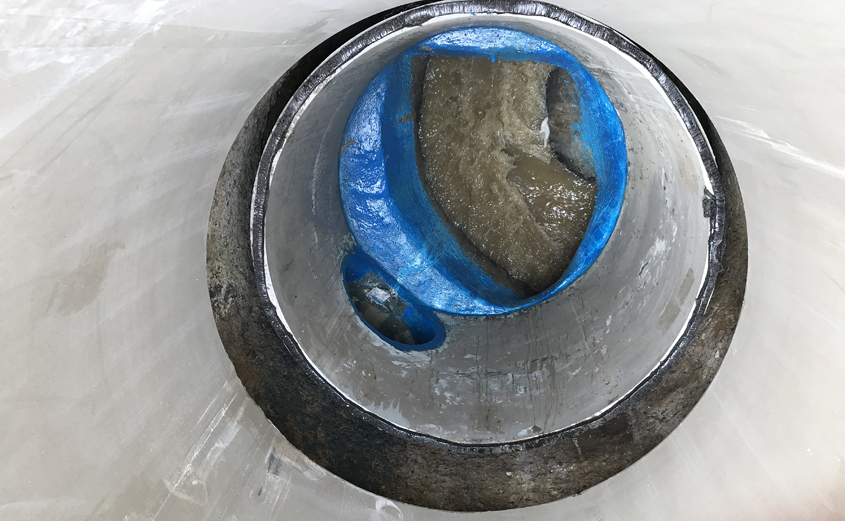
A look at the newly repaired manhole. Photo: Vallecitos Water District

A look at the newly repaired manhole. Photo: Vallecitos Water District

The District kept all construction activities within its existing easement to avoid any impacts to existing riparian vegetation. Crews constructed a temporary bridge over an existing stream obstructing access to the manhole. The bridge installation was designed to be temporary, and not affect the existing stream with footings or other supports. Constructing the bridge for access turned out to be the most complex part of the repair project.

District crews working with a contractor team took advantage of the lower sewage flow during the early morning hours, starting work at 3 a.m. to get as low into the waterline as possible. Repairs like this take advantage of the low flows to keep critically important sewer systems in operation.

Instead of replacing the manhole, the District used a polymer concrete replacement product to build a new manhole within the old manhole. As a result, no excavation was needed. Unlike regular concrete, the new material is corrosion-proof and should provide District customers in San Marcos with many years of reliable service while protecting the environment.

Olivenhain Municipal Water District Logo landscape design workshops

Fitch Reaffirms OMWD’s “AAA” Bond Rating

Encinitas, Calif. — At Olivenhain Municipal Water District’s June 17 board meeting, OMWD staff notified its Board of Directors that Fitch Ratings, a global rating agency that offers independent credit opinions, has reaffirmed the district’s “AAA” bond rating with a stable outlook. AAA is the highest possible rating assigned by Fitch, and OMWD is one of only a handful of Southern California water agencies that have achieved this rating.

Regional Conveyance Study-Colorado River Aqueduct-RCS-primary-June 2020

Draft Study Highlights Region’s Water Conveyance Options

A draft report released today by the San Diego County Water Authority shows that building a new conveyance system to transport regional water supplies from the Colorado River Quantification Settlement Agreement is cost-competitive with other long-term options for meeting the region’s water needs.

The draft Phase A report is under review by water officials across the region. The Water Authority’s Board of Directors is expected to decide whether to move to Phase B at its July 23 meeting.

“By releasing this draft report – along with an independent review of key financial assumptions – we are trying to spark a thoughtful dialogue about our region’s water future,” said Dan Denham, deputy general manager for the Water Authority. “Given the long lead time for major water infrastructure projects, it’s important that San Diego County wrestle with these complex questions today so we can control our own destiny tomorrow.”

The Phase A report is the result of technical and cost analysis by Black & Veatch Corp. and the economic analysis by Water Authority staff. The engineering firm conducted similar studies for the Water Authority dating back to 1996, assessing “single use” water-delivery projects in those studies. The current Phase A analysis looks at conveyance projects with multiple partnership possibilities and potential benefits for the environment, water agencies and others.

Two viable alternatives emerge

Three potential pipeline routes were studied in Phase A, and the draft report says two alternatives (3A and 5A) are cost-competitive with other options, such as relying more on Metropolitan Water District of Southern California or developing additional local supplies.

Phase A takes a conservative approach to cost protections, by not factoring in potential partnerships or other sources of funds. However, partnerships and other agreements could significantly reduce the cost and enhance the value of a regional conveyance system. Phase B would include more detailed analysis of potential partnerships and funding opportunities and more details about projected costs from MWD.

“A decision about the Regional Conveyance System cannot be made in the abstract,” said Kelly Rodgers, director of the Water Authority’s Colorado River Program. “It must be made based on a comparison of the available alternatives, and we look forward to additional analysis and perspectives from our member agencies in the weeks ahead.”

The Water Authority currently pays MWD to transport QSA water through the Colorado River Aqueduct to San Diego. The regional conveyance system would be designed to convey the QSA water, which in 2021 will reach its full amount of 280,000 acre-feet of water annually. The current Water Transfer Agreement between the Imperial Irrigation District and the Water Authority continues to 2047. Both agencies can agree to extend the transfer another 30 years to 2077.

Conveyance routes would connect to All-American Canal

Each of the potential conveyance routes would connect to the tail end of the All-American Canal where it meets the Westside Main Canal in the southwest corner of Imperial Valley.

Two of the routes would follow a southern corridor between the Imperial Valley and San Diego, with one route over the mountains paralleling the U.S./Mexico border and the other tunneling through the mountains. Both routes would end at the San Vicente Reservoir in Lakeside.

The third and northernmost route would follow the Westside Main Canal toward the Salton Sea, then flow past Borrego Springs, and through the mountains. It would eventually connect to the Water Authority’s Twin Oaks Valley Water Treatment Plant in San Marcos.

Draft report findings

  • The region will continue to need QSA water through 2112.
  • All three RCS alternatives are viable from a technical and engineering perspective.
  • Alternatives 3A and 5A are economically competitive and provide long-term reliability and low-cost water to the region.
  • Alternative 5C is not economically competitive with Alternatives 3A and 5A and will not be recommended for further study.
  • Alternatives 3A and 5A could be integrated without major changes to current Water Authority operations.
  • Potential multi-agency, multi-use partnerships and other agreements could significantly reduce the cost and enhance the value of each RCS alternative and provide regional benefits to San Diego, California and the Southwest.

To read the report, go to https://www.sdcwa.org/colorado-river-supplies-management.

The San Vicente Reservoir boat dock will welcome visitors again starting June 13. Photo: City of San Diego reservoirs begin reopening

Reservoirs Begin Reopening to Recreational Use Countywide

City of San Diego lakes and reservoirs previously closed in response to the coronavirus pandemic are now in the process of reopening for public recreation.

“A lot of San Diegans have a passion for fishing and boating, and we’ve been able to partner with the County [of San Diego] to reopen all of our lakes and reservoirs to the public,” said San Diego Mayor Kevin Faulconer.

El Capitan Reservoir and Upper Otay Reservoir reopened on June 6. San Vicente Reservoir will open to the public June 13.

Three reservoirs will re-open in July: Lake Hodges on July 1, Sutherland on July 3, and Barrett on July 8.

Miramar, Murray, and Lower Otay Reservoirs have opened in mid-May.

Standup paddleboarding will return to Lake Hodges on Saturday, July 1. Photo: City of San Diego reservoirs begin reopening

Standup paddleboarding is available at Lake Hodges on Saturday, July 1. Photo: City of San Diego

New safety and cleaning protocols initiated with the re-openings in May will remain in place at all reservoirs. The reservoirs will be open during regular business hours for walking, jogging, cycling, fishing, and boating. Normal fishing and boating fees will apply.

“As we have seen from the thousands of calls, emails, and letters to City Hall, fishing is more than a hobby, it’s a passion,” said San Diego City Councilmember Scott Sherman. “Our lakes and reservoirs are too important of a recreational asset to keep closed and I am thankful they will be opened soon.”

For more information, go to https://www.sandiego.gov/coronavirus

Lake Jennings reopens for recreation and fishing June 13

TCatfish are being restocked this week in Lakes 3 and 6 at Santee Lakes for happy fishermen. Photo: Courtesy Santee Lakes/Padre MWD

Catfish are being restocked this week in Lakes 3 and 6 at Santee Lakes for happy fishermen. Photo: Courtesy Santee Lakes/Padre Dam MWD

Lake Jennings in Lakeside, operated by the Helix Water District, will also reopen for recreation and day-use on Saturday, June 13. Hours are limited to weekends from 6 a.m. to 3 p.m. Fishing and day-use visitors must wear masks and adhere to social distancing. The Bait and Tackle Shop will be open with restrictions. Shore fishing and private boat launching are available, but no boat rentals, night fishing, or fish stocking at this time.

In addition, Lake Jennings recently reopened for camping on June 5 with restrictions in place limiting use to every other campsite, and only by members of the same household. See the complete list of restrictions at the Lake Jennings website.

“We are thrilled to be able to reopen in compliance with the County regulations,” said Kira Haley, Lake Jennings recreation manager. “We really appreciate your understanding in this difficult time while we continue to work hard to keep our community safe.”

The public will be asked to observe COVID-19 preventative measures, including mandates requiring face coverings and physical distancing.

Santee Lakes, operated by the Padre Dam Municipal Water District, expanded recreational use including fishing with some restrictions on May 16. All activities with physical distancing are allowed including jogging, bike riding, roller-skating. A facial covering is not required during physical activities but must be in your possession. Physical distancing and possession of a facial covering are required while fishing. The lake’s campsites have remained open throughout the pandemic, but campers must practice social and physical distancing while on site.

County of San Diego to help cover costs

The cost of reopening the City of San Diego’s additional reservoirs is approximately $1 million. Funding identified through a tentative cost-sharing agreement with the County of San Diego will be limited to covering enhanced staffing costs for ensuring public health is maintained in response to the COVID-19 pandemic. Both the City Council and San Diego County Board of Supervisors will need to approve the agreement.

Sweetwater Authority Expands Contract Opportunities for Local Businesses, Vendors

Doing business with Sweetwater Authority is easier than ever for local companies, thanks to revisions in the water agency’s procurement policy recently approved by its Governing Board. The revised policy created a preferential purchasing program for local businesses and directed agency staff to engage the local vendor community through a newly created vendor webpage and online form where interested businesses can submit their information to be included in the Authority’s vendor database.

Pre-construction activities are currently underway as part of Phase 1 of the Pure Water San Diego Program. Photo: City of San Diego

Pure Water San Diego Projects Underway After Receiving Milestone Permit

Pre-construction activities at the North City Water Reclamation Plant and the future Pure Water Facility are underway as part of Phase 1 of the Pure Water San Diego program. More than 80,000 cubic yards of soil have been moved to date during initial site work, the equivalent of approximately 25 Olympic sized swimming pools.

Last month, the San Diego Regional Water Quality Control Board adopted an order granting a National Pollutant Discharge Elimination System, or NPDES permit, to the City of San Diego to add purified water to the Miramar Reservoir for Phase 1 of  Pure Water San Diego. The approval is a major milestone for the program.

NPDES permits contain discharge limits, monitoring and reporting requirements, and other provisions to ensure water quality and public health. The NPDES permit issued to the City is the first for a reservoir augmentation project in the state of California.

By implementing Phase 1, the City will be able to produce and store 30 million gallons per day of local water supplies and decrease its reliance on imported water.

Pure Water San Diego Phase 1 includes several projects

More than 80,000 cubic yards of soil have been moved to date during initial site work on the Pure Water San Diego project, which is equivalent of approximately 25 Olympic sized swimming pools. Photo: City of San Diego

More than 80,000 cubic yards of soil have been moved to date during initial site work on the Pure Water San Diego project, which is the equivalent of approximately 25 Olympic sized swimming pools. Photo: City of San Diego

Phase 1 includes a series of pipelines and facilities to convey purified water to Miramar Reservoir. Adding the purified water to Miramar Reservoir will increase the reservoir’s beneficial use and optimize protection of water quality. The purified water will blend with the City’s imported sources and be treated again at the Miramar Water Treatment Plant and distributed to the public.

The purified water distribution area will include the portion of the City of San Diego that receives potable water from the Miramar Water Treatment Plant in addition to the City of Del Mar.

Phase 1 of Pure Water San Diego includes several projects: the Morena Pump Station and Pipelines, the North City Water Reclamation Plant Expansion, the North City Pure Water Facility, and the North City Pure Water Pump Station and Pipeline.

SanVicente-sun-PRIMARY-June-2020-WNN

Stimulus Funds Would Create Regional Jobs, Enhance Water Reliability

Water suppliers in San Diego County say future COVID-19 federal and state stimulus packages should include funding for shovel-ready projects that would create jobs in the region.

In a letter to members of California’s congressional delegation, a group of 13 agencies, including the San Diego County Water Authority and 10 of its member agencies, and the cities of Del Mar, Oceanside and Poway, say the region’s water utilities have dozens of infrastructure projects that could be launched with an infusion of state and federal stimulus funding.

“As the water suppliers throughout San Diego County, across the state, and around the nation are confronting the unprecedented impacts of the COVID-19 pandemic, there are several actions that the federal government could take to provide some much-needed relief,” according to the letter dated May 31.

From replacing valves in pipelines to building water purification facilities, to developing a major pumped hydropower energy storage project for the region, the funding boost would advance efforts to enhance water reliability and increase jobs across San Diego County.

Financial stress, economic fallout from pandemic

The letter requests the following action items be supported as Congress discusses additional legislative relief packages:

  • Allow for use of federal funds to backfill for lost revenue: The largest issues that water suppliers are currently facing are the immediate budgetary impacts and the ongoing effects of lost revenues. Allowing water systems to use federal funds to fill the gap being created by lost revenue would provide significant assistance to prevent layoffs or furloughs, minimize project deferrals or delays, and help avoid other associated impacts that may have a lingering negative effect on regional economies. An analysis produced last month by the Association of American Metropolitan Water Agencies and the American Water Works Association estimated that drinking water utilities throughout the county are facing an annualized revenue loss of approximately $13.9 billion as a result of the pandemic – a sum equal to nearly 17% of the sector’s annual revenue.  We strongly encourage Congress to set aside robust funding for water utilities to help offset these fiscal losses. Otherwise, ratepayers will face escalating costs and reduced economic activity related to delayed capital investments, which will only further hinder the nation’s, state’s, and region’s economic recovery. 
  • Extend the Emergency Payroll Tax Credit to Public Entities: The “Families First Coronavirus Response Act” required public employers to provide paid sick and family leave, yet the law excludes these same employers from receiving payroll tax credits made available to private employers. Extending this tax credit to local governments would help cover the costs associated with these programs.
  • Restore advance refunding for tax-exempt bonds: This action would allow flexibility for local government entities to access billions of dollars to reallocate and spend on other projects and priorities, which would be much needed during this time.
  • Aid to low-income ratepayers: COVID-19 response legislation should also include a separate component to ensure that low-income customers are able to afford to keep up with their utility bills throughout the pandemic. Without federal assistance targeted at these customers, some low-income households will fall even further behind on their bills, making it that much more difficult for them to catch up with their payments once the crisis ends.

San Vicente Energy Storage Facility

Pumped Energy Storage-WNN-June 2020-graphic

Pumped energy storage facilities are part of an integrated and sustainable energy system that includes the production, storage and distribution of clean energy.

Regional energy project needs regulatory path

One of those shovel-ready projects does not require any state investment or financial assistance to generate economic stimulus. But it needs a regulatory path forward, which could come in the form of state legislation or decisions by the California Public Utilities Commission.

The Water Authority and the City of San Diego have been working on the San Vicente Energy Storage Facility project for several years. All equity and debt financing would be provided by a private investor.

Generating renewable energy and jobs

The project would create a small upper reservoir above the existing San Vicente Reservoir, along with a tunnel system and an underground powerhouse to connect the two water bodies. The powerhouse would contain up to four reversible pump turbines.

During off-peak periods – when power is inexpensive and renewable supplies from wind and solar facilities exceed demand – turbines would pump water to the upper reservoir where it would act as a battery of stored energy. During peak energy use, the system would create clean energy as water from the upper reservoir flows downhill through the turbines.

“Our developer estimates the project could generate more than 50,000 hours of preconstruction work, followed by more than 1,000 jobs during a four-year construction period,” said Gary Bousquet, with the San Diego County Water Authority. “When it’s completed, the facility could store huge volumes of renewable energy and then use that energy when renewables are not available, such as nighttime.”

Bousquet said the project, when completed, would also generate additional revenue to offset water agency costs and help stabilize water rates.

Olivenhain Municipal Water District Logo landscape design workshops

OMWD Announces Virtual Neighborhood Meeting on June 11 about Pipeline Project along Encinitas Boulevard and Manchester Avenue

Encinitas, Calif. — The public is invited to attend a virtual public meeting via Zoom on June 11 to learn about the potable water pipeline project that Olivenhain Municipal Water District will begin in fall 2020 at the intersection of Rancho Santa Fe Road and Encinitas Blvd.