You are now in Agency News News category.

New Reservoir to Protect Local Drinking Water Deliveries in North County

January 28, 2021 – A major construction project to improve drinking water supply reliability in North County will start in February after the San Diego County Water Authority’s Board of Directors today approved an $11.4 million contract for the work to Pacific Hydrotech Corporation of Perris, Calif.

Vista Irrigation District Logo

Water District to Sponsor Scholarship Contest

Vista, Calif. — Vista Irrigation District invites local high school seniors to compete for scholarships from the district. Up to six scholarships may be awarded; the minimum scholarship award amount is $1,000 and the maximum scholarship award amount is $3,000. The purpose of the scholarship program is to encourage students to learn more about water related issues impacting their community.

Major Rehabilitation of First Aqueduct Complete

January 21, 2021 – The San Diego County Water Authority recently completed a major rehabilitation project on the historic First Aqueduct in North San Diego County. The project renovated and replaced dozens of structures on two large-diameter pipelines, including the historic Pipeline 1. Pipeline 1 delivered the first imported water to the San Diego region in 1947 and remains a vital part of the regional water delivery system. The construction contract for the project was worth approximately $30 million.

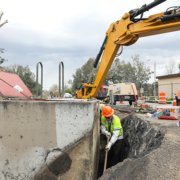
Crews work on First Aqueduct Rehabilitation.

Major Rehabilitation of First Aqueduct Complete

The San Diego County Water Authority recently completed a major rehabilitation project on the historic First Aqueduct in North San Diego County. The project renovated and replaced dozens of structures on two large-diameter pipelines, including the historic Pipeline 1. Pipeline 1 delivered the first imported water to the San Diego region in 1947 and remains a vital part of the regional water delivery system. The construction contract for the project was worth approximately $30 million.

Coordination with member agencies key to success

Over the past two years, four coordinated shutdowns in collaboration with member agencies and communities in North San Diego County ensured minimum impact to nearby neighborhoods and water users.

“The First Aqueduct delivered imported water to our region for the first time more than 70 years ago, and it remains critical to water supply reliability for our region to this day,” said Gary Croucher, chair of the Water Authority Board of Directors. “Through coordination throughout the Water Authority and collaboration with our member agencies, we completed this extraordinarily complex project to ensure these pipelines operate for generations to come.”

The project was completed on January 12 and will be presented to the Water Authority’s Board of Directors at their March meeting.

Proactive asset management program maintains reliable water supplies

The timely rehabilitation of the First Aqueduct is part of the Water Authority’s proactive asset management program. A key element of providing safe and reliable water supplies is continually assessing the agency’s 310 miles of large-diameter pipeline and making the upgrades necessary to continue serving the region. That work is funded through water bills paid by residents and businesses across the county to sustain the region’s $245 billion economy and quality of life.

The First Aqueduct project began in early 2019 and was one of the most complicated pipeline retrofits in the Water Authority’s history. The upgrades included replacing 14,500 linear feet of lining on the steel pipe sections of Pipeline 1, removing 16 associated structures and retrofitting 46 structures. All this work was accomplished while ensuring regional water service remained safe and reliable. In addition, redundant connections to six flow control facilities were added between the two pipelines to improve the aqueduct’s operational flexibility.

Collaboration between departments increased efficiency

The Water Authority’s Engineering Department provided construction management and inspection for the retrofit. Before the pipeline was returned to service, secondary tie-in connections to flow control facilities were added and crews removed bulkheads that were used to isolate pipeline sections during the rehabilitation work. Once the work was completed, staff inspected all work areas in the pipeline to ensure they were clear of construction debris.

After the bulkheads were removed, the Operations and Maintenance team disinfected the highly impacted work areas and then refilled the aqueduct to prepare for a second disinfection of both pipelines with chlorine. Water samples at locations throughout the aqueduct were collected and analyzed to ensure the system was safe to return to service. Once all the samples passed analysis, all flow control facilities were placed back in service and the aqueduct was returned to normal operations.

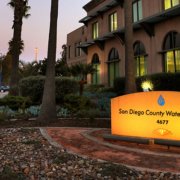
San Diego County Water Authority-Building at night-MWD

Water Authority Prevails in Rate Litigation

The San Francisco Superior Court has ruled the San Diego County Water Authority is the prevailing party in the agency’s first two lawsuits to be heard challenging rates and charges set by the Los Angeles-based Metropolitan Water District of Southern California. The order entitles the Water Authority to recover its attorneys’ fees and costs in those cases, in addition to a $44 million damage and interest award made earlier.

“San Diego prevailed, and the judgment not only benefits its own ratepayers but all of the nearly 19 million people in Metropolitan’s service area because enforcing cost-of-service principles serves the interests of all ratepayers,” said Superior Court Judge Anne-Christine Massullo in her Jan. 13 order, which can be appealed. The exact amount of recoverable fees will be decided later.

In light of the order, Water Authority Board Chair Gary Croucher reiterated the Water Authority Board’s longstanding desire to avoid litigation and find common ground with other MWD member agencies. “This ruling only enhances our determination to find an equitable resolution that will not only conclude the few issues that remain pending in court, but also help avoid future litigation as new rates and charges are being considered for 2023 and subsequent years,” he said.

Protecting water ratepayers

The Water Authority filed lawsuits between 2010 and 2018 challenging water rates and charges as they were set and imposed by MWD on San Diego County agencies and their ratepayers. After a favorable court ruling invalidating MWD’s Water Stewardship Rate on the Exchange Agreement, the Water Authority worked with MWD to try to resolve the remaining issues. The MWD Board promised to fund almost $500 million in local water supply projects in San Diego County and the Water Authority agreed to dismiss claims against MWD’s Water Stewardship Rate on supply, which is used to fund local projects under the MWD program.

“It is deeply gratifying that the court not only validated our claims but acknowledged the importance of protecting ratepayers by water agencies following the law,” Croucher said. “This week’s order makes it clear once and for all that our desire to protect San Diego ratepayers was never intended to harm MWD, its other member agencies or the ratepayers they serve. Rather, the litigation was necessary to address serious flaws in MWD’s rates that will, as the court said, ultimately benefit not only San Diego County ratepayers, but all Southern Californians.”

Rate litigation

The Water Authority’s first two rate cases – covering 2011 to 2014 rates – resulted in the court ordering an increase in the Water Authority’s preferential right to MWD water by as much as 100,000 acre-feet a year, equivalent to about twice the annual production of the $1 billion Carlsbad Desalination Project. MWD has already complied with this ruling and adjusted its records accordingly.

The court also determined that MWD must pay the Water Authority damages for illegal charges imposed on delivery of the Water Authority’s water under the Exchange Agreement. A Superior Court judge in August 2020 awarded the Water Authority $44,373,872.29 covering rates paid by San Diego County ratepayers during 2011-2014.

Water Stewardship Rate charges

San Diego County ratepayers have also avoided paying more than $45 million from 2018-2020 after MWD suspended its invalid Water Stewardship Rate charges on the Exchange Agreement. The improper charges would have cost local residents more than $500 million over the term of the Exchange Agreement. Currently, MWD owns the only pipeline that can deliver the Water Authority’s independent supply of Colorado River water to San Diego County and it sets the unregulated water rates which govern and control the delivery of water to San Diego County.

In addition, the court ruled that MWD had illegally barred the Water Authority from receiving money from MWD’s local water supply program, even though the Water Authority was still being forced to pay for it. MWD lifted the ban in response to the court’s order, and ultimately promised the nearly $500 million for water supply projects in San Diego County including the City of San Diego’s Pure Water North City Project Phase 1, East County Advanced Water Purification Project, Escondido Membrane Filtration Reverse Osmosis Facility and Fallbrook Groundwater Desalter Project.

Olivenhain Municipal Water District Logo

Olivenhain Municipal Water District General Manager Kimberly Thorner Joins County Water Authority Board

Encinitas, Calif. — Olivenhain Municipal Water District General Manager Kimberly Thorner was seated this afternoon at her first board meeting as OMWD’s representative on the San Diego County Water Authority board of directors. OMWD’s board unanimously appointed Ms. Thorner to the position at its November 18, 2020 meeting and she was sworn in on January 6, 2021.

“Ms. Thorner will continue to ensure that the interests of ratepayers in OMWD’s 48-square mile service area are heard at the regional level,” said OMWD Board President Larry Watt.

Olivenhain Municipal Water District Logo

Larry Watt Named President of OMWD’s Board of Directors for Third Time

Encinitas, Calif. — Today, board director Larry Watt presided over Olivenhain Municipal Water District’s first meeting of 2021 as president.

OMWD’s board unanimously elected to take new seats and selected Mr. Watt for a third term as president. Initially appointed to the board in 2011, Mr. Watt represents Division 2 of OMWD’s service area, which includes portions of the cities of Carlsbad and Encinitas. He previously served as president from 2013 through 2014 and from 2017 through 2018.

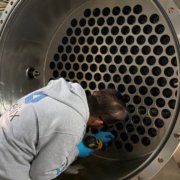
A Helix staff member installs parts in the ozone generator. Photo: Helix Water District

Helix Water District Reduces Plant Upgrade Costs

When the Helix Water District received contractor estimates as high as $3.5 million to upgrade the R.M. Levy Water Treatment Plant’s ozone power supply units and generators, it decided to perform the upgrade in-house.

With Suez Water Technologies provided engineering and equipment, Helix employees incorporated new technology and innovative installation practices. The proof of concept pilot project proved the feasibility of the new approach, and a full retrofit is now planned. The estimated upgrade costs to complete the full project is $1.1 million – an approximately 70% cost savings. The upgrade will extend the life of the power supply units and generators at least 15 years.

Reducing upgrade costs saves ratepayers

“The ozone project is our latest example of cost-effective local government,” said Brian Olney, Helix Water District director of water quality and system operations. “In early 2020, Helix staff also standardized the design, hardware, and software of the motor control centers in the district’s 25 pump stations, and that project also saved our customers money, and created long-term operating, maintenance and purchasing efficiencies.”

Ozone treatment provides safe and reliable water to East County

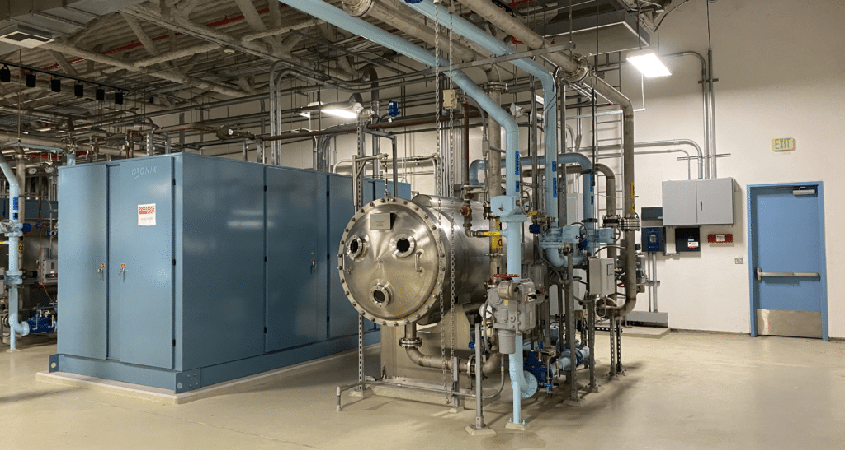
The ozone generator at Helix Water District’s R.M. Levy Water Treatment Plant in Lakeside. Photo: Helix Water District

The ozone generator at Helix Water District’s R.M. Levy Water Treatment Plant in Lakeside. Photo: Helix Water District

The water treatment process at the R.M. Levy Water Treatment plant begins with the removal of dirt and other material suspended in the water. Ozone is then used to inactivate or destroy any organisms in the water. Ozone offers important advantages over chlorine:

  • Ozone destroys or inactivates a wide range of organisms in the water
  • Ozone needs little contact time with the water to be effective
  • Ozone produces fewer potentially harmful disinfection byproducts than other disinfectants
  • Ozone removes most of the smell and taste issues people associate with tap water
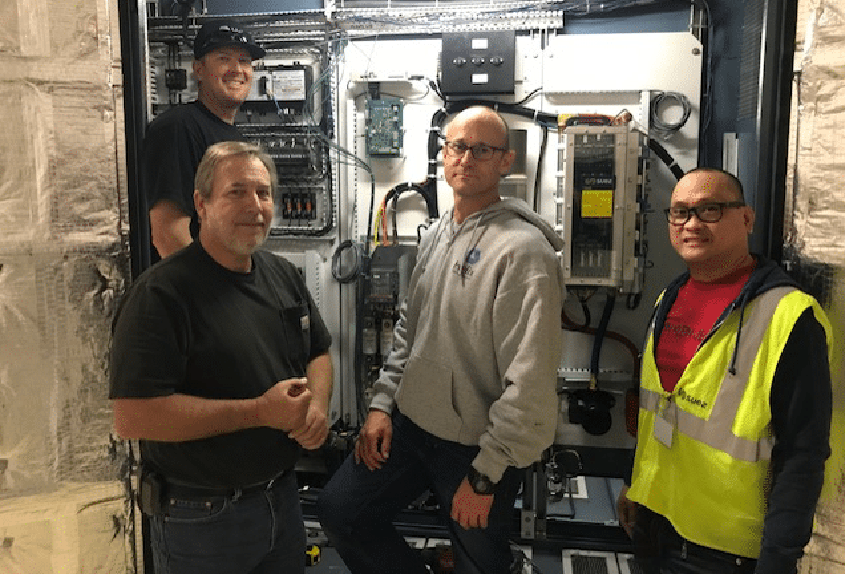
Helix’s ozone project team (pre-pandemic) in front of the rebuilt power supply unit.

Helix Water District’s ozone project team (pre-pandemic) in front of the rebuilt power supply unit. Photo: Helix Water District

Ozone is naturally unstable at normal atmospheric conditions, which is why Helix needs ozone generators to produce it on site. The high voltage generators break down oxygen molecules (O2) and form ozone (O3). The ozone molecules are then diffused in a contact chamber and bubble up through the water to destroy any organisms present.

After ozonation, Helix Water District filters the water and adds a dose of chloramines — chlorine and ammonia — to maintain water quality throughout its 737 miles of water distribution pipelines. The treatment process is managed by a team of highly trained plant operators who conduct 200 water quality tests per day. Chemists and biologists test water samples from both the plant and the distribution system as well.

Controlled Transfer of Water from Sweetwater Authority’s Loveland Reservoir Begins Today

Chula Vista, Calif. – In order to secure additional water sources for our customers, Sweetwater Authority initiated a controlled transfer of water from its two reservoirs on Monday, January 11, 2021.

dry start-snowpack survey-water year-Guzman-primary

Dry Start to California’s Water Year

A dry start to California’s water year is reflected in the season’s first snow survey of the Sierra Nevada snowpack. The statewide snowpack is 52% of average for Dec. 30. On average, the Sierra snowpack supplies about 30% of California’s water needs.

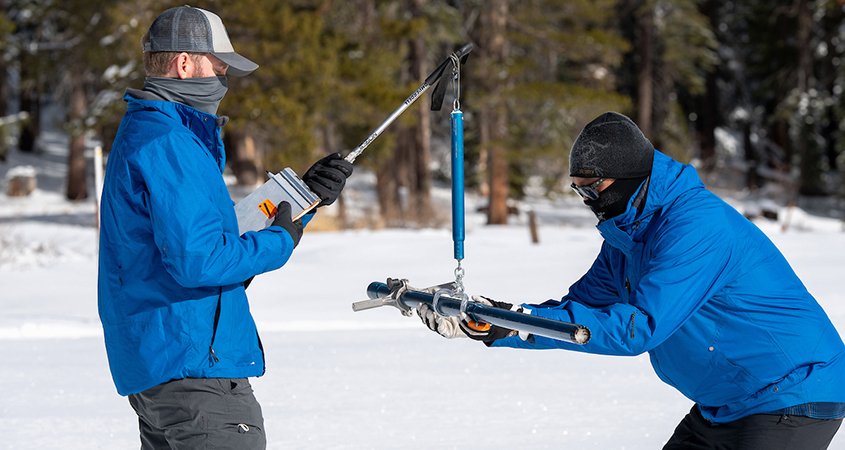
The California Department of Water Resources manual survey at Phillips Station recorded 30.5 inches of snow depth and a snow water equivalent of 10.5 inches, which is 93% of the January 1 average at that location, according to DWR officials. The snow water equivalent,or SWE, measures the amount of water contained in the snowpack and is a key component of DWR’s water supply forecast.

While the Phillips Station measurement was positive, DWR’s electronic readings from 130 stations placed throughout California show the statewide snowpack’s SWE is 5 inches, or 52% of the December 30 average.

“The snow survey results reflect California’s dry start to the water year and provide an important reminder that our state’s variable weather conditions are made more extreme by climate change,” said DWR Director Karla Nemeth. “We still have several months left to bring us up to average, but we should prepare now for extended dry conditions. The Department, along with other state agencies and local water districts, is prepared to support communities should conditions remain dry.”

Water supply diversity meets regional demand

“The first snowpack survey of the water year points to California’s climate variability, which is why a diverse water portfolio is needed to provide a reliable supply,” said Goldy Herbon, San Diego County Water Authority senior water resources specialist. “The Water Authority and its 24 member agencies have successfully diversified water sources, and continue to expand those sources, to ensure our supply meets the needs of the region’s 3.3 million people and its $245 billion economy.”

The supply sources include water from the Claude “Bud” Lewis Carlsbad Desalination Plant, where ten workers volunteered to live on-site in 2020 to keep the water flowing during the coronavirus pandemic.
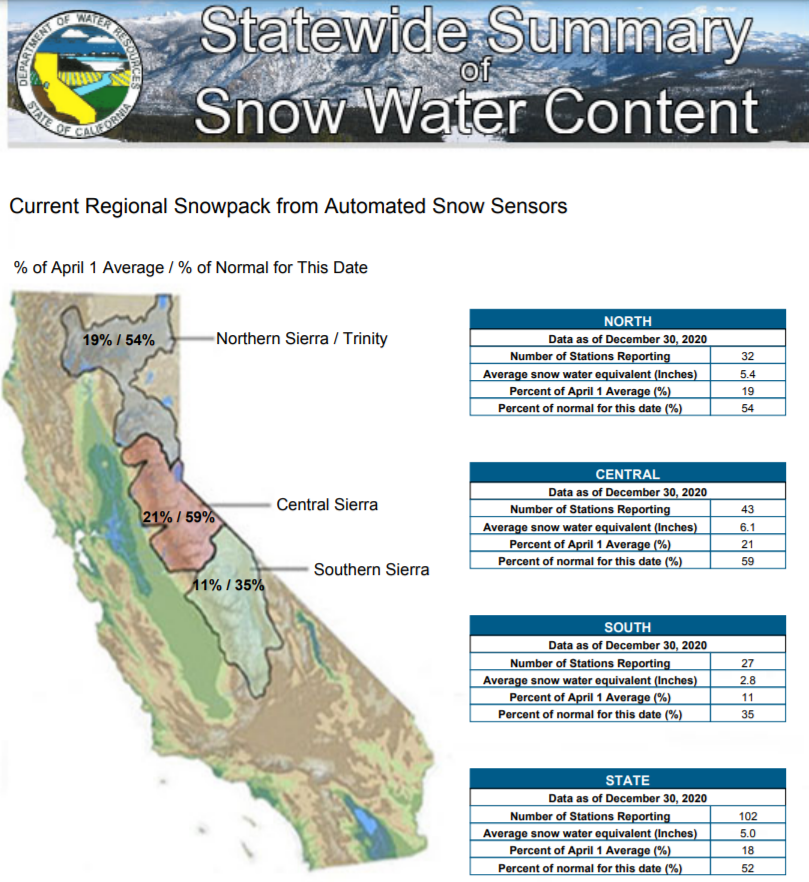
Sierra Nevada Snowpack-Snow Water Content

Climate change brings less snow

When the Sierra Nevada snowpack melts, it feeds into rivers and is stored in reservoirs across California. Reservoirs are tapped as needed during the dry months. However, state officials again said that climate change is affecting California’s snowpack, as more precipitation falls as rain and less as snow. And they urged Californians to make water conservation a “way of life.”

“Today’s survey brought a first glimpse of how the state’s snowpack is shaping up, but there is a lot of winter still ahead,” said Sean de Guzman, chief of DWR’s Snow Surveys and Water Supply Forecasting Section. “While the dry conditions during late summer and fall have led to a below average snowpack, it is still encouraging to have the amount of snow we already have with two of the three typically wettest months still to come.”

DWR conducts five snow surveys at Phillips Station each winter near the first of each month, January through April and, if necessary, May. Guzman said the next survey is scheduled for February 2.
dry start-snow survey-water year

Sean De Guzman (R), chief of the California Department of Water Resources Snow Surveys and Water Supply Forecasting Section, and Jeremy Hill, DWR water resources engineer, conduct the first snow survey of the 2021 season at Phillips Station in the Sierra Nevada. Photo: Kelly M. Grow/DWR