The Helix Water District plays host this week to the Metropolitan Water District of Southern California’s “Being Water Wise Is” traveling art show, now through January 30, at its administration office, located at 7811 University Avenue in La Mesa.
The show displays the original artwork created by talented students from kindergarten through 12th grade from across Southern California, including member agency entrants from San Diego County.
The winning poster from Helix Water District 2025 contest entrant Emma Phillips is featured in the art show. Her poster is among those included in the Metropolitan Water District’s 2026 “Being Water Wise Is” calendar. Emma is an eighth-grade student at Christ Lutheran School.
Winning Ways By Helix Student Artists
The winning entry from Emma Phillips. Photo: Helix Water District
Each year, the Metropolitan Water District of Southern California, one of our wholesale water providers, holds a regional poster contest to increase student awareness about water. This past year, kindergarten through 12th-grade students throughout the Helix Water District competed to have their poster win the district’s poster contest and claim a coveted spot in the Metropolitan Water District’s “Being Water Wise Is” calendar.
Helix Water District winners have been selected for the Metropolitan calendar every year since 2020. The 2025 high school winner, Helix Charter High School ninth-grader Catalina Jones, has won the Helix Water District Contest twice and had her artwork selected for the Metropolitan calendar twice. Her artwork appeared in the 2024 and 2023 calendars.
Other winning students include Charlotte Chatham (2025), Cameryn Kovar (2024), Clare Brandt (2023), Lucas Regimbal (2022), Jose Sabedra and Mina Saeed (2021), and Valeria Ramirez (2020). Phillips now joins them.
Members of the public are welcome to view the art show during business hours at the Helix Water District administration building in La Mesa this week. Photo: Helix Water District
The public is welcome to visit the Helix Water District administration office during business hours to enjoy these inspiring works of art. The district thanks all its past participants for their creativity and commitment to water-wise practices and looks forward to new entries in the 2026 “Being Water Wise Is” Student Poster Art contest.
https://www.waternewsnetwork.com/wp-content/uploads/2026/01/helix-art-show-0092-1080x720.jpg7231080Gayle Falkenthalhttps://www.waternewsnetwork.com/wp-content/uploads/2024/04/WNN-Horizontal-White-Blue2.pngGayle Falkenthal2026-01-27 07:29:252026-01-27 07:29:25Helix Water District Hosts Student Art Show
The San Diego County Water Authority Board of Directors on Thursday unanimously elected Carlsbad City Councilmember Teresa Acosta as the board’s new Secretary. Acosta replaces Joy Lyndes, who stepped down following her recent announcement that she will not seek re-election to her position on the Encinitas City Council this year.
“The San Diego County Water Authority is fortunate to have Director Acosta step up during this critical time in the agency’s history,” said Board Chair Nick Serrano, who represents the City of San Diego. “As an elected official in our North County, she brings a community perspective and a collaborative mindset to the Authority. She also shares my unwavering commitment to ensuring ratepayer affordability, and I look forward to working with her in this new leadership role to bring down costs for all San Diegans while ensuring a safe and reliable water supply.”
Acosta, who has been Carlsbad’s District 4 councilmember since 2020, currently serves as the vice chair of the Water Authority’s Legislation and Public Outreach Committee and is a member of the Administrative and Finance Committee. Additionally, Acosta is the First Vice President of the League of California Cities Board of Directors and and will become its president in September 2026.
“I’m honored by the support of my colleagues as I take over the role of board secretary,” said Director Acosta. “I look to expand on the foundation that Director Lyndes and the rest of the leadership team built as we ensure this agency is doing everything possible for working families across the region.”
Director Lyndes has represented San Dieguito Water District on the Water Authority Board since 2023 and has served as secretary since her unanimous election in October 2024. She plans to remain on the Water Authority Board through the end of the year.
“Director Lyndes has brought grounded, thoughtful, and collaborative leadership to every Board meeting particularly as we have placed significant focus on affordability, reliability, and long-term planning,” Chair Serrano said. “I am sincerely grateful for her leadership here at the Water Authority and her continued service to our region.”
https://www.waternewsnetwork.com/wp-content/uploads/2026/01/screenshot-2026-01-22-151132.png340528Jordan Beanehttps://www.waternewsnetwork.com/wp-content/uploads/2024/04/WNN-Horizontal-White-Blue2.pngJordan Beane2026-01-23 07:48:162026-01-23 07:48:52Teresa Acosta Elected Secretary of Water Authority Board
After two years, the Native Plant Seed Library established by the Vallecitos Water District is flourishing thanks to community contributors known as “Seed Heroes.”
The seed library is located in the Sustainable Demonstration Garden at the district’s headquarters in San Marcos. The district originally partnered with the San Diego Bird Alliance (formerly the Audubon Society) to launch the groundbreaking initiative to safeguard botanical heritage for future generations.
The seed library focuses on San Diego County’s indigenous plants. Native plants benefit local wildlife and typically use less than half the water required by most drought-tolerant plants, such as rosemary or lavender.
Seed Library Helps Remove Barriers to Growing Native Plants
The Vallecitos Seed Library is located at the district’s headquarters in San Marcos. Photo: Vallecitos Water District
Vallecitos Water District public information representative and UCCE Master Gardener Lisa Urabe had wanted a California native plant garden for years for its many benefits, but finding a wide selection of native plants was becoming time-consuming and costly. Her experience helped inspire the Native Plant Seed Library initiative at Vallecitos.
“The original goal for the native seed library was to remove some of the barriers to growing native plants, mainly the difficulty in obtaining California native plants and the cost,” explained Urabe.
“By offering our customers and residents a zero-cost, fun, and easy way to include California native plants in their gardens, we’ve created a way to reduce landscape water usage while creating habitat that supports birds, pollinators, and other local wildlife.”
Learn more about the Seed Library
To date, the seed library has distributed 2,000 individual seed envelopes. Urabe worked with the U.S. Environmental Protection Agency (EPA) to help it write best management practices on running native seed library programs.
Urabe retired at the end of 2025, leaving the seed library in good hands with help from the community seed heroes and Vallecitos’ Conservation team.
“From the popularity of the seed library, we know that the seeds are being planted. It’s the greatest retirement gift to know that this little seed library has created wildlife habitat for generations to come!” said Urabe.
Recognition for Contributors as “Seed Heroes”
Urabe said recognizing the dedicated contributors as “Seed Heroes” was the district’s way of highlighting community members who have embraced and supported this project through their seed donations and native plant expertise.
Donn and Terry Reese with examples of the seeds they have contributed to the Vallecitos Water District Seed Library. Photo: Vallecitos Water District
Donn and Terry Reese contributed seeds from native Coast Live Oaks, along with exotic fruits from their home garden, including cherimoya and sapote, and a variety of vegetable seeds. Donn Reese is a UC Master Gardener. Non-native seeds are also included in the seed library.
Williams was brand new to gardening when he undertook his award-winning makeover project. Several years later, he is hooked. He enjoys the activity in his garden every day. “It’s kind of a place for all the insects and birds. It’s neat to watch all the wildlife. I get a kick out of it.”
Dean Williams won the 2023 Vallecitos Water District Landscape Makeover contest, which jump started his interest in gardening. Photo: Vallecitos Water District
Williams used the PlantNet app to identify the plants. All are drought tolerant and attract native wildlife and pollinators. Williams has planted Viguera, Red Bush Monkeyflower, Desert Globemallow, Elegant Clarkia, and Succulent Lupine with seeds from the library.
In return, Williams often restocks the library with seeds harvested from the plants he’s grown. “It’s a nice way to give back and keep the library stocked with various kinds of seeds.” Williams is creating an edible garden this year and plans to contribute cilantro seeds to the library.
Milkweed is one of the many types of seeds contributed from the personal garden of Dean WIlliams. Photo: Courtesy Dean Williams
Williams encourages beginners to seek out resources from their water district and other organizations for help. “If I could do this, anybody could do it. I couldn’t grow anything before!”
Seed Library Preserves Local Biodiversity
Seeds currently available at the library include California poppy, black sage, and narrow-leaf milkweed, a species that supports monarch butterfly populations. By promoting the cultivation of indigenous species, the library seeks not only to preserve biodiversity but also to support the health and resilience of local ecosystems.
California poppy seeds are available in the Seed Library, contributed by Dean Williams. Photo: Courtesy Dean Williams
The Native Plant Seed Library Program, launched three years ago by volunteers from the San Diego Bird Alliance, addresses the critical lack of native habitat in San Diego County.
With more than 60 Native Seed Libraries established and supported by staff and organizations such as the California Native Plant Society (San Diego Chapter), the program educates the community about the importance of native plants and provides accessible seeds.
An interactive map helps locate the nearest library. Users are encouraged to return clean, mature seeds to sustain both plant life and the free libraries. For more details, visit the map or email nativeseedlibrary@sandiegobirdalliance.org.
The seed box is available during normal business hours. The address is 201 Vallecitos De Oro, San Marcos. Learn more about the Native Plant Seed Library at its webpage.
https://www.waternewsnetwork.com/wp-content/uploads/2026/01/vwd-seed-library-2024-6979-1080x720.jpg7201080Gayle Falkenthalhttps://www.waternewsnetwork.com/wp-content/uploads/2024/04/WNN-Horizontal-White-Blue2.pngGayle Falkenthal2026-01-21 08:45:132026-01-23 11:52:47Seed Heroes Helps Vallecitos Water District Seed Library Flourish
The successful collaboration between the San Diego County Water Authority and the Whittier School in Clairemont to update the school’s landscaping delivered unexpected benefits to the neighborhood.
Senior Water Resources Specialist Debby Dunn says the Whittier School project was an ideal candidate for the Water Authority’s grant-funded Direct Installation Landscape Program. It met the pilot program’s goals, including its visible location along busy Clairemont Drive in a disadvantaged neighborhood.
Seven commercial projects were funded through the program.
Collaboration Delivers Bonus Results
Whittier School principal Kerie Sanders and Associate Principal Christopher Barrera are pleased with the results of the landscaping project. Photo: Courtesy Whittier School
Whittier School is a specialized K-12 school for students with high behavioral needs not being met at their neighborhood schools. “We are the school in the entire district that receives those students to work on some of those adaptive or transitional skills here, so that they can transition back to a comprehensive education site and move toward independence,” explained Associate Principal Christopher Barrera.
Andrea Eaton, Maintenance Planning Senior Coordinator for the San Diego Unified School District, and Kerie Sanders, Whittier School principal, said the school landscaping had deteriorated and was starting to affect school operations.
Whittier School landscaping before its makeover. Photo: Courtesy Whittier School
Sanders said staff conduct tours for parents who want to place their children at Whittier School. Some were discouraged by the school’s run-down appearance. “They looked around and thought ‘wow, people don’t care,’ and it’s not true,” said Sanders.
The impression of the undesirable landscape extended into the neighborhood. “The community thought Whittier was an abandoned school,” said Sanders. It led to neglect, including littering, forcing school employees to clean it all up.
Design Inclusivity Featured in Whittier School Landscape Project
Contractor EcoTech Services worked with Whittier School leaders to minimize disruption for students. Photo: Courtesy Whittier School
District and school representatives worked with the Water Authority and their contractor, EcoTech Services, to plan and install the new landscaping in advance of the school district’s planned modernization effort at Whittier School. Barrera praised the collaborative effort to make the project a reality.
The unique needs of the Whittier School’s students required special accommodations by contractor EcoTech during installation. The EcoTech field technicians expressed how they had a really big love for this project,” said Sanders.
“It was pretty cool to see the inclusivity in the design side. The construction team was mindful about the equipment they were using at certain times where the students are passing through that space,” said Sanders of Eco-Tech’s awareness of student sensitivities. “You don’t see that type of consideration every day.”
New Landscaping Improves Learning Environment
New trees and pollinator-friendly plants create a fresh environment for wildlife, for school staff and students, and for the Clairemont neighborhood. Photo: Courtesy Whittier School
The finished project includes a walking path designed specifically for the students. New trees and plants beautified the learning environment for students, the workplace for staff, and the school’s reputation in the neighborhood. Sanders said neighbors are treating the property with a new, respectful attitude.
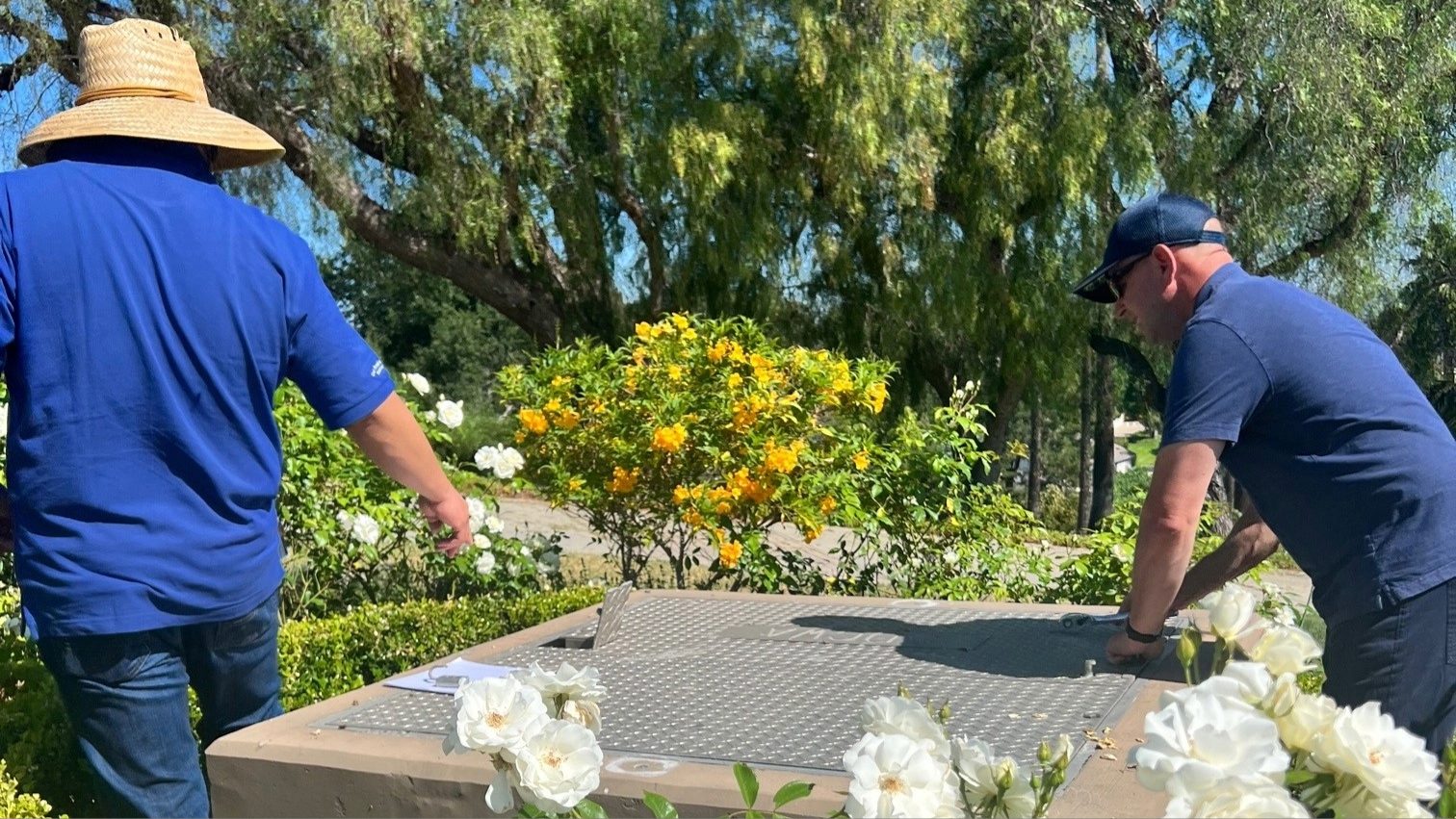
To use water more efficiently, the irrigation system was updated with more efficient sprinkler heads, and a previously undetected water leak was discovered and repaired.
Sanders said Whittier School now looks loved and cared for as a true reflection of its mission. “How our school presents itself is how we care about our kids. Now, when parents pull up into the driveway to pick up their kids or come for events or meetings, our school aligns with how we care about the kids in our school. It seems like an outside manifestation of the work that’s happening on the inside, too.
“I am very, very grateful to the team that gifted us all of this, and we’re working every day inside to make it right and live up to the beauty that’s on the outside,” said Sanders.
Assembly Bill 1572 and Nonfunctional Turf
In an effort to conserve water and promote sustainable landscaping, California has enacted Assembly Bill 1572 (AB 1572), which prohibits the use of potable water to irrigate nonfunctional turf on specific property types, including commercial, industrial, and institutional properties, and common areas of homeowners’ associations.
Signed into law in 2023, it begins to take effect for different property categories from 2027 through 2031.
A variety of helpful programs and rebates are still available to help other commercial, industrial, and institutional landscapes meet the State of California’s new non-functional turf regulations (AB1572). Photo: Courtesy Whittier School
Nonfunctional turf is grass that serves only an aesthetic purpose and is not used for recreation. Examples include grass in center medians and parking lots, decorative landscaping, and other uses for aesthetic purposes.
Functional turf is grass that serves a useful purpose beyond just looking nice. It is turf actively used for recreation, sports, or community events where people (or sometimes animals) walk, play, or gather.
Dunn said a variety of helpful programs and rebates are still available to help other commercial, industrial, and institutional landscapes meet the State of California’s new non-functional turf regulations (AB1572), including:
For more information about the new regulations and tools and programs to help affected businesses and organizations comply, contact Debby Dunn at or 858-522-6745.
https://www.waternewsnetwork.com/wp-content/uploads/2026/01/whittier-school-after-0988-1080x720.jpg7241080Gayle Falkenthalhttps://www.waternewsnetwork.com/wp-content/uploads/2024/04/WNN-Horizontal-White-Blue2.pngGayle Falkenthal2026-01-15 07:48:192026-01-15 07:48:19Whittier School Landscape Project Transforms Neighborhood
For the 30th consecutive year, the San Diego County Water Authority earned the Distinguished Budget Presentation Award from the Government Finance Officers Association (GFOA) — along with a special commendation for its Capital Improvement Program (CIP) budget.
GFOA’s award is the highest recognition in governmental budgeting, while the Water Authority’s CIP is critical to maintaining the region’s liquid lifelines.
“This recognition proves that the attention to detail, commitment to transparency and focus on affordability the Water Authority puts into its budget process make the agency a national leader in public finance,” said Director of Finance Lisa Marie Harris. “Kudos to our staff and our Board for all the effort that to ensure we provide reliable water at the lowest possible cost.”
Over the years, GFOA Award recipients have pioneered efforts to improve the quality of budgeting and provide an excellent example for governments throughout North America, reflecting the commitment of the governing boards and staff to meeting the highest principles of governmental budgeting.
With a two-year budget of over $1.9 billion, the Water Authority’s finance team is entrusted with the fiscal health of an agency responsible for delivering safe and reliable water to 3.3 million residents across the region. More than 90 percent of the budget is for water purchases and treatment, capital improvement and debt service.
While the era of expansive infrastructure projects is over for the Water Authority, the agency continues to invest in CIP projects that maintain its aging infrastructure. The agency operates 308 miles of large-diameter pipelines, 1,600 structures and more than 100 flow-control facilities, most of which are decades old.
https://www.waternewsnetwork.com/wp-content/uploads/2026/01/screenshot-2026-01-08-111550.png738849Jordan Beanehttps://www.waternewsnetwork.com/wp-content/uploads/2024/04/WNN-Horizontal-White-Blue2.pngJordan Beane2026-01-08 11:10:502026-01-08 12:32:38Water Authority Wins Budgeting Award from National Organization
For the Water Authority, Fiscal Year 2025 was about building trust with our communities and delivering improved results for our region. To achieve those goals, we had to stop doing things the way they have always been done, all of which is highlighted in the FY2025 annual report.
To learn more about the achievements and impact of the Water Authority in FY2025, click here to read the annual report in full. Below are highlights from a significant year in Water Authority history.
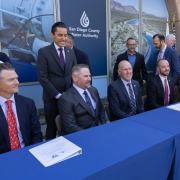
Signaling a new era of collaboration, the San Diego County Water Authority and the Metropolitan Water District of Southern California in June announced the settlement of a 15-year legal dispute over rates and the terms of an exchange agreement between the agencies.
At a news conference in San Diego, leaders from two of the state’s largest water agencies hailed the conclusion of all pending litigation, highlighting their commitment to fostering greater teamwork on a range of issues that affect nearly 19 million Southern California residents. The settlement dismissed all pending appeals. It included provisions to reduce the potential for future litigation, improve certainty in budgeting, and increase flexibility in efficiently managing water supplies.
Starting in 2010, the Water Authority repeatedly challenged the price Metropolitan charged for transporting its water, with both sides winning important legal judgments over more than a decade.
Under the settlement, the Water Authority will pay a fixed price to Metropolitan for delivery of the exchange water, adjusted annually for inflation. The price is no longer tied to Metropolitan’s rates, which was a source of dispute and litigation. In addition, the Water Authority is able to offer that water to other Metropolitan member agencies and to Metropolitan.
“This agreement will allow San Diego to take advantage of our past investments in diverse water supplies to benefit regional ratepayers while addressing water reliability challenges more broadly,” Water Authority General Manager Dan Denham said. “We look forward to building on the foundation of collaboration laid today.”
To expand access to jobs in the water industry and address critical workforce needs, the Water Authority in February hosted a first-ever tour of the region’s water education programs, attended by educators and water professionals from across Southern California. The tour highlighted the region’s statewide leadership role in workforce development, in partnership with the Water Energy Education Alliance, San Diego County Office of Education, Cuyamaca College, and the Metropolitan Water District.
The Education to Workforce Tour supported early career exploration to ensure a steady talent pipeline for the water industry during a critical workforce transition period. An estimated, one-third of water utility operators will become eligible to retire in the next decade – what some have called the industry’s silver tsunami.
During the fiscal year, the Water Authority also won a grant from The Hans and Margaret Doe Charitable Trust that will advance workforce development efforts through continued collaboration with the San Diego County Office of Education.
As drought crept across the Western U.S. in early 2025, the Water Authority ensured sufficient water supplies to meet regional water demands. While the water year got off to a wet start, by summer 2025 it was clear that La Niña conditions were growing, along with the ever-present threat of making the Southwest hotter and drier.
Between the seawater desalination plant in Carlsbad, the nation’s largest water conservation-and-transfer project, and a laser focus on maintaining critical water infrastructure, the San Diego region remained insulated from ongoing drought conditions on the Colorado River and smaller snowpacks that continue to be impacted by climate change.
At the 2024 Golden Watchdog & Fleece Awards hosted by the San Diego County Taxpayers Association, the Water Authority won a Golden Watchdog Award for deploying “Scanny,” an innovative pipeline inspection device. Designed and patented by Asset Management Manager Martin Coghill, this high-tech surveillance tool uses lightweight cameras on a mobile chassis to safely monitor large-diameter pipelines (4-9 feet) without requiring specialized rope and rigging support teams.
“Scanny” paid for itself in just two deployments compared to hiring outside specialists. With 308 miles of transmission pipelines across hilly terrain, the Water Authority inspects about 30 miles annually. Proactive maintenance can extend pipeline lifespans by more than 50 percent, providing significant cost savings. Replacing one mile of large-diameter pipeline costs about $10 million versus approximately $100,000 in maintenance per decade.
After more than 52 years in the water and wastewater industry, Valley Center Municipal Water District’s long-serving General Manager, Gary Arant, is retiring. Arant led the District as General Manager for nearly 37 years. Since March 1989, he guided the District through countless challenges, including multi-year droughts, wildfires, freezes, state-mandated water cutbacks, economic recessions, countywide blackouts, and notably, an emergency in-house repair of a 42-inch transmission main. This exemplary record reflects a leader who consistently faced complex challenges head-on. A tireless and vocal advocate for effective and prudent local government and regional, state, and federal water policy, Arant has left an indelible mark on the District and the broader water community.
After graduating from California State University, Fullerton in 1972 with a Bachelor’s degree in Political Science, Arant began a long, dedicated career in the water industry. In 1973, he joined the Walnut Valley Water District in Los Angeles County as an Administrative Assistant and steadily advanced while continuing his education, earning a Master’s degree in Public Administration from California State University, Fullerton in 1978. Arant was ultimately promoted to Assistant General Manager, overseeing Walnut Valley’s Diamond Bar operations until 1980, when he relocated with his family to San Diego County.
Arant next served as General Manager for the Rincon del Diablo Municipal Water District in Escondido, located in northern San Diego County from 1980 to 1989. While at Rincon, he developed and financed a Capital Improvement Project program, adding significantly to Rincon’s water storage, supply and transmission capacity. Arant also oversaw the expansion of Rincon’s Fire Department to add a second station, provide paramedic service and assisted in the negotiation of the eventual fire merger with the City of Escondido.
In addition to over four decades of day-to-day water agency management, Arant actively engaged in local and state associations, boards and committees always with the goal of ensuring water agencies had a seat at the table where the decisions that affect our communities are made.
Arant was a member of the California Regional Water Quality Control Board, San Diego Region, from 1983 until 1997, appointed by Governor Deukmejian and reappointed by Governor Wilson, serving in the positions Member, Vice Chair and Chair. Arant also previously served on the San Diego Local Agency Formation Commission, Special District’s Advisory Committee from 1981 to 2020.
Arant has been the District’s appointed representative to the San Diego County Water Authority (Water Authority) Board of Directors since 2006. He is currently Vice Chair of the Water Authority’s Administrative and Finance Committee and serves on the Engineering and Operations Committee. As former Chair of the Administrative and Finance Committee, Arant guided the Water Authority through multiple challenging budget and rate cycles and served as a strong and effective voice for the priorities of local member agencies.
As the Valley Center community has historically been rooted in agriculture, the District has long been an active member of the San Diego County Farm Bureau. Throughout the years Arant has led numerous regional efforts to promote water rate stability for local farmers. In 2019, in response to the one-two punch of rapidly increasing wholesale water costs and state-mandated water cutbacks facing local farmers, Arant joined the Farm Bureau’s Water Committee to lend his expertise in navigating local water policy. Arant’s efforts helped secure water rate relief for local farmers through the Water Authority’s Permanent Special Agriculture Water Rate program. For his continued efforts supporting San Diego County agriculture, the Farm Bureau awarded Arant the Friend of Agriculture Award in 2017 and the Outstanding Service Award in 2025.
Active in the Association of California Water Agencies (ACWA) since 1973, Arant has chaired ACWA’s Energy, Local Government and Communications committees and served multiple terms on ACWA’s Board of Directors over a span of more than 20 years. In 2000, Arant participated in the development of ACWA’s grassroots outreach program and served as the first Co-Chair of the Outreach Task Force. ACWA’s outreach program has been instrumental in advocating for common sense legislation and regulations impacting water agencies. In 2007, due to his commitment to advance and advocate for effective California water policy, Arant received the ACWA Emissary Award. Under Arant’s direction, the District received the ACWA Region 10’s Outstanding Outreach Participation Award in 2011 and 2015 and Top Outreach Agency in 2017 and 2021. In December 2024, Arant received ACWA recognition in appreciation for his notable and invaluable contributions to ACWA’s Board of Directors, regions and committees.
Arant’s other notable achievements working with ACWA include assisting in the production of PBS’ “California’s Water” television series and serving on the “No Time to Waste – A Blueprint for California Water” workgroup. Arant also participated in various workgroups producing guidelines for transparent and prudent local government, including “Guidelines for Conduct – a Primer for Public Water Agency Officials,” “Open and Accessible: A Public Guide to Communication and Transparency” and “ACWA Policy Principles and Guidelines to Protect Property Tax and Reserves Funds”.
Arant has worked diligently throughout his career to advance regional, state and federal water policy and mentor the next generation of water leaders. One would be hard pressed to find a Southern California water manager that has not worked alongside Arant on the tough issues facing water agencies. From advancing regional infrastructure projects benefitting not just Valley Center, but the whole of San Diego County, to supporting statewide efforts to secure reliable water supplies, we have all benefitted from Arant’s vast water expertise and knowledge. A true public servant, Arant has shown how dedication and passion can have a lasting impact on the communities we serve.
In retirement, Arant will remain engaged in the water community and continue to serve as the District’s representative on the San Diego County Water Authority Board. As an avid guitar player and active member of his church, Arant looks forward to playing in the church band and spending more time with his three sons and grandchildren. And what he most looks forward to is a restful night’s sleep knowing the agency and community to which he dedicated nearly four decades are in good hands under the leadership of the District’s new General Manager, Lindsay Leahy.
Article courtesy of the Valley Center Municipal Water District.
https://www.waternewsnetwork.com/wp-content/uploads/2025/12/screenshot-2025-12-31-082516.png385579Jordan Beanehttps://www.waternewsnetwork.com/wp-content/uploads/2024/04/WNN-Horizontal-White-Blue2.pngJordan Beane2025-12-31 08:15:122025-12-31 08:25:48Gary Arant Retires After Decades of Service to Valley Center Municipal Water District
San Diego region’s water and wastewater agency employees pitched in to carry on a tradition of holiday giving in 2025, benefiting a wide array of nonprofit community services.
Agencies Support Water For People Fundraising Effort
The Padre Dam MWD team enjoyed putting these baskets together. (L to R): Michelle Revilla, Accounting Specialist/Payroll Specialist-AWP, Marie Southwick, Administrative Assistant, Adrienne Borden, Financial Analyst, and Ben Brugman, Accountant. Photo: Padre Dam Municipal Water District
Employees of the Padre Dam Municipal Water District and Olivenhain Municipal Water District assembled fundraising gift baskets for the nonprofit CA/NV AWWA-Water for People nut basket fundraiser. Proceeds from basket sales raise funds to help provide clean water and sanitation to people in Latin America, Asia, and Africa.
Padre Dam employees prepared 100 gift baskets for the Water for People San Diego Chapter this year. Once sold, the gift baskets prepared by Padre Dam employees will raise $2,200.
Olivenhain Municipal Water District employees and other Water For People volunteers give their time and talent in support of Water for People. Photo: Olivenhain Municipal Water District
Olivenhain Municipal Water District employees have supported Water for People fundraising for two decades. Olivenhain employees have also volunteered abroad, helping to set up water and sewer systems with the agency’s full support.
“Access to clean, safe water is essential, and supporting this cause is incredibly meaningful,” said Tom Bloomer, Engineer at Padre Dam Municipal Water District and Water for People Fundraiser Organizer. “Each year, our staff looks forward to assembling these fundraiser baskets, knowing that every basket helps deliver the vital gift of water to the communities who need it most.”
Olivenhain employees volunteered on weekends to assemble nut baskets of donated Wonderful Pistachios. OMWD also sold baskets to the public as holiday gifts. A total of 204 baskets were sold through OMWD’s efforts, accounting for $5,100. It also facilitated sales and collected money for 365 baskets for a total of $9,125 in sales to support the nonprofit, a record-breaking number.
Lucy with donations for the San Diego Humane Society from Olivenhain MWD employees. Photo: Olivenhain Municipal Water District
In October, OMWD employees collected donations for the San Diego Humane Society to support its efforts to rescue and re-home pets in need during the holiday season. Employees also gathered supplies to create 20 Meals on Wheels senior care packages for delivery during the holidays.
Otay Water District Boosts Food Bank and Water For People Fundraising
Otay Water District employees display some of the 200 baskets they assembled in support of Water for People fundraising this holiday season. Photo: Otay Water District
Otay Water District employees volunteered to assemble 200 baskets in support of fundraising efforts for Water for People, adding to the impressive effort from San Diego County water agencies with its contribution. The effort was led by Engineering Manager Beth Gentry, P.E., and Engineering Department Assistant Mary Lee Wanamaker.
Otay Water District staff also collected 315 pounds of non-perishable food donations, along with diapers, pet food, and feminine hygiene products, for the San Diego Food Bank’s holiday drive to help families in need. The donated food will provide 263 meals for Food Bank clients in need.
Again, the Otay Water District participated in the Chula Vista Holiday Parade. Staff decorated a service truck bringing smiles along the miles of the parade route with their creativity.
Leonardo Lopez, Utility Worker II (left) and Mario Ballejos, Utility Worker I (right) along with Eileen Salmeron, Communications Assistant, decorated the truck and the two utility workers drove the parade. It took three hours to decorate the vehicle. Photo: Otay Water District
Helping Hand From Sweetwater Authority
Sweetwater Authority employees stepped up to lend the Salvation Army a helping hand this holiday season. Photo: Sweetwater Authority
Sweetwater Authority employees have been active participants in the Salvation Army Angel Tree program for more than two decades.
Each year, Sweetwater Authority partners with the Salvation Army to host its own Angel Tree initiative. Employees take a tag that contains information about their recipient (age, gender, and toy request). The employee shops for the item and brings it back to the office unwrapped. The Salvation Army delivers the donated toys.
This year, staff stepped up in a big way, generously donating gifts and helping bring joy to children and families throughout the community.
Generous Escondido Employees Brighten the Holidays
City of Escondido Utilities employees Emma Potratz, Environmental Programs Specialist, and Gio Cortes, Recycling Programs Specialist, play Santa Elves with holiday donations from city employees. Photo: City of Escondido
As they have for several years, City of Escondido employees hosted a food drive for the Salvation Army Escondido Corps, and supported efforts by the Escondido Senior Center to provide gift bags to 150 recipients this holiday season. Thanks to their efforts, employees donated 600 pounds of food items to support the Salvation Army’s food boxes.
Employees collected toiletries, small household items, snacks, food gift cards, batteries, and socks to stock the Escondido Senior Center gift bags. For the recipients, it may be the only holiday gift they receive this year.
Toys for Tots Drive at Helix Water District
The Helix Water District collected 366 toys for the Toys for Tots program at drop-off locations at its La Mesa administration office and the Water Conservation Garden. Photo: Helix Water District
The Helix Water District is a longtime supporter of the Toys for Tots annual campaign through the U.S. Marine Corps Reserves. Individuals were encouraged to drop off donations at the administrative offices in La Mesa, and the Water Conservation Garden, making it easy for the community to come together and bring smiles to local children with 366 donated toys.
https://www.waternewsnetwork.com/wp-content/uploads/2025/12/otay-xmas-parade-4-1080x720-1.jpg8101080Gayle Falkenthalhttps://www.waternewsnetwork.com/wp-content/uploads/2024/04/WNN-Horizontal-White-Blue2.pngGayle Falkenthal2025-12-18 07:07:422026-01-05 14:45:18Member Agencies Give Generously to Nonprofits During Holidays
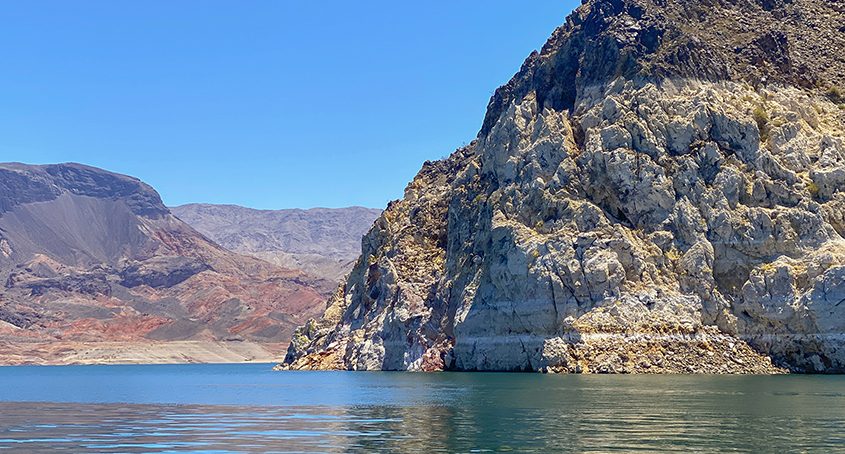
California’s water, tribal, and agricultural leaders today presented a comprehensive framework for a durable, basin-wide operating agreement for the Colorado River and highlighted the state’s proposal for conserving 440,000 acre-feet of river water per year.
At the annual Colorado River Water Users Association conference, California underscored the state’s leadership in conservation, collaboration, and long-term stewardship of shared water resources that inform its approach to post-2026 negotiations.
California takes a balanced approach, relying on contributions from the upper and lower basins to maintain a shared resource. California supports hydrology-based flexibility for river users, with all states contributing real water savings. Any viable framework would need to include transparent and verifiable accounting for conserved water, along with several other elements outlined in the California framework.
State leaders also noted that they are willing to set aside many of their legal positions to reach a deal, including releases from Lake Powell under the Colorado River Compact, distribution of Lower Basin shortages, and other provisions of the Law of the River, provided that there are equitable and sufficient water contributions from every state in the Basin and the country of Mexico.
The Colorado River Basin provides essential water supplies to approximately 40 million people and 30 Tribal Nations, nearly 5.5 million acres of agricultural lands, and habitat for ecological resources across parts of several Western states (including Arizona, California, Colorado, Nevada, New Mexico, Utah and Wyoming) and Mexico.
Constructive California
“California is leading with constructive action,” said JB Hamby, chairman of the Colorado River Board of California. “We have reduced our water use to the lowest levels since the 1940s, invested billions to modernize our water systems and develop new supplies, partnered with tribes and agricultural communities, and committed to real water-use reductions that will stabilize the river. We are doing our part – and we invite every state to join us in this shared responsibility.”
Despite being home to 20 million Colorado River-reliant residents and a farming region that produces the majority of America’s winter vegetables, California’s use of Colorado River water is projected at 3.76 million acre-feet in 2025 – the lowest since 1949.
That achievement comes on top of historic reductions in water use over the past 20 years, led by collaborative conservation efforts. Urban Southern California cut imported water demand in half while adding almost 4 million residents. And farms reduced water use by more than 20% while sustaining more than $3 billion in annual output. Tribes also have made critical contributions, including nearly 40,000 acre-feet of conserved water by the Quechan Indian Tribe to directly support river system stability.
Going forward, California is prepared to reduce water use by 440,000 acre-feet per year – in addition to existing long-standing conservation efforts – as part of the Lower Basin’s proposal to conserve up to 1.5 million acre-feet per year, which would include participation by Mexico. When conditions warrant, California is also committed to making additional reductions to address future shortages as part of a comprehensive basin-state plan.
CRB Vice Chair and SDCWA Director Jim Madaffer at the 2025 CRUWA conference.
“The path to resiliency requires innovation, cooperation, and every Basin state’s commitment to conservation. The San Diego County Water Authority supports an approach that provides flexibility to adapt to changing climate conditions,” said CRB Vice Chair and SDCWA Director Jim Madaffer. “That means developing a new framework that allows for interstate water transfers to move water where it’s most needed and incentivizes the development of new supplies for augmentation.”
The state’s history of conservation illustrates what can be accomplished through collaboration, and all Colorado River water users in California are preparing to contribute to these reductions – agricultural agencies, urban agencies, and tribes.
Framework for a Post-2026 Agreement
In addition to conservation contributions, California provided a framework of principles for the post-2026 river operating guidelines to advance a shared solution for the seven Basin States, the tribes and Mexico. More specifically, California outlined the following key components for a new framework:
Lake Powell releases – California supports a policy of hydrology-based, flexible water releases that protects both Lake Powell and Lake Mead. Flexibility must be paired with appropriate risk-sharing across basins, avoiding disproportionate impacts to any one region.
Upper Initial Units (Colorado River Storage Project Act) – Releases should be made when needed to reduce water supply and power risks to both basins.
Shared contributions – The Lower Basin’s proposed 1.5 million acre-feet per year contribution to address the structural deficit, including an equitable share from Mexico (subject to binational negotiations), is the first enforceable offer on the table. When hydrology demands more, participation by all seven Basin States is essential.
Interstate exchanges – Interstate exchanges need to be part of any long-term solution to encourage interstate investments in new water supply projects that may not be economically viable for just one state or agency.
Operational flexibility – Continued ability to store water in Lake Mead is vital to maintain operational flexibility. California supports continuation and expansion of water storage in Lake Mead as a long-term feature of river management and to encourage conservation. We also support Upper Basin pools for conservation, allowing similar benefits.
Phasing of a long-term agreement – California supports a long-term operating agreement with adaptive phases. Tools like water storage in Lake Mead and Lake Powell need to extend beyond any initial period due to significant investments required to store conserved water in the reservoirs.
Protections and federal support: Any agreement should be supported with federal funding and any necessary federal authorities, allow agriculture and urban areas to continue to thrive, protect tribal rights, and address the environment, including the environmentally sensitive Salton Sea.
“There are no easy choices left, but California has always done what is required to protect the river,” said Jessica Neuwerth, executive director of the Colorado River Board of California. “We have proven that conservation and growth can coexist. We have shown that reductions can be real, measurable, and durable. And we have demonstrated how states, tribes, cities, and farms can work together to build a sustainable future for the Colorado River.”
https://www.waternewsnetwork.com/wp-content/uploads/2021/03/ColoRvAqueduct.1.23.2019x009-Watersource.jpg450845Jordan Beanehttps://www.waternewsnetwork.com/wp-content/uploads/2024/04/WNN-Horizontal-White-Blue2.pngJordan Beane2025-12-16 12:11:492025-12-16 12:31:35California Commits to Conservation, Collaboration in New Colorado River Framework
San Diego County’s most popular reservoir recreation areas offer special holiday season events through 2025 and host winter activities during the region’s cooler months.
Holiday Spirit at Santee Lakes
Santee Lakes Recreation Preserve hosts the Winter Lantern Festival on Saturday, December 13 from 2 p.m. to 7 p.m. The family-friendly festival encourages people to reflect on the year and set intentions for the year ahead by releasing personalized lanterns onto the lake. Enjoy food trucks, live music, vendors, a scavenger hunt, and the lantern launch.
The Festival requires an entry ticket with multiple options for families, date nights, and VIP experiences. Purchase in advance here to receive a discount price.
A full list of additional holiday events, including Saturday Paint and Sip events, Gingerbread House making, and visits with Santa, is listed on the Santee Lakes website.
Take advantage of San Diego County’s mild weather with a stay at Santee Lakes Recreation Preserve. Campground space is available. A three-night minimum stay is required, but you won’t want to leave.
Originally opened to the public in 1961, today, Santee Lakes Recreation Preserve is a nationally recognized Park of the Year, hosting over 760,000 visitors annually. The 190-acre park’s lakes are stocked with fish year-round. Other amenities include camping, cabin rentals, fishing, boating, playgrounds, walking trails, facility rentals, special events, and approximately 230 bird species.
Trout Fishing Season Opens for San Diego Fishing Enthusiasts
This Lake Jennings angler shows off his catch in mid-November: one 3.74 pound trout and one 3.04 pound trout, both caught at Sentry Cove. Photo: Lake Jennings/Instagram
Recreational fishing surged in popularity during the pandemic, and it hasn’t slowed down since then. San Diego County is known for its inland freshwater fishing at its lakes and reservoirs, and its mild winter weather adds to its appeal. Fishing permits are required, so check with staff at each location.
As reported by the City of Poway, the number of fishing permits sold at Lake Poway over the last few years continues to increase. One of the most anticipated days of the year at the lake is trout season opening day.
Lake Poway starts stocking trout on Friday, December 5, and will stock 19,000 pounds of trout through April 16, up 500 pounds from last year.
The fishing experts at Lake Poway share a few tips on its webpage, and it will post monthly fishing reports as the winter season continues.
Starting the week of November 30, trout stocking will take place at Lake Wohlford, Lake Murray, and Chollas Park Lake every two weeks until through April.
Lake Jennings Open For Winter Fun
Lake Jennings opened its annual trout fishing season on November 15 and is open daily except on Christmas Day from 6 a.m. to 5 p.m. through January 7. The lake will be restocked regularly every two weeks through April 27 with a total of 19,000 pounds of trout.
New moon fishing takes place on December 20 at Lake Jennings. Photo: Lake Jennings/Instagram
The lake will be open for its New Moon Fishing event on Saturday, December 20, from 6 a.m. to 10 p.m. Visitors can enjoy fishing, boating, hiking, picnicking, sunset watching, stargazing, and firepit rentals. Get more information about activities at https://lakejennings.org/
Lake Jennings is an exceptional destination during the winter months for the serious and casual wildlife viewer and photographer. The rolling hills, the endless lake, the coastal sage, and the riparian areas provide a diverse habitat in a small area. Common sightings include deer, fox, and osprey. Bird watchers are drawn to Lake Jennings for its rich variety of bird species.
Sweetwater Reservoir Winter Birdwatching
Vermillion Flycatcher at Sweetwater Reservoir in December 2024. Photo: RodgerBPhoto/Instagram
The range of habitats at the Sweetwater and Loveland Reservoirs supports diverse bird populations. Their proximity to the Pacific Flyway means many migratory species are passing through on their way to warmer areas, making the winter months an ideal time to enjoy birdwatching and wildlife walks to work off holiday meals.
Over 250 bird species have been documented at the Sweetwater Reservoir. Sweetwater Authority welcomes birds and other wildlife as part of its stewardship of the natural watershed, which helps keep reservoir water quality high and supports the balance of human and environmental needs.
View birds from public access areas at the Sweetwater Reservoir or Loveland Reservoir. Bring binoculars, a bird guide, and a notebook, or just enjoy the view.
https://www.waternewsnetwork.com/wp-content/uploads/2025/11/water-lantern-festival-3.jpg7211080Gayle Falkenthalhttps://www.waternewsnetwork.com/wp-content/uploads/2024/04/WNN-Horizontal-White-Blue2.pngGayle Falkenthal2025-12-01 07:43:482025-12-01 07:54:492025 Community Holiday Activities at San Diego Reservoirs