This Dying Lake Could Be the Site of California’s Next ‘Gold’ Rush
The Salton Sea, once a resort destination and now largely overlooked, could be the site of California‘s next gold rush – this time involving lithium.

The Salton Sea, once a resort destination and now largely overlooked, could be the site of California‘s next gold rush – this time involving lithium.
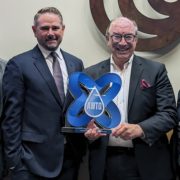
The California Water Environment Association (CWEA) and the California-Nevada Section of the American Water Works Association (CA-NV AWWA) recognized the San Diego County Water Authority’s leadership and support of setting training standards and establishing training programs for water and wastewater industry professionals.
Chuck Greely, president of CWEA, and Sue Mosburg, executive director of CA-NV-AWWA, presented the Advanced Water Treatment Champion award at the November Board of Directors meeting.
“Your involvement from the very beginning of the Advanced Water Treatment Operator Certification program has allowed CWAA and California-Nevada AWWA to train and certify hundreds of California’s best operators, ensuring they have the knowledge and skills to produce the cleanest water possible,” said Greely.
“Thank you for what you’ve done in California. Thank you for bringing the water operator professional to the next level,” added Mosburg.
To date, 60 water industry professionals have completed the AWTO training and received certification.
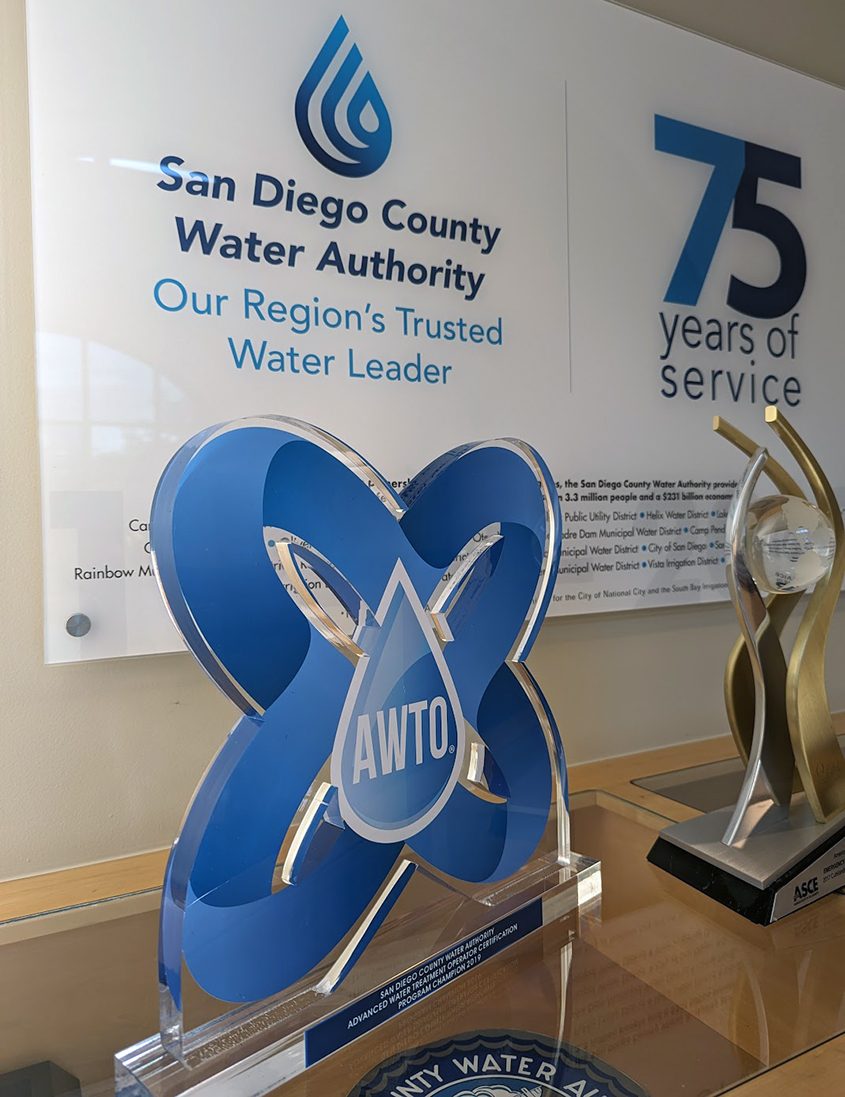
The Advanced Water Treatment Champion award presented to the San Diego County Water Authority for its leadership in developing the Advanced Water Treatment Operator training certificate. Photo: San Diego County Water Authority
Prompted by calls in 2014 from water utilities, water professionals and the California State Water Board, a diverse set of stakeholders and experts including the Water Authority contributed their perspectives on the development of the certification. They were supported by CWEA and CA-NV AWWA staff and experts in exam development. Observers from the California State Water Board participated throughout.
Over 100 volunteers from CA-NV AWWA and CWEA were involved in planning, subject matter expert workshops, exam development, marketing and administering the new program. After four years, the Advanced Water Treatment Operator™ (AWTO®) certification was launched in 2020.
AWTO certification allows water and wastewater operators to demonstrate their advanced knowledge and qualify for new career opportunities at high-tech water reuse facilities. As California and Nevada expand water reuse, AWT operators are expected to be in high demand. There are currently 11 advanced water treatment facilities permitted and operating in California. Seven more are currently awaiting approval in the State of California’s permitting process.
Water and wastewater operators can get ready for these new career opportunities by getting AWTO certified today.
“As more potable reuse facilities start up in San Diego and across the state, this is a watershed moment in California history. We are securing water supplies for generations to come,” said Greely.
“We are well into the next decade of water and wastewater operations, and everyone in our industry plays an important role leading the way toward sustainability,” said Mosburg. “We are building the future now. We need this new supply and a new way of thinking about water before the next drought hits.”
A new landmark water exchange agreement will increase water levels in Lake Mead, fight upward pressure on wholesale water rates, and create a new template for water management in the arid West.
The one-year agreement was announced on Friday, December 1 by the San Diego County Water Authority. The agreement is supported by the U.S. Bureau of Reclamation and executed in coordination with the Imperial Irrigation District (IID) and the Metropolitan Water District of Southern California (Metropolitan). Funds to facilitate the deal are from the federal 2022 Inflation Reduction Act.
The new agreement highlights ways water agencies can work together under existing laws and agreements to adapt to the changing climate.
“This is a great example of what happens when we collaborate and work together. Cooperation by all three water agencies and the Bureau of Reclamation produced a creative solution that helps sustain the Colorado River,” said Water Authority Chair Mel Katz. “Today’s announcement is an innovative win-win-win solution that helps us all meet the incredible challenges we face.”
The agreement builds on the groundbreaking 2003 Quantification Settlement Agreement (QSA). It achieves several goals by helping California meet conservation obligations under the Bureau of Reclamation’s Lower Colorado River Basin conservation program, supporting financial viability for participating agencies, and reducing the chances for more shortages. The Colorado River system has suffered drought-induced decline for more than 20 years.
The new arrangement is expected to save the Water Authority a projected $15 million to $20 million (depending on hydrological variables), which will help offset the impact of inflation and other factors on water rates.
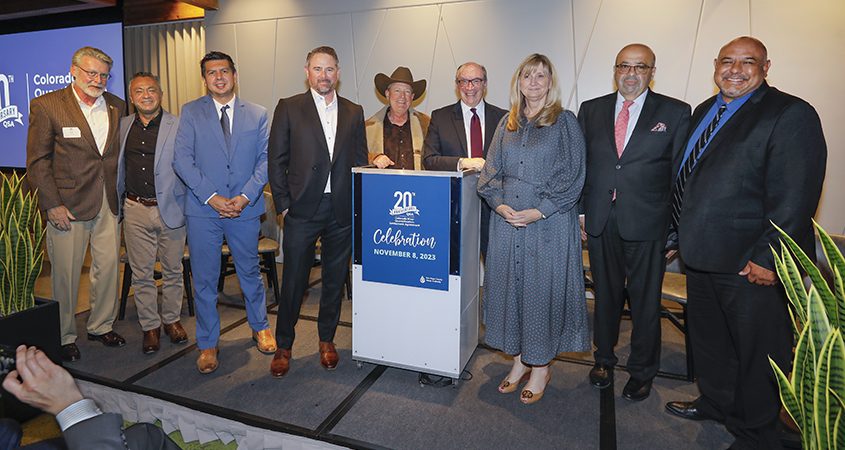
Officials recognizing the Quantification Settlement Agreement 20th Anniversary (L to R): Jim Barrett, Coachella Valley Water District GM, Miguel Luna, Chair of the Legal and Claims Committee with the MWD Board, State Assemblyman David Alvarez (D-80), Water Authority GM Dan Denham, Colorado River Board of California Vice Chair and Water Authority board member Jim Madaffer, Water Authority Board Chair Mel Katz, Jamie Asbury, IID GM, MWD General Manager Adel Hagekhalil, IID GM Alex Cardenas. Photo: San Diego County Water Authority
The Water Authority, Metropolitan, and IID have been working together for several months on ways to capitalize on current water supplies. Due to a historically wet year, the State Water Project is delivering full supplies to Metropolian, refilling reservoirs and reducing demand for imported Colorado River water. The Metropolitan Board of Directors approved the agreement in November, and the IID Board followed with its approval on December 1.
“This partnership between Metropolitan, Imperial Irrigation District, the San Diego County Water Authority, and the Bureau of Reclamation is another example of how solutions developed collaboratively can benefit everyone,” said Adán Ortega, Jr., chair of the Metropolitan Board of Directors. “Our individual efforts to reduce our reliance on the Colorado River can be magnified by our growing and mutual interdependence leading to creative and lasting solutions, where the people we all serve win, as does the environment.”
In October 2003, the San Diego County Water Authority, Coachella Valley Water District, Imperial Irrigation District, Metropolitan Water District of Southern California, State of California, and U.S. Department of the Interior completed a historic set of agreements to conserve and transfer Colorado River water.
The Water Authority will leave 50,000 acre-feet of conserved QSA water in the Colorado River. This helps raise the level of Lake Mead, which has dropped in recent years. The volume is equivalent to the amount of water used in a year by approximately 150,000 single-family homes.
The Water Authority agreed to buy 50,000 acre-feet from Metropolitan to meet current and future demands. The Water Authority’s cost savings result from the difference between the Metropolitan rate and the rate for IID’s conserved water through the QSA. The Bureau of Reclamation will cover the cost of the Water Authority’s QSA supplies left in the river.
“This transfer is an example of how Southern California water agencies are leading with creative water management,” said Water Authority General Manager Dan Denham. “This agreement is based on decades of working together through the QSA, and it makes good on our collective commitment to the river. While this is a one-year arrangement, it will open the door for additional talks between partnering agencies in 2024.”
In the wake of the arrival of a history-making year in weather, the San Diego County Water Authority is working with two other agencies and the federal government to implement lasting changes to regional water management.
As California grapples with worsening cycles of drought, a proposal to create a new water district in Butte County has sparked fears of a profit-driven water grab by large-scale farmers and outside interests.
The Biden Administration will pay the Imperial Irrigation District an estimated $77.6 million for conserving 100,000 acre-feet of water in the Colorado River this year, setting the stage for more than half a billion dollars in federal funds to be paid to the agency, the river’s largest user, to conserve far more through 2026.
The California Department of Water Resources on Friday said its initial State Water Project allocation forecast is 10% of requested supplies for next year — a 5% increase from its December 2022 initial forecast.
For local breweries in San Diego, it’s becoming increasingly complex to brew beer due to a recent surge in water rates.
As part of the historic Lower Basin Plan between Arizona, California and Nevada to conserve 3 million acre-feet of water by 2026 to protect the Colorado River system from extended drought, the Imperial Irrigation District Board of Directors on Friday, Dec. 1 unanimously approved the 2023 System Conservation Implementation Agreement with the U.S. Bureau of Reclamation.
In recent decades, as water has grown increasingly precious, Californians have tried countless ways to find more of it and make it last longer, including covering agricultural canals with solar panels to prevent evaporation, building costly desalination plants and pulling out tracts of water-hungry grass.