Tag Archive for: Colorado River Basin

California’s Young ‘Water Buffalo’ JB Hamby Spurs United Colorado River Rescue, For Now

It was a rough debut. JB Hamby, 26 years old, had rocketed to the innermost circle of state and federal officials charged with saving the Colorado River from collapse. In mid-January, he was elected to chair California’s river board, representing Imperial Irrigation District, by far the biggest recipient of the overused river’s supply.

Federal officials had bluntly threatened to impose mandatory cuts across the region if huge voluntary reductions weren’t made.

But 12 days later, after contentious closed-door talks, he watched in dismay as media outlets across the U.S. published stories about six states releasing a joint plan to save the river, with only his state, California, refusing to sign on.

It was a baptism by near drowning for the youngest “water buffalo,” as negotiators of Colorado River agreements have historically called themselves. But Hamby didn’t respond angrily or publicly. Instead he wrote individual thank-you notes to top negotiators in every other state, and asked if he could meet with each to discuss mutual solutions.

Next Steps to Protect Stability and Sustainability of Colorado River Basin

The Biden-Harris administration October 25 announced next steps in the efforts to protect the stability and sustainability of the Colorado River System and strengthen water security in the West. The Department of the Interior’s Bureau of Reclamation released a revised draft Supplemental Environmental Impact Statement (SEIS) as part of the ongoing, collaborative effort to update the current interim operating guidelines for the near-term operation of Glen Canyon and Hoover Dams to address the ongoing drought and impacts from the climate crisis.

Reclamation-Colorado River-Lake Powell-Lake Mead-conservation

Next Steps to Protect Stability and Sustainability of Colorado River Basin

The Biden-Harris administration October 25 announced next steps in the efforts to protect the stability and sustainability of the Colorado River System and strengthen water security in the West. The Department of the Interior’s Bureau of Reclamation released a revised draft Supplemental Environmental Impact Statement (SEIS) as part of the ongoing, collaborative effort to update the current interim operating guidelines for the near-term operation of Glen Canyon and Hoover Dams to address the ongoing drought and impacts from the climate crisis.

In order to protect Glen Canyon and Hoover Dam operations, system integrity, and public health and safety through 2026 – at which point the current interim guidelines expire – an initial draft SEIS was released in April 2023. Following a historic consensus-based proposal in partnership with states – which committed to measures to conserve at least 3 million-acre-feet (maf) of system water through the end of 2026 enabled by funding – Reclamation temporarily withdrew the draft SEIS to allow for consideration of the new proposal.

The revised draft SEIS includes two key updates: the Lower Basin states’ proposal as an action alternative, as well as improved hydrology and more recent hydrologic data. The release of the revised draft SEIS initiates a 45-day public comment period.

“Throughout the past year, our partners in the seven Basin states have demonstrated leadership and unity of purpose in helping achieve the substantial water conservation necessary to sustain the Colorado River System through 2026,” said Deputy Secretary Tommy Beaudreau, who led negotiations on behalf of the Administration. “Thanks to their efforts and funding, we have staved off the immediate possibility of the System’s reservoirs from falling to critically low elevations that would threaten water deliveries and power production.”

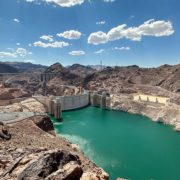
Lake Powell and Lake Mead at “historically low levels”

“The Colorado River Basin’s reservoirs, including its two largest storage reservoirs Lake Powell and Lake Mead, remain at historically low levels. Today’s advancement protects the system in the near-term while we continue to develop long-term, sustainable plans to combat the climate-driven realities facing the Basin,” said Reclamation Commissioner Camille Calimlim Touton. “As we move forward in this process, we are also working to ensure we have long-term tools and strategies in place to help guide the next era of the Colorado River Basin.”

Key components of revised draft SEIS

Reclamation conducted updated modeling analyses using June 2023 hydrology for the No Action Alternative, Action Alternatives 1 and 2 from the initial draft SEIS, and the Lower Division proposal. The results of that modeling indicate that the risk of reaching critical elevations at Lake Powell and Lake Mead has been reduced substantially. As a result of the commitment to record volumes of conservation in the Basin and recent hydrology, the chance of falling below critical elevations was reduced to eight percent at Lake Powell and four percent at Lake Mead through 2026. However, elevations in these reservoirs remain historically low and conservation measures like those outlined by the Lower Division proposal will still be necessary to ensure continued water delivery to communities and to protect the long-term sustainability of the Colorado River System.

Based on these modeling results, Reclamation will continue the SEIS process with detailed consideration of the No Action Alternative and the Lower Division Proposal. The revised SEIS designates the Lower Division Proposal as the Proposed Action. Alternatives 1 and 2 from the initial SEIS were considered but eliminated from detailed analysis.

Funding key to increase conservation efforts

Investing is key in the efforts to increase near-term water conservation, build long term system efficiency, and prevent the Colorado River System’s reservoirs from falling to critically low elevations that would threaten water deliveries and power production. Because of this funding, conservation efforts have already benefited the system this year.

This includes eight new System Conservation Implementation Agreements in Arizona that will commit water entities in the Tucson and Phoenix metro areas to conserve up to 140,000-acre feet of water in Lake Mead in 2023, and up to 393,000-acre feet through 2025. Reclamation is working with its partners to finalize additional agreements. These agreements are part of the 3 maf of system conservation commitments made by the Lower Basin states, 2.3 maf of which will be compensated through funding from the Inflation Reduction Act, which invests a total of $4.6 billion to address the historic drought across the West.

Through the Bipartisan Infrastructure Law, Reclamation is also investing another $8.3 billion over five years for water infrastructure projects, including water purification and reuse, water storage and conveyance, desalination and dam safety.

To date, the Interior Department has announced the following investments for Colorado River Basin states, which will yield hundreds of thousands of acre-feet of water savings each year once these projects are complete:

Long-Term Planning Efforts to Protect the Colorado River System

The process announced October 25 is separate from the recently announced efforts to protect the Colorado River Basin starting in 2027. The revised draft SEIS released today would inform Reclamation’s ongoing efforts to set interim guidelines through the end of 2026; the post-2026 planning process advanced last week will develop guidelines for when the current interim guidelines expire.

(Editor’s note: The San Diego County Water Authority supports a consensus-based approach for long-term solutions to water supply issues in the Colorado River Basin. The content of the USBR news release has been edited by WNN.) 

Bureau of Reclamation Advances Long-Term Planning Efforts to Protect the Colorado River System

The Biden-Harris administration October 19 announced next steps in the formal process to develop future operating guidelines and strategies to protect the stability and sustainability of the Colorado River system and strengthen water security in the West. The guidelines under development would be implemented in 2027, replacing the 2007 Colorado River Interim Guidelines for Lower Basin Shortages and the Coordinated Operations for Lake Powell and Lake Mead, which are set to expire at the end of 2026.

Nevada, Arizona and California Commit to Record-Setting Conservation to Protect Colorado River

The Southern Nevada Water Authority announced that the state will continue to collaborate with Arizona and California on a long-term sustainable plan for the stability of the Colorado River.

According to a media release, the Bureau of Reclamation is moving the process forward to develop new operating guidelines for the Colorado River that will be in effect after 2026. To that end, the Lower Colorado River Basin states— water users in Nevada, Arizona and California—are contributing record volumes of water to Lake Mead.

Lake Mead-Lake Powell-Colorado River Basin-U.S. Bureau of Reclamation

Bureau of Reclamation Advances Long-Term Planning Efforts to Protect the Colorado River System

The Biden-Harris administration October 19 announced next steps in the formal process to develop future operating guidelines and strategies to protect the stability and sustainability of the Colorado River system and strengthen water security in the West. The guidelines under development would be implemented in 2027, replacing the 2007 Colorado River Interim Guidelines for Lower Basin Shortages and the Coordinated Operations for Lake Powell and Lake Mead, which are set to expire at the end of 2026.

Long-Term Planning Efforts to Protect the Colorado River System

The Department of the Interior’s Bureau of Reclamation published the Proposed Federal Action and a Scoping Summary Report related to Colorado River Basin operations post-2026. The Scoping Report, which was supported by a 60-day public scoping period, will inform the post-2026 operating guidelines. This planning process is separate from ongoing efforts to protect the Colorado River Basin through the end of 2026.

These steps to protect the Colorado River Basin now and into the future will help increase water conservation, improve water efficiency, protect critical environmental resources, and prevent the Colorado River system’s reservoirs from falling to critically low elevations that would threaten water deliveries and power production. These actions provide pivotal resources to enhance the resilience of the West to drought and climate change, including to protect the short- and long-term sustainability of the Colorado River System. Through the Bipartisan Infrastructure Law, Reclamation is investing $8.3 billion over five years for water infrastructure projects, including water purification and reuse, water storage and conveyance, desalination and dam safety. The Inflation Reduction Act is investing an additional $4.6 billion to address the historic drought, including by funding water conservation efforts across the Colorado River Basin.

“President Biden’s Investing in America agenda has deployed historic investments as we’ve worked collaboratively with states, Tribes and communities throughout the West to find consensus solutions in the face of climate change and sustained drought,” said Deputy Secretary Tommy Beaudreau. “As the Department works with those partners to stabilize the Colorado River in the short-term, we are also committed to ensuring the long-term sustainability of the Basin for decades to come based on the best-available science and with robust input from stakeholders across the West.”

Colorado River Basin

The Colorado River Basin provides essential water supplies to approximately 40 million people and 30 Tribal Nations, nearly 5.5 million acres of agricultural lands, and habitat for ecological resources across parts of several Western states (including Arizona, California, Colorado, Nevada, New Mexico, Utah and Wyoming) and Mexico. But prolonged drought, driven by climate change and coupled with low runoff conditions in the last several years, resulted in historically low reservoir levels at Lake Powell and Lake Mead.

Consensus-approach to water conservation

The post-2026 planning process builds on the Biden-Harris administration’s ongoing efforts to protect the Colorado River Basin. Earlier this year, Administration leaders brought together stakeholders from across the Basin to build a consensus for water conservation efforts through the end of 2026, enabled by investments from the President’s Investing in America agenda. By the end of October, the Department will issue a draft Supplemental Environmental Impact Statement to revise the December 2007 Record of Decision, which will set interim guidelines through the end of 2026. The post-2026 process being advanced today will develop guidelines for when those interim guidelines would expire.

“The Colorado River Basin has come together over the past year to create a consensus path in the short term that now allows us to focus on the future. Today’s next steps for post-2026 planning helps continue the momentum between all stakeholders across the Basin on what the future operations of this critical system will look like,” said Reclamation Commissioner Camille Calimlim Touton. “As the range of alternatives is developed, Reclamation is committed to a collaborative, inclusive and transparent process with our partners, stakeholders and the public.”

To date, the Interior Department has announced the following investments for Colorado River Basin states, which will yield hundreds of thousands of acre-feet of water savings each year:

Post-2026 planning process

The post-2026 process is a multi-year effort that will identify a range of alternatives and ultimately determine operations for Lake Powell and Lake Mead and other water management actions, potentially for decades into the future. Using the best-available science, Reclamation will develop a draft environmental impact statement (EIS) that will analyze how future operational guidelines and strategies can be sufficiently robust and adaptive to withstand a broad range of hydrological conditions and ultimately provide greater stability to water users and the public throughout the Colorado River Basin.

The completed draft EIS is anticipated by the end of 2024 and will include a public comment period. Reclamation anticipates a final EIS will be available in late 2025, followed by a Record of Decision in early 2026.

As part of Reclamation’s robust and transparent process to gather feedback, three virtual public webinars were held during the scoping period. Reclamation also engaged Basin stakeholders via stakeholder briefings; the formation of a new Federal-Tribes-States working group; two meetings of the Integrated Technical Education Workgroup; and individual communications.

While the post-2026 process will determine domestic operations, the Biden-Harris administration is committed to continued collaboration with the Republic of Mexico. It is anticipated that the International Boundary and Water Commission will facilitate consultations between the United States and Mexico, with the goal of continuing the Binational Cooperative Process under the 1944 Water Treaty.

Arizona, California and Nevada commit to record-setting conservation to protect the Colorado River

The Lower Colorado River Basin states – water users in Arizona, California and Nevada – are contributing record volumes of water to Lake Mead. By the end of 2023, cumulatively, the Lower Basin will have voluntarily conserved more than 1 million acre-feet – water that is being held back in Lake Mead for the benefit of the entire system over and above shortage reductions agreed to in 2007 and those of the 2019 Drought Contingency Plan. In 2023, consumptive use in the Lower Basin States is expected to be around 5.8 million acre-feet, the lowest consumptive use since 1984.

Read the full news release from California, Arizona and Nevada via the State of California California River Board website.

(Editor’s note: The San Diego County Water Authority supports a consensus-based approach for long-term solutions to water supply issues in the Colorado River Basin. The content of the USBR news release has been edited by WNN.) 
New Colorado River Rules Will Be Hard to Agree On. A New Report Shows Just How Tricky It Could Be

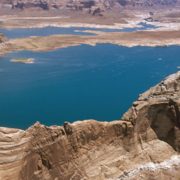
States that use water from the Colorado River are drawing nearer to an important deadline for negotiating the river’s future. A new report from the federal government shows states are aiming to agree on a plan to cut back on water, but still remain divided about how to share the shrinking supply that flows to tens of millions across the Southwest.

Opinion: San Diego-Imperial Water Deal: 20 Years of Success With Questions Ahead

San Diego has secure water supplies that are the envy of many agencies throughout the western United States.

The key to this was an agreement reached 20 years ago this week with the Imperial Irrigation District to send Colorado River water from that desert farming region to San Diego County.

The nation’s largest agriculture-to-urban water transfer was primarily accomplished through vast payments by San Diego to Imperial Valley farmers to modernize their

Water Supply Strong in San Diego Area, County Water Authority Says

After years of dealing with drought conditions, the region’s water supply is in good shape, ready to meet the demand for 2024, according to the San Diego County Water Authority (SDCWA).

“Last year we were starting Water Year ‘23 in really heavy drought conditions with state mandatory reductions and this year there’s no mandatory water use reductions… there’s a lot of water in storage in Northern California, reservoirs are full,” said Efren Lopez, water resources specialist with SDCWA.

That’s because of all the storms over the past year that drenched California, delivering above-average amounts of rain and snow with the Sierra snowpack reaching 200% above average.

San Diego Gears Up to Deal Water Across the West

This October marks 20 years since San Diego cut a famous deal that protected it from drought but paved the way for putting a high price on otherwise free water from the Colorado River.

The hard-fought deal – called the Quantification Settlement Agreement, or QSA – dramatically lowered how much water California takes each year from this river that makes life possible in seven western U.S. states and northern Mexico. It ensured, for the first time, that California wouldn’t use any more than its share. And it achieved that by putting a cap, for the first time, on how much water the farmers in Imperial Valley could take. Water officials would now meticulously count every gallon that once haphazardly emptied from farm fields into the Salton Sea. Today, that massive lake is in danger of becoming a massive public health and ecological disaster.