Tag Archive for: Wildfires

Urban Corps San Diego team members get a briefing before beginning habitat restoration work. Photo: Sweetwater Authority

Sweetwater Authority Habitat Restoration Effort Delivers Impressive Results

What began as an emergency hazardous tree removal project to protect water treatment facilities by the Sweetwater Authority became an effective community partnership. By working with Urban Corps San Diego, supported by neighboring residents and regulatory agencies, Sweetwater Authority transformed a portion of a fire-prone canyon adjacent to the Robert A. Perdue Water Treatment Plant into a safer, fire-resilient native habitat.

Need For Fire Hazard Mitigation Addressed With Two-Year Plan
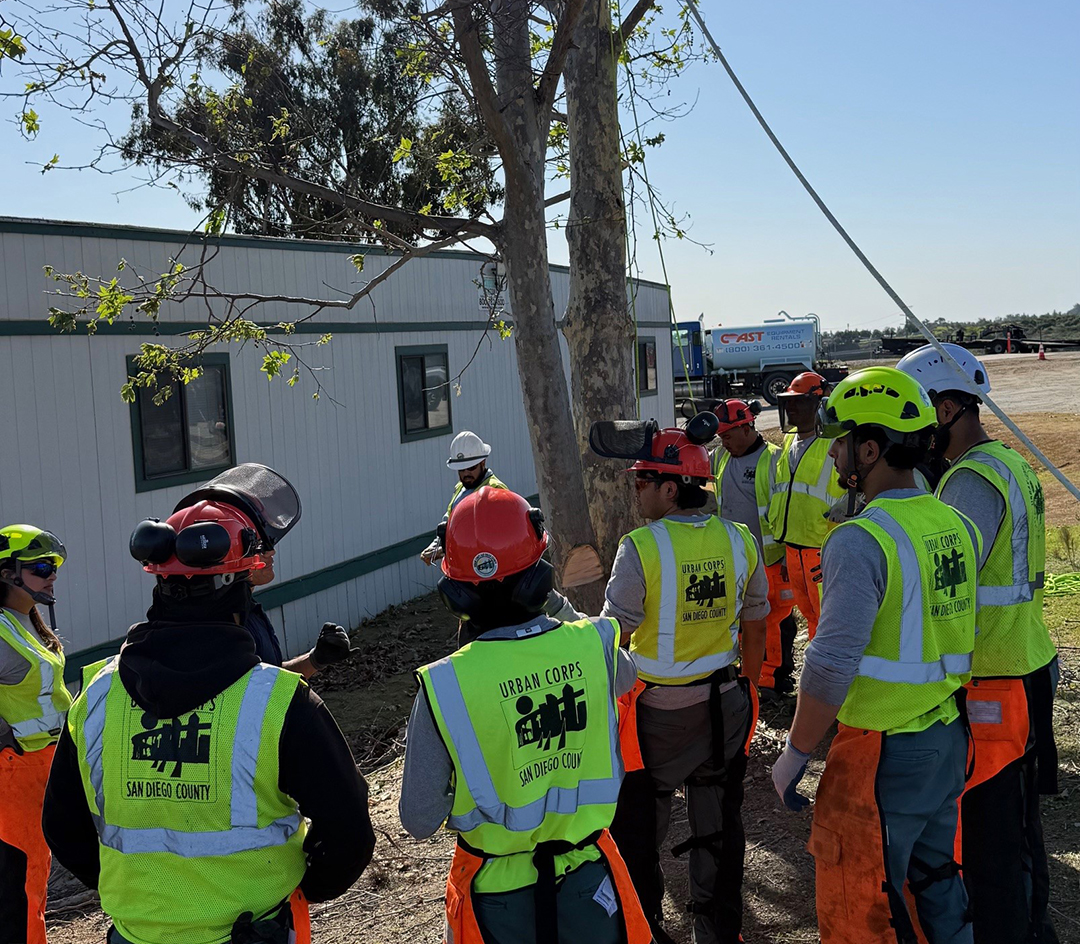
Non-native tree removal was a focus of the Sweetwater Authority's habitat restoration project. Photo: Sweetwater Authority

Non-native tree removal was a focus of the Sweetwater Authority’s habitat restoration project. Photo: Sweetwater Authority

The Perdue Plant is situated at the western edge of the urban–wildland interface, within a designated Very High Fire Hazard Zone. The facility faces ongoing wildfire threats from the adjacent open space and urban canyon immediately west of the treatment plant.

Eight different fires burned in the canyon below in five years, including one that came close to buildings. It became evident that the hazardous eucalyptus trees adjacent to the treatment plant needed to be removed. Sweetwater Authority took proactive steps to protect water infrastructure and the surrounding neighborhoods, approving a two-year plan in 2024.

The project evolved through the development of partnerships among the Sweetwater Authority, nonprofits, conservation partners, and the community working side by side to protect people and wildlife with positive results. Sweetwater Authority decided to restore that same area with fire-resilient native habitat to protect the slope from erosion issues and to create habitat for sensitive species.

State and federal wildlife agencies including the California Department of Fish & Wildlife (CDFW) and the U.S. Geological Survey (USGS) provided scientific guidance, emphasizing the importance of restoring the cactus scrub habitat for sensitive species like the coastal cactus wren and the California gnatcatcher.

San Miguel Fire & Rescue supported the need to reduce fuel loads in this difficult terrain. Sweetwater Authority’s neighbors in Spring Valley, led by the Spring Canyon HOA, worked to ensure safe access, good communication, and community awareness.

Sweetwater Authority Teams Partner With Urban Corps San Diego
Urban Corps San Diego teams led by development manager Zhenxi Zhong, contributed labor to habitat restoration and site management. Photo: Sweetwater Authority

Urban Corps San Diego teams, led by development manager Zhenxi Zhong, contributed labor to habitat restoration and site management. Photo: Sweetwater Authority

The Authority effort led by project manager Israel Marquez included both its Habitat Maintenance team and Watershed Caretaker team. “Both played essential roles in every phase of the work,” said Marquez.

The Urban Corps of San Diego County, led by development manager Zhenxi Zhong, applied for a Forestry Corps Grant and contributed its labor to habitat restoration and site management. Hazardous non-native invasive trees were removed, slopes stabilized, and fire-resilient native habitat restored.

“Today, the landscape is recovering and becoming a model for wildfire resilience, habitat restoration, and community collaboration,” said Marquez.

The Habitat Restoration team, led by Cesar Alcaraz and Julia Varnergardner, worked side by side with Urban Corps crews, guiding them in collecting and planting cactus cuttings, removing debris, installing erosion-control measures, and stabilizing soils on the steep slope.

In collaboration with the Urban Corps Construction Team, the Watershed Caretaker Team led by Adam Dingley and Richard Cortez handled the heavy lifting of site preparation, field coordination, and tree material reuse. Their work was essential to the project’s success.

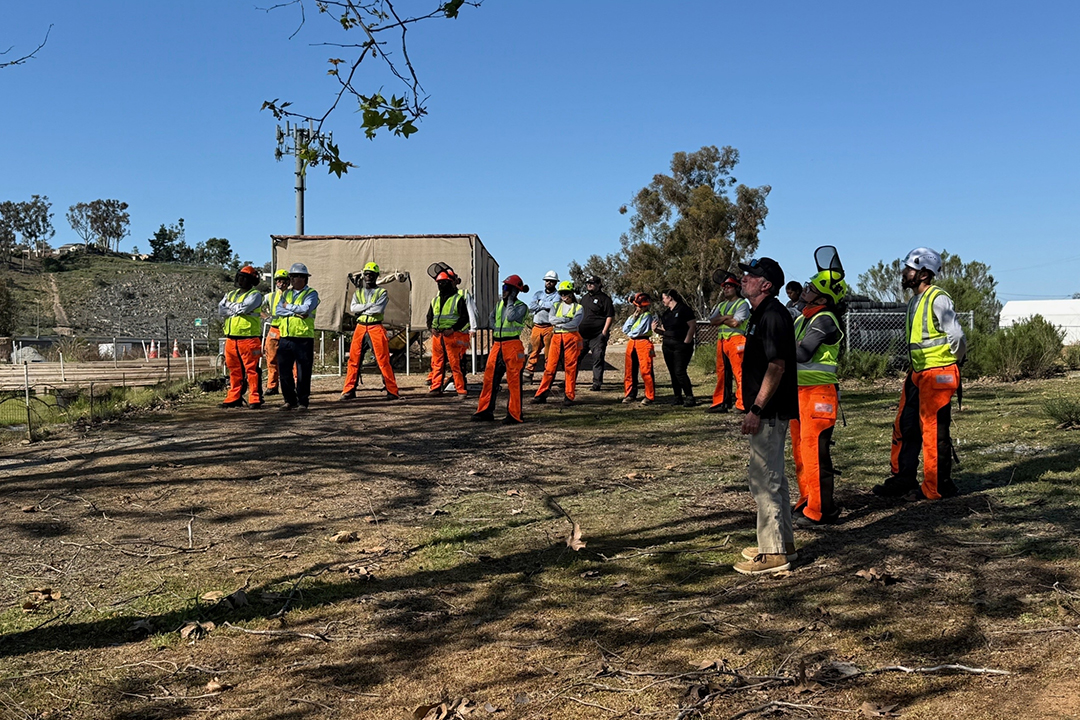
Cortez personally contributed a full day of chainsaw safety and arborist training with Urban Corps members, highlighting the Authority’s commitment to workforce development.
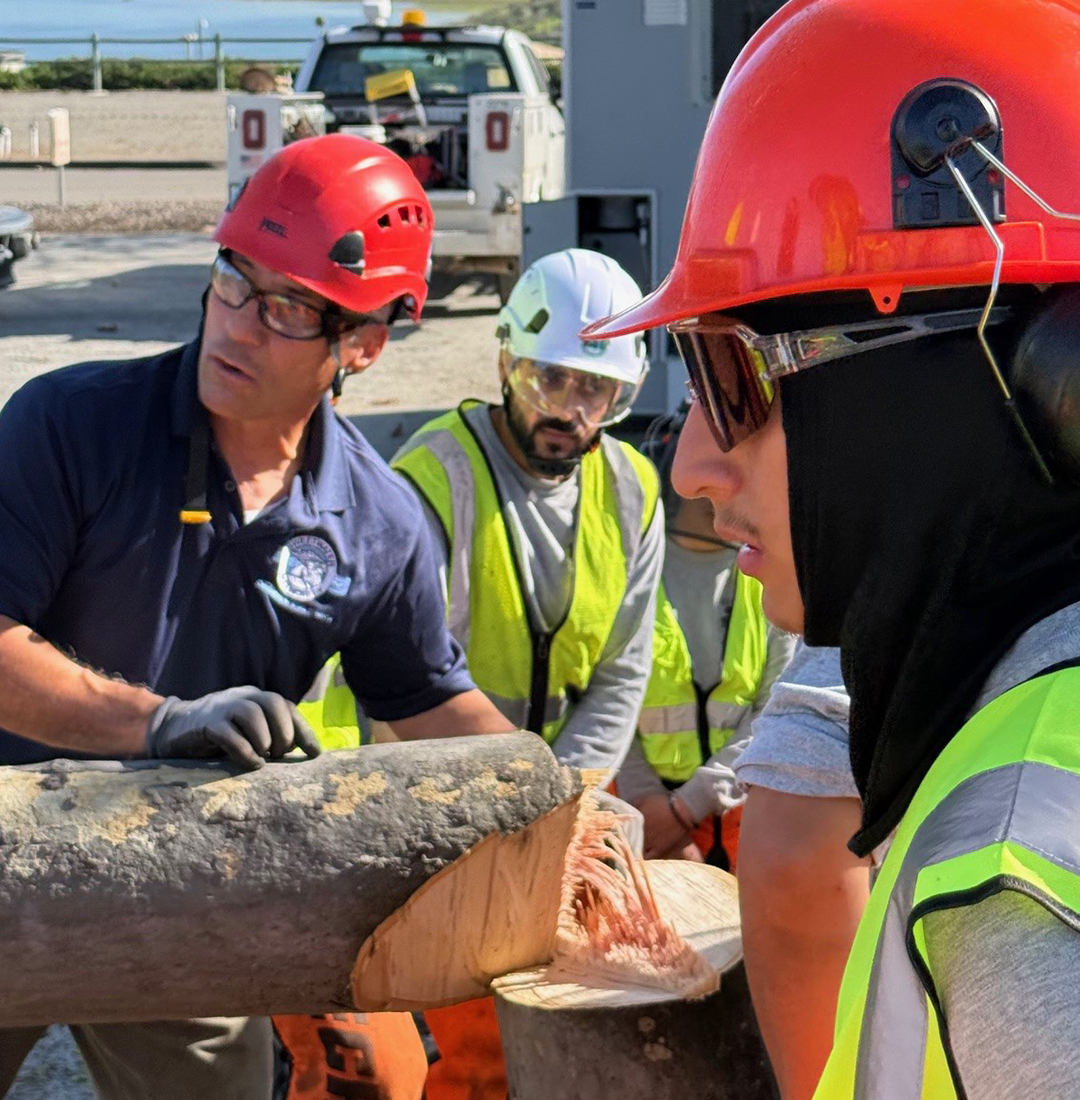
Sweetwater Authority project manager Richard Cortez (far left) with the Watershed Caretakers team and Urban Corps San Diego crew members. Photo: Sweetwater Authority habitat restoration

Sweetwater Authority project manager Richard Cortez (far left) with the Watershed Caretakers team and Urban Corps San Diego crew members. Photo: Sweetwater Authority

Mitigation Efforts Magnified By Flourishing Habitat

Over the past two years, the project has yielded impressive and visible results. The first year focused on removing dozens of dead and dying trees, stabilizing slopes, and beginning the transition to fire-resilient native habitat.

The results were immediate. When the Quarry Fire swept through the area on October 31, 2024, the newly created defensible space and early restoration work helped reduce the potential for the wildfire to spread to the Perdue Plant, protecting the facility and nearby homes.

In the second year, hazardous tree removal was completed. Authority staff and Urban Corps crews returned to the slope to expand restoration efforts by planting native succulent scrub habitat, which is dominated by cacti and adapted to the region’s fire cycles.

Tree branches were chipped and reused as mulch at Authority tank sites and other properties to control weeds and reduce erosion. Selected tree trunks were also repurposed at the Sweetwater Reservoir Recreation Area to help mark roads and trails and reduce trespassing into sensitive habitats.

The native habitat is now flourishing. With the eucalyptus canopy removed and the soil receiving more sunlight and moisture, the slope is healing itself. Native coastal sage scrub species, including some rare plants like California Adolphia and many native annual herbs, are returning to the site. The recovering ecosystem is becoming more resilient, more diverse, and more supportive of native wildlife.

USGS and the wildlife agencies emphasized the importance of expanding succulent scrub habitat to support breeding, foraging, and long-term population stability of threatened bird species, including the coastal cactus wren and the California gnatcatcher, a federally threatened species. Both benefit from the return of coastal sage scrub habitat.

As the slope continues to recover, these species will find new opportunities for nesting, feeding, and moving across the landscape in one of their last remaining strongholds in southern San Diego County.

Restoration and monitoring will continue through 2026, with follow-up maintenance by Sweetwater Authority staff as part of its watershed and habitat protection program.

What was once a hazardous, fire-prone area covered with dead and dying eucalyptus and debris is becoming a healthier, safer, and more resilient habitat that protects critical drinking water infrastructure, supports sensitive wildlife, and strengthens the connection between Sweetwater Authority and the community it serves.
Intensifying Climate ‘Whiplash’ Set the Stage for Devastating California Fires

The devastating wildfires that have ravaged Southern California erupted following a stark shift from wet weather to extremely dry weather — a phenomenon scientists describe as “hydroclimate whiplash.”

New research shows these abrupt wet-to-dry and dry-to-wet swings, which can worsen wildfires, flooding and other hazards, are growing more frequent and intense because of human-caused climate change.

California Burns as Heat Wave Spreads Across Western U.S.

As California braces for a dangerous, prolonged heat wave that’s expected to last through next week, firefighters across the state are battling several new wildfires, some serious enough to force evacuations.

The most dangerous fire was burning in Oroville, where crews on Wednesday were fighting the Thompson fire under an excessive-heat warning, with temperatures forecast to reach up to 109 degrees and wind gusts up to 30 mph.

First Heat Wave To Scorch The West Because Of A ‘Heat Dome.’ Who Will See Extreme Temps?

The USA’s first major heat wave of the summer will overspread the West over the next few days, forecasters said, pushing temperatures to dangerous and even “life-threatening” levels across several states, including California, Nevada and Arizona.

By the middle of the week, temperatures in both Phoenix and Las Vegas could reach 111 degrees, the National Weather Service said. Many record highs are possible.

New Wildfire Fighting Tool Unveiled in North County

A new water tank to help fight fires from the air was unveiled in San Marcos Tuesday.

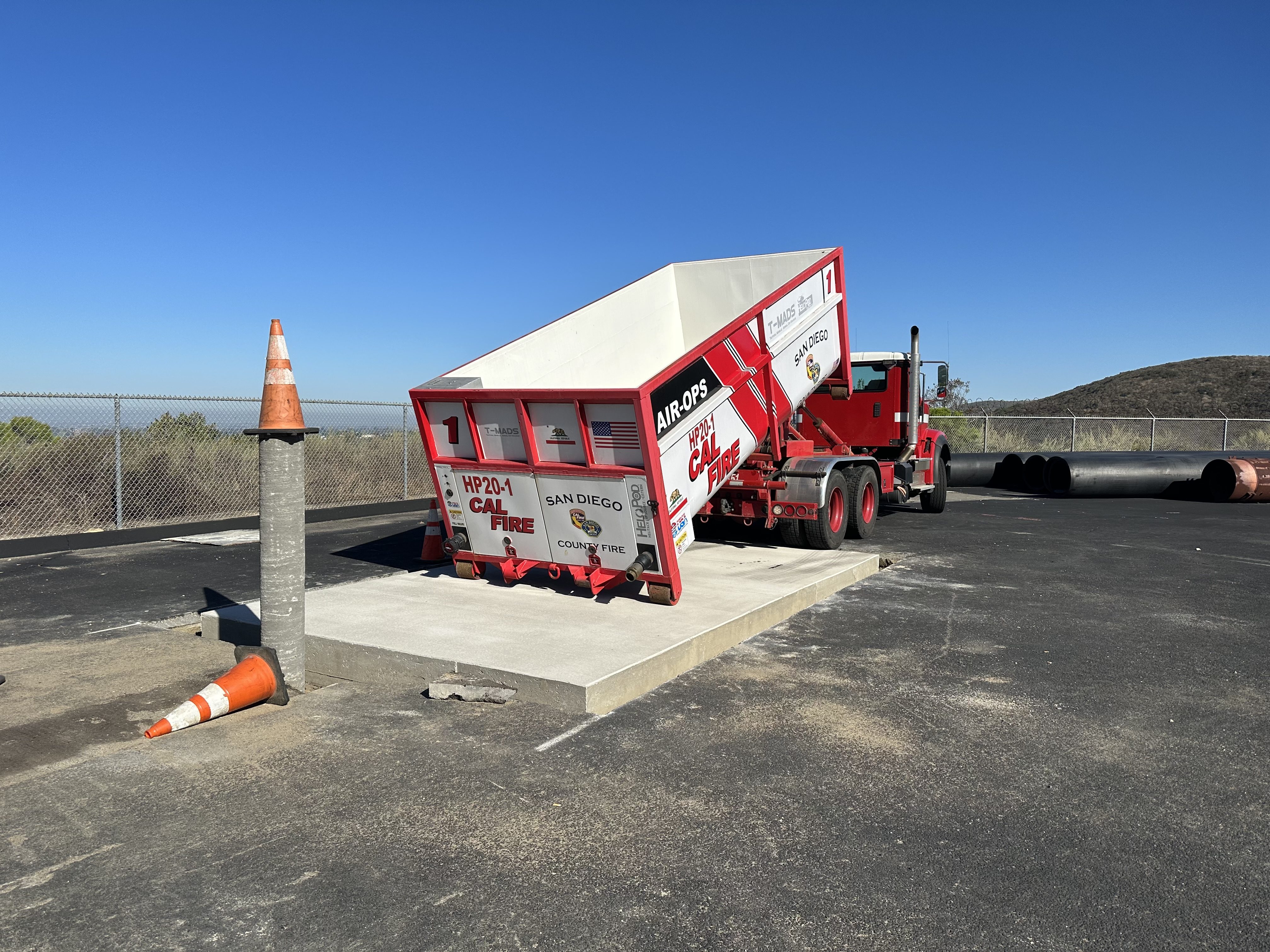
Helicopters with capabilities to drop water onto fires aerially are one of the most crucial firefighting tools. The New HeloPod can be filled with 5,000 gallons of water in under three minutes.

Left group, front row: San Marcos councilmembers Ed Musgrove and Mike Sannella; San Marcos Deputy Mayor Sharon Jenkins; San Marcos Mayor Rebecca Jones. Back row: San Marcos Fire Department Fire Marshall/Battalion Chief Jason Nailon. Right group, front row: Vallecitos Board Member Craig Elitharp and President Tiffany Boyd-Hodgson, Ph.D.; Vallecitos Operations and Maintenance Manager Ed Pedrazzi. Back row: Vallecitos Board Member Jim Pennock with grandson; Vallecitos Board Member Erik A. Groset, Vallecitos General Manager James Gumpel. Photo: Vallecitos Water District wildfire preparedness HeloPod

Vallecitos Water District, City of San Marcos, and CalFIRE Collaborate on Wildfire Preparedness

In preparation for the 2024 wildfire season, the Vallecitos Water District and City of San Marcos worked with the California Division of Forestry and Fire Protection (CalFIRE) to provide a new water source to aid firefighters.

On Tuesday, April 30, Vallecitos Board President Tiffany Boyd-Hodgson, Ph.D., and San Marcos Mayor Rebecca Jones hosted a ribbon-cutting ceremony for the District’s new HeloPod, including a demonstration of the new tool in use. CalFIRE representatives joined water and city officials for the event.

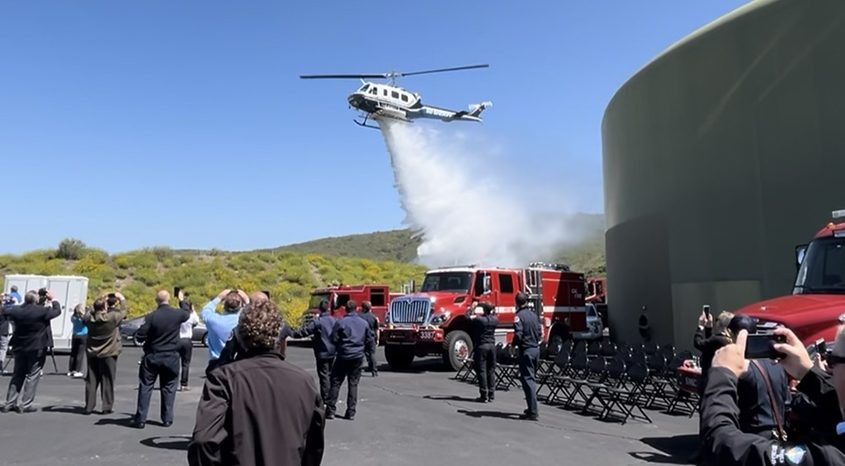
The San Diego County Sheriff's Department helicopter demonstrates how it deploys water from the HeloPod in firefighting. Photo: Vallecitos Water District wildfire preparedness

The San Diego County Sheriff’s Department helicopter demonstrates how it deploys water from the HeloPod in firefighting. Photo: Vallecitos Water District

“The Vallecitos Water District, the City of San Marcos, San Marcos Fire, and Cal-Fire have demonstrated our commitment to progress and partnership by providing the resources, expertise, people, and political will to achieve this benefit to our community. Today we are marking an occasion of progress and partnership as much as we are celebrating the milestone in-service of the HeloPod,” said Boyd-Hodgson.

“This important new weapon in our fight against wildfire stands as a testament to how government agencies can work together to protect our quality of life, our property and our community for years to come,” added Boyd-Hodgson.

See a demonstration video of the HeloPod.

The HeloPod is located next to a Vallecitos Water District-owned water storage tank east of North Las Posas Road in the Santa Fe Hills area.

CalFIRE provided the HeloPod unit to Vallecitos. Facilities and maintenance personnel installed it in its permanent location in San Marcos. It is eight feet long, six feet wide, and five feet deep.

HeloPod Helps Improve Wildfire Fighting Capacity

Vallecitos Water District personnel install the HeloPod. Photo: Vallecitos Water District wildfire preparedness

Vallecitos Water District personnel installed the HeloPod. Photo: Vallecitos Water District

The event marked a significant milestone in firefighting capacity in inland North San Diego County.

This HeloPod is a new high-capacity helicopter water dipping source — a 5,000-gallon cistern specifically designed for firefighting helicopters. It can be filled by water from Vallecitos’ Palomar Tank. It is strategically located in the hills north of Highway 78. It will serve as a vital resource for firefighting helicopters, enabling them to swiftly access clean water to contain and extinguish wildfires before they spread.

Each HeloPod holds a ready supply of 5,000 gallons of water. Photo: Vallecitos Water District wildfire preparedness

Each HeloPod holds a ready supply of 5,000 gallons of water. Photo: Vallecitos Water District

With access to a HeloPod, firefighting helicopters can fill their water tanks faster and conduct more water drops per hour. Filling up a helicopter with a HeloPod is four times faster than filling up by landing, which is vital when seconds count.

County Fire and CalFIRE are also placing large HeloPods around San Diego County. One is already in use at the CalFIRE Station in Julian, and at the CalFIRE San Diego Unit in El Cajon; at the Rainbow Fire Center in Fallbrook, and at the McCain Valley Fire Camp in Boulevard. Future HeloPods will be placed at Crouch Valley near Mt. Laguna and near the Puerta La Cruz CalFIRE Conservation Camp near Warner Springs.

July Keeps Sizzling as Phoenix Hits Another 110-Degree Day and Wildfires Spread in California

Phoenix sizzled through its 31st consecutive day of at least 110 degrees Fahrenheit (43.3 Celsius) and other parts of the country grappled Sunday with record temperatures after a week that saw significant portions of the U.S. population subject to extreme heat.

The National Weather Service said Phoenix climbed to a high of 111 F (43.8 Celsius) before the day was through.

Climate Change Leaves Fingerprints on July Heat Waves Around the Globe, Study Says

The fingerprints of climate change are all over the intense heat waves gripping the globe this month, a new study finds. Researchers say the deadly hot spells in the American Southwest and Southern Europe could not have happened without the continuing buildup of warming gases in the air.

Expect a Hot, Smoky Summer in Much of America. Here’s Why You’d Better Get Used to It

The only break much of America can hope for anytime soon from eye-watering dangerous smoke from fire-struck Canada is brief bouts of shirt-soaking sweltering heat and humidity from a southern heat wave that has already proven deadly, forecasters say. And then the smoke will likely come back to the Midwest and East.

Opinion: California’s Regulated Water Utilities Work Constantly to Provide Safe, Clean Water

Water is a precious resource, essential to life and requires our utmost care. As drought, climate change, wildfires and other natural disasters become more impactful, it is more important than ever that we are meeting our everyday and emergency water needs.