Tag Archive for: SDCWA

Urban Water Management Plan-Water Authority-Primary photo-Colorado River Aqueduct

California Commits to Conservation, Collaboration in New Colorado River Framework

California’s water, tribal, and agricultural leaders today presented a comprehensive framework for a durable, basin-wide operating agreement for the Colorado River and highlighted the state’s proposal for conserving 440,000 acre-feet of river water per year.

At the annual Colorado River Water Users Association conference, California underscored the state’s leadership in conservation, collaboration, and long-term stewardship of shared water resources that inform its approach to post-2026 negotiations.

California takes a balanced approach, relying on contributions from the upper and lower basins to maintain a shared resource. California supports hydrology-based flexibility for river users, with all states contributing real water savings. Any viable framework would need to include transparent and verifiable accounting for conserved water, along with several other elements outlined in the California framework.

State leaders also noted that they are willing to set aside many of their legal positions to reach a deal, including releases from Lake Powell under the Colorado River Compact, distribution of Lower Basin shortages, and other provisions of the Law of the River, provided that there are equitable and sufficient water contributions from every state in the Basin and the country of Mexico.
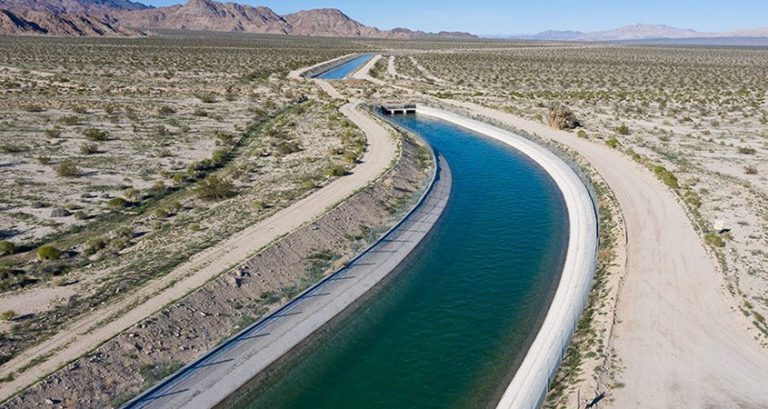
The Colorado River Basin provides essential water supplies to approximately 40 million people and 30 Tribal Nations, nearly 5.5 million acres of agricultural lands, and habitat for ecological resources across parts of several Western states (including Arizona, California, Colorado, Nevada, New Mexico, Utah and Wyoming) and Mexico.

Constructive California

“California is leading with constructive action,” said JB Hamby, chairman of the Colorado River Board of California. “We have reduced our water use to the lowest levels since the 1940s, invested billions to modernize our water systems and develop new supplies, partnered with tribes and agricultural communities, and committed to real water-use reductions that will stabilize the river. We are doing our part – and we invite every state to join us in this shared responsibility.”

Despite being home to 20 million Colorado River-reliant residents and a farming region that produces the majority of America’s winter vegetables, California’s use of Colorado River water is projected at 3.76 million acre-feet in 2025 – the lowest since 1949.

That achievement comes on top of historic reductions in water use over the past 20 years, led by collaborative conservation efforts. Urban Southern California cut imported water demand in half while adding almost 4 million residents. And farms reduced water use by more than 20% while sustaining more than $3 billion in annual output. Tribes also have made critical contributions, including nearly 40,000 acre-feet of conserved water by the Quechan Indian Tribe to directly support river system stability.

Going forward, California is prepared to reduce water use by 440,000 acre-feet per year – in addition to existing long-standing conservation efforts – as part of the Lower Basin’s proposal to conserve up to 1.5 million acre-feet per year, which would include participation by Mexico.  When conditions warrant, California is also committed to making additional reductions to address future shortages as part of a comprehensive basin-state plan.
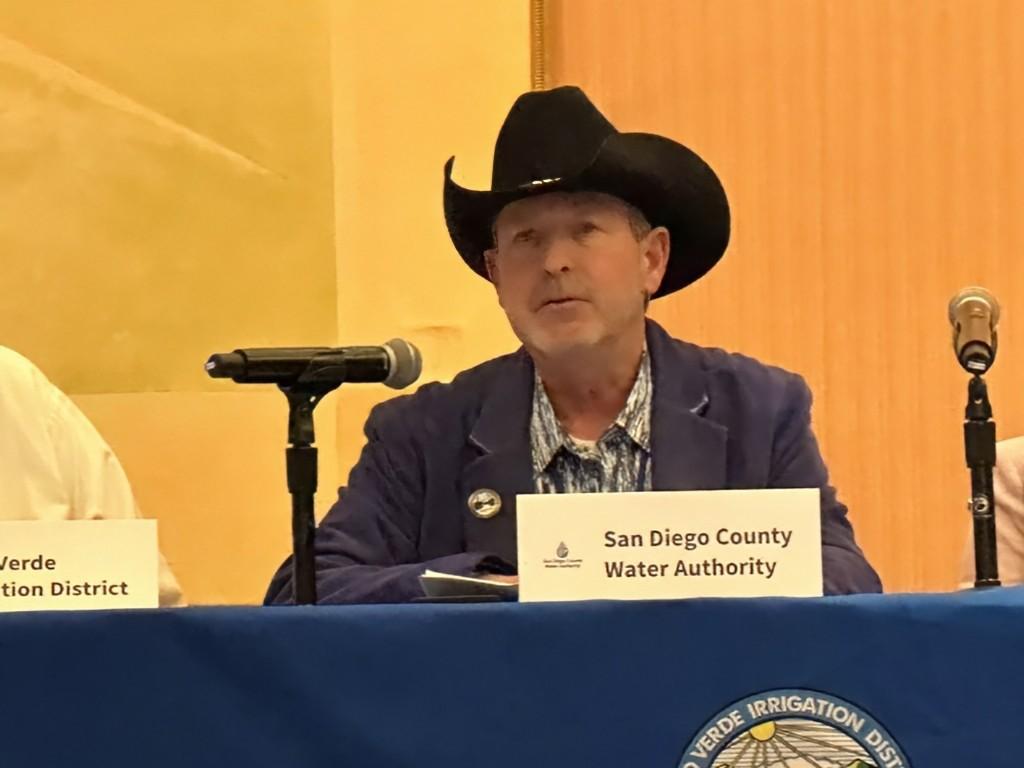
CRB Vice Chair and SDCWA Director Jim Madaffer at the 2025 CRUWA conference.

“The path to resiliency requires innovation, cooperation, and every Basin state’s commitment to conservation. The San Diego County Water Authority supports an approach that provides flexibility to adapt to changing climate conditions,” said CRB Vice Chair and SDCWA Director Jim Madaffer. “That means developing a new framework that allows for interstate water transfers to move water where it’s most needed and incentivizes the development of new supplies for augmentation.”

The state’s history of conservation illustrates what can be accomplished through collaboration, and all Colorado River water users in California are preparing to contribute to these reductions – agricultural agencies, urban agencies, and tribes.

Framework for a Post-2026 Agreement

In addition to conservation contributions, California provided a framework of principles for the post-2026 river operating guidelines to advance a shared solution for the seven Basin States, the tribes and Mexico. More specifically, California outlined the following key components for a new framework:

  • Lake Powell releases – California supports a policy of hydrology-based, flexible water releases that protects both Lake Powell and Lake Mead. Flexibility must be paired with appropriate risk-sharing across basins, avoiding disproportionate impacts to any one region.
  • Upper Initial Units (Colorado River Storage Project Act) – Releases should be made when needed to reduce water supply and power risks to both basins.
  • Shared contributions – The Lower Basin’s proposed 1.5 million acre-feet per year contribution to address the structural deficit, including an equitable share from Mexico (subject to binational negotiations), is the first enforceable offer on the table. When hydrology demands more, participation by all seven Basin States is essential.
  • Interstate exchanges – Interstate exchanges need to be part of any long-term solution to encourage interstate investments in new water supply projects that may not be economically viable for just one state or agency.
  • Operational flexibility – Continued ability to store water in Lake Mead is vital to maintain operational flexibility. California supports continuation and expansion of water storage in Lake Mead as a long-term feature of river management and to encourage conservation. We also support Upper Basin pools for conservation, allowing similar benefits.
  • Phasing of a long-term agreement – California supports a long-term operating agreement with adaptive phases. Tools like water storage in Lake Mead and Lake Powell need to extend beyond any initial period due to significant investments required to store conserved water in the reservoirs.
  • Protections and federal support: Any agreement should be supported with federal funding and any necessary federal authorities, allow agriculture and urban areas to continue to thrive, protect tribal rights, and address the environment, including the environmentally sensitive Salton Sea.

“There are no easy choices left, but California has always done what is required to protect the river,” said Jessica Neuwerth, executive director of the Colorado River Board of California. “We have proven that conservation and growth can coexist. We have shown that reductions can be real, measurable, and durable. And we have demonstrated how states, tribes, cities, and farms can work together to build a sustainable future for the Colorado River.”
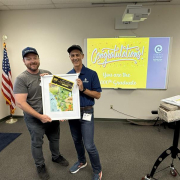
1000th Community Leader Graduates from Citizens Water Academy

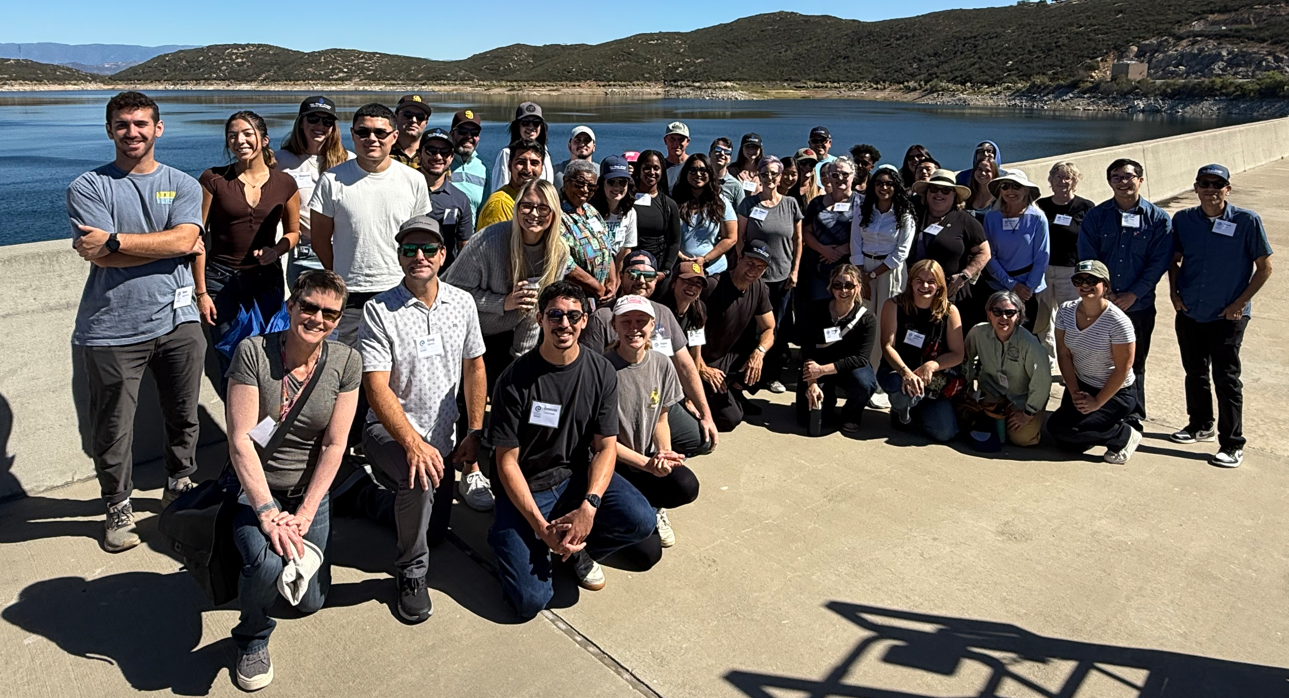
The San Diego County Water Authority’s award-winning Citizens Water Academy celebrated the graduation of its 1,000th community leader last Saturday at the conclusion of this year’s fall class.

During the popular and long-running academy program, civic leaders learn about how the Water Authority has built the safe and reliable water supply San Diego County depends on over the past 80 years. Additionally, attendees visit vital Water Authority sites like the Olivenhain Dam, hear from staff about a wide range of topics from physical infrastructure that makes the system work to the future of the Colorado River, all while building relationships with staff and each other.

“The Citizens Water Academy is a valuable and effective way to help community leaders better understand how the Water Authority manages our most important natural resource,” Board Chair Nick Serrano said. “With more than 1,000 graduates, this academy has helped increase transparency about who we are and what we do to guarantee water reliability and security for the region.”

The Citizens Water Academy launched in fall 2014 and produced a diverse inaugural class of 49 graduates. Over the years, 99 percent of participants said they would recommend the Water Academy to a colleague.

Participants said the class series helped them understand the physical movement of water into and around the region, the importance of the region’s water supply diversification strategy, how large-scale water projects are built and maintained, and how water managers are preparing for future water supply needs.

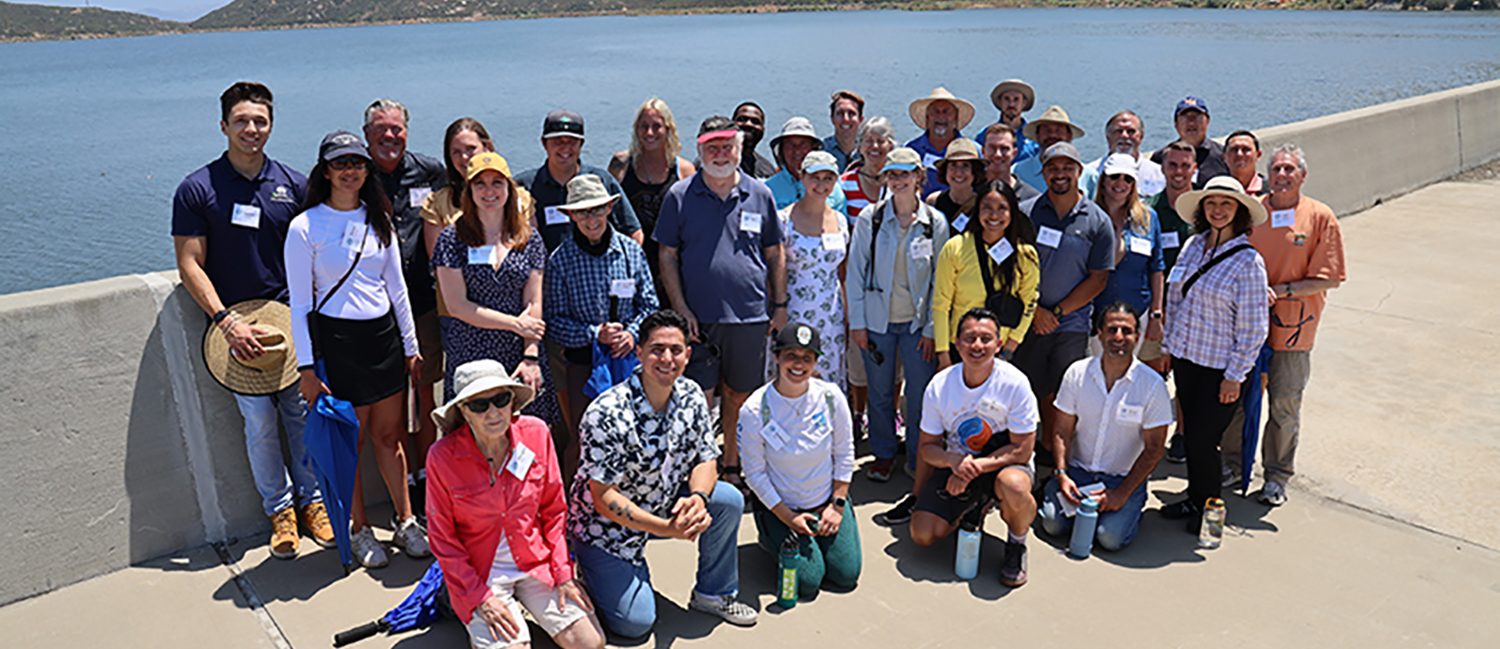
The Fall 2025 Citizens Water Academy class.

The Fall 2025 Citizens Water Academy class.

The Water Authority typically hosts two academies of roughly 50 participants each year. This year’s class included representatives from several state and local elected offices, leading companies in the region, and an array of non-profits, universities and public agencies.

In addition, the Water Authority maintains an active network of Water Academy graduates who participate in specialized tours, lectures and other events, like the recent “Future of the Colorado River” panel held in conjunction with the San Diego Global Affairs Council and the Burnam Center for Community Advancement. They also stay connected through an alumni newsletter – part of the Water Authority’s commitment to supporting engaged and knowledgeable regional leaders.

The Water Authority will host its next academy in the spring of 2026. For more information about how to take part in this unique experience, visit www.sdcwa.org/in-the-community/citizens-water-academy/.

Summer 2023 Water Academy class visiting the Olivenhain Dam and Pump Station.

Applications Now Open for Spring 2025 Citizens Water Academy

Don’t miss this exclusive opportunity for emerging leaders throughout San Diego County to join the Citizens Water Academy and get an up-close understanding of our most important resource.

Over multiple sessions participants will learn firsthand about critical water issues affecting the region and go behind the scenes with water managers, planners, and engineers to gain a deeper understanding of the Water Authority’s life-sustaining mission.

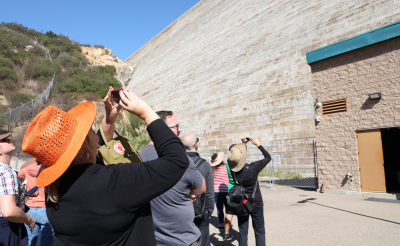
Citizen Water Academy participants check out the Olivenhain Dam.

Citizen Water Academy participants check out the Olivenhain Dam.

Since its launch in 2015, this award-winning program has equipped nearly 800 civically engaged leaders with the water knowledge they need to make a difference in their communities and careers.

Whether you’re a staffer or a working professional, an elected official or business leader, the information and relationships you’ll gain from the Citizens Water Academy will be impactful. Finally, graduates will have access to a robust and growing alumni network from across the region.

The application period runs from January 6 to February 28, with the class taking place in early April. Citizens Water Academy participants must attend all three sessions. The application is available on the Water Authority website through this link.

Session Guide:

Session 1 – Wednesday lunch hour, April 9 via Zoom. Welcome and overview by General Manager Dan Denham.

Session 2 – Thursday evening, April 10. Dinner, presentations, and activities. Topic: planning for a water-resilient future.

Session 3 – Saturday, April 12, half day. Breakfast and lunch, and behind-the-scenes tours of the Water Authority’s Operations Center and Olivenhain Dam and Pump Station.

Innovative Water Deal Deliver Benefits to Regional Ratepayers

For the second year in a row, the San Diego County Water Authority and its partners have struck a deal to conserve water in Lake Mead, support the long-term sustainability of the Colorado River and save local ratepayers money.

The agreements between the Water Authority, the Imperial Irrigation District, and the Metropolitan Water District, with funding from the U.S. Bureau of Reclamation, are designed to promote voluntary water conservation. The 2024 agreement was announced during a meeting of the Colorado River Board of California at this year’s Colorado River Water Users Association’s conference in Las Vegas.

As a part of these deals, the Water Authority agreed to leave 50,000 acre-feet of water from its Quantification Settlement Agreement supplies in the Colorado River, helping California meet federal conservation goals.

The 2023 agreement between the three parties was the first of its kind. The 2024 deal will save San Diego County ratepayers approximately $20 million, which will be applied to 2026 wholesale water rates.

“For the second year in a row, the Water Authority and its partners have struck a deal to conserve water in Lake Mead and save our local ratepayers approximately $20 million,” said Water Authority Board Chair Nick Serrano. “This is a win-win for all of us and demonstrates how the Water Authority is strategically using its assets to help protect ratepayers and the Colorado River through innovative thinking.”

The Water Authority’s efforts are part of a larger commitment by California water users to protect the overtaxed Colorado River, including plans to save at least 400,000 more acre-feet in 2025 after conserving more than 1.2 million acre-feet over the last two years.

“It is really a model partnership and collaboration between states and local entities and the federal government,” said U.S. Bureau of Reclamation Commissioner M. Camille Calimlim Touton.

California’s efforts have led to the equivalent of 16 feet of water being added to Lake Mead in two years, providing much-needed stability to the entire river system as the seven Basin states work with the federal government to create a post-2026 operations plan for the river.

“Our collective achievements not only have made a profound impact on Lake Mead today, they also illustrate the can-do spirit that the Water Authority and our partners bring to future conservation work on the river,” said Colorado River Board Vice Chair and Water Authority Director Jim Madaffer. “We are both proud of what we have accomplished and committed to delivering additional solutions for the Southwest in the years ahead.”

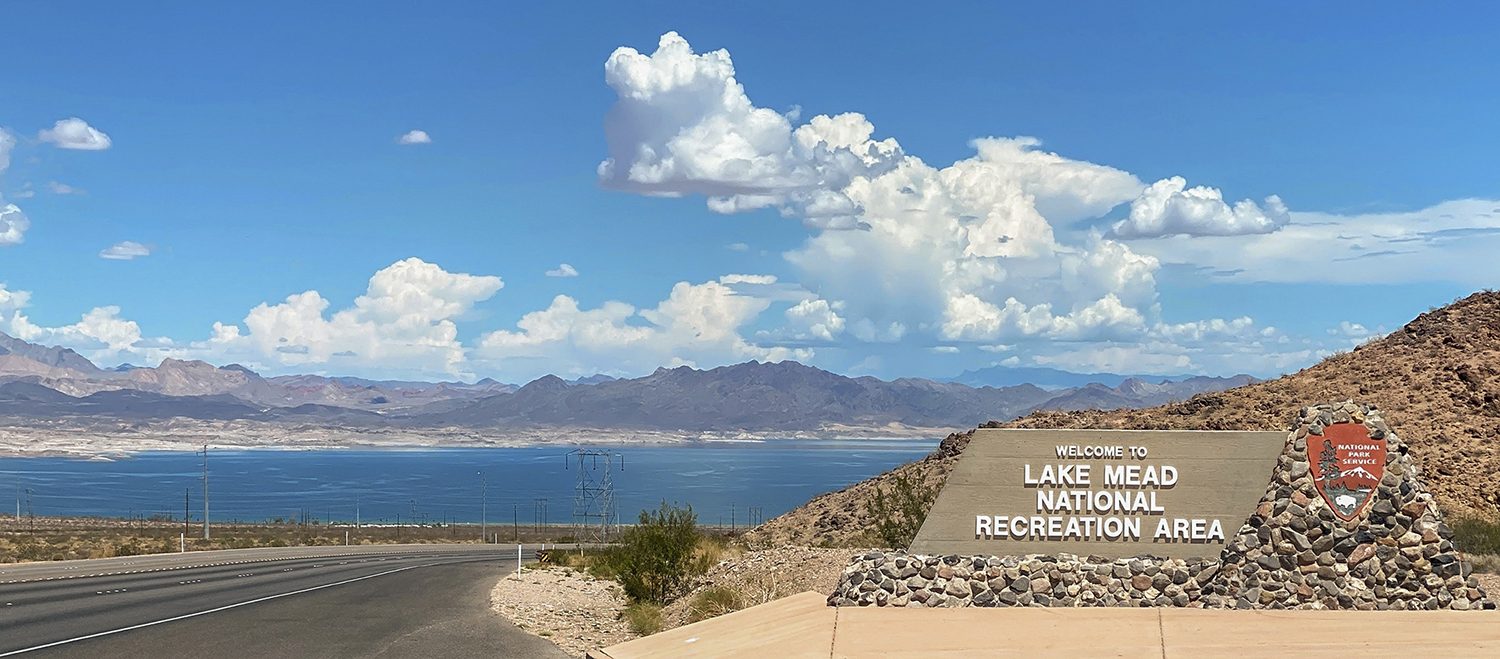
SLIDER The welcome sign for the Lake Mead National Recreation Area, which includes 750 miles of shoreline. The federal site was Americaís first national recreation area established in 1947. Photo taken August 17, 2022. Christopher Clark / U.S. Department of the Interior - Bureau of Reclamation

The Colorado River Basin is the most important water source in the West, providing water for more than 40 million people and generating hydropower in seven U.S. states.

The Water Authority will continue to pursue other water transfers and exchanges to maximize the value of San Diego County’s water resources and minimize the cost to local ratepayers. Those steps include budget cuts, project deferrals, debt refinancing, increasing grant funds and restructuring rates.

“Scanny” Gives SDCWA a New Perspective on Pipe Inspection

The high-tech surveillance device is called “Scanny.” Previously, SDCWA hired a specialty rope crew at a minimum of $3,000 a day to help perform the steep, slippery work throughout the hills and canyons of its service area. Shutoffs for this type of maintenance can’t surpass 10 days, so the pipe remained slick throughout the job.

Martin Coghill, SDCWA’s operations and maintenance manager, created the Scanny device in his spare time in his garage for less than $6,000. He arranged a series of GoPro cameras and lights on a mobile chassis. Learn more about how Scanny works in this video.

The San Diego County Water Authority added desalinated seawater to its supply portfolio in 2015 with the start of commercial operations at the nation’s largest seawater desalination plant. Photo: San Diego County Water Authority

Membrane Tech Important Piece of Water Future

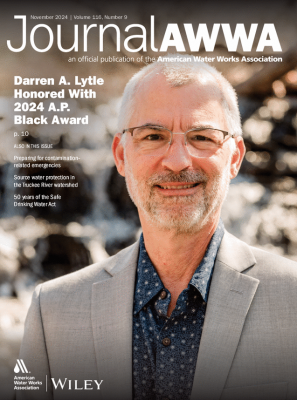
The November edition of Journal AWWA (American Water Works Association) features a San Diego County Water Authority employee’s thoughts on a larger discussion about what the world of water could look like in 2050. In a piece titled “Addressing the Global Water Crisis With Membrane Technology”, Water Authority Principal Engineer Silvana Ghiu and her co-authors expanded on the vital importance of membrane technology for a hotter and dryer planet.

“The United Nations’ World Water Development Report 2023: Partnerships and Cooperation for Water estimates that the urban population facing water scarcity will increase from 933 million in 2016 to between 1.7 and 2.4 billion by 2050, representing one-third to one-half of the global urban population,” the article’s authors highlighted.

What can be done to fight against this global emergency?

The November edition of Journal AWWA

The November edition of Journal AWWA

“After decades of advancements and innovation, membrane technology has evolved into an essential tool that can harness unconventional water sources to provide safe, sustainable drinking water.”

San Diego County residents don’t have to go far to see this technology in action. In fact, it’s being used right here in Carlsbad.

“In California, drought is intrinsic to the natural climate, and the need for lo­cal, reliable water supplies led to the 2015 construction of the Claude ‘Bud’ Lewis Carlsbad Desalination Plant, the largest desalination plant in the Western Hemisphere, with a capac­ity of 50 mgd (million gallons per day).”

From desalination along the coast to using membrane technology to treat brackish water in the interior, along with future advancements that could create even more opportunities for reliability, this technology is clearly here to stay.

“Membrane technology could be present in some capacity in nearly every new water plant built by the middle of this century,” writes Ghiu and her co-authors. In San Diego that future is already here as the Water Authority continues to build a reliable regional water supply for a changing climate. To read more, click here.

Utility Patent-Pipeline Inspection Tool-

Water Authority Wins Golden Watchdog Award

The San Diego County Water Authority won a Golden Watchdog Award at this year’s Golden Watchdog & Fleece Awards hosted by the San Diego County Taxpayers Association on Oct. 18. The Water Authority was recognized for its deployment of “Scanny,” a high-tech surveillance device designed to safely and efficiently monitor the agency’s large-diameter pipelines that provide water to the San Diego region.

Scanny-patent-innovation-

The inspection tool uses commercially available lightweight adventure cameras and lights that are arranged in a unique way on a chassis that moves through pipelines that are 4 to 9 feet in diameter. Photo: San Diego County Water Authority

A special congratulations to the Water Authority’s Operations and Maintenance team and in particular Asset Management Manager Martin Coghill, who designed and patented “Scanny” on behalf of the Water Authority.

Proactive maintenance and asset management practices allow water agencies to extend the lifespan of their pipeline assets by more than 50%. With 308 miles of transmission pipelines, 100 flow control facilities and more than 1,400 pipeline-related structures, the Water Authority is constantly assessing and inspecting critical infrastructure across the county. This not only ensures that the Water Authority can stay ahead of potential emergencies but also reduce the need for replacing infrastructure.

Inspections involve crews entering the drained pipelines and evaluating around 30 miles each year. The pipelines traverse the hilly terrain of San Diego County, and some sections are so steep that they require the use of specialized rope and rigging support teams. That’s where “Scanny” comes in. Using an array of cameras to provide high-definition video surveillance of the interior of the pipeline, invented by Water Authority staff, provides the ability to inspect these pipes without requiring specialists.

The benefit of this technology goes beyond proactive maintenance. When compared to the cost of hiring specialized rope and rigging teams, “Scanny” paid for itself in just two deployments. “Scanny” can also be deployed multiple times each year during the inspection season.

Asset management at the Water Authority is more than just using new technology, it’s a strategic investment. In round numbers, the cost to replace 1 mile of large-diameter pipeline can be around $10 million. The cost to assess and maintain the same mile of pipeline may be around $100,000 every 10 years.

Imagining a World Without Water

Every October 17, the US Water Alliance hosts “Imagine a Day Without Water” — a chance to collectively acknowledge the critical role water plays in every aspect of our lives.

Imagine rolling out of bed in the morning, going to brush your teeth, and no water coming out of the tap. You check the dishwasher, which was supposed to run last night, and see the plates and glasses are still dirty. The shower runs dry, the lawn isn’t watered, and the washing machine is idle.

A world without water. It’s a scary proposition.

While this may seem like science fiction, some cities have come extremely close to this terrifying reality. A few years ago, huge water shortages forced residents of Cape Town, South Africa, to shrink their water use to all-time lows.  “We are now limited to using 13 gallons of water per person per day,” wrote Time Magazine. “That’s enough for a 90-second shower, a half-gallon of drinking water, a sinkful to hand-wash dishes or laundry, one cooked meal, two hand washings, two teeth brushings and one toilet flush.”

This year Mexico City faced similar catastrophic cuts to keep preserve their dwindling water reserves. “Bernardo Nonato Corona, a resident of the hills surrounding Mexico City, told ABC News he spends 25% of his income on water.”

Cataclysmic water shortages, safety and supply problems aren’t just an international issue. They’re happening right here in California as well. An annual assessment released by the State Water Resources Control Board found that “almost 400 water systems serving nearly a million Californians don’t meet state requirements for safe and reliable drinking water supplies.”

Climate change, poor planning and other factors have caused residents around the world to face a world without water.

Now think about how a similar situation would impact our region. More than 3 million residents across the county and hundreds of millions of dollars in economic activity would grind to a halt, making the basic activities we take for granted impossible.

Thankfully, the San Diego region has planned to make sure that scenario stays a hypothetical.

On Oct. 1, the San Diego County Water Authority announced that the region had plenty of water to meet demands during the year ahead regardless of the weather. That’s because our region’s work on new supplies, conservation and water storage over the past 30 years were a down payment on sustainable water supplies for future generations.

We know there are challenges ahead to provide our growing region the reliable water supply it needs in a hotter and drier world. We’re working to make sure that a world without water is just a one day thought experiment instead of reality.

Tijuana Water Deliveries, Explained

Over the last few weeks, several stories have come out about water deliveries being made to the city of Tijuana. Here’s some of the basics behind this unique international agreement.  

Whose water is it? Mexico’s. Water delivered through the Emergency Deliveries Agreement is a portion of the Colorado River supplies allotted to Mexico under the 1944 Treaty.  

Where does it come from? Under normal conditions, Tijuana’s supply of Colorado River is diverted from the Morelos Dam, about 1 mile downstream of the California and Baja California boundary, south of Yuma, Ariz. Water is transported west through the Alamo Canal to Mexicali, and then through the Tijuana Aqueduct to Tijuana, for a total of about 150 miles.  

Under emergency conditions, Mexico’s Colorado River supply to Tijuana is diverted at Lake Havasu and transported through Metropolitan’s 242-mile Colorado River Aqueduct before being conveyed through MWD, Water Authority and Otay Water District distribution systems. 

Daytime papel picado framed view of the iconic landmark arch of downtown Tijuana, Baja California, Mexico.

When did deliveries start? The Agreement was signed in 1972, and several amendments (minutes) were signed since then that document the authorization of emergency deliveries to Mexico. Delivery volumes have varied from 0 to nearly 10,000 acre-feet per year; the maximum annual delivery volume, per the agreement, is 14,400 acre-feet.  

Emergency deliveries occurred throughout the 1970s and stopped from 1981-2002. Deliveries started up again from 2003-2012, with another hiatus from 2013- 2017. Most recently, Mexico has requested emergency deliveries every year from 2018 -2024, except for 2021. 

How many agencies are involved? A number of agencies from the federal, state, local and Mexico governments are involved. On the U.S. side, this includes the Bureau of Reclamation, the U.S. International Boundary and Water Commission, Metropolitan Water District of Southern California, San Diego County Water Authority and Otay Water District. South of the border, the National Water Commission, Mexico’s International Boundary and Water Commission, State Public Utility Commission of Tijuana (CESPT) and other agencies are involved. 

What does the current agreement include? The current agreement, which expires in 2027, includes procedures and schedules for annual emergency delivery requests, capacity determination by the California Agencies, base cost of deliveries calculation and fund balance requirements.   

With each annual request by Mexico, the California Agencies must agree to deliver the requested delivery volumes based on available capacity within their respective systems. Additionally, funds must be provided by Mexico in advance of water deliveries.  

Opinion: Calgary’s Water-main Break Has Important Lessons for the Rest of Us

I saw a heartwarming tweet on Sunday. It was notable for two reasons. The first was that something heartwarming was a nice change of pace. But the second was that it spoke to a story that is currently very much in the news and also very relevant to my interests. The municipal water-service department in San Diego, California, is shipping the city of Calgary a spare section of pipe. It is apparently exactly what Calgary needs to help recover from the recent catastrophic water-main failure that has deprived the city of 60 per cent of its potable water supply, resulting in the declaration, this weekend, of a state of emergency.