Helix Water District Opens Model EV Charging Hub At El Cajon Operations Center
The Helix Water District and invited guests celebrated the opening of its newly upgraded Operations Center in El Cajon, which has been transformed into one of California’s most advanced electric fleet charging hubs. The $11 million project will deliver cleaner air and cost savings for East County residents.
Helix Water District is among the first public agencies to build out its charging infrastructure to meet the California Air Resources Board’s Advanced Clean Fleets Regulation, taking effect in 2030. Local and state public agencies must replace medium- and heavy-duty trucks and equipment with zero-emission models. Fifty percent of new vehicle purchases must be zero emissions by 2027; 100% of vehicle purchases by 2030.
The facility features 87 high‑capacity chargers and nearly six megawatts of power. It meets new California vehicle emission mandates and maintains around-the-clock emergency readiness.
Twenty-eight counties, cities, water districts, and other public agencies came to Helix’s Nat L. Eggert Operations Center on March 27 to attend the ribbon cutting, followed by facility tours and a trade show with the companies involved in its construction. Electric medium- and heavy-duty trucks and equipment were also displayed.
“Helix is clearly ahead of the game,” said Helix Water District Board President Kathleen Coates Hedberg. “Our board saw the impact of this regulation early on. We made the decision to build vehicle charging infrastructure to power our fleet into the future and allow us to serve our customers for decades to come.
“As a civil engineer with a background in public health, I am truly humbled to be part of this project and the impact it will have on our community. Our district’s forward thinking and innovation will help keep East County healthy and thriving, and we are proud to show you what we have accomplished.”
Electric Vehicles Deliver Cost Savings
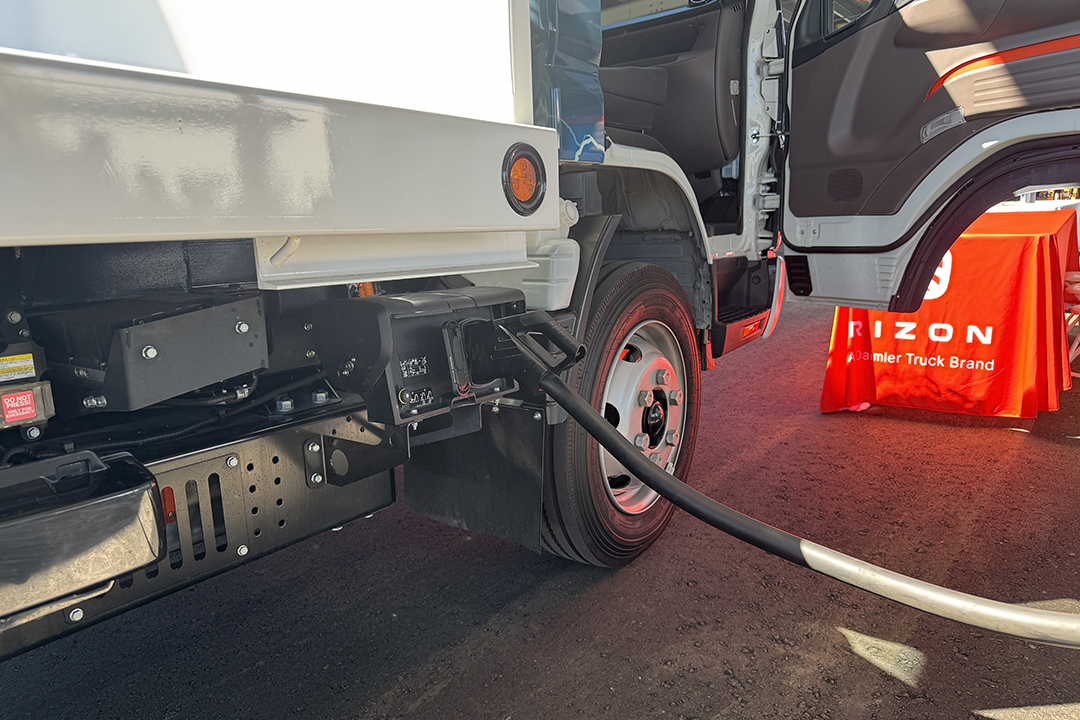
By converting its fleet and providing the charging infrastructure to support it, Helix expects to see continued cost savings from a zero-emissions fleet. Photo: San Diego County Water Authority
According to the California Air Resources Board, trucks make up just six percent of vehicles on California roads but generate more than 35% of nitrogen oxide emissions and 25% of on‑road greenhouse gas emissions.
By converting its fleet and providing the charging infrastructure to support it, Helix expects to see continued cost savings from a zero-emissions fleet as well as a reduced impact on air pollution.
“The data from our current fleet show that fuel costs for an electric vehicle are one-fifth the fuel costs of a gas or diesel vehicle,” said Helix Water District Operations Director Kevin Miller.
Charging Infrastructure Designed For Critical Infrastructure Operations
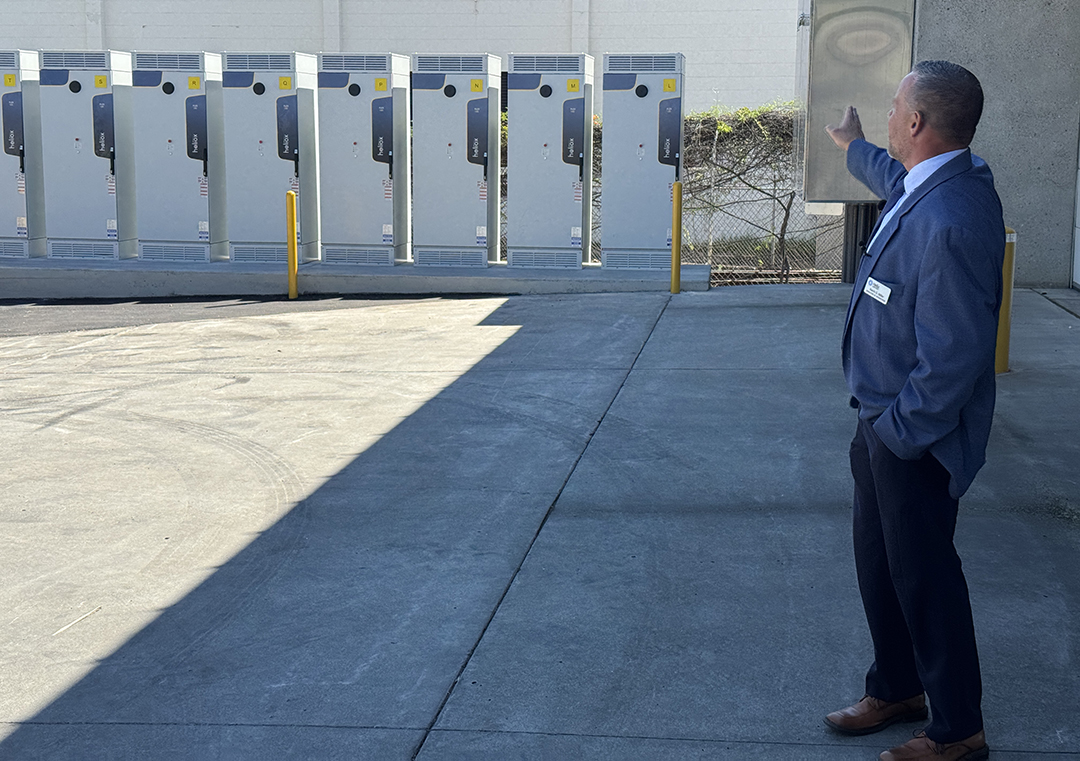
The infrastructure includes 87 chargers, from 40 to 640 kilowatts, manufactured by Heliox and Autel. The largest can recharge medium- and heavy-duty trucks in an hour. Photo: San Diego County Water Authority
Helix operates a fleet of 100 vehicles, from cars and pickup trucks to medium and heavy-duty vehicles, including three-axle dump trucks, backhoes, and skip loaders. The charging infrastructure is designed and engineered to meet four core operational requirements common to many public agencies, including 24-hour emergency response and limited charging during peak hours to take advantage of reduced electricity rates.
Helix also stipulated that it would not add vehicles or staff to compensate for the time spent charging.
The infrastructure includes 87 chargers, from 40 to 640 kilowatts, manufactured by Heliox and Autel. Most are installed overhead. This minimized the need for trenching, which increases construction costs and offers flexibility in daily operations and parking. The larger Autel 640-kilowatt MaxiCharger can recharge medium- and heavy-duty trucks in an hour.
Collaboration Helps Lower Project Costs
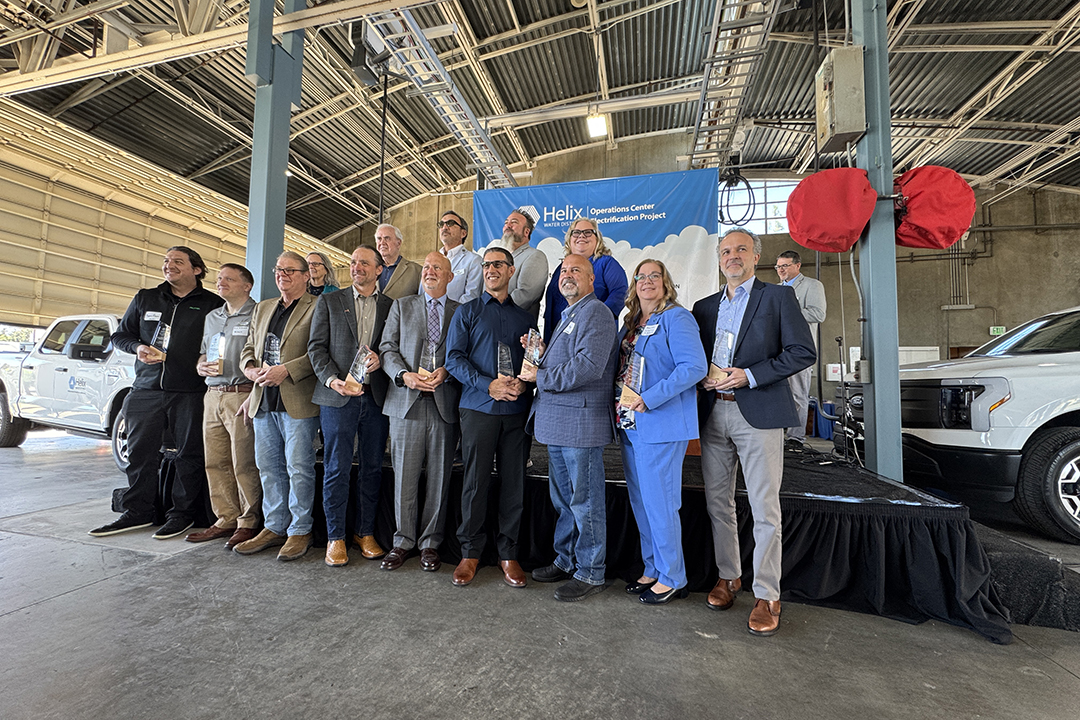
Helix Water District officials collaborated with the San Diego County Air Pollution Control District, San Diego Gas and Electric and the California Energy Commission to successfully execute the upgrades. Photo: San Diego County Water Authority
When planning the project, Helix Water District officials reached out to the San Diego County Air Pollution Control District, San Diego Gas and Electric, and the California Energy Commission to strategize collaboration on the project. The agencies provided more than $10.2 million in grants and rebates, ensuring the project would have minimal impact on water rates.
The grant funding enabled Helix to build the full charging system upfront at a cost savings. Additional savings will come from shared use of the charging system by neighboring cities and public agencies, which will be tracked with software to allocate and recover costs for the district.
The collaborative approach will provide a roadmap for other public agencies planning their own compliance with the Advanced Clean Fleets Regulation.
“This is one of many projects that Helix has done as a sustainable but also fiscally responsible leader in water and energy,” said Kathleen Coates Hedberg. “Twenty years ago, we installed our solar (power) system, and now we’re doing electrification. This is just the beginning of becoming a better steward of our environment.”
The Helix Water District provides water treatment for 500,000 people in San Diego’s east county suburbs and distributes drinking water to 279,000 people in the cities of La Mesa, El Cajon, and Lemon Grove, and the Spring Valley, Mt. Helix, and Lakeside communities.
The Climate Registry recognized Helix Water District as a Water-Energy Leader Gold organization in 2023, and the district was named a Certified Green Business by the Green Business Network in 2025.