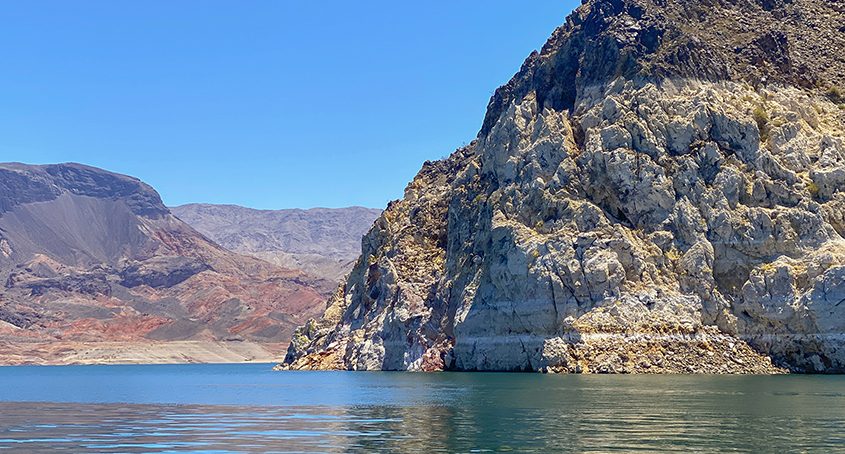
 The Colorado River Photo: Christopher Clark / U.S. Department of the Interior - Bureau of Reclamation
Colorado River Basin Cities, Businesses, Farmers, Utilities, and Conservationists Unite to Call for $2 Billion in Federal Drought Funding
A broad coalition of organizations from throughout the Colorado River Basin is urging Congress to provide at least $2 billion in new federal funding to begin to address the region’s escalating water supply crisis. The coalition includes more than 70 groups from Arizona, California, Colorado, New Mexico, Utah, Wyoming, and Tribal Nations. A link to the letter sent to Congressional leadership today is here.
The request reflects growing consensus among traditionally diverse interests that immediate federal investment is needed to reduce drought risks, protect critical infrastructure, and preserve the long-term reliability, value, and stability of Colorado River water for all Basin communities and Tribes. The requested funding would support near-term drought mitigation programming that builds on the Bureau of Reclamation’s existing investments to address urgent water supply risks and position the Basin for longer-term resilience.
This year, the Upper Colorado River Basin experienced the lowest snowpack totals in recorded history. The call for action comes as the Colorado River system faces acute stress from the poor snowpack, along with exceptionally low runoff and depleted reservoir storage. Lake Powell is now approaching a critical threshold that puts hydropower at risk– prompting immediate drought response measures involving Flaming Gorge Reservoir and reduced releases from Glen Canyon Dam. Together, these conditions threaten drinking water supplies, agricultural production, reliable hydropower generation, fish and wildlife habitat, outdoor recreation economies, and critical water delivery infrastructure for more than 35 million Americans.
The breadth of the coalition demonstrates that securing the Colorado River is not a narrow sector issue—it is a shared regional and national priority tied to food security, water reliability, trust responsibility, affordable energy, economic stability, and ecosystem health.
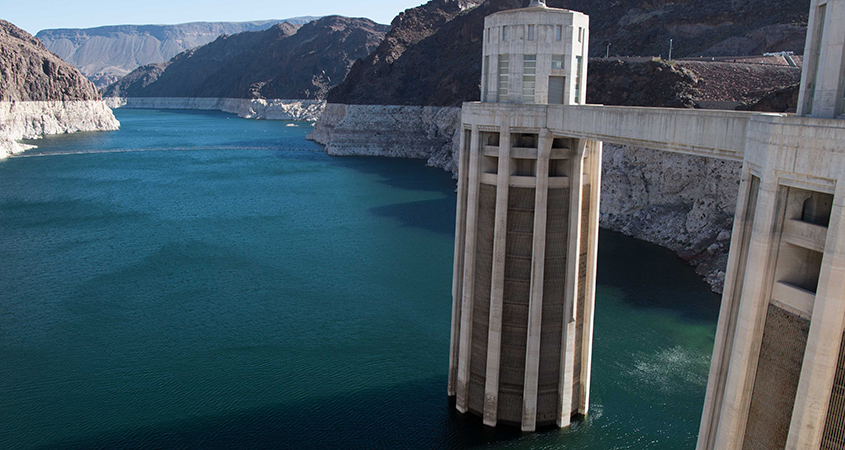
Lake Mead, a key reservoir for the Colorado River. Photo: U.S. Bureau of Reclamation
“The Colorado River is the quiet backbone of San Diego County’s daily life, sustaining our businesses, our farms and our communities. As pressures on the river system grow, we must accelerate the innovative efforts to manage the river more efficiently and sustainably,” said Dan Denham, General Manager, San Diego County Water Authority. “Local and regional agencies are doing their best, but the scale of the challenge requires strong partnerships across every level of government. With strategic federal investments, we can strengthen the systems that keep water flowing to millions while ensuring a more resilient future for the entire basin.”
“Recent emergency measures to prop up water levels in Lake Powell buy us time to avert immediate catastrophe but a durable path forward requires more than short-term actions,” said Steve Wolff, General Manager of the Southwestern Water Conservation District. “This funding would provide an essential bridge to help the Basin navigate the current crisis, while building the tools, mechanisms, and opportunities needed to move toward long-term stability across all seven basin states.”
“The West cannot conserve its way out of this challenge alone – Western communities are already working overtime, all the time,” said Samantha Barncastle, Executive Director of the Family Farm Alliance. “Our water infrastructure was designed for a climate and hydrology that no longer exist, and every year we delay modernization, the risks to farms, cities, ecosystems, and rural economies grow more severe.
Congress has an opportunity to support bold infrastructure investments and collaborative water solutions that will help buffer communities against both immediate drought impacts and the long-term realities of aging infrastructure, changing water cycles, and population growth. We appreciate the collaboration that made this initiative possible, seeing interests from all over the basin and all different sectors come together in such a big way is promising for our future.”
The coalition emphasized that this near-term bridge funding should be paired with a durable, long-term federal funding mechanism to support voluntary conservation efforts across sectors. Long-term federal investment is essential to help address impacts to Tribal and other affected water users, and secure the engineered and natural infrastructure necessary to stabilize the Colorado River system, advance innovative water savings solutions, and evaluate opportunities to augment supplies.
The Colorado River Basin faces ongoing threats from drought, wildfires, and limited water supplies,” said Sara Porterfield, Colorado River Program Director & Western Water Policy Advisor for Trout Unlimited, working in coordination with other conservation organizations on this effort, including The Nature Conservancy, American Rivers, Environmental Defense Fund, National Audubon Society, Theodore Roosevelt Conservation Partnership, and Western Resource Advocates. “These challenges are not going away, and the dire impacts on drinking water, food supplies, energy production, and local economies are growing. A near-term federal funding bridge is essential to keep agricultural producers viable, protect local communities, ensure water conservation responsibilities are shared equitably across all sectors, and invest in the health of the rivers and landscapes that the entire system runs on.”