You are now in Agency News News category.

Helix Water District Logo Square officers for 2021

Helix Recognized for Excellence in Financial Reporting

The Government Finance Officers Association (GFOA) announced that Helix Water District received a Certificate of Achievement for Excellence in Financial Reporting for its fiscal year 2021-22 Annual Comprehensive Financial Report.

The district’s Annual Comprehensive Financial Report communicates the district’s finances after the fiscal year closes on June 30. The Certificate of Achievement recognizes the district’s efforts at organizing a financial document that is easy to read, understand and access.

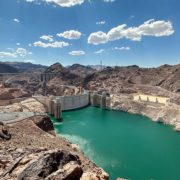
Lake Mead-Lake Powell-Colorado River Basin-U.S. Bureau of Reclamation

Reclamation Announces 2024 Operating Conditions for Lake Powell and Lake Mead

The Bureau of Reclamation on August 15, released the Colorado River Basin August 2023 24-Month Study, which determines the tiers for the coordinated operation of Lake Powell and Lake Mead for 2024. These operating conditions, which are based on existing agreements under the 2007 guidelines and lower basin Drought Contingency Plans, will be in effect until the near-term guidelines from the Supplemental Environmental Impact Statement (SEIS) are finalized. Reclamation is currently analyzing the consensus-based Lower Division States proposed alternative for the SEIS.

Based on projections in the 24-Month Study, Lake Powell will operate in a Mid-Elevation Release Tier with a 7.48 million acre-feet release in water year 2024. Consistent with existing agreements, Lake Mead will operate in a Level 1 Shortage Condition – an improvement from the Level 2 Shortage Condition announced last year – with required shortages by Arizona and Nevada, coupled with Lower Basin Drought Contingency Plan water savings contributions. Mexico’s water delivery will be reduced consistent with Minute 323.

Lake Mead’s release in 2023 is projected to be the lowest in 30 years, approximately one and half million acre-feet lower than an average normal year, reflecting extensive, ongoing conservation efforts in the Lower Basin states funded in part by President Biden’s historic Investing in America agenda, above-normal inflows in the lower basin below Hoover Dam, and conservation in Mexico.

Reclamation: Significant improvement for Lake Mead due to improved hydrology, ongoing conservation efforts. Operating guidelines in effect until Reclamation finalizes SEIS, including analysis of consensus-based state conservation agreement.

Investments in system conservation and improved hydrology this year have provided an opportunity to recover some reservoir storage. At the same time, the Colorado River system continues to face low elevations, with Lake Powell and Lake Mead at a combined storage of 36%.

“The above-average precipitation this year was a welcome relief, and coupled with our hard work for system conservation, we have the time to focus on the long-term sustainability solutions needed in the Colorado River Basin. However, Lake Powell and Lake Mead – the two largest reservoirs in the United States and the two largest storage units in the Colorado River system – remain at historically low levels,” said Reclamation Commissioner Camille Calimlim Touton. “As we experience a warmer, drier west due to a prolonged drought, accelerated by climate change, Reclamation is committed to leading inclusive and transparent efforts to develop the next-generation framework for managing the river system.”

Reclamation on Development of Near- and Long-Term Guidelines

Reclamation is simultaneously developing both near- and long-term guidelines for Lake Powell and Lake Mead operations. The supplemental SEIS in progress focuses on near-term actions, which would be applicable from 2024 through 2026 based on potential changes to limited sections of the 2007 Interim Guidelines. Reclamation temporarily withdrew the SEIS so it could fully analyze the consensus-based Lower Division States proposed alternative and will publish an updated draft SEIS for public review and comment with the consensus-based proposal as an action alternative later this year.

In addition to several agreements that have already been finalized, a consensus-based proposal – agreed upon by the three Lower Basin states earlier this year – commits to measures to conserve at least 3 million-acre-feet (maf) of system water through the end of 2026, when the current operating guidelines are set to expire.

The long-term guidelines, informally referred to as Post 2026 Operations, will revisit the 2007 Interim Guidelines in full, as well as other operating agreements that expire in 2026, including Drought Contingency Plans and Minute 323. In June, Reclamation initiated the formal process to develop the long-term operating guidelines.

Reclamation is committed to an inclusive and transparent process that enhances meaningful Tribal engagement as well as collaboration with all stakeholders in the basin. In response to Tribal feedback, the Department of the Interior established the first-ever Federal-Tribal-State partnership to promote equitable information-sharing and discussion among the sovereign governments in the Colorado River Basin. All 30 Colorado River Basin Tribal Nations and the seven U.S. basin states were invited to participate in this new group. The group met for the first time last week with Deputy Secretary Tommy Beaudreau, Commissioner Touton, and other Department leaders. The formation of this new group does not replace any independent consultation with either Tribes or states.

2024 Operations of Lake Powell and Lake Mead

Until the updated near-term guidelines are finalized once the supplemental SEIS is complete, Reclamation will continue to implement the plans developed over the past two decades that lay out detailed operational rules for these critical Colorado River reservoirs through 2026:

  • Lake Powell Mid-Elevation Release Tier: The 24-Month Study, with an 8.23 maf release pattern in October – December 2023, projects Lake Powell’s January 1, 2024, elevation to be 3,568.57 feet – about 130 feet below full and about 80 feet above minimum power pool. Based on this projection, Lake Powell will operate in the Mid-Elevation Release Tier in water year 2024 (October 1, 2023, through September 30, 2024). Under this tier, Lake Powell will release 7.48 million acre-feet in water year 2024 without the potential for a mid-year adjustment in April 2024. Under the most probable scenario, and with a 7.48 maf release pattern in October – December 2023, Lake Powell’s projected elevation on January 1, 2024, is 3,573.68 feet.
  • Lake Mead Level 1 Shortage Condition: The 24-Month Study projects Lake Mead’s January 1, 2024, elevation to be 1,065.27 feet – about 10 feet below the Lower Basin shortage determination trigger of 1,075 feet and about 25 feet below the drought contingency plan trigger of 1,090 feet. This elevation is based on a 7.48 maf release from Lake Powell in water year 2024. Based on this projection, Lake Mead will operate in a Level 1 Shortage Condition for calendar year 2024 (January 1, 2024, through December 31, 2024). This is a significant improvement from the Level 2 Shortage Condition announced last year. The required shortage reductions and water savings contributions under the 2007 Colorado River Interim Guidelines for Lower Basin Shortages and Coordinated Operations of Lake Powell and Lake Mead, 2019 Lower Basin Drought Contingency Plan and Minute 323 to the 1944 Water Treaty with Mexico are:
    • Arizona:  512,000 acre-feet, which is approximately 18% of the state’s annual apportionment.
    • Nevada:  21,000 acre-feet, which is 7% of the state’s annual apportionment.
    • Mexico:  80,000 acre-feet, which is approximately 5% of the country’s annual allotment.

Lower Basin projections for Lake Mead include updated water orders to reflect additional conservation efforts and new completed system conservation agreements under the Lower Colorado River Basin System Conservation and Efficiency Program.

President Biden’s Investing in America Agenda

System conservation and efficiency programs in the Colorado River Basin are being strengthened by President Biden’s Investing in America agenda and will invest in long-term durable system efficiency improvements that result in quantifiable, verifiable water savings in the Basin.

The Investing in America agenda represents the largest investment in climate resilience in the nation’s history and is providing much-needed resources to enhance Western communities’ resilience to drought and climate change, including protecting the short- and long-term sustainability of the Colorado River System. Through the Bipartisan Infrastructure Law, Reclamation is investing a total of $8.3 billion over five years for water infrastructure projects, including water purification and reuse, water storage and conveyance, desalination and dam safety. The Inflation Reduction Act is investing an additional $4.6 billion to address the historic drought.

To date, the Interior Department has announced the following investments for Colorado River Basin states, which will yield hundreds of thousands of acre-feet of water savings each year once these projects are complete:

Robinson Tank-Ramona Municipal Water District-public service

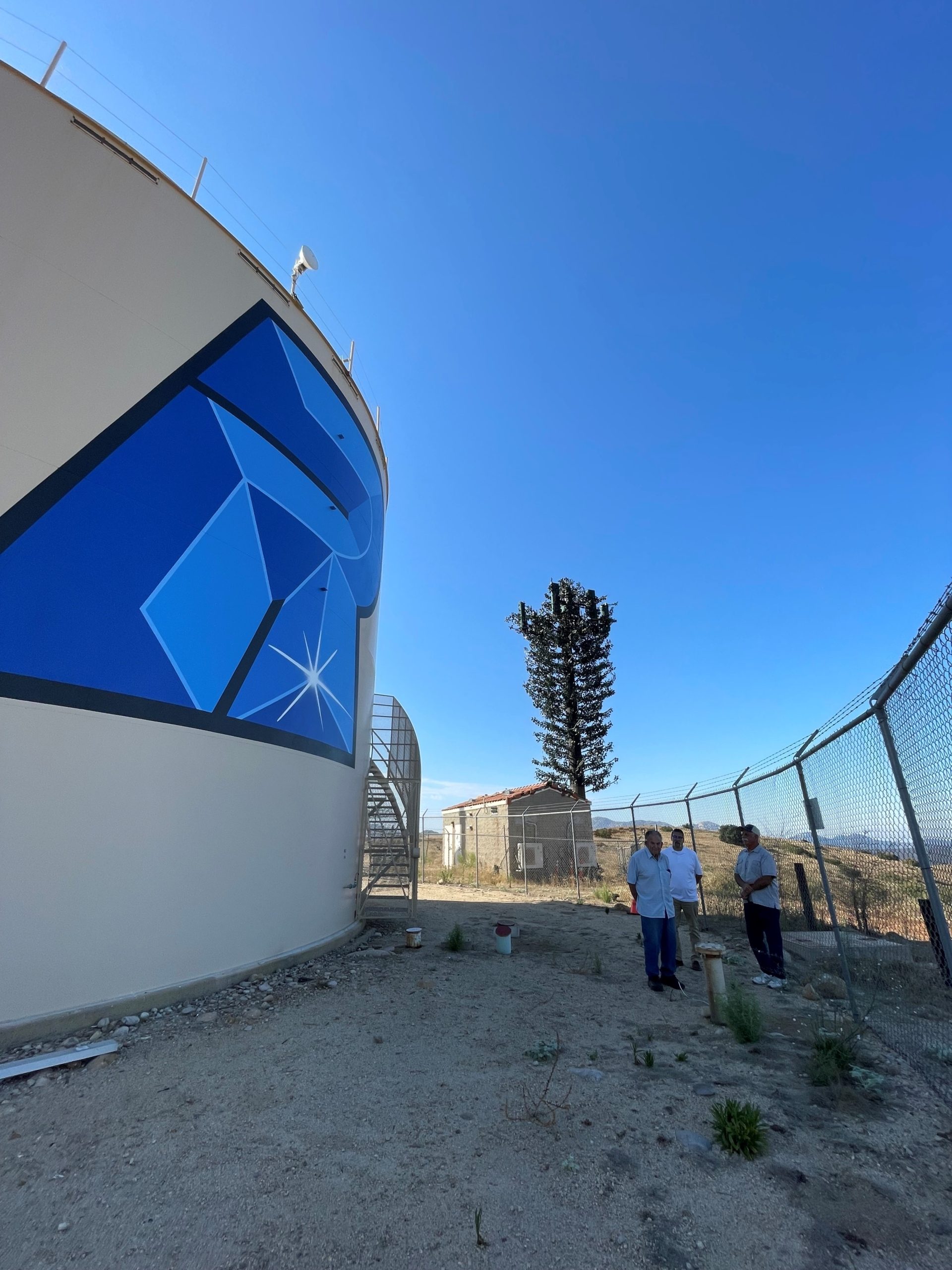
Robinson Tank “R” Project Completed

On November 8, 2022, the Ramona Municipal Water District Board of Directors unanimously approved a resolution renaming Improvement District No. 5 (ID-5) tank to Robinson Tank to recognize retiring Director Jim Robinson’s 20-year service to the community. Director Robinson served on the water board from 1994 to 2010 and from 2018 to 2022.

He added his foresight and timely advice to numerous RMWD committees including those to improve the District’s engineering processes, the District’s responses to future with lessons learned from the Witch Creek Fire and planning and improvements for Santa Maria Recycled Water Plant. He was instrumental in the development of Ramona Parks and Recreation Association, Wellfield Community Park, and Ramona Junior Fairgrounds.

Board President Jim Hickle in November 2022 said of Director Robinson, “He’s always been an advocate for the youth and the community. That’s what I like most about him. We will miss his historical perspective. He’s been around for many years, so he understands why we did things in the past and he has a knowledge of the water systems. His knowledge and history with the district will be missed. I think all the board members will agree with that.”

Robinson Tank was originally constructed as part of the ID-5 project in 1981. It is located off of Old Julian Highway between downtown Ramona and the San Diego Country Estates. The tank is 484,000 gallons and 40-foot high and 46 feet in diameter. It was recently recoated and therefore was an excellent tank to choose to honor retiring Director Robinson.

The District was also looking to connect its infrastructure with the community and took inspiration from Fallbrook PUD’s Rattlesnake Tank, on which Fallbrook staff annually paint the year of the graduating high school class. After discussing with Ramona High School and RMWD’s board members and staff, the decision was made to paint an “R” on the tank for Ramona, Ramona High School, and Robinson.

(Editor’s note: The Ramona Municipal Water District is one of the San Diego County Water Authority’s 24 member agencies that deliver water across the San Diego County region.) 

wine growing season-UCSD-Scripps-Napa Valley

Warming is Shifting Napa’s Wine Growing Season

The start of wine grape growing season in California’s Napa Valley now comes nearly a month earlier than it used to because of the region’s warming climate, according to a new study from a team led by UC San Diego Scripps Institution of Oceanography researcher Dan Cayan.

The research, published online in the International Journal of Climatology on June 29, is based on an analysis of local temperature records spanning 1958-2016 that charts the effects of natural climate variations such as the Pacific Decadal Oscillation and the growing influence of human-caused climate change upon the seasonal rhythms and shorter term temperature extremes in Napa Valley.

Since 2006, Cayan has been working with the Napa Valley Vintners trade association, which funded the new research along with additional support from the National Oceanic and Atmospheric Administration (NOAA) and the U.S. Geological Survey (USGS), to help Napa vintners understand the effects of climate variation and change on their region and on their renowned premium grapevines.

“The vintners want to know what’s changing and what the nature of those changes is,” said Cayan.

In a 2011 report, Cayan showed that Napa had warmed by 1-2 degrees Fahrenheit since the 1930s — markedly less than the 3 degrees of warming suggested by earlier studies. Cayan and his team found then that the magnitude of warming in Napa is difficult to pin down exactly, and different temperature records and ways of treating them result in a substantial range in estimated temperature trends. The team took great pains to identify temperature records that most correctly captured Napa’s unique climate, which is affected both by cooler maritime influences and inland heat.

Temperature variation and change

The present study takes another look at Napa’s temperature variation and change, adding seven years of more recent data. It also takes a sharper aim at factors that are particularly important to Napa’s viticulture, translating the decades of temperature observations into a set of key wine-growing metrics. The goal, said Cayan, was to use this lengthy temperature record to examine the implications of the last six decades of temperature variation and change for Napa Valley vineyard growers and wine producers.

The researchers assembled their temperature data largely from observations taken at the Napa State Hospital. Cayan said the hospital’s location makes it an imperfect representation of weather conditions in Napa. It is close to roads and buildings which can influence temperature readings, but this weather station has been in place for several decades and biases introduced by the surroundings have likely been consistent. NOAA has also deemed the temperature record from the hospital reliable enough to use it as one the data sources for its national and regional scale climate monitoring in the United States.

The researchers filled in any missing data using other sources, such as the weather records from a weather station in Oakville, California managed by the state’s Department of Water Resources, and performed other quality control steps to ensure the data were as reliable as possible.

“Wine grapes offer a super interesting lens through which we can view climate variation,” said Cayan, noting the many ways temperature impacts grape growth and wine quality.

Using the Napa daily temperature records, the team developed and analyzed variations and changes in several temperature-dependent metrics of importance to wine grapes. Key among these metrics was the beginning of the growing season, which was defined as the time when the average daily temperature rises in spring to consistently exceed 50 degrees Fahrenheit.

The study also looked at the time required to bring wine grapes to maturity. Other measures included the occurrence of extreme hot days that may be detrimental to grape quality, and the temperature during the final 45 days before grapes mature — a period that is vital in determining grapes’ sugar content and flavor.

Growing season starts four weeks earlier now than in 1950s

The study found that the growing season now starts more than four weeks earlier than it did in 1958. This means that in Napa back around 1958, average daily temperatures typically first exceeded 50 degrees Fahrenheit consistently around April 1. Fast forwarding to 2016, the study finds that the start of the growing season generally occurs around March 1.

For wine growers and makers this means that wine grapes will also generally mature about a month earlier than they used to in the late 1950s, but Cayan noted that the actual harvest date is more changeable, as some vintners may make stylistic choices to delay harvest.

“This is a remarkable long-term shift given that wine grapes require about six months to mature on the vine and most year-to-year fluctuations in growing season start were typically limited to about three weeks,” said Cayan.

Warmer conditions, earlier growing seasons

The average temperature of the last 45 days of the growing season also warmed by more than 3 degrees Fahrenheit during the study period.

“The Napa record indicates an undeniable shift towards earlier growing seasons and warmer conditions,” said Cayan. “The strongest changes took hold in the 1970s and warmed pretty dramatically through the 1990s, in sync with the large-scale North Pacific climate shift that commenced in the mid-1970s.”

The warming trend Cayan and his colleagues observed in Napa echoed changes seen elsewhere in the American West and Pacific Ocean. In recent decades, western North America has been one of the U.S. hot spots for warming, with about 2 degrees Fahrenheit of increase compared to 1950’s temperatures. Napa’s warming during that period was roughly equivalent.

Anthropogenic climate change

Additionally, anomalously warm temperatures persisted in recent decades despite the fact that a natural source of climatic variation called the Pacific Decadal Oscillation reverted to its cooler state.

“As numerous studies have demonstrated in other settings, these persistent changes strongly suggest that anthropogenic climate change is playing a role,” said Cayan.

Along with warmer seasonal average temperatures in recent decades, the Napa record has shown a significant reduction in the occurrence of cool extremes and an increased occurrence of warm extremes.

Global impacts of climate change

The advancing start of the wine grape growing season in Napa joins a body of research documenting how climate change has altered seasons across the globe, with the most direct comparison being the earlier start of spring.

“This is another piece of evidence of a remarkable seasonal change occurring across the western landscape and is very likely a signal that is being reinforced by climate change,” said Cayan.

However, Cayan was careful to note that the links between Napa’s warming climate and anthropogenic climate change inferred in this study’s results were correlational rather than causal.

“Regional temperature changes including those in Napa Valley are invariably affected by multiple natural drivers as well as human-caused warming effects,” said Cayan. “Teasing those influences apart would require an extensive climate modeling attribution science study that was beyond the scope of the present study.”

Climate challenges for Napa Valley wine growers

For winemakers in Napa banking on the continuation of their historically mild Mediterranean climate, Cayan said the results underscore that “climate changes are likely to drive Napa growers to continue to innovate, perhaps using novel growing practices, and perhaps by introducing grape varieties that might be more heat-tolerant.”

Further, the paper states that the continued anomalous warmth of the last seven years combined with projected further warming strongly suggests that an additional 1 degree Fahrenheit of warming is likely within the next three decades, along with more significant and more frequent bouts of extreme heat.

“Such an increase in heat would impose a challenge in producing premium quality wine,” wrote the study authors.

Rapidly warming climate

And Napa is not alone. Other regions with longer wine growing traditions, such as France or Italy, are already experiencing similar forks in the road when it comes to the continued viability of their chosen varieties and systems of agriculture in the face of rapidly warming climate.

Looking forward, Cayan suggested that California should take an even more fine-grained approach to anticipate the local effects of climate change, especially in regions with sensitive crops such as wine.

“A key issue for Napa is the extent to which its climate will be moderated by its marine layer air-conditioning and whether that can overcome the faster warming projected in nearby inland regions,” said Cayan. “We need more precise regional climate investigations to get a better handle on how changes in the coast-interior transition zones might unfold.”

Laurel DeHaan and Mary Tyree of Scripps Oceanography as well as sustainability scientist Kimberly Nicholas of Lund University were co-authors of the study.

(Editor’s Note: Story by Alex Fox, at UC San Diego Scripps Institution of Oceanography. The San Diego County Water Authority has partnered with the Scripps Institution of Oceanography at UC San Diego to better predict atmospheric rivers and improve water management before, during, and after those seasonal storms.)

August Caires-Padre Dam Muncipal Water District-August A. Caires

Padre Dam Board Vice President August A. Caires

Padre Dam Municipal Water District Board Vice President August Caires died August 2 from pancreatic cancer. He was 76 years old.

“Augie served this District and his community with outstanding distinction for nearly 30 years. He was a good friend and colleague to many of us,” said Padre Dam Board President Bill Pommering. “He will be missed greatly.”

Caires led the District as General Manager from 1993 to 2006 and served on Padre Dam’s Board of Directors from 2007 to 2023. He served as Board President in 2009 and 2017 and Vice President in 2008, 2011, 2015-2016 and 2023. Caires served on the East County Advanced Water Purification Program’s Joint Powers Authority Board of Directors from 2019 to 2023. He was also a Veteran of the United States Army.

Decades of public service

During his tenure, he represented Padre Dam on the San Diego Metro Commission/Metro Wastewater Joint Powers Authority, the San Diego Independent Rates Oversight Committee, the Association of California Water Agencies’ Water Management Committee and the Association of California Water Agencies/Joint Powers Insurance Authority. His commitment to the community extended beyond his role with Padre Dam; he served on the Grossmont College Foundation Board as well as 40 years as a member of the Rotary Club of Santee-Lakeside, serving as President for three terms and earning the Rotarian of the Year award for demonstrating “Service Above Self.”

Caires’ professional background includes 41 years of public service, including 27 years as a public agency CEO. Among his many accomplishments as Padre Dam’s General Manager, Caires created the Workforce Partnership which made labor, management and the Board equal partners in strategic planning – a great tradition of collaboration that continues today. In 2002, Caires was honored as one of the Top Ten Leaders in the Public Works Profession in the United States and Canada by the American Public Works Association.

“Augie’s passing leaves a deep sadness among Padre Dam employees.” said Board President Pommering. “I have known and worked with him since 2009. I will miss his counsel, I will miss his friendship and I will miss Augie.”

August A. Caires-Padre Dam Municipal Water District-Customer Service Center

Padre Dam’s Customer Service Center was rededicated as the August A. Caires Customer Service Center at the July 19, 2023, Board Meeting. Padre Dam’s Board recognized Director Caires for his outstanding public service to the District, community and San Diego region. Photo: Padre Dam Municipal Water District

Leadership ensures water reliability

Caires was a tireless proponent of infrastructure integrity, water quality and fire safety. His aspirations and advocacy for the Santee Lakes Recreation Preserve resulted in the planning and approval of many projects, and his forethought and leadership were instrumental in making it a nationally recognized, award winning park. He was a strong advocate for ensuring water reliability while working to keep costs down, and was instrumental in the District’s efforts to advance water recycling and bring a local water supply to East County through the East County Advanced Water Purification Program.

During his time as General Manager, Caires played a pivotal role in the building of a new Customer Service Center in order to co-locate the District’s Administration offices with the Operations facilities already located at Santee Lakes. In July 2023, the building was rededicated as the August A. Caires Customer Service Center in recognition for Caires’ outstanding public service to the District, community and San Diego region.

(Editor’s note: The Padre Dam Municipal Water District is one of the San Diego County Water Authority’s 24 member agencies that deliver water across the San Diego County region.) 

snowmelt runoff-streamflow-records

Snowmelt Runoff Sets Streamflow Records in the Southwest

Across the western U.S., many areas received record or near-record amounts of snowpack over the winter. With the spring and summer temperatures melting the abundant snow, a record volume of streamflow has been recorded in several basins in the southwestern U.S., providing more water for the area later into the summer than is typically seen.

Snowmelt runoff in Walker and Carson basins

The Walker and Carson basins near the California-Nevada border, for example, have reported the largest volume of streamflow for April through July that has ever been observed in roughly a century, when the records began. The ample runoff is helping fill reservoirs that have been depleted from years of drought conditions.

Weekly U.S. Drought Monitor: Cooler Northwest, Warmer Southwest

Dry conditions dominated the West and southern Plains, coupled with above-normal temperatures. Precipitation was most widespread throughout much of the upper Midwest and central Plains and into the Northeast. Almost the entire country had near- to above-normal temperatures this last week, with the greatest departures over the Southwest and central Plains where temperatures were at least 4-7 degrees above normal.

Cooler-than-normal temperatures were recorded in the Pacific Northwest with departures of 3-6 degrees below normal. At the end of the current U.S. Drought Monitor period, significant rains developed over portions of the Midwest and central Plains, and they will be accounted for in the next analysis.

U.S. Seasonal Drought Outlook

Central portions of the Intermountain West may be spared degradation, as those areas are still showing residual benefits from above normal winter snowpack leading up to the summer, in addition to periods of above normal rainfall during the last 60 to 90 days. Seasonal temperature and precipitation outlooks, ENSO, and climatology favor widespread drought improvement and removal across the central U.S. However, drought persistence is favored across the Upper Midwest, although there is the potential for localized improvements.” Read full assessment: cpc.ncep.noaa.gov/products/expert_assessment/sdo_summary.php.

Seasonal Precipitation Outlook: November, December, January 2023-24

Colors show where total precipitation has an increased chance of being higher or lower than usual during the next three months. The darker the shading, the greater the chance for the indicated condition. White areas have equal chances for precipitation totals that are below, near, or above the long-term average (median) for the next three months.

Climate scientists base future climate outlooks on current patterns in the ocean and atmosphere. They examine projections from climate and weather models and consider recent trends. They also check historical records to see how much precipitation fell when patterns were similar in the past.

Copernicus Climate Change Service: July 2023 sees multiple global temperature records broken

July 2023 highlights:

  • The global average temperature for July 2023 is confirmed to be the highest on record for any month.
  • Antarctic sea ice extent continued to break records for the time of year, with a monthly value 15% below average, by far the lowest July extent since satellite observations began.
  • July 2023 was wetter than average over most of northern Europe and in a region from the Black Sea and Ukraine to northwestern Russia. Drier than average conditions were experienced across the Mediterranean basin, with Italy and southeastern Europe having the largest anomalies.

July 2023 NOAA State of Climate Report

Record-high temps & devastating floods struck the U.S. 15 separate billion-dollar disasters occurred during the 1st 7 months of 2023. More from NOAA’s July State of Climate report.

(Editor’s Note: Content for this story comes from the Natural Resources Conservation Service, which produces a weekly report using data and products from the National Water and Climate Center and other agencies. The report focuses on seasonal snowpack, precipitation, temperature, and drought conditions in the United States.)

Vista Irrigation District Logo

Vista Irrigation District Receives National Award for Financial Reporting

Vista, Calif. — Vista Irrigation District has been presented with the Certificate of Achievement for Excellence in Financial Reporting by the Government Finance Officers Association of the United States and Canada (GFOA) for its annual comprehensive financial report (ACFR) for fiscal year ending June 30, 2022. This certificate is the only national award for public sector financial reporting.

winter waves-Climate Change-Sea Level Rise-UCSD-Scripps Institution of Oceanography research

California’s Winter Waves May Be Increasing Under Climate Change

A new study from UC San Diego Scripps Institution of Oceanography researcher emeritus Peter Bromirski uses nearly a century of data to show that the average heights of winter waves along the California coast have increased as climate change has heated up the planet.

The study, published August 1 in the Journal of Geophysical Research – Oceans, achieved its extraordinarily long time series by using seismic records dating back to 1931 to infer wave height, a unique but accepted method first developed by Bromirski in 1999. The results, made more robust by their 90 years of statistical power, join a growing body of research that suggests storm activity in the North Pacific Ocean has increased under climate change.

If global warming accelerates, growing winter wave heights could have significant implications for flooding and erosion along California’s coast, which is already threatened by accelerating sea-level rise.

When waves reach shallow coastal waters, some of their energy is reflected back out to sea, Bromirski said. When this reflected wave energy collides with waves approaching the shoreline, their interaction creates a downward pressure signal that is converted into seismic energy at the seafloor. This seismic energy travels inland in the form of seismic waves that can be detected by seismographs. The strength of this seismic signal is directly related to wave height, which allowed him to calculate one from the other.

Calculating water heights

In using this relationship to infer wave height, Bromirski had to filter out the “noise” of actual earthquakes, which he said is easier than it sounds because earthquakes are typically much shorter in duration than the ocean waves caused by storms.

Bromirski developed this novel way to calculate wave heights out of necessity. Seeing patterns or trends in phenomena such as storm activity or big wave events associated with climate change requires many decades of data, and the buoys that directly measure wave heights along the California coast have only been collecting data since around 1980. Of particular interest to Bromirski were the decades prior to 1970 when global warming began a significant acceleration. If he could get his hands on wave records stretching back several decades before 1970, then he could assess the potential influence of climate change.

Since no direct wave measurements going back that far existed, Bromirski began a search for alternative sources of data in the 1990s. In 1999, he published a paper detailing his method of deriving historic wave heights using modern digital seismic records. In the process, Bromirski learned that UC Berkeley had seismic records going back nearly 70 years at the time. The problem was that these records were all analog — just sheets and sheets of paper covered in the jagged lines of seismograph readings.

To work in the many decades of seismic records held at UC Berkeley to create a long-term wave record using this method, Bromirski needed to digitize the reams of analog seismograms spanning 1931 to 1992 so that he could analyze the dataset as a whole. The process required the enthusiasm of multiple undergraduate students, a special flatbed scanner, and multiple years of intermittent effort to complete.

Finally, with the digitized seismic data spanning 1931-2021 in hand, Bromirski was able to transform those data into wave heights and begin to look for patterns.

Average winter wave height increased 13% since 1970

The analysis revealed that in the era beginning after 1970, California’s average winter wave height has increased by 13% or about 0.3 meters (one foot) compared to average winter wave height between 1931 and 1969. Bromirski also found that between 1996 and 2016 there were about twice as many storm events that produced waves greater than four meters (13 feet) in height along the California coast compared to the two decades spanning 1949 to 1969.

“After 1970, there is a consistently higher rate of large wave events,” said Bromirski. “It’s not uncommon to have a winter with high wave activity, but those winters occurred less frequently prior to 1970. Now, there are few winters with particularly low wave activity. And the fact that this change coincides with the acceleration of global warming near 1970 is consistent with increased storm activity over the North Pacific resulting from climate change.”

Bigger winter waves and sea-level rise

The results echo an increase in wave height in the North Atlantic tied to global warming reported by a 2000 study.

If California’s average winter waves continue to get bigger under climate change, it could amplify the effects of sea-level rise and have significant coastal impacts.

“Waves ride on top of the sea level, which is rising due to climate change,” said Bromirski. “When sea levels are elevated even further during storms, more wave energy can potentially reach vulnerable sea cliffs, flood low-lying regions, or damage coastal infrastructure.”

To see how his results compared with atmospheric patterns over the North Pacific, which typically supplies the California coast with its winter storms and waves, Bromirski looked to see if a semi-permanent wintertime low pressure system located near Alaska’s Aleutian Islands called the Aleutian Low had intensified in the modern era. A more pronounced Aleutian Low typically corresponds to increased storm activity and intensity.

Coastal impacts in California

Per the study, the intensity of the Aleutian Low has generally increased since 1970. “That intensification is a good confirmation that what we are seeing in the wave record derived from seismic data is consistent with increased storm activity,” said Bromirski. “If Pacific storms and the waves they produce keep intensifying as climate change progresses and sea-level rises, it creates a new dimension that needs to be considered in terms of trying to anticipate coastal impacts in California.”

(Editor’s Note: Story by Alex Fox, at UC San Diego Scripps Institution of Oceanography. The San Diego County Water Authority has partnered with the Scripps Institution of Oceanography at UC San Diego to better predict atmospheric rivers and improve water management before, during, and after those seasonal storms.)

Helix Water District Logo Square officers for 2021

Helix Water District Named Water Energy Leader Gold

The Climate Registry has recognized Helix Water District as a Water-Energy Leader Gold organization after the district reduced its electric use by 15% and greenhouse gas emissions by 40%.

The Climate Registry made the announcement this month after the University of San Diego’s Energy Policy Initiative Center confirmed the district’s 2019 and 2021 total greenhouse gas emissions are 40% lower than those in 2009. EPIC’s findings were verified by a third party.

Helix achieved these reductions through a comprehensive lighting retrofit program, new lighting management system and an upgrade to the HVAC system at the district’s R.M. Levy Water Treatment Plant. Helix also transitioned its diesel fleet to 100% renewable diesel fuel.

Construction of the new Hauck Mesa Storage Reservoir in North San Diego County was completed in June 2023.

Award-Winning Hauck Mesa Storage Reservoir Project

The award-winning Hauck Mesa Storage Reservoir enhances drinking water supply reliability and operational efficiency for the region. Construction was completed June 23 on the San Diego County Water Authority project in North San Diego County.

Work started in March 2021 with the demolition of an out-of-service steel tank.

Project work included construction of an underground isolation vault and flow control facility, in addition to a new 2.1 million-gallon water tank connected to the Valley Center Pipeline.

Hauck Mesa Storage Reservoir project-water infrastructure

The project included construction of the water tank, flow control facility, and valve vault; paving of the project site and access road; and installation of new security fencing. Photo: San Diego County Water Authority

Improved operational flexibility

Operational flexibility is increased at Hauck Mesa by balancing the flow of treated water between the agency’s First and Second Aqueducts and by helping to maintain water deliveries if power supplies are interrupted. The new storage reservoir enhances the Water Authority’s ability to provide reliable and efficient deliveries of treated water to member agencies.

The walls of the new tank are about 60 feet tall, stained a forest green color to blend in with the natural landscape, and made of prestressed, or wire wrapped, concrete.

“The prestressed technology will maintain the tank walls in permanent compression, allowing the tank to accommodate seismic events while remaining watertight,” said Water Authority Construction Manager Emma Ward-McNally.

The project reached a major milestone in April 2022 when crews poured the concrete roof of the new prestressed concrete water tank. The entire system, including the new tank and flow control facility, was put into service in May 2023.

Hauck Mesa Storage Reservoir project-concrete tower-water infrastructure

In April 2022, crews worked to pour the concrete roof of the new Hauck Mesa Storage Reservoir in North San Diego County. Photo: San Diego County Water Authority

Award-winning Hauck Mesa Storage Reservoir project

The Hauck Mesa Storage Reservoir project has received two awards: The 2023 Honor Award from the American Public Works Association for Utilities in the $6 – $25 million category and was a joint winner of the 2023 Outstanding Water Project from the American Society of Civil Engineers.

Hauck Mesa Reservoir Storage project-water infrastructure-award winning

Water Authority Construction Manager Emma Ward-McNally (seated left) receives APWA award for the Hauck Mesa Storage Reservoir Project. Photo: San Diego County Water Authority/APWA

Strategic infrastructure improvements by the Water Authority and its member agencies are part of the regional effort to ensure continued delivery of water to support the region’s $268 billion economy and the quality of life for 3.3 million residents. As part of the asset management program, it is critical to actively replace and repair the Water Authority’s assets, which include pipes, valves, facilities, equipment, and other infrastructure.

Collaboration with Valley Center Municipal Water District

During construction, the Water Authority worked closely with the Valley Center community, Valley Center Municipal Water District, and nearby homeowners to minimize short-term construction impacts during the project.

The Water Authority operates and maintains a regional water delivery system capable of delivering 900 million gallons of water per day. Building and operating the large-scale infrastructure required to meet the region’s water needs now and in the future requires careful planning and technical expertise. The Water Authority uses a sophisticated approach to cost-effectively build, operate, maintain and secure its water facilities as an integrated system.

(Editor’s note: The Valley Center Municipal Water District is one of the San Diego County Water Authority’s 24 member agencies that deliver water across the San Diego County region.)