You are now in Facilities & Operations News category.

A Reason To Survive (ARTS) interns co-designed, fabricated, and installed seven new pieces of community art at the Sweetwater Spigot, elevating a free water source and highlighting the importance of water conservation. Photo: A Reason To Survive

Ribbon Cutting For New Public Art at Sweetwater Spigot on Sept. 10

Sweetwater Authority invites the public to a community celebration and ribbon cutting for a new public artwork project titled “Ripple Effect” at the Sweetwater Spigot, the only publicly owned well station providing potable drinking water in San Diego County.

The event takes place on Wednesday, September 10, at 9:30 a.m. in El Toyon Park in National City. The water station is located at 1925 E. 4th Street by El Toyon Park, near the Interstate 805 bridge.

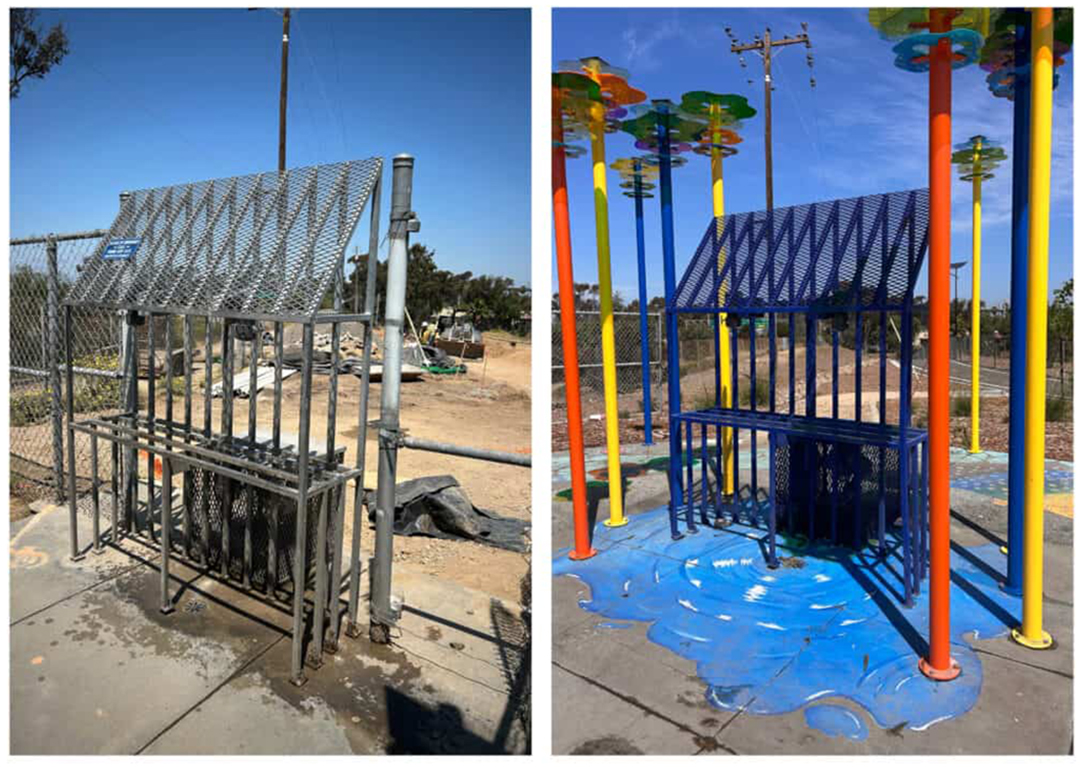
The Sweetwater Spigot before and after its renovation and makeover. Photo: San Diego Architectural Foundation

The Sweetwater Spigot before and after its renovation and makeover. Photo: San Diego Architectural Foundation

Ripple Effect represents a community-based partnership between City of National City, the Sweetwater Authority, the nonprofit A Reason To Survive (ARTS), and the National City-based Design and Fabrication team at ARTIST AND EXILE dba F-GMENT, where young people co-designed, fabricated, and installed seven new pieces of community art, elevating a free water source and highlighting the importance of water conservation.

The City of National City obtained funding for the public art enhancement to beautify the water station area through Caltrans’ Clean California Grant Fund.

Ripple Effect is nominated this year in the Public Art category in the annual San Diego Architectural Foundation “Orchids & Onions” awards. SDAF recognizes projects in the built environment with an impact on the San Diego region, whether positive or negative.

ARTS Interns Create New Public Artwork at Sweetwater Spigot

A Reason To Survive (ARTS) intern Addie E. works on the artwork titled "Mother Nature’s Conversion of Conservation" now installed at the Sweetwater Spigot. Photo: A Reason To Survive

A Reason To Survive (ARTS) intern Addie E. works on the artwork titled “Mother Nature’s Conversion of Conservation” now installed at the Sweetwater Spigot. Photo: A Reason To Survive

Five interns from ARTS invested 300 hours of work through its apprenticeship training program. ARTS provides arts education focused on design thinking, cultural equity, and healing-centered engagement to youth in the South County communities of San Diego County.

ARTS Youth Intern Addie E. worked on “Mother Nature’s Conversion of Conservation,” one of the seven artworks. She said of the experience, “I think it’s made me quite confident. I feel very happy that I’ve been able to excel and that I’ve been able to have an impact in the community. I mean, this is already brightening people’s days! It’s only been here for a short while, but there’s just been so much positive feedback.”

The finished artwork "Mother Nature’s Conversion of Conservation" is already drawing attention from visitors. Photo: A Reason To Survive

The finished artwork “Mother Nature’s Conversion of Conservation” is already drawing attention from visitors. Photo: A Reason To Survive

Groundwater Sources Remain Key Water Supply

The free water station is operated by the Sweetwater Authority and is open to the public for drawing water from a local well.

The station draws water from the San Diego Formation. The San Diego Formation is a geological feature primarily composed of marine sandstone and conglomerate sediments. It was formed roughly 1.5 million to 3.5 million years ago. This thick wedge of sediment acts as an important aquifer in the region, with ample storage capacity in the Lower and Middle Sweetwater Basins.

This aquifer is one of two groundwater sources used by the Sweetwater Authority. It draws groundwater from deep wells located in the San Diego Formation to help supply water to its customers. It is naturally filtered, then disinfected, and tested for safety before being offered to the public.

Sweetwater Authority customers receive an average of 70% of their water from local water supplies, including the Sweetwater River and the San Diego Groundwater Formation. The remainder is obtained from imported water sources.

The public is invited to attend the ribbon cutting ceremony on Sept. 10 for "Ripple Effect" at the Sweetwater Spigot. Photo: Sweetwater Authority

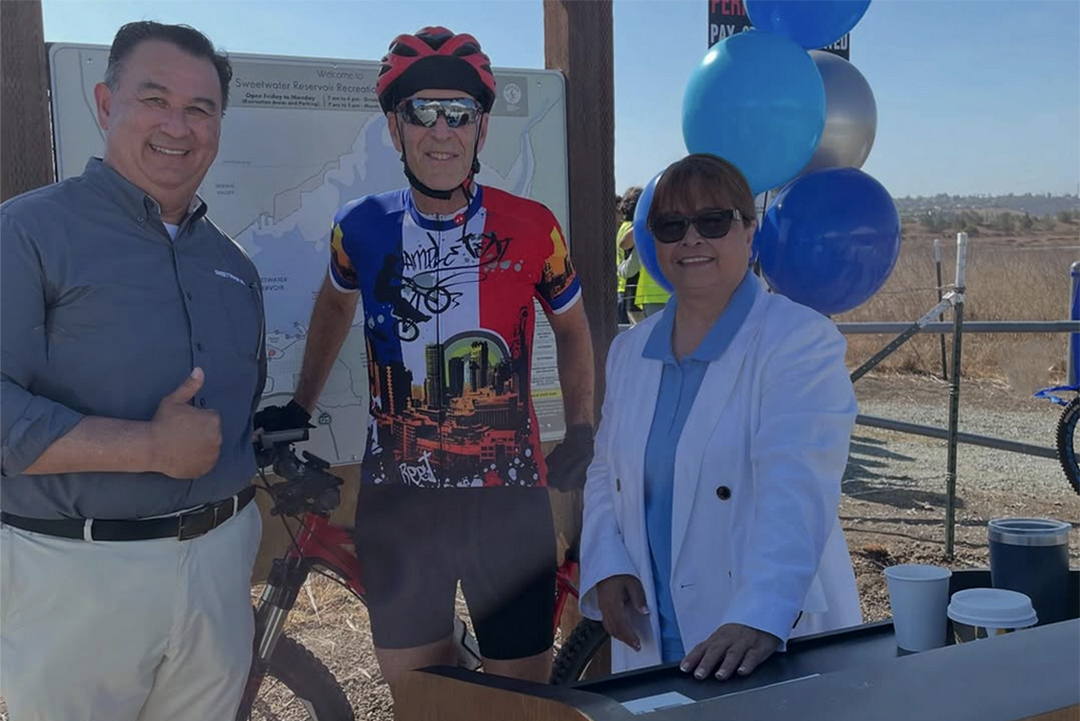
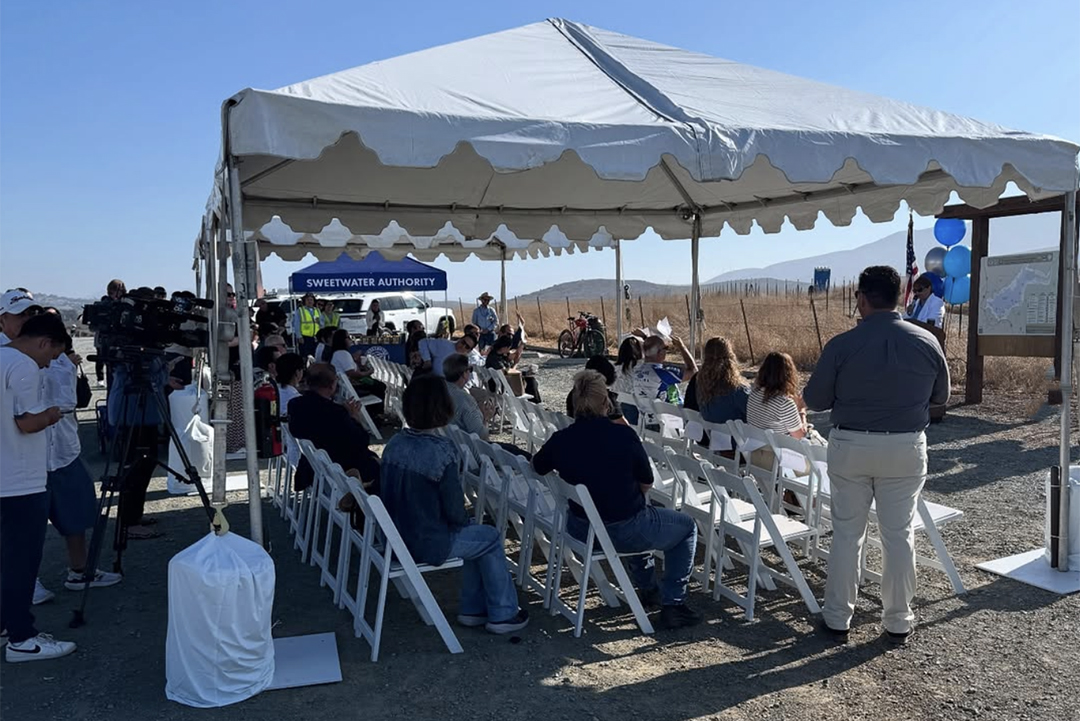
The public is invited to attend the ribbon-cutting ceremony on Sept. 10 for “Ripple Effect” at the Sweetwater Spigot. Photo: Sweetwater Authority

Any member of the public can access the well water directly from the spigots. The Sweetwater Authority provides water free of charge as part of a commitment it made when it acquired the water wells from the city upon its formation in 1977.


Olivenhain Municipal Water District Logo landscape design workshops

OMWD Honored for Commitment to Safety

Encinitas, Calif. – Today, Olivenhain Municipal Water District was honored with the McMurchie Excellence in Safety Award at the California Special Districts Association Annual Conference in Monterey. The award was presented by Special District Risk Management Authority for OMWD’s safety practices.

Each year, SDRMA selects two public agencies from its over 650 members for this award. To determine the award re

The East County AWP construction team is working to install a 28-inch bypass pipeline along Mission Gorge Road. It is 20,500 linear feet, or about 3.9 miles long. Photo: East County AWP

Construction Heats Up This Summer On East County AWP

Summer 2025 marks the third year of construction on the East County Advanced Water Purification Program facilities in Santee.

Progress on the East County Advanced Water Purification Program (East County AWP) continues on schedule at multiple East County locations, with significant steps forward reached as the project works its way toward completion.

The last piece of purified water pipeline was installed at Riverside Drive and Valle Vista Road in Lakeside. Photo: East County AWP

The last piece of purified water pipeline was installed at Riverside Drive and Valle Vista Road in Lakeside. Photo: East County AWP

A major project milestone was reached in June. Purified water pipeline construction is officially complete. The final 20-foot piece of the pipeline was installed in Lakeside last month.

Since construction began in 2022, just over 51,000 linear feet of purified water pipeline has been installed. This 10-mile pipeline will transport purified water from the East County AWP Facility in Santee to Lake Jennings. Restoration and roadway paving is wrapping up this portion of the project 

See a brief video update on the East County AWP progress here.

Mission Trails Regional Park Closures

Visitors to Mission Trails Regional Park may have seen the installation of a project bypass pipeline along the Father Junipero Serra Trail. This bypass pipeline serves to protect Mission Trails Regional Park against sewer spills once construction is underway to rehabilitate a sewer pipeline and install a new residuals pipeline.

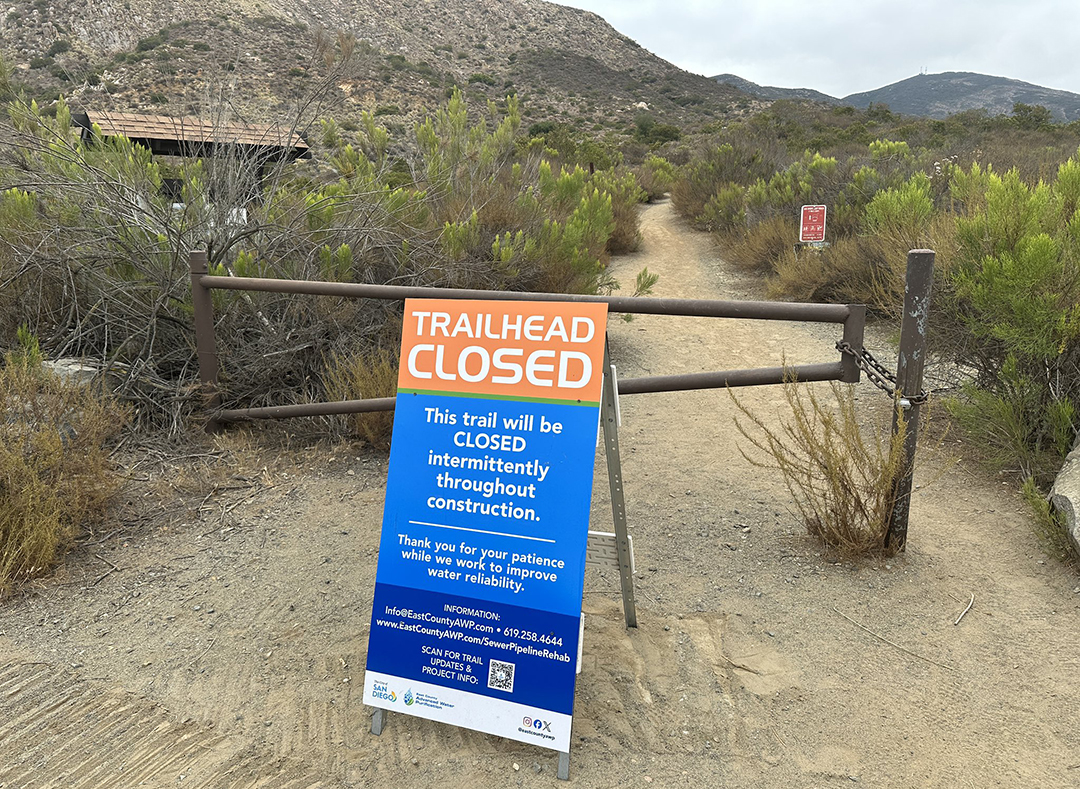
Temporary closure of trailheads in Mission Trails Regional Park will take place through summer 2028. Photo: East County AWP

Temporary closure of trailheads in Mission Trails Regional Park will take place through summer 2028. Photo: East County AWP

The 28-inch bypass pipeline is being installed along the entire 2.6 mile stretch of the trail with crews working east to west, fusing the pipeline sections together and undergrounding it when they reach intersections and trailheads.

The project requires the temporary closure of trailheads for up to two to three-day periods from 7 a.m. to 3:30 p.m.

It has also resulted in a long-term closure of the Father Junipero Serra Trail to all vehicles from the gate near the Visitor Center to the Old Mission Dam parking lot. This closure will last through summer 2028. The trail will remain open to pedestrians and bicyclists.

Overnight Work Underway At Santee Lakes

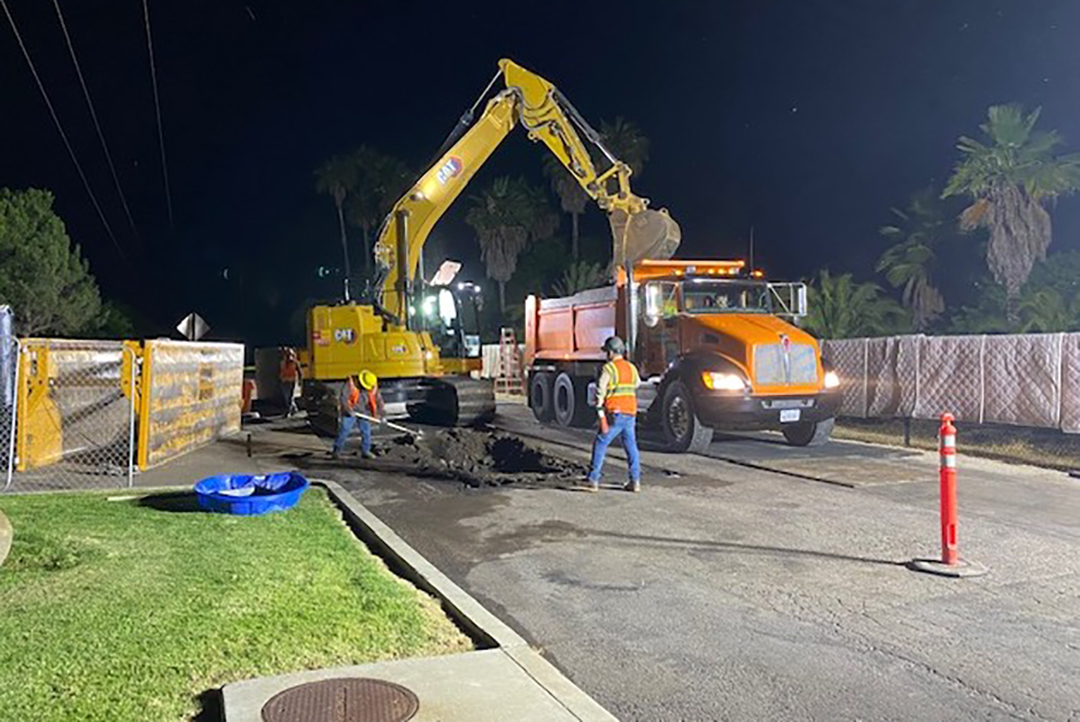
Overnight work is underway at Santee Lakes for the East County AWP. Photo: East County AWP

Overnight work is underway at Santee Lakes for the East County AWP. Photo: East County AWP

Overnight work on the east side of Santee Lakes is now underway. Crews are working at various locations on the east road from the roundabout near the park entrance on Fanita Parkway up to the East County Advanced Water Treatment Facility, just north of the lakes.

A 20-inch sludge line is being installed using a trenchless construction method called sliplining which may result in noise and bright lights for nearby neighbors. This overnight work is expected to be completed by the end of November 2025.

Work will take place during the following days and hours:

Monday night to Thursday morning from 7 pm. to 6 a.m.

Thursday night to Saturday morning from 7 p.m. to 5:30 a.m.

West Side of Santee Lakes Reopens For Summer

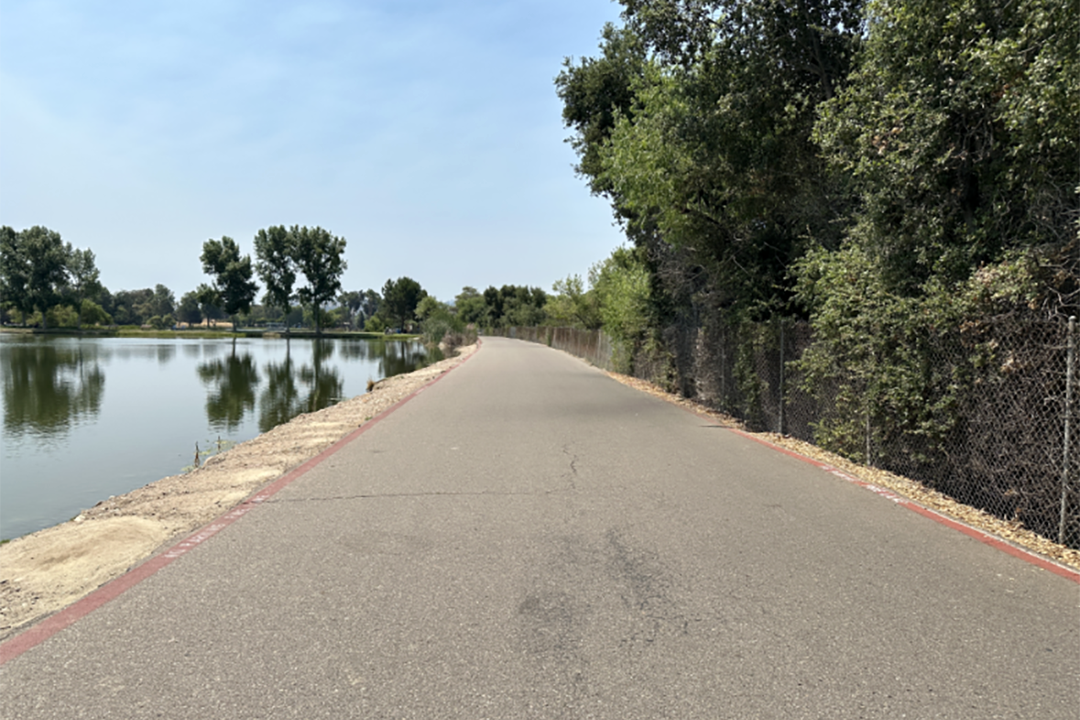
The west side of Santee Lakes is now reopened for recreation. Photo: East County AWP

The west side of Santee Lakes is now reopened for recreation. Photo: East County AWP

Great news for Santee Lakes visitors. The west road where wastewater and brine pipelines were being installed has been reopened. Pedestrians, bicyclists and cars are able to use the roadway following the completion of this pipeline work, marking another project milestone.

Interactive Map Keeps Residents Updated On Progress

When completed, water from this project will provide potable water to customers in Padre Dam Municipal Water District, Helix Water District, and Lakeside Water District service areas, and the northern portion of the Otay Water District.

With construction in multiple locations throughout east county, the Program’s interactive map offers a useful tool for residents and businesses to track where work is happening. The map is updated regularly and accessible 24/7 through the EastCountyAWP.com website. Information is also available via social media at @eastcountyawp

Vista Irrigation District Logo

Vista Irrigation District Receives National Award For Financial Reporting

Vista, Calif. — Vista Irrigation District has been presented with the Certificate of Achievement for Excellence in Financial Reporting by the Government Finance Officers Association of the United States and Canada (GFOA) for its annual comprehensive financial report (ACFR) for fiscal year ending June 30, 2024.  This certificate is the only national award for public sector financial reporting.
Over 250 different species of flora and fauna, and more than 25 special status species are found in the San Miguel Habitat Management Area, a a 240-acre biological reserve owned and maintained by the Otay Water District. Photo: Otay Water District

Otay Water District Habitat Management Preserves Biodiversity, Water Quality

The Otay Water District’s efforts to preserve local habitat contribute to the region’s biodiversity and support healthy ecosystems, which are crucial for maintaining water quality for its customers and throughout San Diego County.

The San Miguel Habitat Management Area (HMA) is a 240-acre biological reserve owned and maintained by the Otay Water District. It is located within the City of Chula Vista and lies at the base of Mount Miguel and the San Miguel Mountains, surrounded by water reservoirs and the former Salt Creek Golf Course.

Otay Environmental Compliance Specialist Juliana Luengas works to help preserve local habitat which contributes to the region’s biodiversity and supports healthy ecosystems, which are crucial for maintaining water quality. Photo: Otay Water District

Otay Environmental Compliance Specialist Juliana Luengas works to help preserve local habitat which contributes to the region’s biodiversity and supports healthy ecosystems, which are crucial for maintaining water quality. Photo: Otay Water District

The HMA was established in 1994 under a joint agreement with the U.S. Fish and Wildlife Service and the California Department of Fish and Wildlife, fulfilling requirements established by the Endangered Species Act.

The HMA is comprised of wetlands, coastal sage scrub, and native grasslands. Over 250 different species of flora and fauna, and more than 25 special status species were found within the HMA in a 2022 survey. Some of these species include the coastal California gnatcatcher, the least Bell’s vireo, the Quino checkerspot butterfly, the burrowing owl, the coastal cactus wren, the Otay tarplant, and the variegated dudleya.

Mountain bluebirds are one of the bird species found in the San Miguel Habitat Management Area. Photo: Otay Water District

Mountain bluebirds are one of the bird species found in the San Miguel Habitat Management Area. Photo: Otay Water District

“The San Miguel Habitat Management Area reflects Otay’s commitment to protecting native species and preserving natural resources while delivering safe, reliable water to our community,” says Otay Environmental Compliance Specialist Juliana Luengas.

Habitat Preservation Helps Maintain Water Quality

Water agencies preserve habitat to ensure a sustainable and reliable water supply for current and future needs, while also supporting healthy ecosystems and communities. Habitat preservation is crucial for maintaining water quality, regulating water flow, and providing valuable ecosystem services. Healthy habitats also support biodiversity, protect endangered species, and enhance recreational opportunities.

Flower of the Otay tarplant, a species within the San Miguel Habitat Management area. Photo: Otay Water District

In 2023, the Otay Water District was awarded a grant through the SANDAG TransNet Environmental Mitigation Program for Threat Reduction in the HMA. This program has allocated $4 million annually to help maintain the biological integrity of San Diego County.

Ongoing activities within the San Miguel HMA include updating wildlife surveys and site maintenance.

Public Help Needed To Prevent Trespassing Damage to Habitat

Posted signs remind the public about the need for habitat preservation by avoiding trespassing in the San Miguel HMA. Photo: Otay Water District

Posted signs remind the public about the need for habitat preservation by avoiding trespassing in the San Miguel HMA. Photo: Otay Water District

Recently, the Otay Water District has been using these funds to combat the increased threat of illegal trespassing. The HMA has experienced increased illegal entrance and the creation of trails, which have caused severe damage to native habitats and sensitive species it was created to protect.

The District aims to reduce the number of recreational trespassers, including mountain bikers, hikers, dirt bikers, and ATV riders along the perimeter fencing, and reduce disturbance to habitats throughout the HMA.

Members of the community are reminded that the San Miguel HMA is private property, and recreational use or any trespassing, such as hiking or biking, is not permitted. The public is asked to refrain from feeding wildlife or littering.

Violations will result in arrests, fines, vehicle confiscation, and prosecution to the fullest extent of the law. Residents are asked to report any trespassing by calling the City of Chula Vista Police at (619) 691-5151.

More information about the San Miguel HMA can be found at otaywater.gov/HMA.

Vista Irrigation District Logo

Vista Irrigation District’s Annual Water Quality Report Available Online

Vista Irrigation District’s Consumer Confidence Report, also known as the annual water quality report, is available to be viewed online.  English and Spanish versions of the report are available for download from the district’s website.

In 2024, as in past years, the district’s tap water met all federal and state safe drinking water standards.

The R.M. Levy Water Treatment Plant in Lakeside treats 87.8% of the Helix Water District's water to the highest state and federal water quality standards. Photo: Helix Water District

Helix Water District Water Quality Report: 100% Compliance

The Helix Water District’s new 2024 Water Quality Report shows that throughout 2024, the district continued to deliver healthy, top-quality drinking water, which was 100% compliant with federal and state standards.

The characteristics of each specific local water supply depend on its original source and the route it travels through rock, soil, lakes, and rivers. Helix WD manages the characteristics of each water source through its multi-step treatment process.

In 2024, 58% of the Helix Water District’s supply came from the Colorado River, 25% came from Lake Cuyamaca and creeks in the mountains east of San Diego, and 17% came from Northern California through the State Water Project.

All raw water, whether imported or local, is treated before entering the Helix Water District distribution system. In 2024, 87.8% of the District’s water was treated at Helix Water District’s R.M. Levy Water Treatment Plant in Lakeside.

The remaining 12.2% of water was purchased through the San Diego County Water Authority and treated at the Metropolitan Water District of Southern California’s R.A. Skinner Treatment Plant, the Water Authority’s Twin Oaks Valley Water Treatment Plant, and/or the Claude “Bud” Lewis Carlsbad Desalination Plant.

Experts Behind Water Quality at Helix Water District

The Helix Water District uses ozone generators to reduce the use of chlorine as a primary disinfectant. Ozone inactivates a wide range of microorganisms, needs little contact time with the water, and it eliminates most of the odor and taste issues some people associate with tap water. Photo: Helix Water DIstrict ozone disinfection

The Helix Water District uses ozone generators to reduce the use of chlorine as a primary disinfectant. Ozone inactivates a wide range of microorganisms, needs little contact time with the water, and it eliminates most of the odor and taste issues some people associate with tap water. Photo: Helix Water District

Federally regulated under the Safe Drinking Water Act, public water systems are monitored for contaminants, including microbial threats, chemical hazards, or disinfection byproducts. All water and wastewater systems are regularly tested to ensure quality.

Each day of the year, state-certified staff at the Helix Water District conduct hands-on testing in the field and in its lab. Over 200 water samples are collected and analyzed every 24 hours to ensure its drinking water meets all safety standards. Water quality testing continuously monitors the treatment process, 24 hours a day, seven days a week.

“I wish all of our customers could meet our treatment staff,” said Helix General Manager Brian Olney. “Their expertise and experience goes into every drop of water we produce. They are at the forefront of the water industry and are committed to keeping the communities we serve healthy and happy.”

The 2024 Water Quality Report explains the water quality standards mandated by the U.S. Environmental Protection Agency and the State of California, and presents Helix’s water quality data for each standard. As in years past, Helix’s tap water outperformed all standards.

Water Quality Report Available To Customers

The Helix Water District's 2024 Water Quality Report is available online in both English and Spanish.

The Helix Water District’s 2024 Water Quality Report is available online in both English and Spanish.

For questions about the report, please email the Helix Water District water quality staff at or call (619) 667-6248.

The delivery of safe water to the Water Authority’s 22 member agencies and their customers is the top priority for the Water Authority through regular water quality monitoring, supported through investments in ongoing maintenance.

Helix Water District is a not-for-profit, local government agency responsible for tap water in San Diego’s East County suburbs. The district provides water treatment for 500,000 residents and distributes water to 278,000 people in the cities of El Cajon, La Mesa, and Lemon Grove, the community of Spring Valley, and areas of Lakeside


On National Hydration Day on June 23, fill up your reuseable bottle with tap water to stay healthy. Photo: GSquarePhoto

National Hydration Day Highlights Safe, Reliable Drinking Water

National Hydration Day is June 23, a time to recognize the essential role of one of humanity’s resources: safe, reliable drinking water.

National Hydration Day was originally established in 1991 at the start of the summer season to remind athletes of the importance of hydration and to promote the benefits of proper hydration for overall health.

It also demonstrates the availability of the healthiest way to stay hydrated: the drinking water provided by water agencies like the 22 member agencies of the San Diego County Water Authority.

Hydration Matters To Your Health

Stay aware of your hydration by monitoring your thirst, especially when working or playing outdoors in warm summer weather. Photo: Nuzree

Stay aware of your hydration by monitoring your thirst, especially when working or playing outdoors in warm summer weather. Photo: Nuzree

Water makes up 50 to 70% of the healthy human body weight. It lubricates joints, regulates your body temperature, flushes toxins via urine and sweat, and supports every organ system from brain function to heart health.

Scientific studies underline hydration’s importance. Proper hydration supports cognitive performance, mood stability, and may slow age-related cellular decline.

The American Heart Association recommends that men drink about fifteen and a half cups of water and women drink about eleven and a half cups of water each day. Older adults should pay extra attention to hydration needs to prevent rapid fluid loss from decreased total body water or medication effects .

Water and water-rich foods are the best sources of hydration to keep your heart healthy and maintain a regulated temperature. Relying on sodas, sports drinks, or sweetened coffee and frozen drinks to stay hydrated can introduce too much sugar into your diet.

Safe Drinking Water Delivered Daily

Drought-Safe, Supply Investments-Carlsbad Desalination Plant-drought

The San Diego region’s diversified water supply portfolio includes highly reliable, locally controlled and drought-proof supplies from the Claude “Bud” Lewis Carlsbad Desalination Plant. Photo: San Diego County Water Authority

On National Hydration Day — and every day — the mission of the San Diego County Water Authority and its 22 member agencies is to ensure that every tap delivers water that meets or exceeds federal and state standards.

Federally regulated under the Safe Drinking Water Act, public water systems are monitored for contaminants, including microbial threats, chemical hazards, or disinfection byproducts. All water and wastewater systems are regularly tested to ensure quality on a regular basis.

The delivery of safe water to the Water Authority’s 22 member agencies and their customers is the top priority for the Water Authority. Regular water quality monitoring and the use of online monitoring equipment ensure that the Water Authority is delivering high-quality, safe water to its member agencies 24 hours a day, seven days a week.

Potable water supplied by the Water Authority to its member agencies comes from three primary sources. Whether the water is treated by the Metropolitan Water District, the Water Authority, or a local agency, all treated water served in San Diego County meets or exceeds rigorous state and federal water quality standards.

Each member water agency publishes an annual Water Quality Report, such as this example from the City of San Diego, and from the Padre Dam Municipal Water District, which provide details about treatment and compliance.

Are Your Hydration Habits Healthy?

Your lorikeet can get its drinking water this way. You should fill your reusable water bottles and chill them in the refrigerator for your cold drinking water. Photo Wade Tregaskis/CC

Your lorikeet can get its drinking water this way. Fill your reusable water bottles with water and chill them in the refrigerator for cold drinking water. Photo: Wade Tregaskis/CC

You can use National Hydration Day as a reminder to check your own hydration habits.

Make water your primary source of hydration. Fill your reuseable bottle with tap water and put it into your refrigerator at night so it’s ready and waiting for you in the morning.

Choosing tap water over bottled beverages is eco‑friendly, budget‑friendly, and health‑friendly. Public water systems are strictly regulated, while bottled water is less so. Reusable bottles reduce plastic waste. Save money and save the environment by using tap water.

If your taste buds need more variety than plain water, add lemon, cucumber, or mint to your reusable drinking water bottle. National flavoring can help you ensure you reach your daily hydration goals.

Learn the signs of dehydration from experts such as the Mayo Clinic, which can show up quickly during hot summer days, especially if you are outside and active. It is especially dangerous for infants, children, and older adults.

Commitment to Community Well‑Being

Work continues on the Water Authority's historic First Aqueduct to ensure safe, reliable water supplies for the San Diego region well into the future. Photo: San Diego County Water Authority

Work continues on the Water Authority’s historic First Aqueduct to ensure safe, reliable water supplies for the San Diego region well into the future. Photo: San Diego County Water Authority

Investments by the San Diego County Water Authority and its member agencies in treatment plants, pipeline maintenance, and highly trained water professionals at all levels ensure safe, reliable water is available to support your health on National Hydration Day and every day.

The installation of over 5,600 feet of new recycled water pipelines will result in more than 12.5 million gallons of drinking water saved every year. Photo: Olivenhain Municipal Water District

New OMWD Recycled Water Pipelines Provide Savings

Construction is complete on new recycled water pipelines by the Olivenhain Municipal Water District (OMWD) in Carlsbad and Encinitas, resulting in significant annual drinking water savings.

The installation of over 5,600 feet of new pipelines will allow several HOA communities in the project area to convert their irrigation systems to recycled water, resulting in more than 12.5 million gallons of drinking water saved annually.

“Converting our irrigation system to recycled water was the right decision,” said Paul Heller, Summerhill HOA board president. “We’ll be less impacted by future droughts that could limit watering schedules, and recycled water is more affordable than drinking water, which will reduce costs for our residents.”

Grant Funding Makes Pipeline Project Cost-Effective For Ratepayers

OMWD secured more than $900,000 in grant funding to make the project cost-effective for ratepayers. Photo: Olivenhain Municipal Water District recycled water pipelines

OMWD secured more than $900,000 in grant funding to make the project cost-effective for ratepayers. Photo: Olivenhain Municipal Water District

OMWD secured more than $900,000 in grant funding to make the project cost-effective for ratepayers. Grants from the U.S. Bureau of Reclamation’s Title XVI Water Reclamation and Reuse Program and the California Department of Water Resources’ Integrated Regional Water Management Program contributed funds to offset project costs.

“Converting our commercial customers to recycled water for irrigation will help ease our dependence on imported water,” said OMWD board secretary Christy Guerin. “And by using grant funds to help with the costs involved, we’re minimizing the impacts to ratepayers.”

The project was completed on time and with no interruptions to customers’ water supplies.

Recycled water is locally produced, disinfected wastewater that is used for irrigation purposes. OMWD meets up to 15 percent of its overall demand with recycled water and continues to identify additional ways to make recycled water available to eligible customers.

Ensuring Reliable Water Supplies

The completion of the project will resulti in more than 12.5 million gallons of drinking water saved annually. Photo: Olivenhain Municipal Water District recycled water pipelines

The completion of the project will result in more than 12.5 million gallons of drinking water saved annually. Photo: Olivenhain Municipal Water District

One hundred percent of OMWD’s drinking water supply is imported into the region. These sources are threatened by droughts and overuse.

Recycled water is locally produced, disinfected wastewater that is used for irrigation. Not only is it a drought-resilient supply, but recycled water also costs less than potable water. In addition, using recycled water reduces the amount of treated wastewater discharged into the ocean and reduces the dependence on imported water from distant sources.

The completion of the pipeline extensions will result in the conversion of 28 water meters from potable to recycled water, allowing large customers in Carlsbad and Encinitas, such as HOAs, to connect to OMWD’s recycled water distribution system.

OMWD Plays Leadership Role in Water Recycling Efforts

For the fifth time, the Olivenhain Municipal Water District's 4S Ranch Water Reclamation Facility received statewide recognition from CWEA. Photo: Olivenhain Municipal Water District

For the fifth time, the Olivenhain Municipal Water District’s 4S Ranch Water Reclamation Facility received statewide recognition from CWEA. Photo: Olivenhain Municipal Water District

OMWD produces up to two million gallons of recycled water every day at its 4S Ranch Water Reclamation Facility, which began operation in 2003. Additionally, OMWD is the lead agency of the North San Diego Water Reuse Coalition, a group of nine North County agencies that coordinate across jurisdictional boundaries to expand the reach of the recycled water.

As a result, OMWD now serves up to 15 percent of its overall demand from recycled water and continues to identify additional ways to make recycled water available to eligible customers.

Water recycling is the process of capturing and treating wastewater for non-domestic purposes such as irrigation and industrial processes. By 2027, the volume of recycled water produced in the U.S. is projected to increase 37% from 4.8 billion gallons per day to 6.6 billion gallons per day, according to a recent survey by Bluefield Research.

(L to R) Staff from the City of La Mesa and the U.S. Green Building Council of California (USGBC) present the Green Business Certification to Helix Water District's board of directors. From left: City of La Mesa's Hilary Ego and Lainey Bloom, USGBC's Robert Carr, Division 2 Director Andrea Beth Damsky, Division 3 Director Mark Gracyk, Board President Dan McMillan, Division 4 Director Kathleen Coates Hedberg, and City of La Mesa's Logan Kelly and Serena Lee. Photo: Helix Water District

Helix Water District Recognized As Certified Green Business

The California Green Business Network and the City of La Mesa presented the Helix Water District with its Green Business certification at the June board of directors meeting. Achieving this certification recognizes the district’s ongoing commitment to environmentally responsible business practices.

To achieve certification, businesses and government entities must meet an extensive set of core and elective measures covering seven categories: energy, pollution prevention, solid waste, transportation, wastewater, water, and community.

“Our district’s focus on sustainability also has financial benefits,” said Dan McMillan, Helix Water District board president. “We can make decisions that are good for the environment as well as the ratepayer’s wallet.”

The Helix Water District serves 278,000 people in San Diego’s east county suburbs.

Investments In Clean Energy Benefit Consumers

The installation of solar panels is lowering Helix Water District energy consumption and budget costs. Photo Helix Water District

The installation of solar panels is lowering the Helix Water District’s energy consumption and budget costs. Photo Helix Water District

Helix has made significant investments in clean energy, securing a renewable energy supply through its power purchase agreement and further reducing its reliance on fossil fuels by installing solar panels at its Nat L. Eggert Operations Center. The agreement has delivered double-digit cost savings, reaching as high as 18% on electric commodity costs, over the last several years.

Helix has secured the renewable energy supply it needs through 2030.

The district currently fuels its fleet with 100% renewable diesel, which has reduced the district’s carbon emissions by an estimated 500 metric tons per year. It is also developing state-of-the-art charging infrastructure at its operations center to support its transition to an electric fleet.

This charging infrastructure is funded almost entirely through grants due to the district’s swift action in developing the project and securing funding.

Energy Efficiency Reduces Power Consumption and Costs

Helix also underwent a lighting retrofit and installed energy-efficient window coverings at its facilities. It also installed lighting controls, features a programmable smart thermostat, and ENERGY STAR appliances to reduce its electricity usage. Through retrofits and the implementation of energy-efficient appliances and measures, the district has reduced its electricity consumption by 15%.

Additionally, a key priority of the district is educating customers on the responsible use of water, promoting the adoption of high-efficiency appliances and irrigation, and encouraging the use of climate-appropriate landscaping. Helix models water efficiency at its facilities through the use of low-water-use toilets, faucets, appliances, and irrigation systems.

These efficiencies allow the district to reduce its water consumption and long-term water costs.

“This certification proves that a government agency can prioritize sustainability while managing public funds responsibly,” said Helix Water District Board Director Mark Gracyk. “The district is proud to be an industry leader in sustainable and fiscally responsible business practices.”

Helix Water District Demonstration Garden Offers Community Resource

The award winning Helix Water District Demonstration Garden offers ideas on conserving water and energy in your landscaping. Photo: Helix Water District Green Business

The award winning Helix Water District Demonstration Garden offers ideas on conserving water and energy in your landscaping. Photo: Helix Water District

In 2020, the Helix Water District installed drip irrigation and a low-water use demonstration garden at its administration office to reduce its outdoor water use and provide a resource to the community. The San Diego Architectural Foundation awarded the district a coveted Orchid Award for the project in 2023.

Visitors can see firsthand what plants thrive in the San Diego climate and what water-wise landscaping can look like.