You are now in Achievements Education Features category.

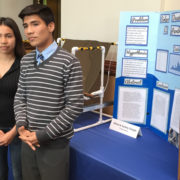
Alfred and Audrey Vargas, a brother and sister team from Sweetwater High School, won top honors from the Water Authority for water-related projects at the regional Science and Engineering Fair. Their work is designed to provide low-cost fresh water to people in developing countries. Photo: SDCWA

Sweetwater High Students Aim To Avert World Water Crisis

Audrey and Alfred Vargas are trying to expand access to clean drinking water one drop at a time.

The brother and sister duo, who live in National City and attend Sweetwater High School, have been refining a portable, low-cost, easy-to-use, simple-to-construct system that efficiently desalinates brackish water.

“We see it as one of many possible solutions that can help solve the water crisis occurring throughout the world today,” said Audrey Vargas, 15.

Their endeavor is garnering growing attention. At the Greater San Diego Science & Engineering Fair, their project – Solar Desalination Using a Parabolic Trough – secured the top Senior Division award from the San Diego County Water Authority.

Water Authority promotes innovation in students

The Water Authority has sponsored the Science & Engineering Fair for decades, and the Water Authority’s Board of Directors recognized Audrey and Alfred at its April 12 meeting, along with five other top water-related projects from the science fair.

Board member Frank Hilliker interviewed the Vargas team at the science fair and was impressed with their work. “The fact that they were able to take such a complex challenge and find a solution that seems so easy and without having to spend a lot of money was remarkable,” he said. “There are no computers, no electronics, no fuel involved. It’s a fascinating way to provide clean, reliable drinking water for people who don’t have access to clean water.”

Besides the Water Authority award, the siblings also won a Scripps Institute of Oceanography Climate Science Award, and their work was honored by the WateReuse Association (San Diego Regional Chapter) and the California Environmental Health Association – Southwest Chapter/San Diego County, Department of Environmental Health. They compete in the California State Science & Engineering Fair competition on April 23 and 24 at Exposition Park in Los Angeles.

Students set sights on solving global problem

Audrey and Alfred aspire to see their device used in impoverished communities around the world that don’t have reliable sources of drinking water.

“My sister and I live in a very modest community, and we see people who are living in poverty every day,” said Alfred. “This is a cost-effective and simple solution that can help anyone have access to a basic necessity.”

Alfred and Audrey have been entering science fairs since they were middle schoolers and Alfred has been refining the desalination project for the past three years. Alfred and Audrey note that a pivotal manner of obtaining freshwater is by distilling seawater. But that can be a costly and time-consuming process. Their portable, parabolic desalination device, however, can efficiently purify brackish water through a simple yet complex process that uses PVC pipes, a copper tube, and the sun.

Sofia Sandoval, a chemistry teacher at Sweetwater High School who advised the students, said Alfred and Audrey are destined for greatness. Indeed, Alfred aspires to attend Massachusetts Institute of Technology and work as a chemical engineer. Audrey is determined to gain acceptance to Harvard, UC Berkeley, and Stanford en route to a career enforcing environmental regulations.

“Alfred and Audrey are not the typical high school students who were interested in conducting a cookie cutter science fair project,” Sandoval said. “They have bigger dreams. They came to science fair orientation meeting with a firm belief that humans have a moral obligation to help humanity. They, themselves, feel obliged to enter careers that allow them to directly help humans.

“This conviction, along with Audrey’s environmental passion and Alfred’s engineering mind, drove them to their project topic selection. I think this project embodies exactly what our next generation scientists and innovators should focus on, namely a multi-dimensional approach to solving world problems.”
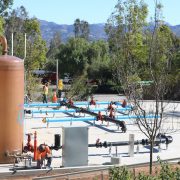


The new skills lab for the Cuyamaca College Wastewater Studies program. Photo: Courtesy GCCCD

College Students Get Their Feet Wet at New Center for Water Studies

RANCHO SAN DIEGO – Cutting-edge training facilities unveiled for spring classes at Cuyamaca College help tomorrow’s water and wastewater workforce gain the hands-on experience necessary for successful careers in the industry. Additional upgrades are on the way by fall, as the college continues expanding its legacy of preparing workers for careers in water.

Cuyamaca’s new Center for Water Studies features an innovative Field Operations Skills Yard – an above-ground water distribution system and an underground wastewater collection system that provides students with practical challenges they will face in today’s complex water and wastewater facilities.

“These fully operational water and wastewater systems will be used to replicate many of the entry-level tasks employees perform as they begin their careers in the water and wastewater industry,” said Don Jones, who helped spearhead the creation of the Center for Water Studies. “It’s the culmination of a many years long pipe dream.”

Cuyamaca students also will benefit from a $1 million renovation to Water & Wastewater Technology program facilities, including a water quality analysis classroom and a shop area for backflow prevention and cross-connection control training. Renovations started this spring with completion anticipated by fall 2018.

Skilled water professionals are in high demand as the current workforce ages. Water and wastewater agencies employ more than 60,000 workers statewide, including 5,000 in San Diego County, according to the federal Bureau of Labor Statistics (BLS). But the Water Research Foundation and the American Water Works Association anticipate one-third of the current water utilities workforce nationwide will retire over the next decade, offering numerous opportunities for 20-somethings to start careers.

The industry offers other benefits. In San Diego County, wastewater treatment and system operators earn an average annual wage of more than $66,000, according to the federal BLS.

Filling the Water Career Pipeline

Cuyamaca College’s Water & Wastewater Technology program is the oldest and most comprehensive program of its kind in the California Community Colleges system, educating the state’s water utility workforce for more than a half a century. In the 2016-2017 academic year, 35 students at Cuyamaca earned associate’s degrees or certificates in water and wastewater fields.

The college works closely with local water agencies, and the new Center for Water Studies evolved through discussions among members of the Cuyamaca College Water & Wastewater Technology Program Industry Advisory Committee. The committee comprises representatives from the City of San Diego Public Utilities Department, the San Diego County Water Authority, Helix Water District, Padre Dam Municipal Water District, the City of Escondido Utilities Department, Olivenhain Municipal Water District and other agencies.

Funding for the recent upgrades at Cuyamaca comes from several sources:

  • A California Community College Strong Workforce grant provided $192,000 for the Field Operations Skills Yard.
  • A grant from the National Science Foundation provided $72,000 for the skills yard.
  • Grossmont-Cuyamaca Community College District’s Proposition V, approved by voters in 2012, provided $1 million for renovating classroom space.

Cuyamaca College has received a $900,000 National Science Foundation grant to encourage Grossmont Union High School District (GUHSD) students to consider careers in water and wastewater. Those funds also will help recruit veterans, women and students from underrepresented communities to start careers in water and wastewater management.

GUHSD and water industry experts currently are collaborating on lesson plans related to water and wastewater management skills for local high school science classes. High school teachers will be invited to activities at the Center for Water Studies as soon as this summer – another way that Cuyamaca’s investment is paying off for the community.

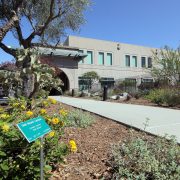
The San Diego County Water Authority's Sustainable Landscaping offers examples of plant choices for our region. Photo: SDCWA

Free WaterSmart Landscaping Class Series Returns in March

Participants receive expert advice and develop a personalized landscape plan

Looking for a way to spruce up your yard and trim water use at the same time? The San Diego County Water Authority is here to help with two new sessions of the four-part WaterSmart Landscape Makeover Series starting in March.

These free, award-winning and interactive classes teach the steps for successfully converting high-water-use turf areas to WaterSmart landscapes during four classes over consecutive weeks. Participants learn from local landscape professionals about soil, project planning and design, turf removal, plant selection, irrigation, efficiency and rainwater harvesting. Each series culminates with experts helping homeowners create personalized landscape makeover plans.

The first class begins March 5 at the Water Authority’s headquarters in Kearny Mesa. Another four-part series, also at the Kearny Mesa facility, begins March 28. Each class is scheduled from 5:30 p.m. to 8:30 p.m. Preregistration and a commitment to attend all four classes in the series is required. Applicants must also identify existing turf areas to remove at their homes and have in-ground, working irrigation systems to qualify.

Class details and an online application form are at landscapemakeover.watersmartsd.org/classes. Enrollment is on a first-come, first-served basis; applicants may join a waitlist if their desired session is full.

“Participants rave about how these classes not only instruct, but inspire them to do more with their yards by enhancing their landscapes while increasing water-use efficiency,” said Mark Muir, chair of the Water Authority’s Board of Directors. “Since the landscape makeover series began in April 2014, participants have cut their average household water use by about a third because of their WaterSmart landscape upgrades.”

The class series is recommended – but not required – for residents interested in following guidelines set by the Sustainable Landscapes Program. The grant-funded partnership, known as the SLP, was created by the Water Authority, the City of San Diego, the County of San Diego, the Surfrider Foundation, the California American Water Company and the Association of Compost Producers. The SLP promotes landscape upgrades that comply with a more rigorous set of design criteria than other turf replacement programs. It includes climate-appropriate plants and high-efficiency irrigation equipment, rainwater capture and detention features, and soil amendments to improve water efficiency. The Water Authority recently installed the Sustainable Landscaping Demonstration Garden at its Kearny Mesa headquarters at 4677 Overland Ave. in San Diego. Visitors to the demonstration garden can view a practical, beautiful landscape that applies SLP principles that can be replicated at their homes.

A limited number of SLP incentives remain to help qualified applicants receive up to $1.75 per square foot toward eligible project costs for upgrading 500 to 3,000 square feet of existing turf areas to sustainable landscapes. For more information about the SLP, including program resources and incentives, go to sustainablelandscapessd.org.

In addition to the four-class series, the Landscape Makeover Program offers free, three-hour WaterSmart Landscape Design Workshops – a popular first step toward implementing water-efficient landscapes. The workshops provide an introduction to skills and resources needed for a landscape makeover. The Water Authority, in partnership with its member agencies, will hold workshops in February, March and April at locations around the county. Workshop locations, times and registration details are at landscapemakeover.watersmartsd.org/design_workshop.

Residents who want to learn more about the makeover process from the comfort of their homes can view the Landscape Makeover Videos on Demand at landscapemakeover.watersmartsd.org/elearning. Those videos provide content that is similar to the workshops and class series in an online format for easy access.


WaterSmart Landscape Makeover Series

Upcoming Four-Class Series

March 5, 12, 19 and 26
March 28, April 4, 11 and 18

Classes are held from 5:30 p.m. to 8:30 p.m. at the Water Authority’s Kearny Mesa headquarters,
4677 Overland Ave.

For details and to apply:
landscapemakeover.watersmartsd.org/classes.

Flowers, WaterSmart checkup program

Wanted: Large Landscapes for Program Proven to Reduce Irrigation Water Use

Participants receive training, state-of-the-art tools to cut outdoor demand by at least 20 percent.

The San Diego County Water Authority is seeking approximately 20 commercial-scale landscapes for participation in a program that has demonstrated significant outdoor water-use reductions through a combination of training, hardware upgrades and technical assistance valued at more than $15,000 per site.

Applicants have until March 31 to file statements of interest in the WaterSmart Landscape Efficiency Program, using the form at watersmartsd.org.  An interest meeting is scheduled from 2-4 p.m. on Feb. 15 at San Diego Gas & Electric’s Energy Innovation Center, 4760 Clairemont Mesa Blvd.

In two earlier iterations of the landscape efficiency program, water savings topped 30 percent, exceeding the target of 20 percent. Participating sites have included parks, apartments, schools and homeowner association common areas. Project sites are typically about four irrigated acres (though they are often part of a larger property), and they must be on dedicated potable water meters.

“We are looking for places to showcase significant water savings without compromising landscape quality by employing best practices for irrigation management and top-tier technology,” said Carlos Michelon, principal water resources specialist at the Water Authority. “This program is one of many ways the Water Authority continues to promote long-term water-use efficiency.”

The WaterSmart Landscape Efficiency Program requires joint participation by property owners and landscape maintenance contractors at each site. Landscape contractors receive training, assistance, and performance-based financial incentives for documented water savings. Site owners receive water-saving devices and the long-term benefits of lower water use. The program is funded mainly through a Proposition 84 Integrated Regional Water Management grant from the California Department of Water Resources.

Program benefits include leak detection and repair, irrigation system pressure regulation, improvements in distribution uniformity of irrigation water, and the installation of flow sensors and weather-based irrigation controllers. Each site is provided with a water management target that will be tracked for a year. Participants are responsible for hardware installation, landscape maintenance and other contract conditions.

From the pool of interested parties, the Water Authority will select those that best fit the program’s technical requirements and are most likely to meet the program’s demanding implementation schedule. Promising sites that aren’t selected for the program’s current round may be eligible for future rounds, depending on funding.

In addition to the WaterSmart Landscape Efficiency Program, the Water Authority offers free training to landscape professionals through the Qualified Water Efficient Landscaper program. That program, known as QWEL, provides 20 hours of training on the latest water-efficiency principles and the opportunity to earn a QWEL certificate. Information about QWEL is at qwel.watersmartsd.org.