Tag Archive for: AB1572

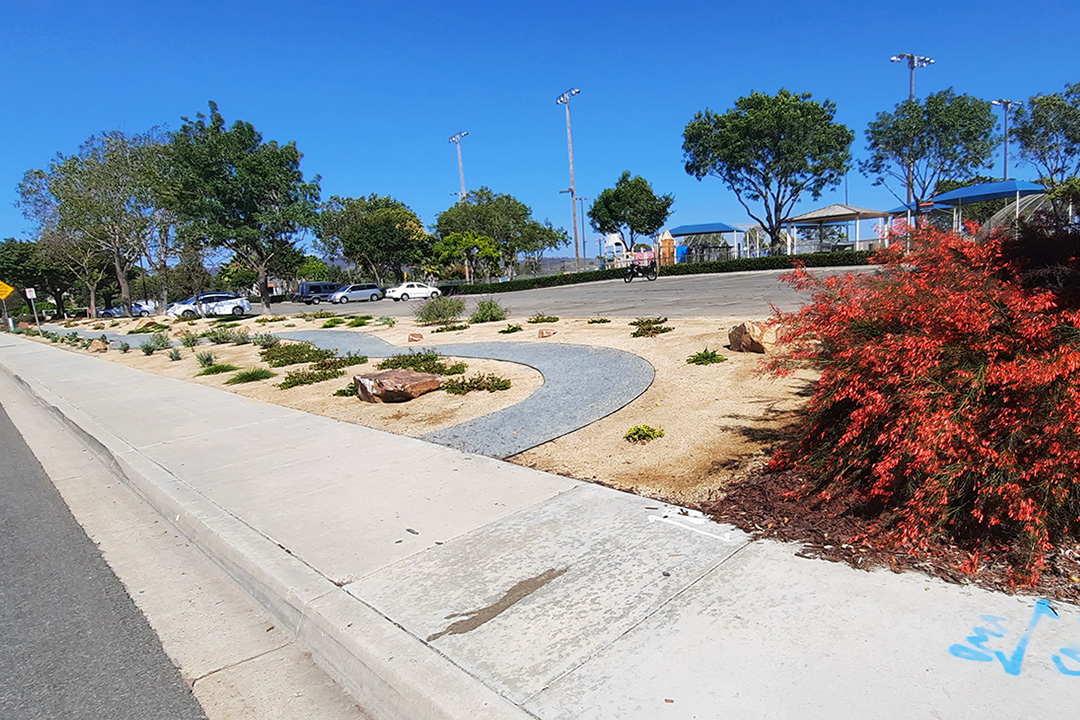
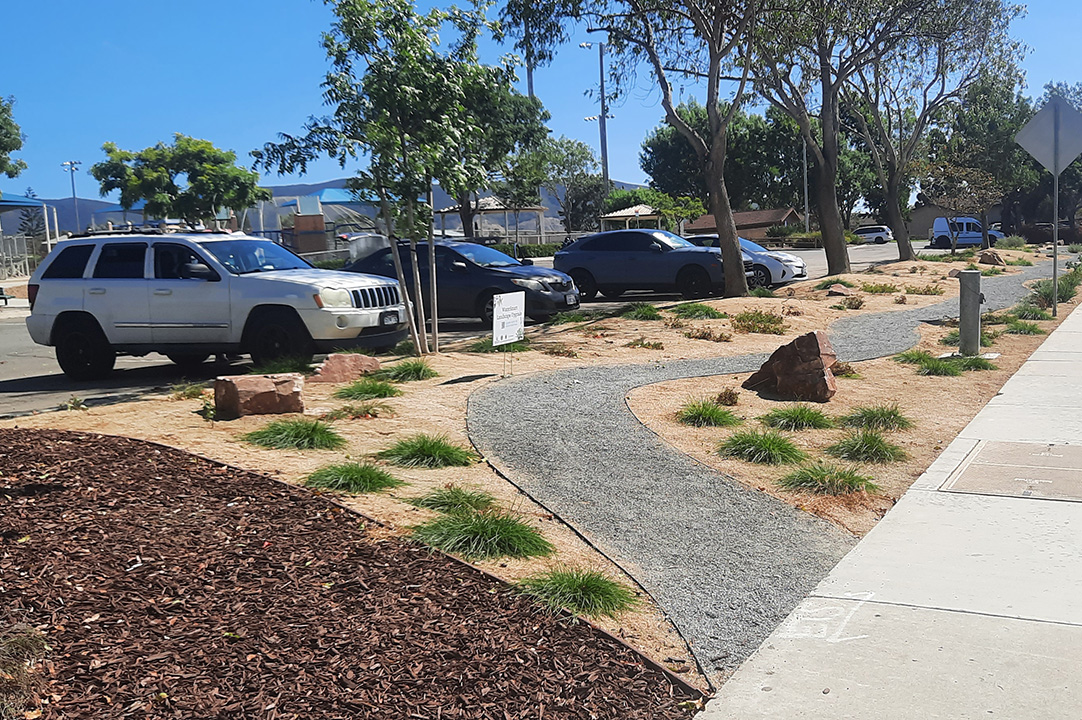
Whittier School landscaping after its makeover. Photo: Courtesy Whittier School landscape project

Whittier School Landscape Project Transforms Neighborhood

The successful collaboration between the San Diego County Water Authority and the Whittier School in Clairemont to update the school’s landscaping delivered unexpected benefits to the neighborhood.

Senior Water Resources Specialist Debby Dunn says the Whittier School project was an ideal candidate for the Water Authority’s grant-funded Direct Installation Landscape Program. It met the pilot program’s goals, including its visible location along busy Clairemont Drive in a disadvantaged neighborhood.

Seven commercial projects were funded through the program.

Collaboration Delivers Bonus Results
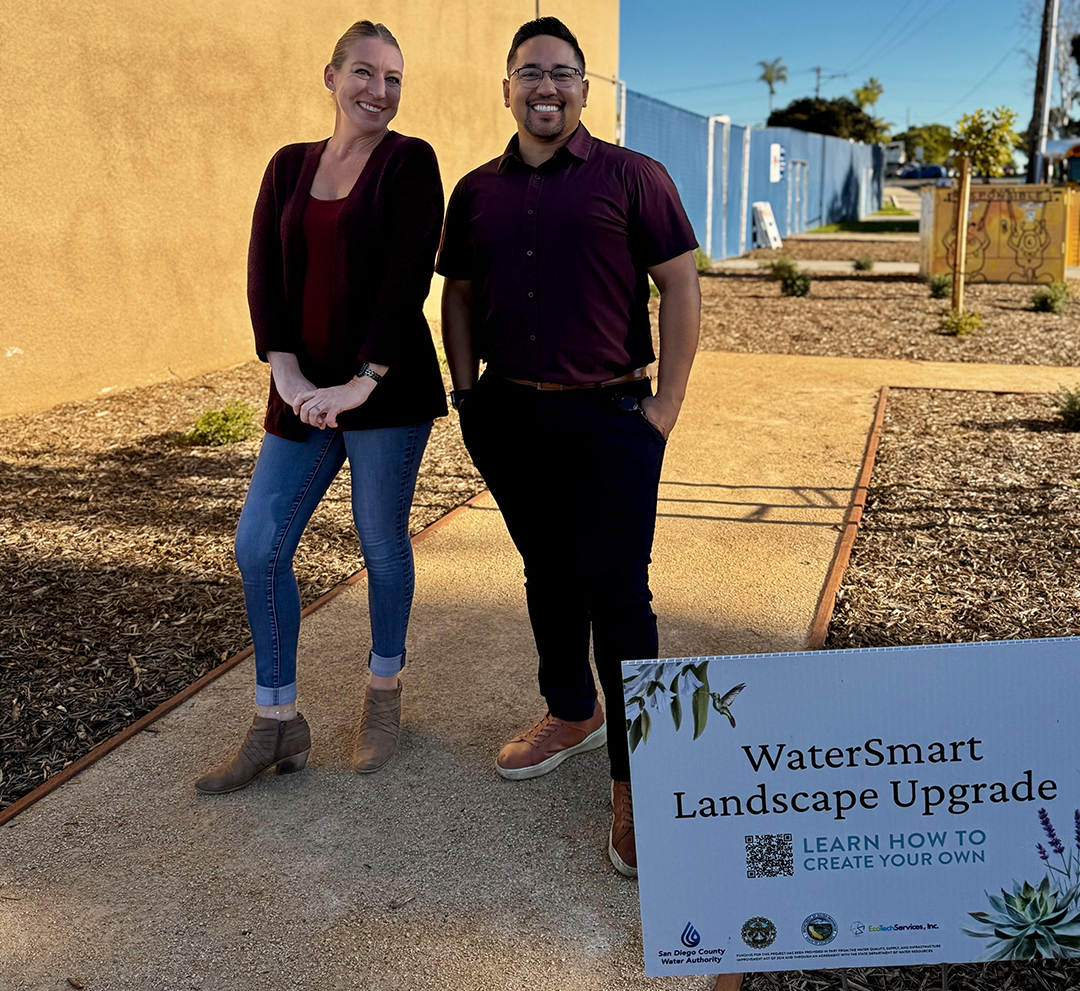
Whittier School principal Kerie Sanders and Associate Principal Christopher Barrera are pleased with the results of the landscaping project. Photo: Courtesy Whittier School

Whittier School principal Kerie Sanders and Associate Principal Christopher Barrera are pleased with the results of the landscaping project. Photo: Courtesy Whittier School

Whittier School is a specialized K-12 school for students with high behavioral needs not being met at their neighborhood schools. “We are the school in the entire district that receives those students to work on some of those adaptive or transitional skills here, so that they can transition back to a comprehensive education site and move toward independence,” explained Associate Principal Christopher Barrera.

Andrea Eaton, Maintenance Planning Senior Coordinator for the San Diego Unified School District, and Kerie Sanders, Whittier School principal, said the school landscaping had deteriorated and was starting to affect school operations.
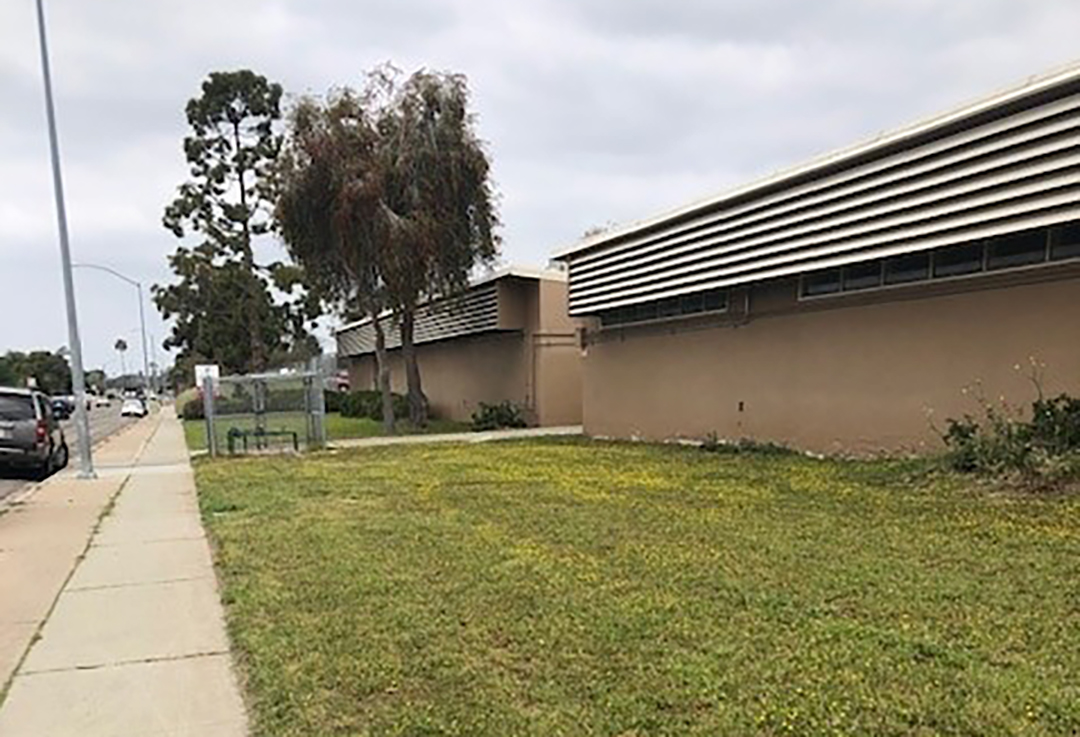
Whittier School landscaping before its makeover. Photo: Courtesy Whittier School landscape project

Whittier School landscaping before its makeover. Photo: Courtesy Whittier School

Sanders said staff conduct tours for parents who want to place their children at Whittier School. Some were discouraged by the school’s run-down appearance. “They looked around and thought ‘wow, people don’t care,’ and it’s not true,” said Sanders.

The impression of the undesirable landscape extended into the neighborhood. “The community thought Whittier was an abandoned school,” said Sanders. It led to neglect, including littering, forcing school employees to clean it all up.

Design Inclusivity Featured in Whittier School Landscape Project
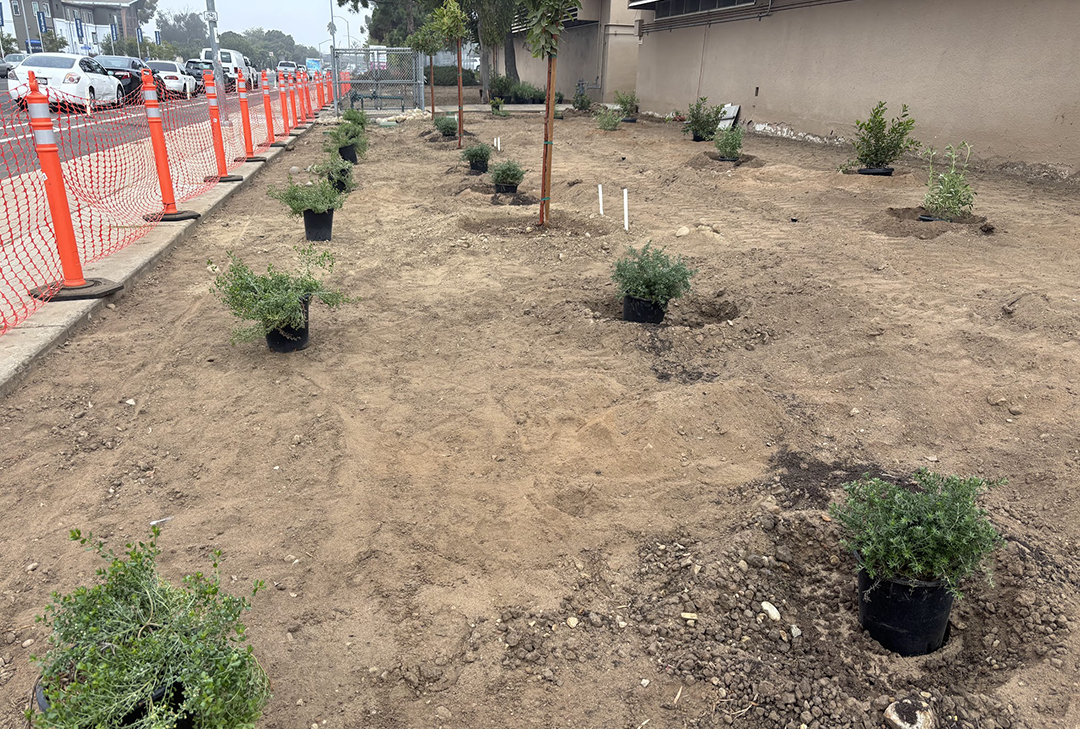
Contractor EcoTech Services worked with Whittier School leaders to minimize disruption for students. Photo: Courtesy Whittier School landscape project

Contractor EcoTech Services worked with Whittier School leaders to minimize disruption for students. Photo: Courtesy Whittier School

District and school representatives worked with the Water Authority and their contractor, EcoTech Services, to plan and install the new landscaping in advance of the school district’s planned modernization effort at Whittier School. Barrera praised the collaborative effort to make the project a reality.

The unique needs of the Whittier School’s students required special accommodations by contractor EcoTech during installation. The EcoTech field technicians expressed how they had a really big love for this project,” said Sanders.

“It was pretty cool to see the inclusivity in the design side. The construction team was mindful about the equipment they were using at certain times where the students are passing through that space,” said Sanders of Eco-Tech’s awareness of student sensitivities. “You don’t see that type of  consideration every day.”

New Landscaping Improves Learning Environment
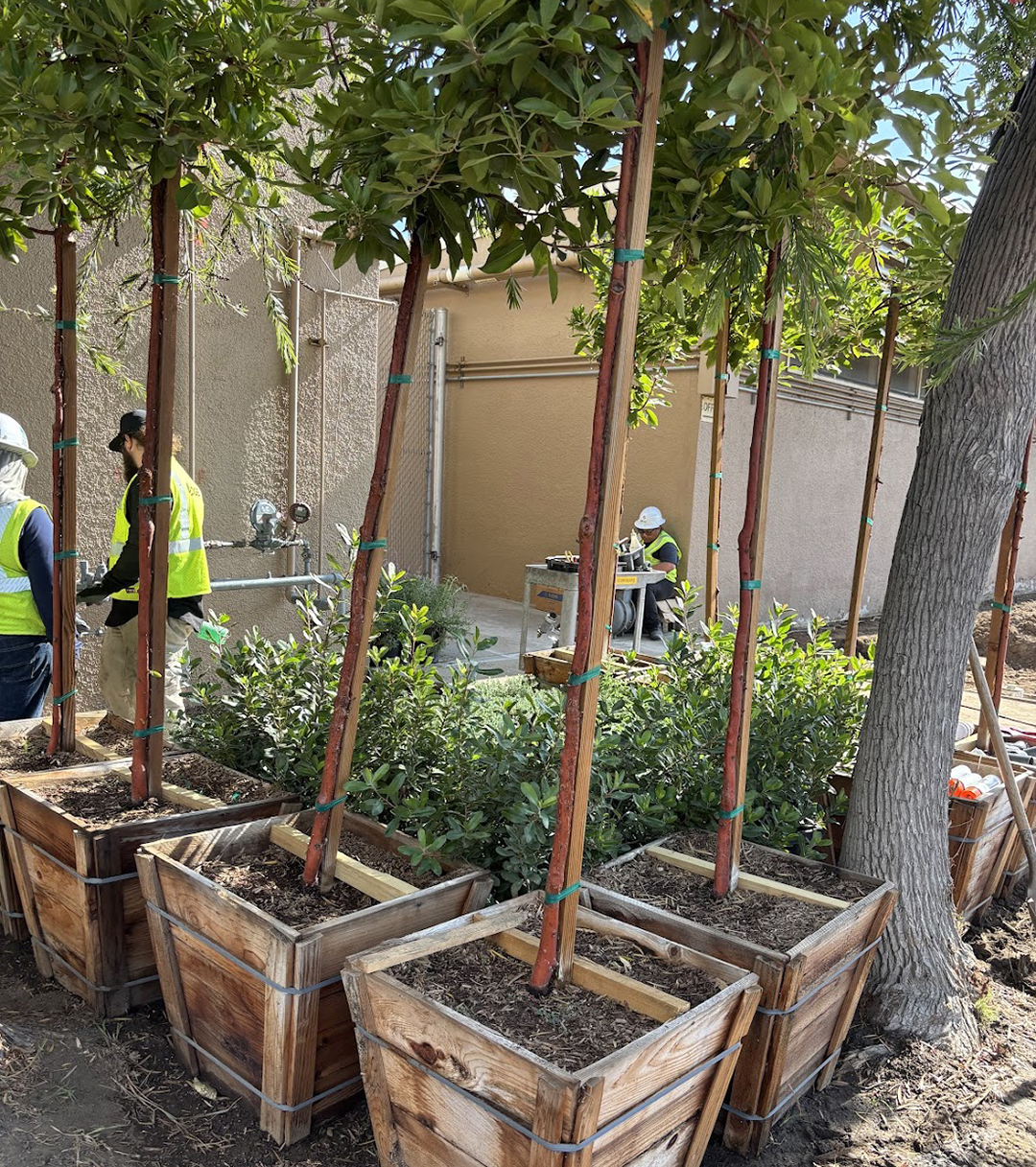
New trees and pollinator friendly plants create a fresh environment for wildlife, for school staff and students, and for the Clairemont neighborhood. Photo: Courtesy Whittier School

New trees and pollinator-friendly plants create a fresh environment for wildlife, for school staff and students, and for the Clairemont neighborhood. Photo: Courtesy Whittier School

The finished project includes a walking path designed specifically for the students. New trees and plants beautified the learning environment for students, the workplace for staff, and the school’s reputation in the neighborhood. Sanders said neighbors are treating the property with a new, respectful attitude.

To use water more efficiently, the irrigation system was updated with more efficient sprinkler heads, and a previously undetected water leak was discovered and repaired.

Sanders said Whittier School now looks loved and cared for as a true reflection of its mission. “How our school presents itself is how we care about our kids. Now, when parents pull up into the driveway to pick up their kids or come for events or meetings, our school aligns with how we care about the kids in our school. It seems like an outside manifestation of the work that’s happening on the inside, too.

“I am very, very grateful to the team that gifted us all of this, and we’re working every day inside to make it right and live up to the beauty that’s on the outside,” said Sanders.

Assembly Bill 1572 and Nonfunctional Turf

In an effort to conserve water and promote sustainable landscaping, California has enacted Assembly Bill 1572 (AB 1572), which prohibits the use of potable water to irrigate nonfunctional turf on specific property types, including commercial, industrial, and institutional properties, and common areas of homeowners’ associations.

Signed into law in 2023, it begins to take effect for different property categories from 2027 through 2031.

A variety of helpful programs and rebates are still available to help other commercial, industrial, and institutional landscapes meet the State of California’s new non-functional turf regulations (AB1572). Photo: Courtesy Whittier School

A variety of helpful programs and rebates are still available to help other commercial, industrial, and institutional landscapes meet the State of California’s new non-functional turf regulations (AB1572). Photo: Courtesy Whittier School

Nonfunctional turf is grass that serves only an aesthetic purpose and is not used for recreation. Examples include grass in center medians and parking lots, decorative landscaping, and other uses for aesthetic purposes.

Functional turf is grass that serves a useful purpose beyond just looking nice. It is turf actively used for recreation, sports, or community events where people (or sometimes animals) walk, play, or gather.

Dunn said a variety of helpful programs and rebates are still available to help other commercial, industrial, and institutional landscapes meet the State of California’s new non-functional turf regulations (AB1572), including:

For more information about the new regulations and tools and programs to help affected businesses and organizations comply, contact Debby Dunn at or 858-522-6745.
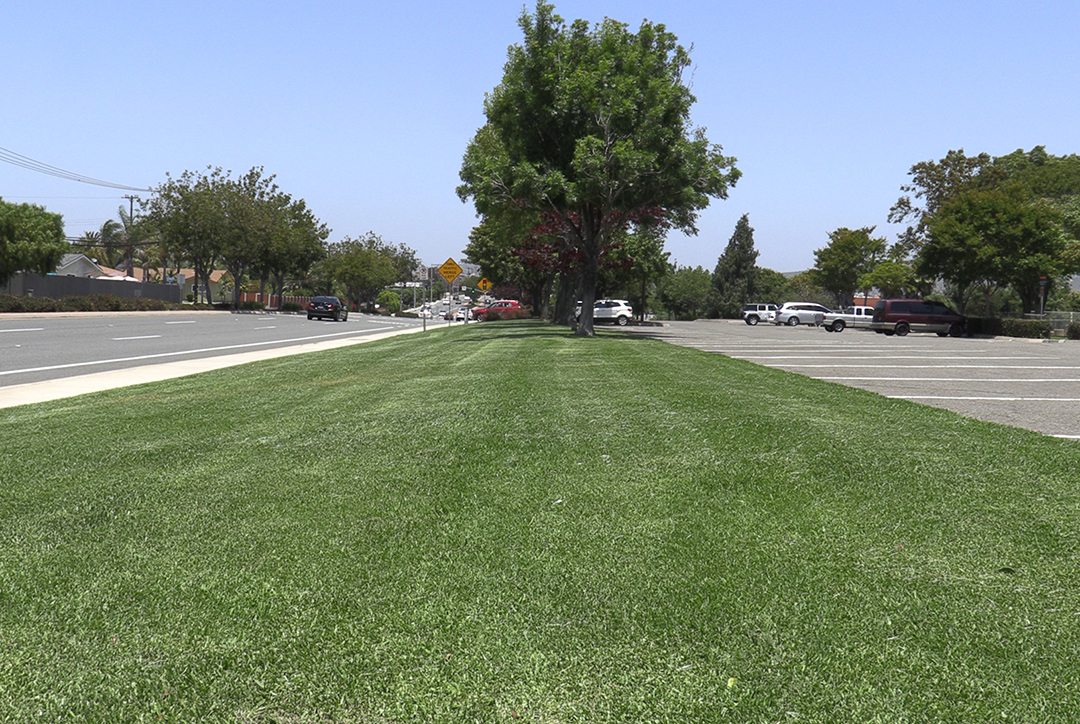
 

The City of San Marcos replaced 11,000 square feet of nonfunctional turf through a new pilot program. Photo: Vallecitos Water District

Partnerships Support San Marcos Turf Replacement Projects

In an effort to conserve water and promote sustainable landscaping, California has enacted Assembly Bill 1572 (AB 1572), which prohibits the use of potable water for irrigating non-functional turf on specific property types, including commercial, industrial and institutional properties, and common areas of homeowners’ associations (HOAs).

Signed into law in 2023, it begins to take effect for different property categories from 2027 through 2031.

The City of San Marcos and the Vallecitos Water District applied to the San Diego County Water Authority’s Commercial Direct Install Program, a grant-supported pilot program accepting seven large-scale projects countywide. Eligible projects focus on nonfunctional turf replacement at commercial sites located in income qualifying neighborhoods.

Two sites in San Marcos were selected for this pilot program, along with two schools and three other locations in San Diego County.

Nonfunctional turf like in this before photo was replaced with low-water use landscaping. Photo: Vallecitos Water District turf replacement

Nonfunctional turf like in this before photo was replaced with watersmart landscaping. Photo: Vallecitos Water District

“We’re very grateful to the Water Authority and Vallecitos Water District for reaching out about this program,” said Amanda Haas, City of San Marcos park maintenance supervisor.

“They came to us, shared the idea and the concept. We instantly thought about Bradley Park having the turf removed and a drought-tolerant landscape installed. We hope it inspires the community to do the same thing, and we hope that other cities follow our lead,” explained Haas.

Bradley Park Project Leading The Way

Nonfunctional turf in Bradley Park next to a parking lot. Photo: Vallecitos Water District turf replacement

Nonfunctional turf in Bradley Park next to a parking lot. Photo: Vallecitos Water District

Haas said Bradley Park was an ideal candidate. It is located in an income-qualifying neighborhood and is highly visible along busy Rancho Santa Fe Road, with 11,000 square feet of turf needing replacement. “It’s a good location to showcase a project like this because it is so visible,” said Haas.

Haas says the Bradley Park project helps the City of San Marcos meet ambitious goals to reduce water use in municipal landscapes.

The parking lot with new low-water use landscaping. Photo: Vallecitos Water District turf replacement

The parking lot filled with waterwise plants. Photo: Vallecitos Water District

“We’re reducing our turf print and we’re increasing beautiful plants, reducing our water use, taking advantage of good partnerships with the (Vallecitos) water district and the Water Authority,” said Haas.

Haas says having a program help subsidize the costs of turf replacement makes it an ideal time to pursue projects. “This helps us get ahead of the curve when it comes to fulfilling the state mandate to remove nonfunctional turf. We hope that it helps inspire the community to do the same thing in their landscapes.”

The second proposed project in the City of San Marcos is for a commercial building in operation since 1979 and well-known in the community, with more than 10,000 sq. ft. of turf to be replaced with watersmart landscaping. This 12,000 sq. ft. site, highly visible from the 78 freeway, will be replaced with a colorful watersmart plant palette.

For information on these plants and more, check out the Water Authority’s Nifty 50 and Happy 100 plant lists.

Watch a video review of the Bradley Park turf replacement project.


Who Must Comply With AB 1572?

  • Properties owned by state or local governments
  • Commercial, industrial, and institutional (CII) properties
  • Common areas of HOAs and common interest developments

What is Nonfunctional Turf?

Nonfunctional turf is grass that serves only an aesthetic purpose, not used for recreation, and is irrigated with potable (drinking) water. Examples include:

  • Medians: Grass on medians and parking lots that serve no active purpose.
  • Commercial: Decorative grass areas on commercial and industrial properties, such as office buildings or hotel landscaping.
  • Entrances: Grass near commercial buildings, school grounds, and building entrances, used only for aesthetic purposes, is not allowed.

Properties using recycled water are exempt from AB 1572.

What is Considered Functional Turf?

Functional turf is grass that serves a useful purpose beyond just looking nice. It is turf or lawn actively used for recreation, sports, or community events.

It’s grass that people and pets walk, play, or gather on.

Examples include public parks, school fields, sports fields, and golf courses, used for recreation or civic events. Pet relief areas, veterinary offices, boarding facilities, animal shelters, and within cemeteries used for visitation and gathering are also considered functional turf.

This new law does not apply to residential properties and apartment buildings. There are also exemptions for trees and all non-turf plants.

Nonfunctional turf is replaced by new landscaping plus a walking path. Photo: Vallecitos Water District turf replacement

Nonfunctional turf is replaced by new landscaping plus a walking path. Photo: Vallecitos Water District

Property maintenance staff must attend a training on proper maintenance, adhere to maintenance recommendations, and agree to maintain the landscape long term to participate in the Water Authority’s Direct Installation Landscape Program.

Each project includes a professional landscape design, irrigation upgrades, storm water retention features, Watermart plants included in the Water Authority’s “Happy 100” list, and trees where possible. It must comply with local city ordinances, including the Model Water Efficient Landscape Ordinance.

For more information about the Direct Installation Landscape Program or nonfunctional turf regulations, please contact Debby Dunn at or 858-522-6745.